Aviation is interesting but weird, and you might have heard many myths, like someone believing that a tiny crack in the fuselage can suck you into the sky or that pilots lower the oxygen levels to sedate passengers, and much more. Some of those myths can be true, while most of them are myths for a reason.
Most stories or myths spread easily because people are gullible and these stories appear reasonable. The decades of crash investigations, regulator data, and cabin-air research show that almost every myth is debunkable under physics and real-world evidence. To understand further, you must know what's actually happening up there.
Also read || Why Do Airplanes Disappear From Radar?
Five Myths, Busted by Physics
Myth: You can open an emergency door mid-flight
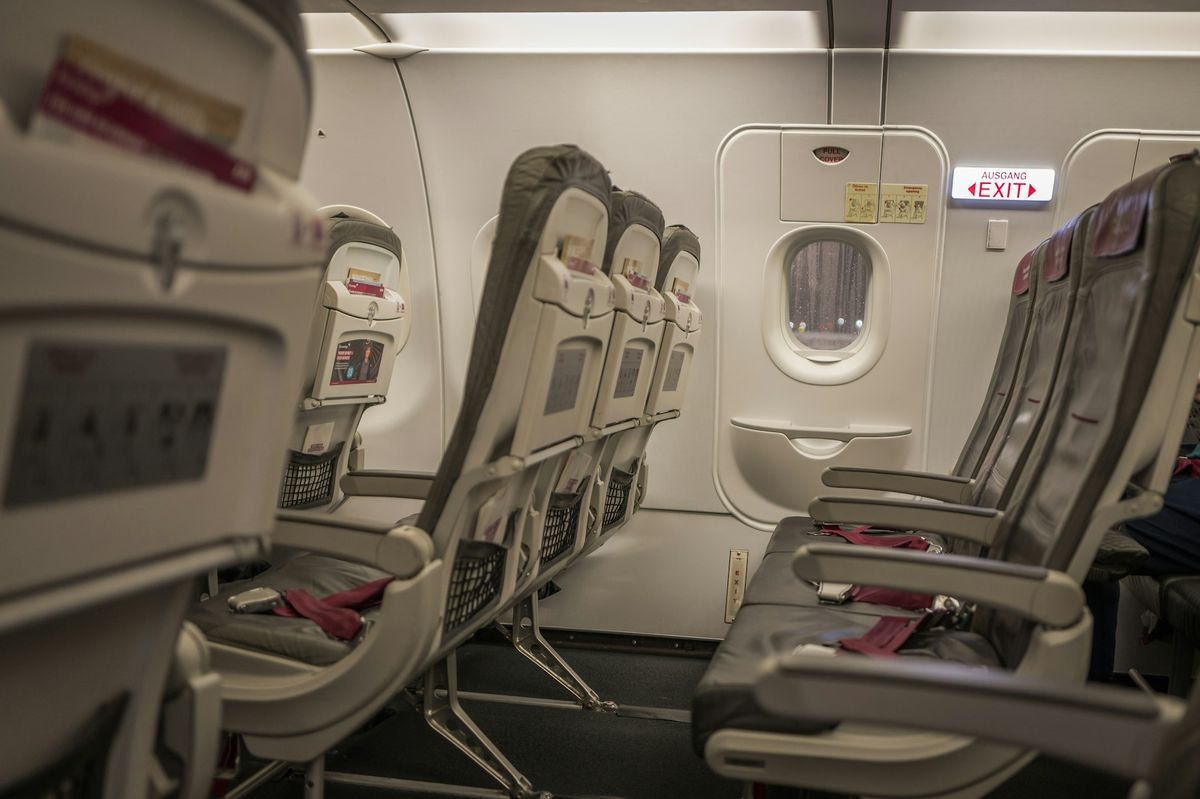
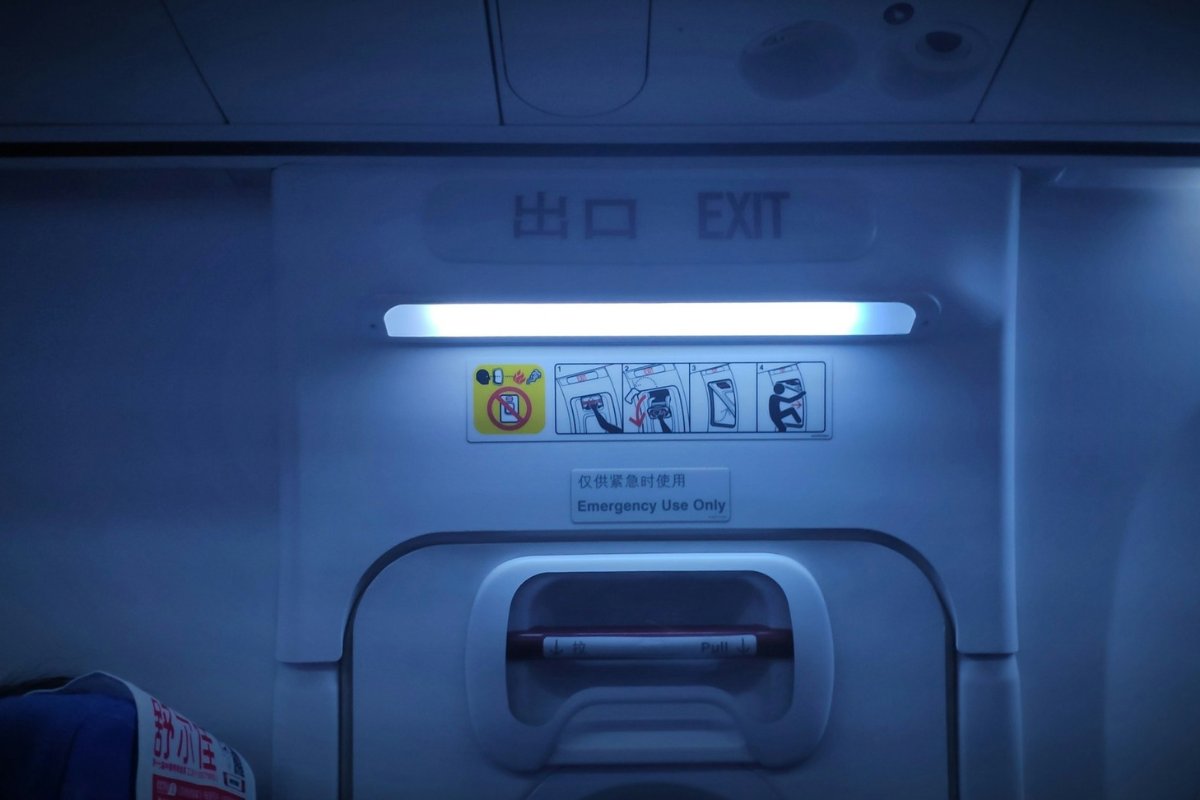
Reality: One may assume that it's easier to open the door mid-flight, but it is physically impossible for a human to force open a main plug-type exit. When you are flying high, the cabin is pressurized well above the surrounding air, and that pressure difference is what pushes the door firmly into its frame. So, unless you're a superhuman, you can't beat the physics. To date, there are no confirmed cases of a passenger successfully opening a main plug door at cruising altitude.
Myth: A small hole in the fuselage will suck everyone out.
Reality: Unless it is a movie, nobody gets sucked out if there's a breach in the cabin. The real stories are much calmer. In December 2006, there was a roughly 12-inch gash in the fuselage of an Alaska Airlines MD-80 during takeoff. When it was in the air, the cabin pressure equalized with the outside air, the violent airflow stopped, and the plane was forced to make a rapid emergency descent safely. And they did it with no serious injuries. In short, small breaches can be alarming but not always catastrophic.
Myth: You get drunk faster on a plane
Reality: Based on controlled studies and FAA reviews, your blood alcohol concentration (BAC) does not rise faster at typical cabin altitudes. What happens is that most cabins are pressurized to feel like roughly 8,000 feet of elevation, so less oxygen reaches your bloodstream. It causes mild hypoxia, which results in lightheadedness and fatigue. The fatigue and lethargy make you feel you're more drunk, even though there's no change in blood alcohol concentration levels.
Myth: Airlines dump toilet waste mid-flight.
Reality: Commercial aircraft store human waste in sealed tanks that are emptied on the ground. Moreover, there is no in-flight dump valve for sewage. So, there are occasional reports of "blue ice" falling from the sky that come from rare valve or seal leaks that freeze onto the outside of the fuselage before eventually breaking off. Therefore, if something messier ever lands on your car, it's more likely a bird passing overhead, and not some jet.
Myth: Recycled cabin air spreads disease through the plane.
Reality: It sounds reasonable and intuitive because logically we feel that when air gets reused, germs must spread. However, on most modern jetliners, the system mixes roughly equal parts fresh outside air and filtered interior air. So, the filtered half of the air passes through hospital-grade HEPA filters capable of capturing anywhere between 94 and 99.9% of airborne particles, including many microbes. Thus, it is more of a fear than a fact, as the entire volume of the cabin air is typically replaced every two to three minutes.
Also read ||Ghost Flights: Why Airlines Fly Empty Planes
The Real Air You're Breathing
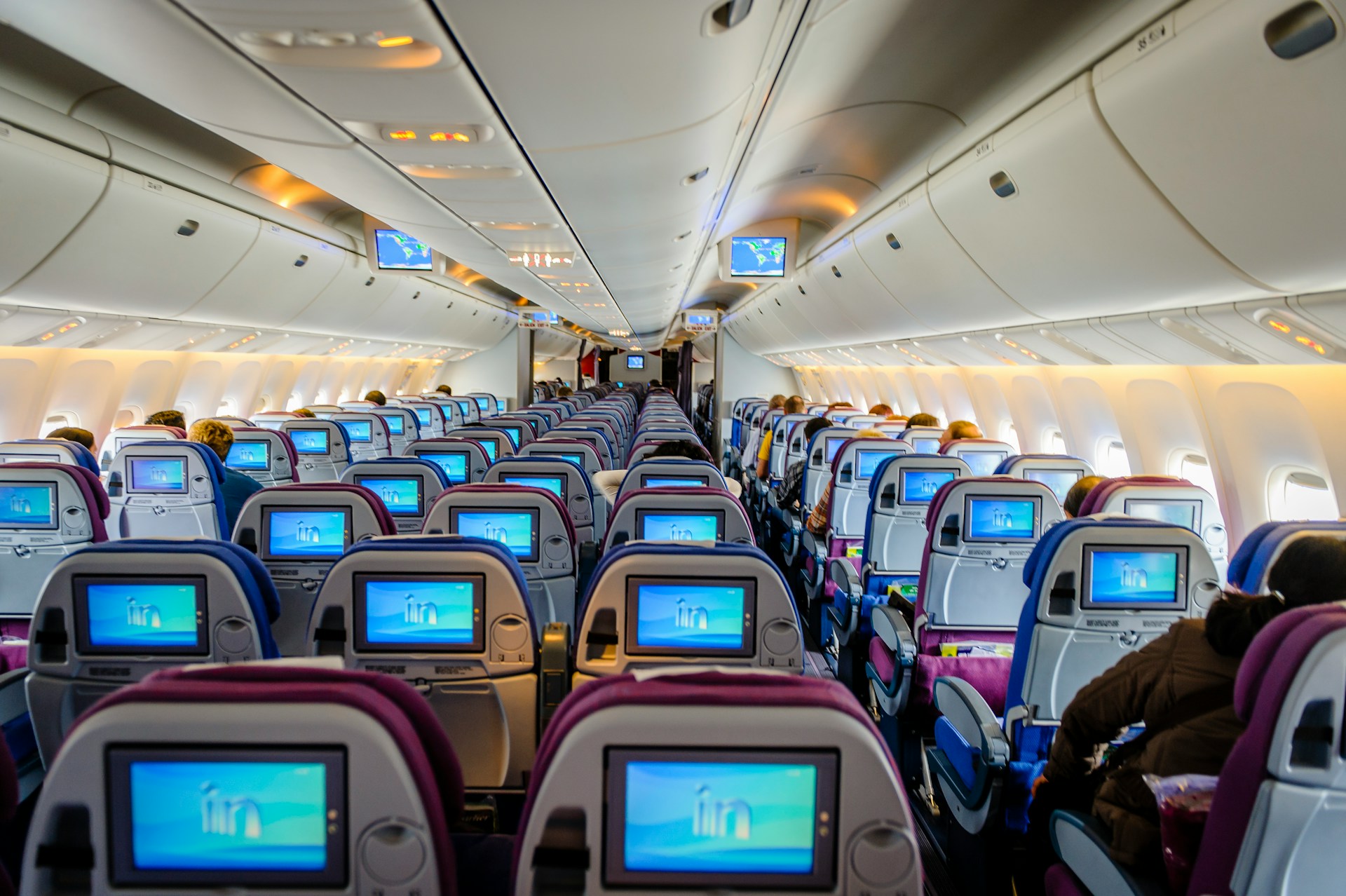
When flying, air in the cabin is one of the most misunderstood concepts, and it's necessary to understand how it is regulated. The FAA standards and ASHRAE call for roughly 3.5 litres per second of fresh air per passenger, with total airflow around 9 to 10 liters per second per person. So, that's some continuous, monitored flow and not a sealed box of stale air revolving the same handful of molecules for hours.
Just like regulated air, temperature is also strictly controlled in cabins. According to ASHRAE Standard 161, the operative temperature must be in a range of 18.3°C to 23.9°C, without exceeding 26.7°C. To keep your head and feet at a similar temperature level, the vertical temperature is kept within about 2.8°C. Another problem that passenger face is humidity. Since the cabin humidity is roughly between 15% and 35%, it irritates your skin, eyes, and nasal passages. Though there is no strict law for it, a humidity level up toward 20- 30% can meaningfully reduce this irritation.
Gas levels are also regulated for safety, regulatory compliance, and environmental sustainability. Based on FAA standards and regulations, carbon dioxide cannot exceed 5,000 parts per million, while toxic carbon monoxide is capped at 50 parts per million. This data is not informal, but enforceable standards checked through certification and ongoing compliance processes.
Most planes today still use "mixing ventilation," blasting air down from the ceiling and pulling it out near the floor, as they don't rely on these numbers either. While "mixing ventilation" works reliably, it creates drafts and is not efficient at clearing pollutants from the breathing zone around your face. The newer cabin designs are inspired by office buildings, where they use radiant panels and displacement systems for cleaner air and fewer drafts.
Also read || What Ultra-Long-Haul Flights Do to Your Brain
Why About 95% of Crash Victims Survive
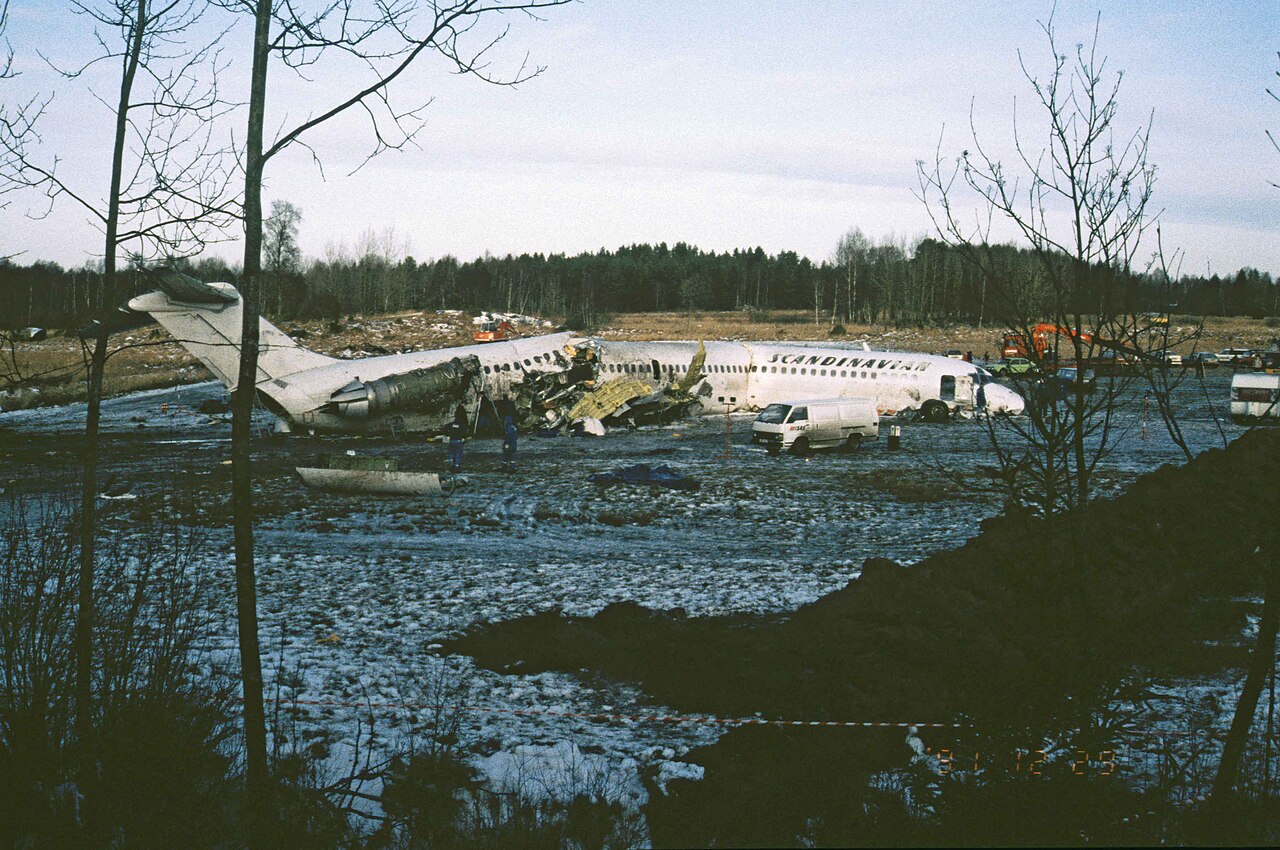
You must have thought that surviving a plane crash is all about luck. However, a National Transportation Safety Board study disagrees. They say about 95.7% of occupants involved in U.S. Part 121 air carrier accidents between 1983 and 2000 survived, which is huge. The number shows that aviation learned its lesson from real wreckage, not some good luck or chance.
Further investigations into serious accidents have shown that survivability depends on factors like seat and interior design, restraint use, fire protection, and evacuation performance. So, when planes follow 16-g seat standards, work on brace positions, and cabin interiors, it is the work of broader research, and not some dramatic incident. However, every crash contributes to hard data that makes planes safer than before. The modern seats are designed to absorb forces that earlier seats couldn't.
The reason why most crash victims survive is because of rehearsed evacuations and standardized brace positions across fleets instead of relying on individual discretion. In these exercises and redesigns, the purpose is to minimize the gap between a structurally survivable crash and an actual one. In most cases, investigators found that the physics of the impact and the outcome for passengers are two distinct stories.
Also read || 7 Emerging Trends Shaping Global Aviation
The One Myth That's Actually True
While most myths were false, this one is not. Here is the scariest-sounding story of aircraft engines. Aircraft engines have become more fuel-efficient per passenger since the 1960s, but the total emissions kept climbing. The reason behind this weird relationship between efficiency and emissions was not failed technology, but runaway growth. From the 1970s to the early 2020s, global carbon dioxide emissions from aviation grew more than twice as fast as passenger travel grew, far quicker than efficiency gains.
With an annual demand growth of roughly 3 to 4%, aviation emissions are rising rapidly, and the demand for flying is outpacing engine efficiency improvements. Global aviation policies are failing to regulate the industry. In the original 1997 Kyoto Climate Treaty, international flights were excluded and handed over to aviation's own governing body for self-policing. European Union tried to close this loophole in 2012 by taxing carbon on all arriving international flights, but faced heavy political pushback from nations like the U.S. and China, which restricted the rule within Europe only.
So, your biggest fear should not be an emergency door, a gash, or dirty recycled air; it should be the math behind climate's footprint, which is not a myth at all. The planes are cleaner, safer, and well-engineered than ever; what's concerning is how sustainable these long flights are. Are there additional rules that could minimize the carbon footprint?