How would you react if you were traveling from Washington to Brussels, and a captain's voice came through the cabin speakers, only this time, he was speaking the most fluent Dutch you've ever heard? Sounds interesting? Right. It's not a movie scene or a well-written fiction plot, but the upcoming reality of the airline industry.
The captain didn't learn the language and became fluent overnight. Believe it or not, whatever you hear could be generated by artificial intelligence. And that's what we're going to talk about. AI voice cloning and how airlines are using it in commercial aviation.
Also read || 7 Most Expensive Private Jets to Charter Worldwide
What is AI Voice Cloning, Exactly?
AI voice cloning is no rocket science. You record a person speaking for a few minutes, and an AI system studies that recording like a perfect voice artist. It understands the tone, the rhythm, and the pauses and reproduces that voice on command. Now, all you need is to type a new text, and it will speak in that person's voice, saying things they never actually said.
For years, you may have been seeing AI-generated multimedia memes on your social channels and everywhere. That was just the beginning and experimentation phase. Now, it is time for execution. The technology is already mature enough that three seconds of audio is sufficient to produce a voice clone with 85% match to the original, and people will not be able to tell the difference.
The global AI voice cloning market is expanding, and was worth around $3.29 billion in 2025, from $2.65 billion in 2024. With a rough year-on-year growth rate of 24%, airlines are among the industries quietly figuring out how to put it to work.
Also read || Why NASA Carried Space Shuttles on Top of Boeing 747s
The Pegasus Airlines Experiment
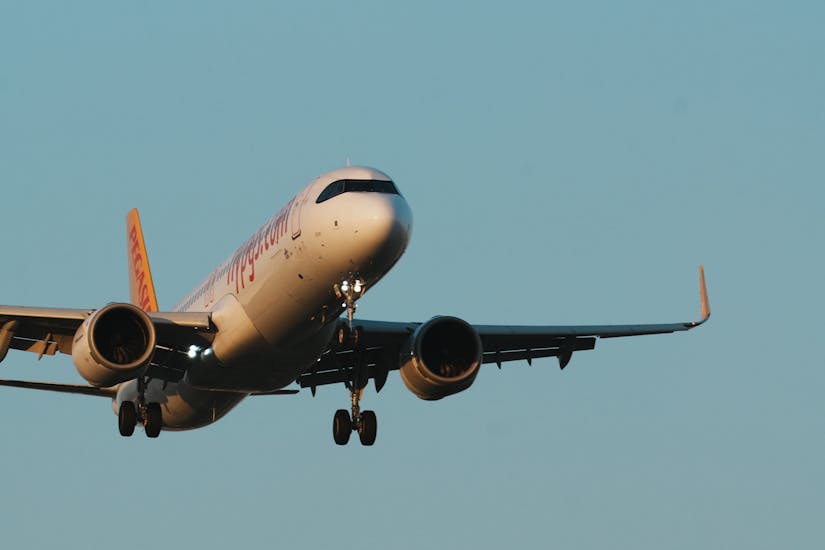
Some of the best examples of AI voice cloning in commercial aviation come from Turkey's Pegasus Airlines. In October 2024, Pegasus Airlines launched a multilingual in-flight announcements system developed entirely by its team at the Pegasus Innovation Lab, which was set up in Silicon Valley in 2023.
The system clones the voices of real Pegasus captains and uses AI to deliver pre-flight announcements in Arabic, Spanish, and Russian, depending on the destination of the flight. Not only that, the AI updates the content before every flight, whether it is weather at the destination, flight duration, captain's name, and local conditions, and delivers it in the passenger's native language, in a familiar pilot's voice.
Also read || 7 Best Budget Airlines to Travel With in 2026
It was first made on the Seville route in September 2024. And, by October 2024, it was extended to Arabic and Russian-speaking countries as well. The astonishing part about Pegasus was that they built this in-house, whereas most airlines outsource technology to vendors. Pegasus chose to own the innovation rather than contracting out to other organizations.
"Our investments in technology stand out as one of the key elements that set us apart. Since launching our digital transformation in 2018, we have been making significant investments."
— Güliz Öztürk, Pegasus Airlines CEO
Why is the aviation industry paying attention?
Commercial aviation is a global business. People come from dozens of countries, often with limited English, and the moment someone hears information in their native language, it changes the customer's experience from being anxious to relaxed and comfortable. As a result, the trust goes up.
Airlines knew this for years, but cost and logistics were always the constraints. Hiring a voice talent, translators, sound engineers, and rebuilding the system was never a priority. With the arrival of voice cloning, the friction is gone. Once a pilot's voice has been cloned with their consent, airlines can generate announcements in any language for any route, updated in real-time without re-recording a single word.
United Airlines Betting on AI Voice
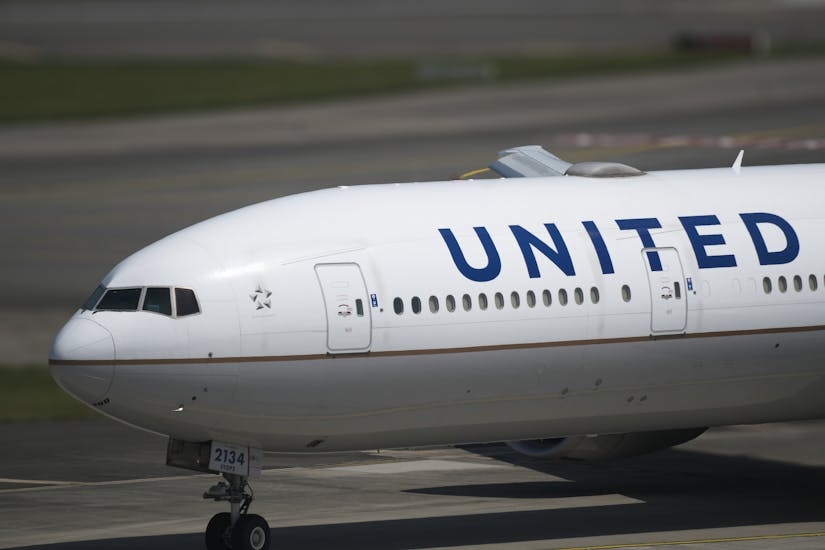
While Pegasus might be the initiator, they are not the last airline to implement AI voice cloning. The aviation giant United Airlines made a strategic move by investing $25 million in aiOla, a deep-tech voice AI company.
United & aiOla are exploring how to turn spoken data into structured, actionable information, especially in noisy multilingual environments where generic speech tools fail. The aiOla's core technology is called Jargonic, which is designed to understand aviation-specific jargon with 95% accuracy, and performs better than general models from companies like OpenAI and ElevenLabs in similar environments.
The use cases extend beyond flight announcements for passengers. For instance, maintenance teams might record fault reports using their voice, and ground crews can verbally share their inspection reports instead of writing them down. Besides, dispatch centres can provide real-time voice instructions without needing to be transcribed by a human. The AI in the aviation market is growing at 37.3% per year, and is forecasted to hit $52.7 billion by 2033.
Also read || The Fake AI Lawyer Scam Of 2026
Lufthansa Is Experimenting Too
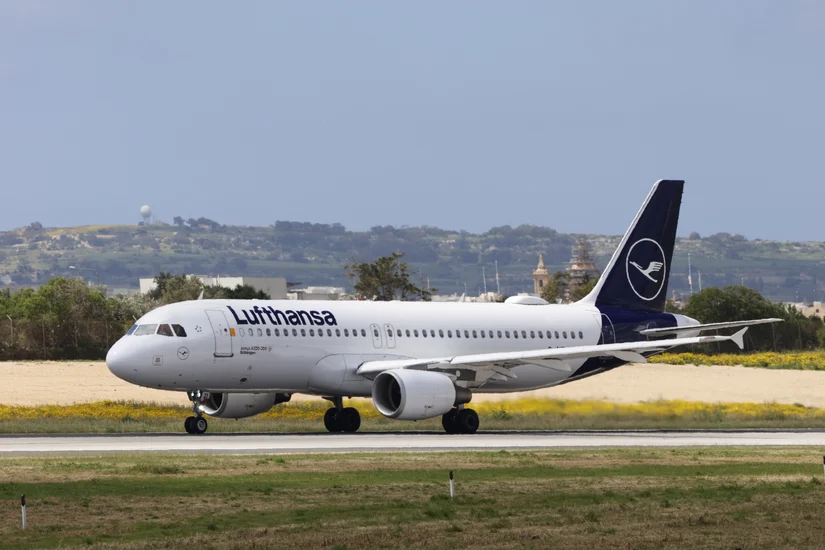
Lufthansa, the largest German airline's aviation training division, has been testing AI systems that allow trainee pilots to access support through chat and voice interface during simulator exercises. They have trained AI on flight manuals, standard operating procedures (SOPs), and training data, making them capable of answering most aviation-specific questions in real time, in a conversational voice.
Besides, the pilot shortage is as real as it could get. The New York-based global management consulting firm estimated a pilot shortfall of 24,000 in 2026, with Europe among the hardest hit regions. Similarly, Boeing estimated 122,000 new European pilots needed by 2041. The solution to this bottleneck can be using AI to train more students by handling routine feedback, questions, and answers.
The Honest Concerns
Everything comes at the cost of something. AI is no different. The Airlines cloning pilots' voices are responsible for getting written consent from pilots, defining how the voice will be used, and setting limits on routes and duration. Pegasus from Turkey did it with both male and female captains. However, the EU's AI Act already classifies voice cloning as high-risk AI, and passengers deserve to know if the voice they are hearing is from a real person or an AI, especially in a critical environment.
The risks outside the aviation industry are equally real. We have witnessed how voice cloning is weaponized in deepfake frauds and financial scams. Recently, the National Transportation Safety Board (NTSB) paused its public docket after AI was used to reconstruct the voices of pilots killed in a UPS cargo crash, not from any audio file, but from a spectrogram, which is a visual image of sound data included in public records.
Federal law bans cockpit recording from public access for exactly this reason. A visual workaround undid that protection in days. Although the technology is neutral in itself, its deployment with consent, transparency, and real guardrails is what separates innovation from exploitation