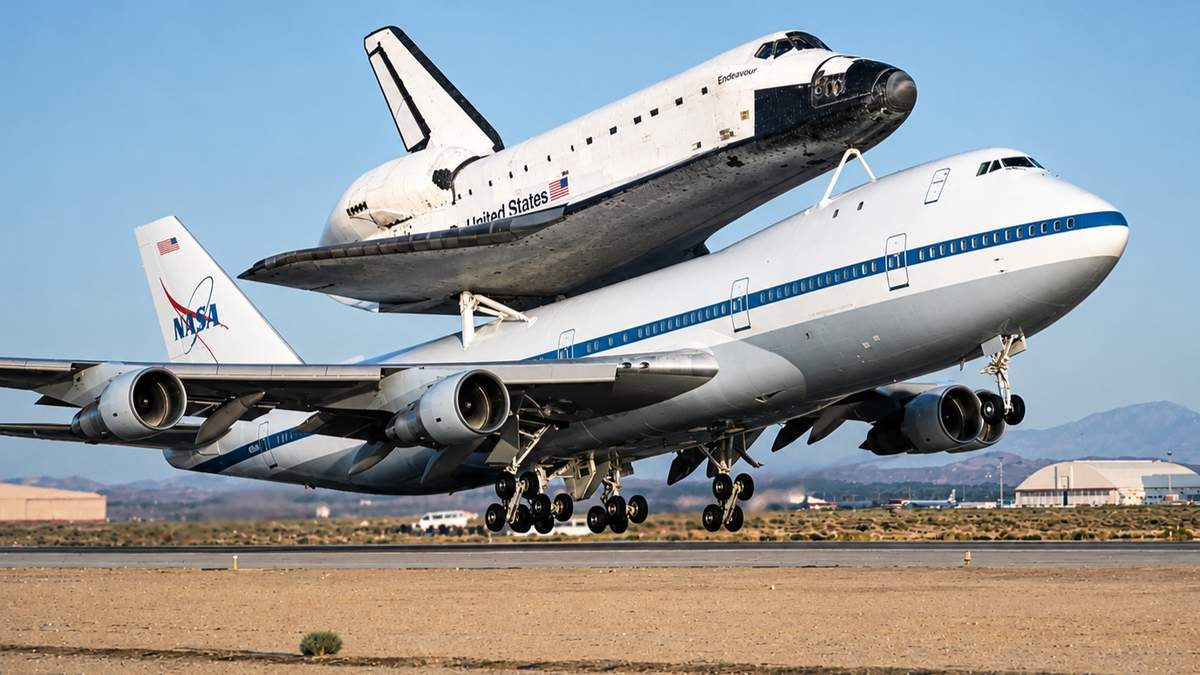
The space shuttle is one of the most recognizable spacecraft ever built. With its airplane-like wings and body, many people assume it could fly just like a normal aircraft. However, despite its appearance, the space shuttle worked very differently from commercial airplanes. It could launch into space using powerful rocket engines and glide back to Earth during landing, but it could not take off from a runway on its own like a regular jet. Because of this limitation, NASA needed a special way to transport the shuttle between landing and launch sites. The solution was an unusual but iconic one: carrying the shuttle on top of a modified Boeing 747.
Why NASA Needed Another Aircraft
Although the space shuttle looked like an airplane, it was not designed for normal air travel. Commercial aircraft use turbofan engines to generate thrust and take off repeatedly from airports. The space shuttle, on the other hand, relied on rocket boosters and its main engines to reach space. Once its mission was complete, it returned to Earth as a glider, meaning it had only one chance to land safely and could not simply fly back to its starting point. Space shuttles often landed at places far from Kennedy Space Center in Florida, especially if weather conditions made landing there unsafe. Some missions ended at Edwards Air Force Base in California. Once the shuttle landed, NASA needed a reliable way to bring it back for the next mission. Since the shuttle could not make that trip on its own, another aircraft had to do the job.
Also Read: 7 Best Budget Airlines to Travel With in 2026
Why NASA Chose the Boeing 747
NASA considered different aircraft capable of carrying the heavy shuttle. Two main options were studied: the Lockheed C-5 Galaxy and the Boeing 747. The Boeing 747 was chosen for practical reasons. First, its large wings and strong structure made it better suited to carry the shuttle’s weight on top of the fuselage. Second, the Lockheed C-5 Galaxy belonged to the U.S. military, meaning NASA would need approval from the Air Force whenever it wanted to use one. That would create extra delays and dependency. Buying Boeing 747 aircraft gave NASA full ownership and control. At the time, an economic slowdown in the 1970s made purchasing used 747s more affordable, making the decision even more practical.
How the Boeing 747 Was Modified
A standard Boeing 747 could not simply carry a spacecraft without major changes. NASA heavily modified two aircraft to create what became known as the Shuttle Carrier Aircraft (SCA). Inside the aircraft, most passenger seats and interior fittings were removed. Only the first-class cabin remained for the flight crew. The extra space was used for special monitoring systems that tracked electrical performance and flight conditions during transport missions. The outside of the aircraft also changed significantly. Engineers installed three large attachment points, called struts, on top of the fuselage to securely hold the shuttle in place. Additional vertical stabilizers were added at the rear of the aircraft to improve balance and control, since carrying a large orbiter on top created unusual aerodynamic challenges. These modifications made the aircraft look very different from ordinary Boeing 747s and turned them into one of NASA’s most unique transport systems.
Testing the Shuttle Carrier Aircraft
Before the space shuttle program officially began, NASA carried out extensive tests in 1977. These tests were important to ensure both the modified aircraft and the shuttle could operate safely together. One of the most famous tests involved mounting the shuttle prototype on top of the 747 and flying at high altitude. During some test flights, the shuttle was released from the carrier aircraft using explosive bolts. Once separated, shuttle crews tested onboard systems and practiced landing procedures. These tests proved that the shuttle could safely glide back to Earth and that the modified 747 could successfully carry and release it when needed.
Also Read: How NASA Secretly Hid an SR-71 in Plain Sight
The End of the Shuttle Carrier Aircraft
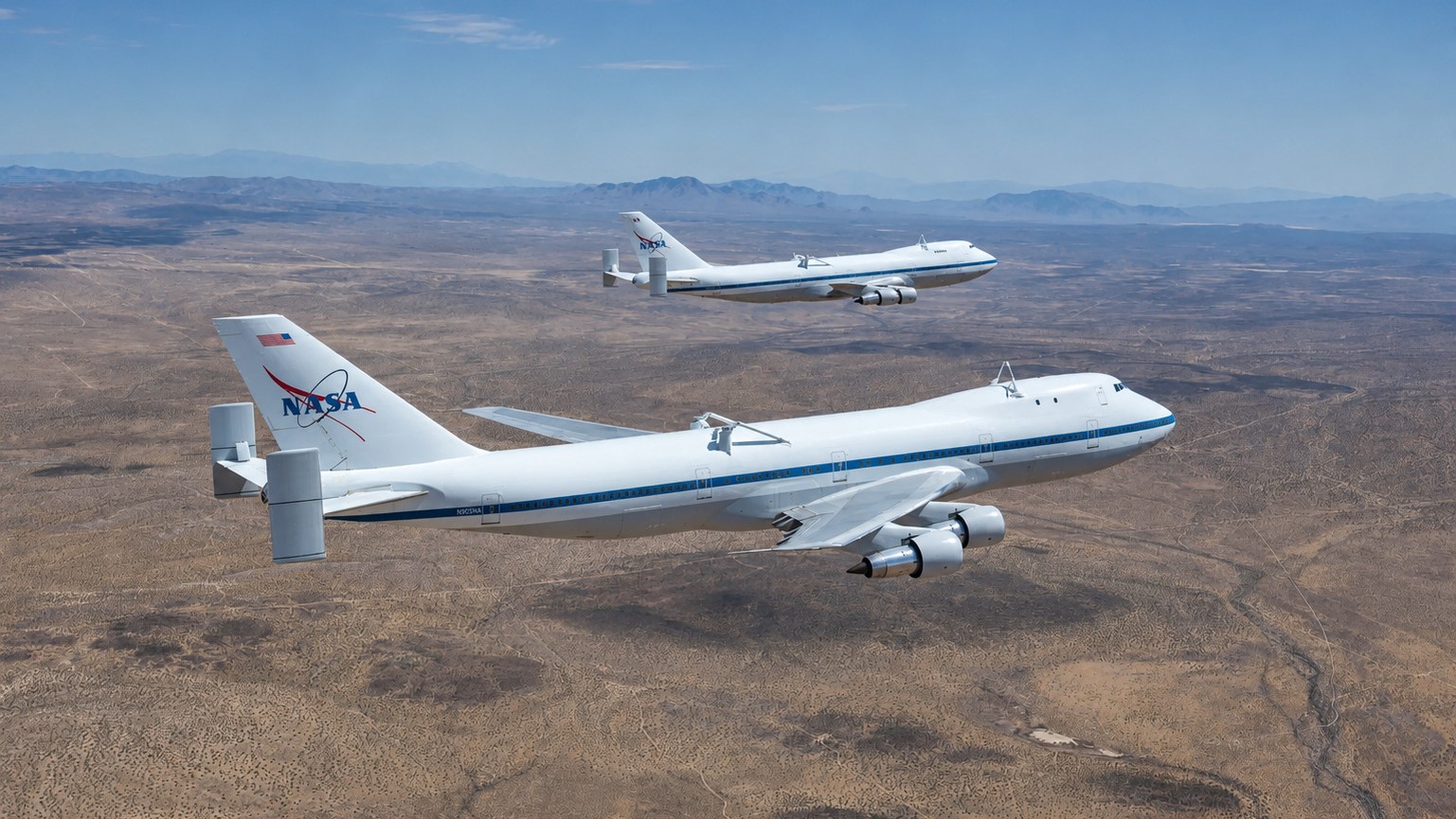
NASA retired the Shuttle Carrier Aircraft after the final space shuttle mission in July 2011, marking the end of an important chapter in space exploration history. One aircraft, known as NASA 911, made its final flight in February 2012. It traveled from the Armstrong Flight Research Center in Edwards, California, to the Joe Davies Heritage Airpark in Palmdale, California, where it remains on public display. The second aircraft, NASA 905, continued working a little longer. It was used to transport the retired space shuttles to museums across the United States. After completing that mission, it made its final trip to Space Center Houston, where it is now displayed with a replica shuttle mounted on top.
A Lasting Legacy
Boeing ended production of the 747 in 2023, but the aircraft remains one of aviation’s most legendary designs. NASA’s Shuttle Carrier Aircraft gave the 747 an especially unique role in history. Seeing a massive space shuttle mounted on top of a Boeing 747 became one of the most unforgettable sights in aerospace history. These aircraft were not just transport planes. They were an essential part of making the Space Shuttle Program possible.