The Beechcraft Bonanza is one of the best-known small airplanes in aviation history. It is a single-engine aircraft made for private flying. The Bonanza became popular because it was fast, comfortable, stylish, and more advanced than many other small airplanes of its time. However, the aircraft also received a dark nickname: the “Doctor Killer.” Some people also call it the “V-tail Doctor Killer” or the “fork-tail Doctor Killer.”
The nickname was mainly used for the early V-tail Bonanza models. The name came from a mix of fatal crashes, wealthy owners, pilot mistakes, bad weather, and concerns about the airplane’s unusual tail design. However, the nickname does not tell the full story. Studies later showed that pilot error caused most Bonanza accidents, not problems with the aircraft itself.
The Beginning of the Beechcraft Bonanza
The Beechcraft Bonanza was designed by the Beech Aircraft Corporation in Wichita, Kansas, in the United States. The first Beechcraft Bonanza flew on December 22, 1945. The aircraft entered service in 1947, soon after World War II ended. The Bonanza was different from many other small airplanes because it had a smooth body, retractable landing gear, a powerful engine, and a comfortable cabin.
Retractable landing gear means that the wheels can fold up into the aircraft during flight, which helps the Bonanza fly faster. Early Bonanza models usually had four seats, although later versions could carry more people. The aircraft became popular with business owners, doctors, lawyers, and other people who wanted a fast private airplane.
Also Read: Why NASA Carried Space Shuttles on Top of Boeing 747s
The Bonanza’s Famous V-Shaped Tail
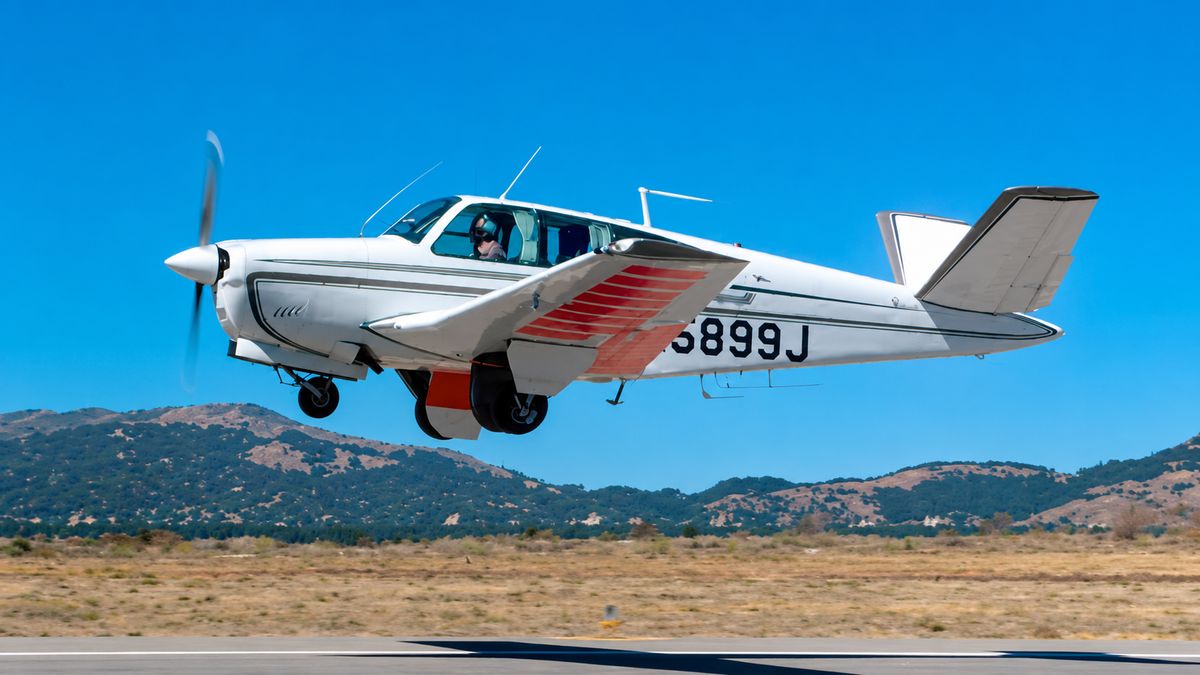
The early Bonanza was easy to recognize because of its V-shaped tail. Most airplanes have one upright tail fin and one flat tail surface, but the early Bonanza had two tail surfaces that pointed upward in a V shape. This design was unusual and made the aircraft look modern. It also gave the Bonanza the name “V-tail Bonanza.”
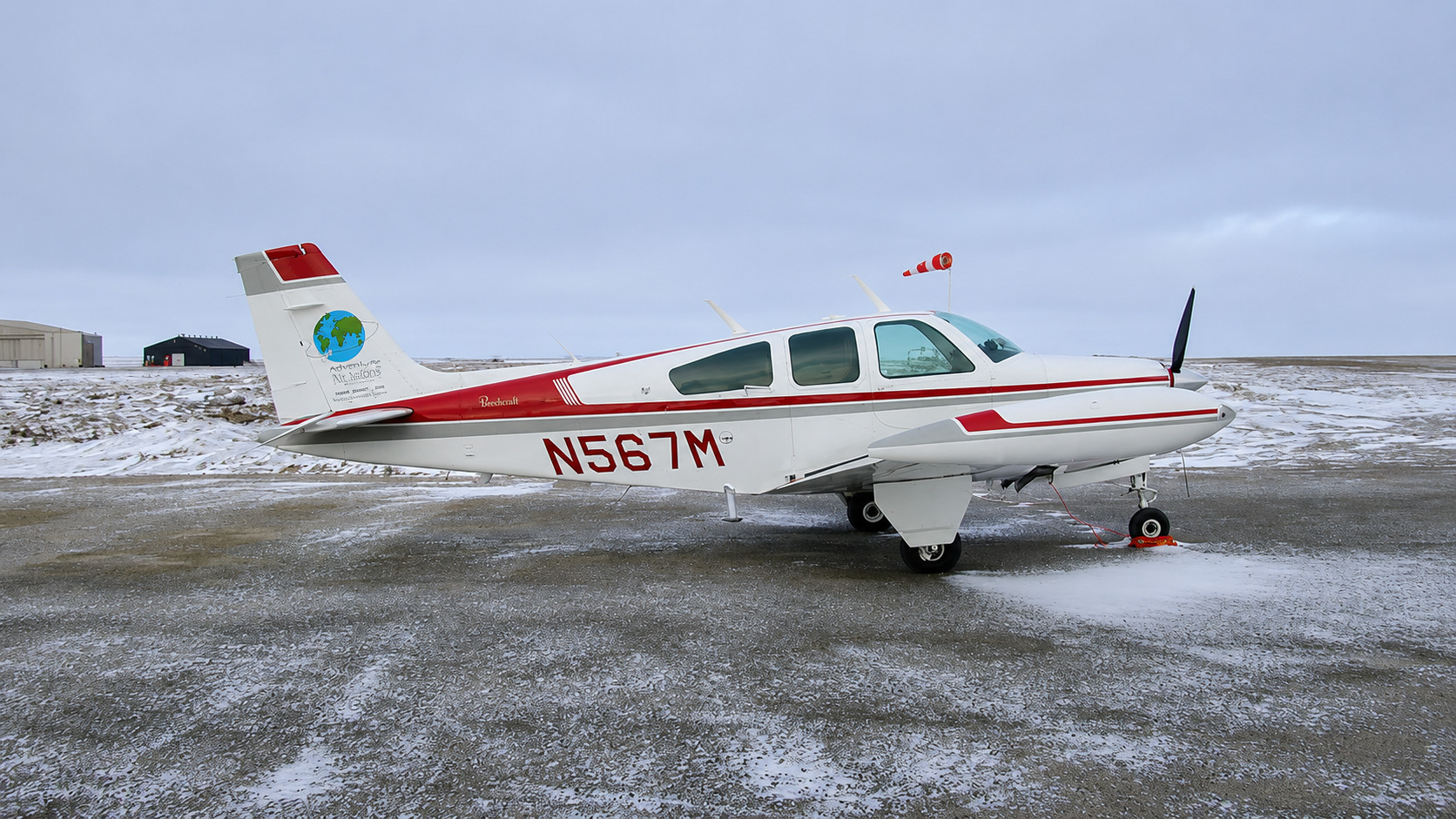
The V-tail model was known as the Model 35 Bonanza. Beechcraft later made Bonanza models with normal straight tails, called the Model 33 and Model 36 Bonanzas. The V-tail Model 35 was made from 1947 until 1982, while the straight-tail Bonanza models continued after that.
Why Doctors and Lawyers Bought the Bonanza
In 1947, a Beechcraft Bonanza cost about $7,975. That was a large amount of money at the time, and in today’s money it would be worth roughly $119,000. Because the Bonanza was expensive, it was often bought by doctors, lawyers, business owners, and other wealthy professionals. Many of these buyers were private pilots, not full-time professional pilots.
The Bonanza was faster and more complex than basic training airplanes because it had retractable landing gear, a more powerful engine, and more controls for the pilot to manage. Some owners moved from slower and simpler airplanes to the Bonanza without enough training. This could be dangerous, especially when the weather was poor or when the pilot had little experience.
How the “Doctor Killer” Nickname Started
The nickname “Doctor Killer” became popular because several doctors and other wealthy professionals died in Bonanza crashes. The name suggested that the Bonanza was especially dangerous, but the real reason for many crashes was more complicated. Many early Bonanza owners had basic flying skills but did not have enough training for flying in clouds, fog, rain, snow, darkness, or mountains.
They could fly safely when the weather was clear, but they could become lost or confused when they could not see outside the airplane. The nickname was not a technical or official name. It was an informal aviation nickname that became widely known over time.
Visual Flying and Instrument Flying
Many early Bonanza pilots flew under visual flight rules, also called VFR. VFR means that pilots mainly use what they can see outside the aircraft. They look at the ground, roads, rivers, mountains, the horizon, and other landmarks to know where they are and how the aircraft is moving. VFR flying can be safe in clear weather, but it can become dangerous in clouds, fog, heavy rain, snow, or darkness.
Pilots need instrument flight rules training, also called IFR training, to fly safely when they cannot see clearly outside the aircraft. IFR training teaches pilots to use the aircraft’s instruments, such as flight gauges and navigation tools, instead of depending only on their eyes. Many early Bonanza pilots did not have IFR training. Some pilots flew into poor weather even though they were not trained to do so, and this caused many serious and fatal crashes.
The Early Accident Rate
The early Model 35 Bonanza had a high fatal accident rate. Through 1952, the Model 35 Bonanza had a fatal accident rate of 4.90 fatal accidents for every 100,000 flight hours. This was more than twice the rate of the similar Cessna 195, which had a fatal accident rate of about 2.0 per 100,000 flight hours.
Later Model A35, B35, and C35 Bonanzas had a lower fatal accident rate of about 2.50 per 100,000 flight hours. These numbers helped create the Bonanza’s dangerous reputation. However, the accident rate later improved, and the aircraft’s record became closer to that of other fast single-engine airplanes.
Problems With the V-Tail
The V-tail was one of the most interesting parts of the Bonanza, but it also caused concern. During the late 1980s, the United States Department of Transportation and the Federal Aviation Administration studied repeated V-tail failures. The agencies used wind-tunnel tests and flight tests to study the design. The tests found that the V-tail did not meet all safety rules under some conditions. In some crashes, the tail failed when the airplane was flown too fast, flown into strong storms, or placed under very heavy stress.
Some pilots lost control of the aircraft in clouds or storms. When they tried to pull the airplane out of a steep dive, the aircraft could be moving too fast. This could place too much pressure on the tail. The Federal Aviation Administration later required a safety change called an airworthiness directive. This required owners to strengthen the tail area, and the change greatly reduced the number of tail failures. Beechcraft said that many V-tail failures happened because the aircraft was flown beyond its safe limits. In other words, the plane was often pushed too hard in dangerous conditions.
Famous Bonanza Crashes
Several famous accidents made the Bonanza’s reputation worse.
The Oregon Government Crash — October 28, 1947
On October 28, 1947, a Beechcraft Bonanza crashed in stormy weather in Lake County, Oregon. The crash killed Oregon Governor Earl Snell, Oregon Secretary of State Robert S. Farrell Jr., Oregon State Senate President Marshall E. Cornett, and pilot Cliff Hogue. The crash received major attention because several important state leaders died in one accident.
The Day the Music Died — February 3, 1959
One of the most famous Bonanza crashes happened on February 3, 1959. A Beechcraft Bonanza 35 crashed shortly after taking off near Clear Lake, Iowa. The crash killed musicians Buddy Holly, Ritchie Valens, and J.P. Richardson, who was known as the Big Bopper. Pilot Roger Peterson also died.
The aircraft took off at night during poor weather, and the pilot had limited experience flying by instruments. The event later became known as “The Day the Music Died.” The name became famous after singer Don McLean used it in his 1971 song “American Pie.” This accident was tragic, but it was linked to poor weather and pilot experience, not only to the aircraft itself.
A 1994 Safety Study
In 1994, the AOPA Air Safety Foundation studied Bonanza accidents to better understand the aircraft’s safety record. The study looked at 523 Bonanza accidents that happened between 1982 and 1989. It compared V-tail Bonanzas and straight-tail Bonanzas with other similar aircraft. The study found that V-tail Bonanza pilots were responsible for about 73% of accidents, while straight-tail Bonanza pilots were responsible for about 83% of accidents.
Aircraft-related problems were involved in about 15% of V-tail Bonanza accidents and about 11% of straight-tail Bonanza accidents. The study also found that Bonanzas had a lower overall accident rate than the other similar aircraft included in the study. The report showed that the Bonanza itself was not the main cause of most accidents. Pilot decisions, poor weather planning, lack of training, and flying into unsafe conditions were major reasons for crashes.
Also Read: How NASA Secretly Hid an SR-71 in Plain Sight
Landing Gear Problems
The Bonanza also had a history of landing gear mistakes. A gear-up landing happens when a pilot lands an aircraft without lowering the wheels. The aircraft then lands on its bottom and slides along the runway. Bonanzas had an unusually high number of gear-up landings. Some pilots also pulled up the landing gear while the aircraft was still on the ground. One reason was the early landing gear switch. It was different from the switches used in many other airplanes and could be confused with the flap switch.
Flaps are movable parts on the wings that help an airplane take off and land at lower speeds. Starting in 1984, later Bonanza models received a more noticeable landing gear switch in a different position. The newer models also used squat switches. These switches help stop the landing gear from retracting while the airplane is sitting on the ground and its weight is pressing on the wheels. A throttle-position switch was also added to help stop the gear from retracting when engine power was low.
The Bonanza’s Later Safety Record
The Bonanza became safer over time because of better training, stronger parts, improved landing gear systems, better weather reports, and better navigation tools. Later studies showed that the V-tail Bonanza had accident rates similar to those of other fast single-engine airplanes.
The Bonanza was not perfect, and the early V-tail design had real safety concerns. However, the aircraft was not responsible for most crashes. Many accidents happened because pilots flew into bad weather without instrument training, lost control of the aircraft, flew too fast, or made unsafe decisions.
The Bonanza Today
The Beechcraft Bonanza remained one of the longest-produced aircraft families in aviation history. More than 18,000 Bonanzas of all versions had been built by the end of 2024. The V-tail Bonanza stopped production in 1982, but straight-tail Bonanza models remained popular for many years. The Bonanza is still respected by many pilots because it is fast, useful, and comfortable. Older Bonanzas are also popular with private aircraft owners.
The “Doctor Killer” nickname is memorable, but it is not fully fair. The nickname came from a real period of accidents and safety concerns, but it ignored the important role of pilot training, weather, and decision-making. The history of the Beechcraft Bonanza shows that even a well-made aircraft can become dangerous when it is flown by someone without the right skills, training, or judgment.