Traveling can be fun until you land after sixteen hours, and you can not process what the gate agent is saying. You're trying to say something, but missing out on words. You're not only in a different time zone, but also unsure about how long your journey was. Though it is more common than ever, it feels like nothing more than a bad day.
You can ignore it, thinking that it's a random event due to fatigue from the journey, but it's not just your fatigue or disrupted sleep. It's something in your brain; it's your oxygen supply and a shift in memory circuitry, which happened when you were crossing the oceans. Let's decode what the actual problem is.
Also read || The First Jet Fighter: How the Me 262 Changed Military Aviation
"It's Just Tiredness" — Except It Isn't
Most of us would assume it's tiredness and fatigue. But that's not all. You think you're groggy because you did not sleep well, and that's a false story. A good night's rest indeed fixes your body, and it works great for a short domestic hop, but long-haul flights are different.
Ultra-long haul travel defies all your beliefs. What's happening at 35,000 feet and across nine time zones is undoubtedly tiring to the core. Fatigue is real, but three separate biological processes are running underneath it, and none of them can be fixed by a short or power nap alone.
Also read || 7 Emerging Trends Shaping Global Aviation
Three Separate Studies, One Consistent Pattern
There is a clock in your head, and field studies on airline pilots whose schedules are nothing more than a controlled experiment in circadian disruption show something strange. It suggests that trips crossing multiple time zones produce a small but statistically noteworthy rise in sleepiness and measurably slower reaction speed on standard psychomotor vigilance tests, compared with non-disrupted trips. In simpler words, sleep debt combined with circadian disturbance impairs attention, reaction time, working memory, and decision-making.
Similarly, the second separate study shows that Jet lag does not make you sluggish, but specifically targets your memory. The experimental jet-lag models in animals produce significant deficits in hippocampal-dependent learning tasks such as Spatial navigation, Episodic memory, Declarative memory (recalling facts), and Relational Learning. These deficits don't vanish the moment the disruption ends; they persist. Flight crews who are chronically exposed to long-haul travel mirror this in the long run.
Most importantly, altitude plays a critical role. A 2025 meta-analysis of 59 studies found that high-altitude hypoxia, reduced oxygen at elevation, significantly impairs overall cognition, and does so unevenly. During this, your perceptual functions and long-term memory take a hit; executive control and attention also get affected. Though working memory is still resilient, the effects of chronic altitude exposure beyond a month are quite noticeable on short as well as long-haul trips. In simpler words, poor sleep, jet lag, and high altitude slow your brain, dull your focus, and affect your memory.
What's Actually Happening Inside Your Head
We know that you're concerned about your brain, but pilots and cabin crews are the worst affected on long-haul flights. You might be traveling for fun or for an international business trip, but the one whose career depends on it has no other choice than to face some health consequences of long-haul travel.
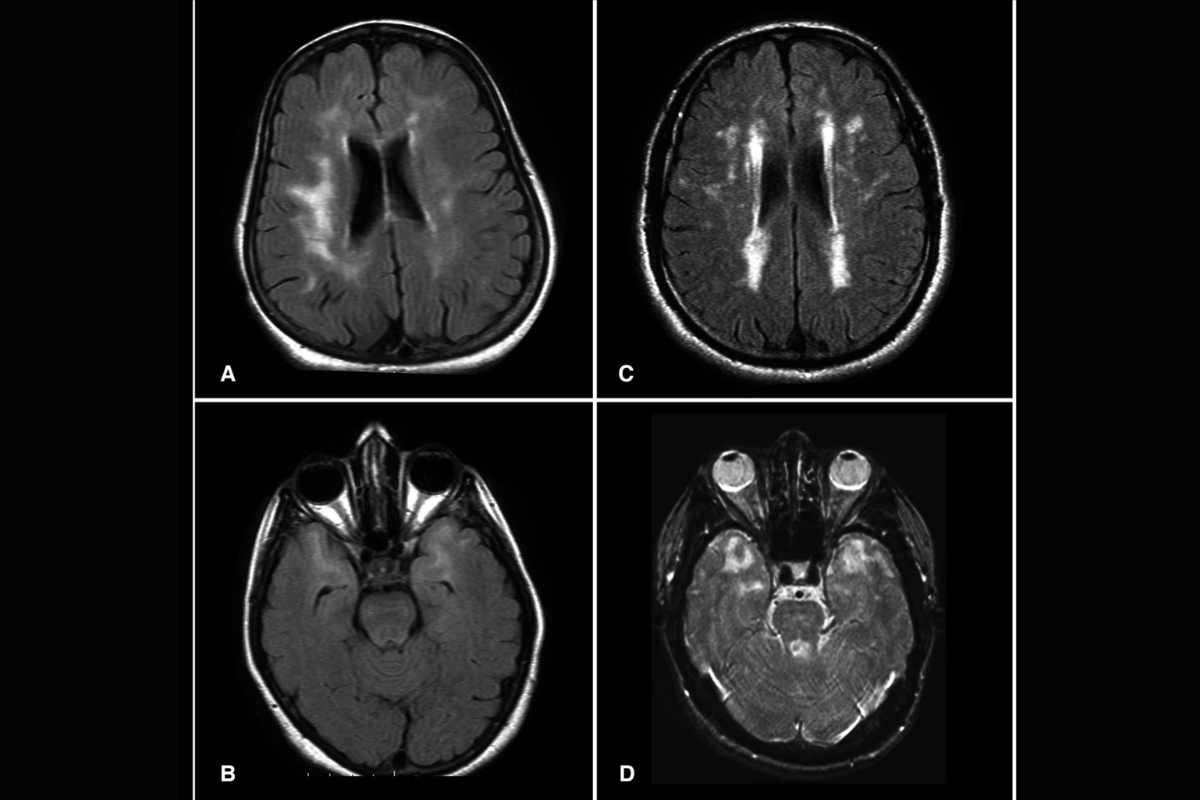
In a 2026 systematic review and meta‑analysis, pilots showed more white‑matter hyperintensities (WMH) — small bright spots on brain MRI — than non‑flying control groups. On average, pilots had about 3.57 more WMH lesions and 0.09 cm³ greater WMH volume. Separate studies of high‑performance military aircrew (such as U‑2 pilots) report a higher burden of these lesions associated with lower scores on reasoning, calculation, memory, and information‑processing accuracy. These are subtle deficits in highly selected, high‑performing aviators; the operational impact varies by task and individual. These crews experience extreme physiological stressors that are not typical of commercial aviation.
Instead of creating panic, let's focus on the nuances of this matter. The possible causes of WMH can be low-oxygen swelling in the brain or tiny air bubbles blocking the normal blood flow, but there is no solid evidence for it. In the general non-flying public, more white matter spots are linked to higher chances of stroke, memory loss, and early death. Do the same dangers apply to pilots and space travelers? The mystery remains unsolved.
Also, during analysis, you cannot mix two different types of people. Pilots, space crews, and career aviators are lifelong exposed to thin air and low pressure, unlike business travelers who travel a handful of times a year. Thus, the white matter change evidence and the physical brain scan proof are more significant for aviators and staff, rather than those who travel for fun. There can be temporary mental cloudiness for regular travelers, but not lasting physical harm like in the case of those who are flying fighter jets or traveling frequently.
Another important fact to remember is that the air pressure inside a normal passenger airplane cabin is much safer than the extremely thin air outside at cruising altitude. And the low-oxygen tests look at much higher, less protected mountain-level environments. So, it is proven true that memory recall and sensory awareness suffer during the high-mountain thin air. However, there is not enough understanding of whether it has an effect inside a standard pressurized passenger cabin.
Also read || The World's Most Carbon-Efficient Airlines Right Now
Why This Is More Than a Sore Excuse for Jet Lag

So, does it mean that ultra-long-haul travel damages every passenger's brain? The answer is no. The fog you feel after a transpacific flight has a real, multi-faceted biological basis. Your circadian rhythm is affected, your hippocampus gets under stress, and your brain runs on less oxygen than it used to. All these things add up to legit cognitive impairment.
If you are an occasional traveler, expect real cognitive slowdown after long-haul trips; plan around it rather than focusing on important decisions immediately on landing. When you give your circadian rhythm enough time for recovery, you perform better than you expect. For airline workers and pilots, the stakes are different.
Pilots and crews stay at high altitudes for around half a month, and that's why the pattern shows on their brain scans, which correlates with cognitive changes. It's still an active area of research for the aviation industry, as it can have a direct effect on safety implications. So, when you feel the turbulence after a long flight, it is nothing but a temporary version of the same problem, which aviation researchers are trying to solve.
This explains why aviation medicine is not merely for comforting pilots and crew members but a safety system for managing fatigue. There are rules around flight-time limitations, crew rotation, and mandatory rest periods, ensuring minimal circadian disruption and hypoxia. Science may not have fully mapped where "temporary fog" ends and "lasting change" begins. Still, the direction of the evidence is consistent enough that airlines, regulators, and researchers are treating it as a real concern.
In the end, we must understand that brain fog after a long-haul flight is not a character flaw or a failure to sleep properly on the plane. It's our circadian rhythm, hippocampus, and our oxygen-starved brain readjusting to the real change. Instead of rushing through the night, it takes a few days to fix everything.