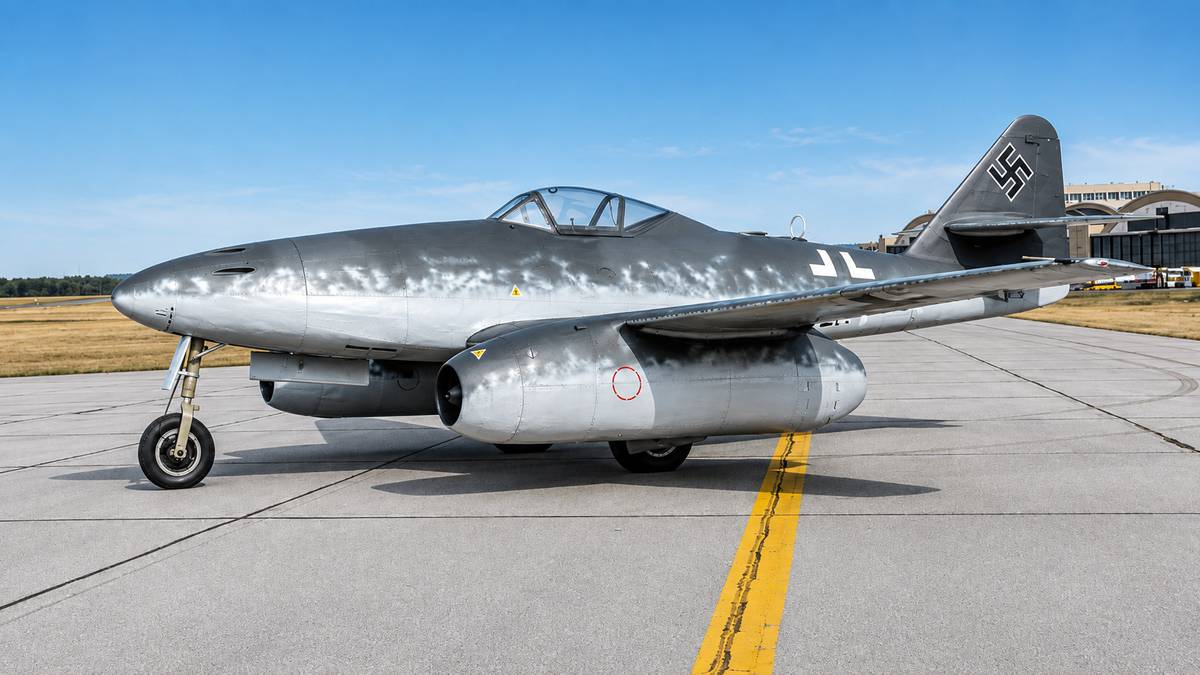
The invention of the jet fighter changed military aviation forever. Before jet aircraft were developed, fighter planes relied on piston engines and propellers, which performed well during the early years of World War II.
However, engineers recognized that these aircraft had reached the limits of their speed and performance, making it clear that a completely new type of engine would be needed. When people think about the first jet fighter, they usually think of the Messerschmitt Me 262. While it was the world's first operational jet fighter, the story of jet-powered flight began several years earlier.
The real beginning of the jet age can be traced to two engineers working independently in different countries, Hans von Ohain of Germany and Frank Whittle of Britain. Both played a crucial role in developing the turbojet engine, the invention that made modern jet aircraft possible.
Frank Whittle and Hans von Ohain Started the Jet Age
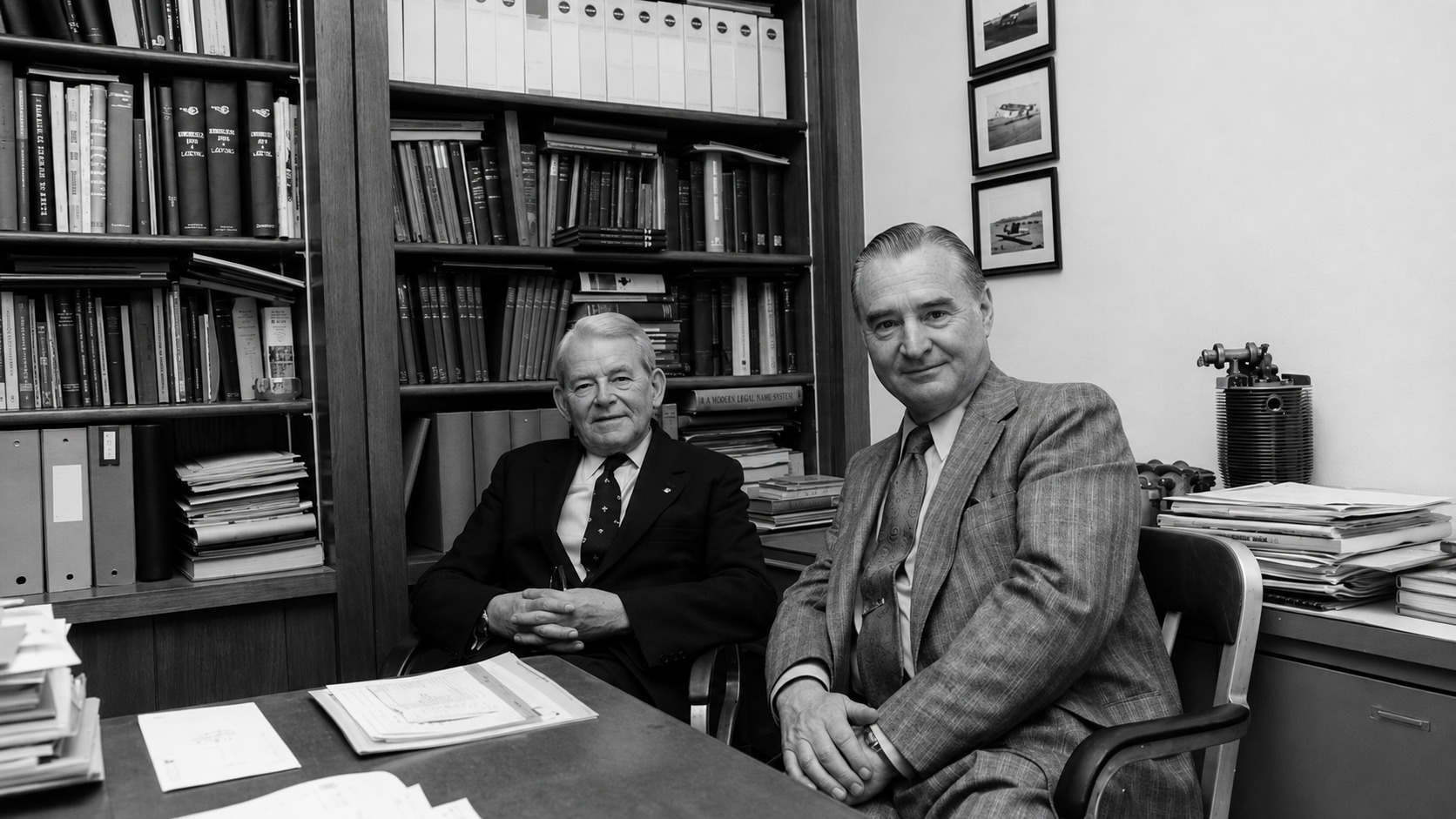
During the late 1920s and early 1930s, engineers searched for ways to make aircraft fly faster than propeller-driven planes. British engineer Frank Whittle designed a turbojet engine and received a patent for it in 1930. His design demonstrated that an aircraft could generate thrust by drawing in air, compressing it, mixing it with fuel, burning the mixture, and forcing hot gases out through the rear of the engine.
Despite the promise of his invention, Britain provided limited support during the early years, which slowed development considerably. As a result, Whittle's first jet-powered aircraft did not fly until 1941. At the same time, German engineer Hans von Ohain was independently developing his own turbojet engine.
Unlike Whittle, von Ohain received strong backing from the German aircraft manufacturer Heinkel, allowing him to transform his concept into a working aircraft much sooner. Although Whittle patented the turbojet engine first, Hans von Ohain became the first person to fly an aircraft powered by a jet engine.
Also Read: The Flying Banana: The Helicopter That Changed Military Aviation
The First Jet Aircraft Flew on August 27, 1939
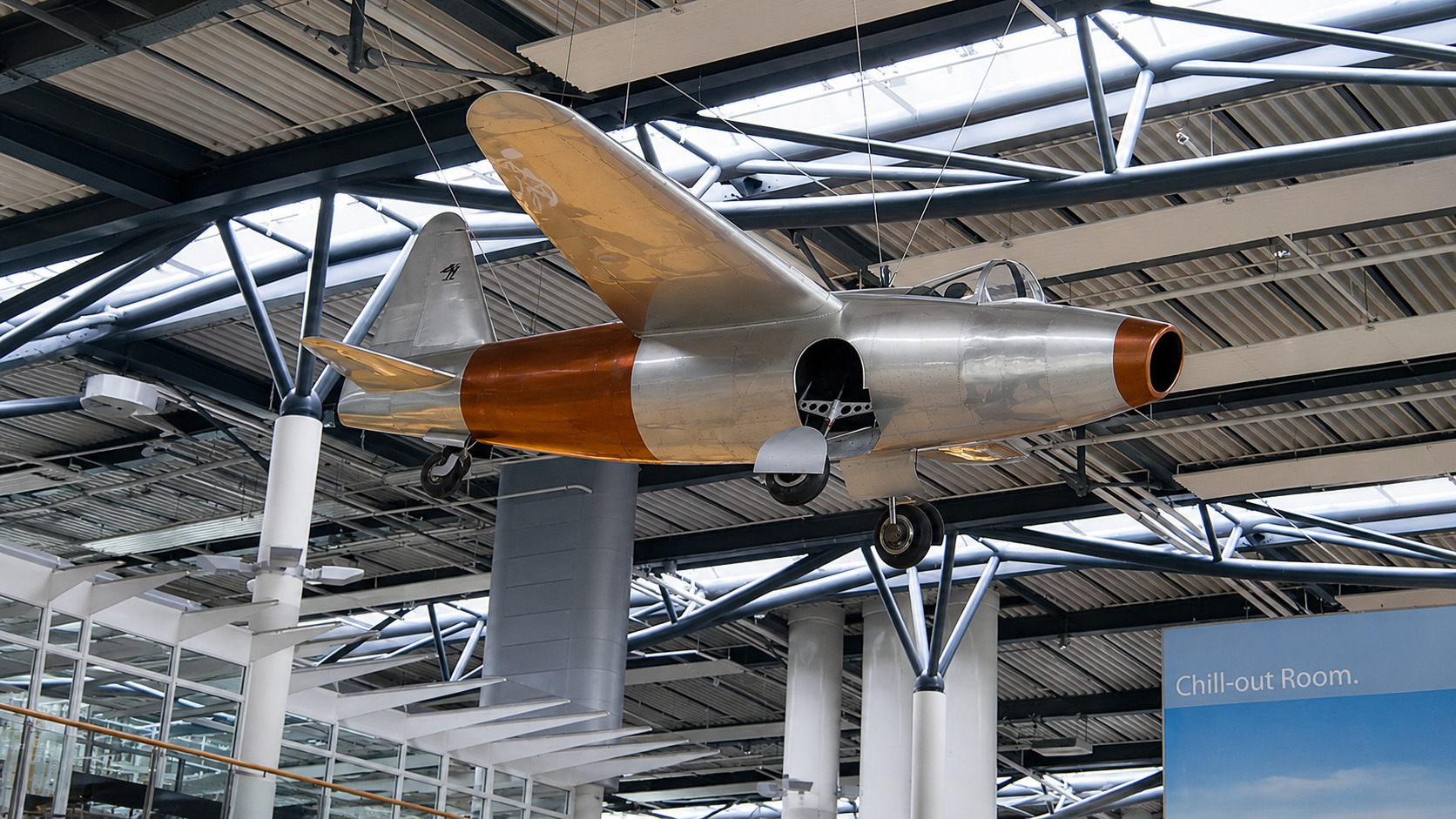
Working alongside the Heinkel aircraft company, Hans von Ohain developed the Heinkel He 178, the world's first aircraft powered entirely by a turbojet engine. The aircraft completed its historic maiden flight on August 27, 1939, only a few days before Germany invaded Poland on September 1, 1939, an event that marked the beginning of World War II.
Although the flight lasted only a few minutes, it successfully proved that jet-powered flight was practical. The Heinkel He 178 remained an experimental aircraft and never entered combat, but it demonstrated that jet engines could operate effectively in real aircraft. This achievement encouraged Germany to begin developing a jet fighter that could eventually be used during the war.
The Development of the Messerschmitt Me 262
Germany's next major step was the construction of a jet-powered fighter aircraft that became the Messerschmitt Me 262, widely recognized as the world's first operational jet fighter. Development of the project began in 1938, but progress was slower than expected because engineers encountered significant challenges in creating reliable turbojet engines.
During its early test flights, the aircraft even flew with a piston engine installed in its nose because the jet engines were not yet dependable enough for regular flight. The Me 262 finally completed a successful flight powered solely by its two Junkers Jumo 004 turbojet engines in July 1942.
These engines were designed by German engineer Anselm Franz. The fighter version, known as the Me 262 Schwalbe, meaning "Swallow," officially entered service with the Luftwaffe, Germany's air force, in 1944 and was considered one of the most advanced fighter aircraft of its time.
How Fast Could the Me 262 Fly?
The Me 262's greatest advantage was its remarkable speed. It had a top speed of approximately 870 kilometers per hour (540 miles per hour), making it around 193 kilometers per hour (120 miles per hour) faster than the famous North American P-51 Mustang, one of the best fighter aircraft operated by the Allied forces during World War II. This significant speed advantage made it extremely difficult for Allied fighter pilots to intercept the Me 262 once it reached full speed.
One German pilot, Hans Guido Mutke, later claimed that he may have briefly exceeded the speed of sound while flying a Me 262 during a steep dive in April 1945. However, aviation historians and experts continue to debate this claim, and no conclusive evidence has ever confirmed that the aircraft actually broke the sound barrier.
Weapons and Combat Power
The Me 262 was not only exceptionally fast but also heavily armed. It carried four 30 mm MK 108 cannons mounted in its nose, and these powerful weapons were capable of destroying large Allied bombers with only a few direct hits.
Germany also developed a bomber version of the aircraft called the Sturmvogel, meaning "Stormbird," which could carry bombs or rockets for attacks against ground targets. The combination of outstanding speed and powerful weaponry made the Me 262 one of the most dangerous and formidable aircraft used during World War II.
Also Read: Top 5 Fastest Military Aircraft In Aviation History
Problems That Limited the Me 262
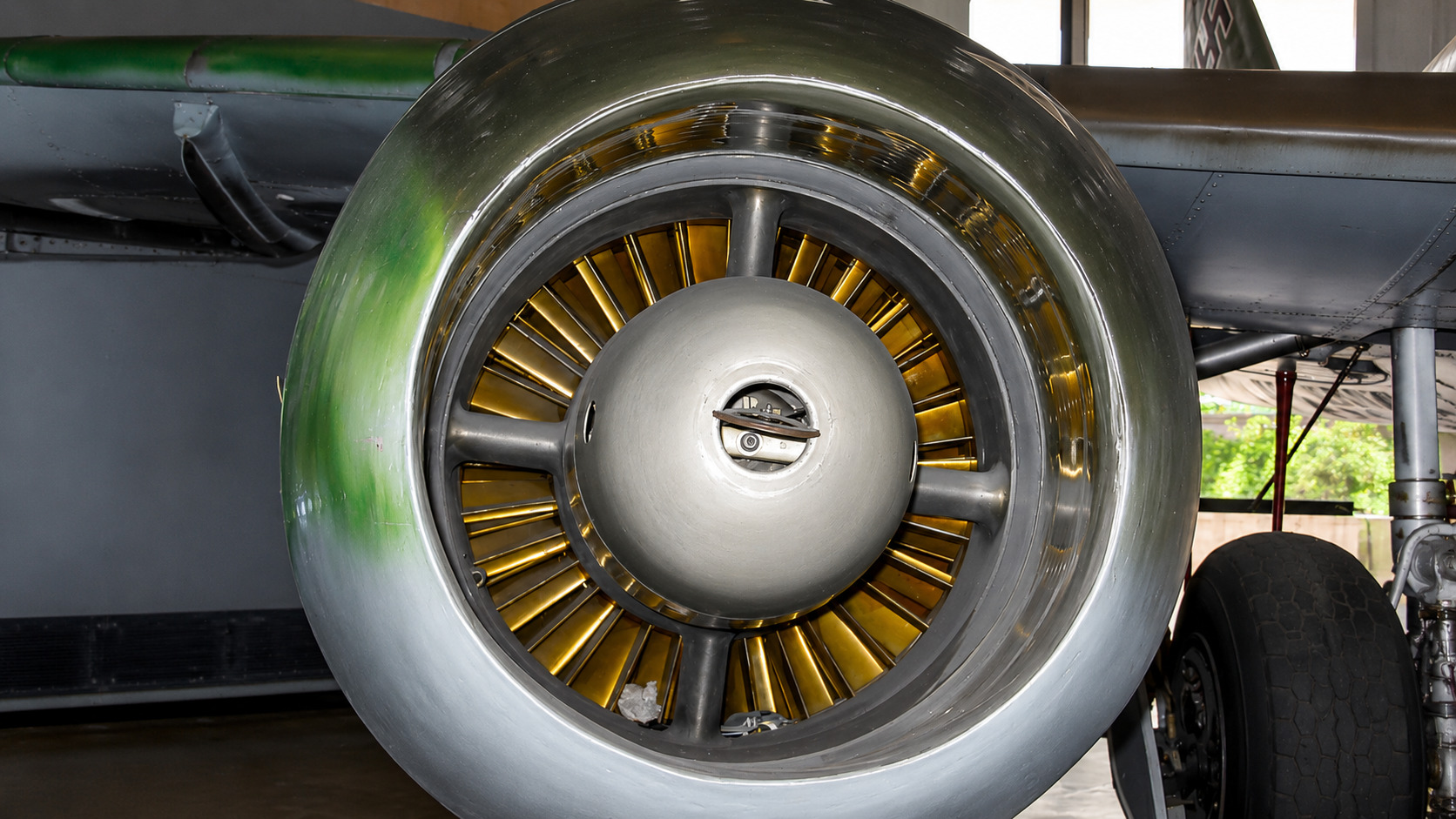
Despite its advanced design, the Me 262 suffered from several serious weaknesses. Its Junkers Jumo 004 turbojet engines consumed large amounts of fuel, limiting the aircraft's endurance and requiring frequent refueling. The engines also responded slowly and required time to reach full power after being started, making the aircraft especially vulnerable during takeoff and landing.
Allied pilots quickly recognized this weakness and often chose not to pursue the Me 262 in the air. Instead, they waited near German airfields and attacked the jets while they were taking off or landing. Another major problem was the short service life of the engines.
Because Germany faced severe wartime shortages of important metals such as nickel and cobalt, engineers were forced to use lower-quality materials that could not withstand extreme heat effectively. As a result, each engine generally lasted only about 25 hours of flight before requiring replacement. Frequent engine failures significantly reduced the aircraft's operational effectiveness.
Why the Me 262 Did Not Change the War
Many historians have questioned whether the Me 262 could have altered the outcome of World War II if it had entered service earlier and been produced in greater numbers. Although Germany built more than 1,400 Me 262 aircraft, fewer than 300 were actually used in combat. For many years, it was widely believed that the delay occurred because Adolf Hitler wanted the aircraft to serve primarily as a bomber rather than as a fighter.
However, historians now agree that the primary reason for the delay was not Hitler's decision but the enormous technical difficulty of developing reliable jet engines and producing enough of them during wartime. By the time the Me 262 entered combat in significant numbers, Germany was already losing the war, making it impossible for the aircraft to change the conflict's outcome.
The Me 262's Lasting Impact on Aviation
Although the Me 262 did not alter the outcome of World War II, it had a profound and lasting influence on the future of aviation. The aircraft introduced several design features that later became standard in jet fighters around the world, including swept wings that improved high-speed performance, jet engines mounted beneath the wings, and powerful guns concentrated in the nose to increase firing accuracy.
After Germany surrendered in 1945, several captured Me 262 aircraft were transported to the United States as part of Operation Lusty, short for LUftwaffe Secret TechnologY. American engineers carefully studied the aircraft, its engines, and its overall design, and the knowledge they gained played an important role in the development of America's first generation of jet fighters and many later military aircraft.