"AI will eat your jobs", says a random founder on LinkedIn, and workers go crazy. You can't ignore the quiet transformation happening inside workspaces, studios, hospitals or even newsrooms. Whether you want to write a quick first draft, summarize your research or create an impactful presentation, AI needs only a few seconds, and you'll get your work done.
Nobody can deny how AI adoption has led to significant job cuts and restructuring in big tech. Companies are preferring to spend more on machines than humans, and that can be disturbing for many. At the moment, organizations prefer paying you for your strategic mindset and human insight, rather than just for executing simple tasks. And that changes your job. You're no longer executing menial tasks, but managing risks by close observation.
Also read || Why Artificial Intelligence Frightens Its Founders
How AI Is Changing Job Descriptions Across Every Industry
For the vast majority of us, professional value was measured by production throughout modern history. Whether you are a lawyer drafting the contract, a designer making a mockup or a developer writing code, work is all about generating something from nothing. It was turning time, expertise and effort into deliverables.
However, the equation is changing rapidly. AI systems can now produce a working draft of almost anything within seconds. Be it a financial model, marketing brief, a legal clause or a software module. You can call those drafts imperfect, but they can be used and improved in no time. Right now, creation is no longer a bottleneck, but verification is.
Also read || Virtual Reality vs. Augmented Reality: What's the Difference?
Why Reviewing AI Output Is Now Your Superpower
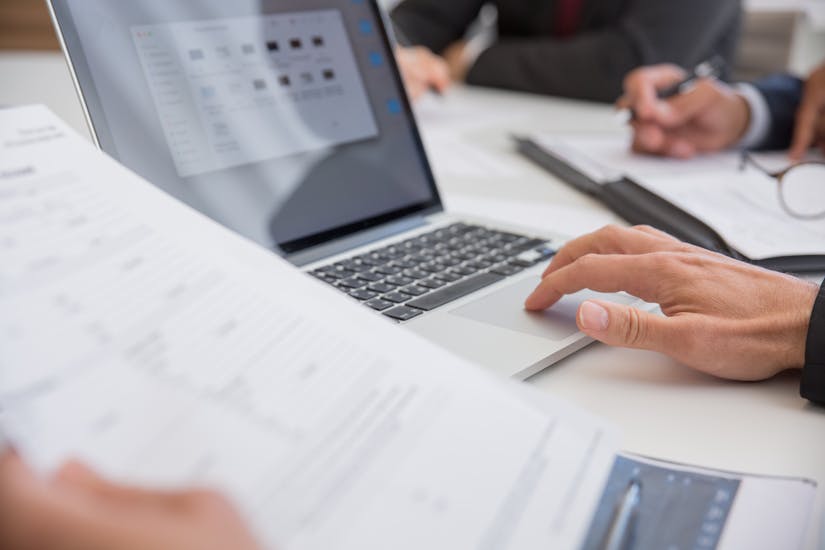
Welcome to the age of review. When you generate your first draft with AI, your job is no longer to execute and publish but to verify if your draft is right, safe and appropriate. And that is how you are managing risks. Consider how it looks in practice across different fields.
- Software development: Your AI can write entire functions, modules or even full applications. Thus, a developer's job shifts from writing efficient code to checking for security vulnerabilities and the relevance of the draft. Shipping without that review means shipping the risk along with the code.
- Legal and Compliance Work: You can draft policies and contracts in minutes. However, you must ensure that jurisdiction-specific nuances and the correct language are being used. One wrong clause that AI slips in unnoticed can expose your company to liability it never intended to take on.
- Healthcare: AI diagnostic tools can be used for identifying anomalies and diagnosing diseases. However, the final call still rests with the clinician, who must weigh AI findings against the full picture of a patient's history.
- Media: Whether you are a journalist or working in the content industry, you can research summaries and structured outlines. Once summarized, you can check whether facts are correct or false. A confident-sounding AI summary can still get things wrong, and your byline takes the hit.
- Finance: As a finance professional, your AI can run scenario analyses and generate investment recommendations. The analyst's job is to pressure-test the assumptions, identify the inputs the model didn't have access to, and decide where the model's confidence exceeds its actual reliability.
Also read || 7 AI Mistakes Small Businesses Are Making Right Now
Why Reviewing AI Is Your Hardest New Skill
Earlier, it was simple. You write something yourself, analyze content and make decisions. However, reviewing AI output is not that simple. When you review AI output, you get a finished product with no explanations behind it. The model neither flags assumptions nor does it tell you where it was guessing.
This creates a trap called the fluency illusion. AI output is well-structured and confident, and it feels like someone who knows what they are doing. As a result, we skim, nod and approve. And that's where the trouble begins. Errors get wrapped in polished writing, and that is harder to question than a rough human draft.
While reviewing, your question should be "Do I actually trust this?" not just "Does this look fine?" Your insight is your biggest filter, not just a production tool. AI fails, hallucinates, provides outdated data, and there are plenty of blind spots that only an expert could catch. It is up to you when to trust it or override it.
Also read || Ghost Jobs: The Truth Behind Always Hiring
Why Your Company Is One Bad AI Approval Away From a Problem
AI can do the tasks, but that doesn't mean the person using AI is less accountable. When there are errors and a human has passed it, they're responsible for any havoc that gets created. AI code can have vulnerabilities; a developer can ship it but can never blame it on the model. The model has no license, no liability and no consequences, but the person approving it does.
It means review can't be a separate department, but a critical part of the production process. Reviews can't be ignored from the workflows. While speed is equally important, rushing through reviews can lead to faster mistakes at scale. You can train people to use AI tools, but it is their duty to question everything that comes out of them. Faster AI adoption might not matter if there's no strong culture of judgement around it. Your value is no longer just in what you produce. It is in what you catch before it goes out.