
Aerodynamics is now one of the most important parts of modern car design. Today, almost every vehicle is shaped to move through the air as efficiently as possible, whether it is a small city car, a family sedan, or a high-performance supercar. However, this was not always the case. Before the 1970s, most car manufacturers focused more on styling, engine power, and practicality than on how air flowed around a vehicle. Although some early cars, such as the Tatra streamliners and the Chrysler Airflow, experimented with aerodynamic designs during the 1930s, these ideas were ahead of their time and did not become common across the industry.
Everything changed during the 1970s. Rising fuel prices, changing customer needs, and new developments in motorsport pushed car companies to take aerodynamics seriously. Engineers began studying airflow more closely and discovered that a vehicle's shape could have a major impact on fuel economy, performance, and stability. As a result, the following decades saw major changes in the way cars were designed, leading to smoother body shapes, better fuel efficiency, and new technologies that continue to influence vehicles today.
The 1970s: A Turning Point for Automotive Design
The 1970s were a difficult period for the automotive industry. The global oil crisis caused fuel prices to rise sharply, making fuel economy a top priority for both manufacturers and consumers. Large V8-powered muscle cars that had been extremely popular during the 1960s suddenly became expensive to own and operate. Buyers began looking for vehicles that could travel longer distances while using less fuel.
At the same time, engineers gained a better understanding of how a car's shape affected its efficiency. They realized that reducing air resistance, also known as drag, could improve fuel economy without reducing performance. This discovery encouraged manufacturers to invest heavily in aerodynamic research and wind tunnel testing. Car companies started designing vehicles that could cut through the air more smoothly, reducing fuel consumption and improving overall efficiency. This marked the beginning of a new era in automotive design and laid the foundation for many of the cars that followed.
Also Read: Do You Have to Be a Millionaire to Become an F1 Driver?
How Formula One Revolutionized Aerodynamics

Motorsport has often been a source of innovation for the automotive industry, and aerodynamics is one of the best examples. During the 1970s, Formula One teams began exploring new ways to use airflow to improve performance. While wings and spoilers had already become common during the previous decade, engineers soon realized that the underside of the car could also be used to create downforce. This idea became known as ground-effect aerodynamics.
Ground effect works by creating an area of low air pressure underneath the car. As air flows through specially designed tunnels under the vehicle, it creates a suction effect that pulls the car closer to the track surface. This gives the car more grip and allows it to corner at higher speeds. The Lotus 78 and Lotus 79 were the first Formula One cars to successfully use this technology. Their design gave them a huge advantage over competitors and quickly changed the sport.
The success of Lotus encouraged other teams to develop similar systems. One famous example was the Brabham BT46B, also known as the "fan car." Instead of relying only on tunnels beneath the car, it used a large fan to pull air out from underneath the vehicle, creating even more downforce. Although the car was quickly banned, it demonstrated the incredible potential of aerodynamic engineering. While many ground-effect systems were eventually restricted because of safety concerns, the technology remained influential and returned to Formula One in modern regulations introduced in 2022.
The Race for Lower Drag Coefficients

While racing teams focused on improving speed and grip, road car manufacturers concentrated on reducing drag. Drag is the force that pushes against a vehicle as it moves through the air. The lower the drag, the less energy is needed to maintain speed. This helps improve fuel economy, reduce wind noise, and sometimes even increase top speed.
During the 1980s, car manufacturers competed to create vehicles with lower drag coefficients, which measure how efficiently a vehicle moves through the air. One of the most important examples was the Audi 100 (C3), introduced in 1982. With a drag coefficient of just 0.30, it became one of the most aerodynamic sedans of its era. Audi achieved this by using smooth body panels, carefully shaped bumpers, and flush-mounted windows.
Another important vehicle was the Ford Sierra. Its rounded appearance looked very different from the sharp-edged cars of the 1970s, earning it the nickname "jelly mold." Although some people initially disliked its unusual styling, the Sierra demonstrated the advantages of a more aerodynamic design. Mercedes-Benz also pushed the boundaries with the W124, which featured a carefully shaped body and a streamlined underbody. By the end of the decade, smooth and aerodynamic designs had become the new standard, replacing the boxy shapes that had dominated earlier years.
Also Read: Five Cars from the 1980s That Defined Racing History
The Rise of the Kammback Design

One aerodynamic design that became increasingly popular during this period was the Kammback. Named after German aerodynamicist Wunibald Kamm, the design combines good airflow with practical vehicle proportions. Instead of tapering the rear of the vehicle to a long point, the roofline slopes toward the back and then ends suddenly with a flat rear section.
Although this shape may seem unusual, it allows air to leave the vehicle more cleanly, reducing turbulence and drag. The idea was first developed during the 1930s, but it became much more popular during the 1980s as manufacturers searched for new ways to improve efficiency. Vehicles such as the Honda CR-X and several Citroën models successfully used Kammback styling.
The design later became especially important for hybrid and electric vehicles. Cars such as the Toyota Prius, Honda Insight, and GM EV1 used Kammback-inspired rear sections to improve fuel economy and reduce energy consumption. Their distinctive shapes became closely associated with efficiency and environmental friendliness. Even today, many electric vehicles continue to use similar designs because of their aerodynamic benefits.
Active Aerodynamics: Cars That Adapt to the Air
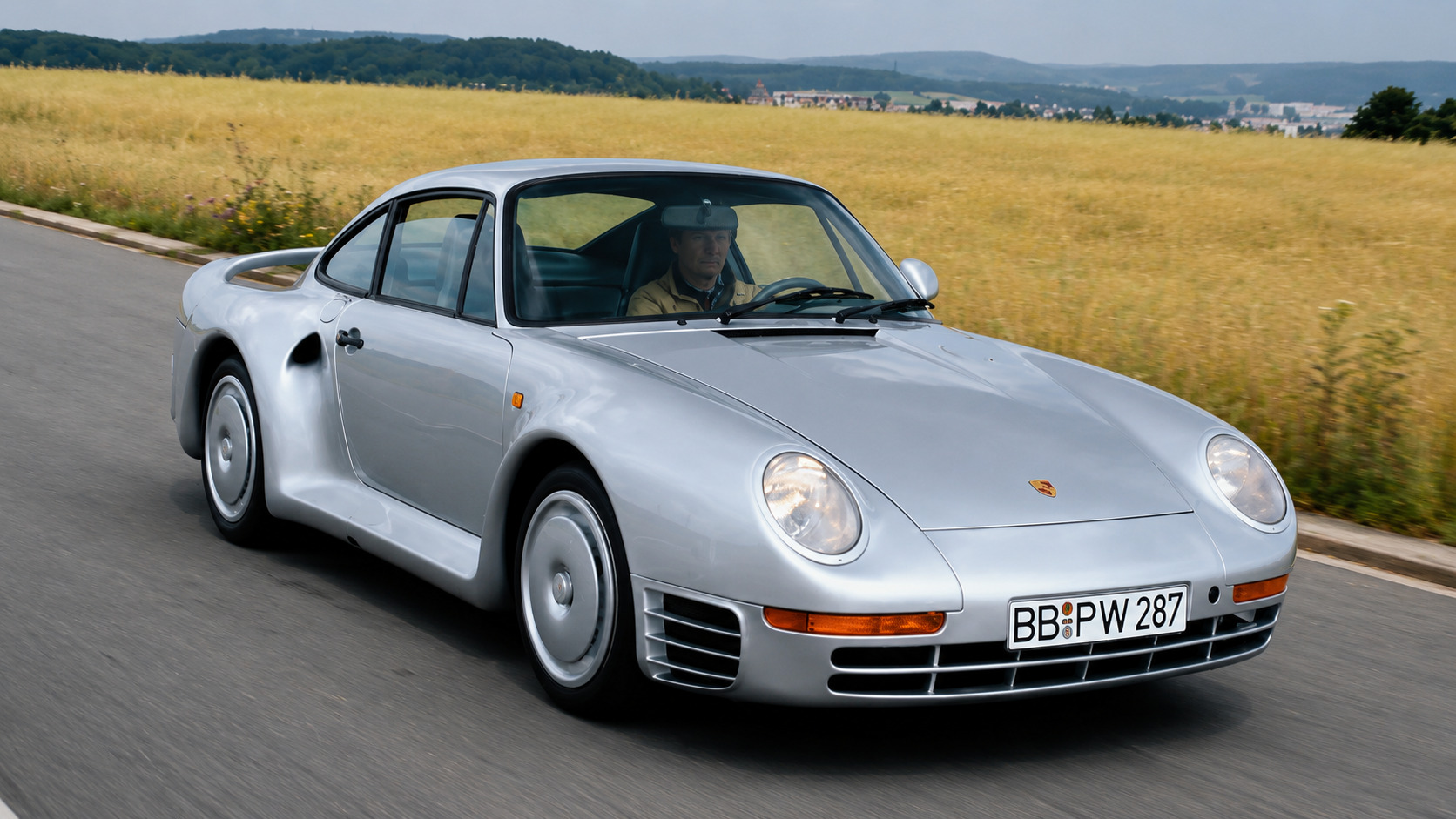
As engineers learned more about aerodynamics, they realized that a single fixed shape could not provide the best performance in every situation. A car may need low drag for efficiency at one moment and extra downforce for stability at another. This challenge led to the development of active aerodynamics.
Unlike traditional wings and spoilers, active aerodynamic systems can move automatically depending on speed and driving conditions. These systems adjust airflow around the vehicle to provide the best balance between performance, stability, and efficiency. One of the earliest examples was the Porsche 959. Introduced during the 1980s, the car featured an active rear spoiler and specially designed underbody panels that reduced drag while maintaining stability at high speeds.
Other manufacturers soon adopted similar technology. The Mitsubishi 3000GT VR-4 used electronically controlled aerodynamic parts that adjusted automatically while driving. The McLaren F1 also featured advanced aerodynamic solutions, including a flat underbody and a rear wing that deployed when additional downforce was required.
Perhaps the most famous example of active aerodynamics came with the Bugatti Veyron in 2005. The car's rear wing could change position depending on speed and braking conditions. At high speeds, it helped keep the car stable, while during hard braking, it acted as an air brake to slow the vehicle more effectively. Today, active aerodynamic systems can be found on many sports cars, luxury vehicles, electric cars, and hypercars.
Also Read: Who Invented the Car?
The Lasting Impact of Aerodynamics
The aerodynamic revolution that began during the 1970s continues to influence vehicle design today. Modern cars are developed using advanced computer simulations, wind tunnels, and testing methods that allow engineers to study airflow in great detail. Manufacturers now pay attention to every part of a vehicle that affects aerodynamics, including grilles, mirrors, wheels, underbody panels, and even door handles.
The rise of electric vehicles has made aerodynamics even more important because reducing drag directly improves driving range. What began as a response to rising fuel prices and racing innovation has become a key part of automotive engineering. Whether it is a compact family car, a hybrid vehicle, a Formula One racer, or a high-speed hypercar, aerodynamics plays a major role in determining its efficiency, performance, and overall design. More than fifty years after the aerodynamic revolution began, the ideas developed during the 1970s and 1980s continue to shape every new vehicle that reaches the road.