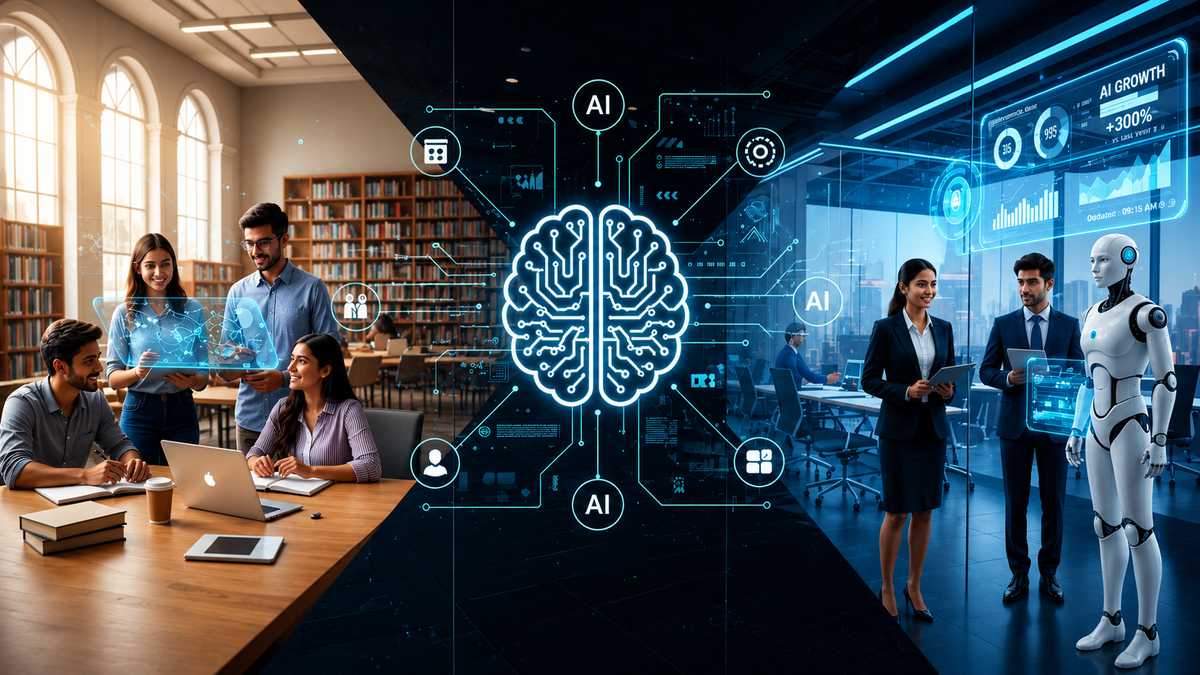
Artificial Intelligence (AI) is changing the workplace faster than ever before. Companies are using AI to improve productivity, reduce costs, automate routine tasks, and make better decisions. As AI becomes a regular part of daily work, employees are increasingly expected to know how to use AI tools effectively. In many organizations, AI skills are now considered important for hiring, performance reviews, and career advancement. However, success in the AI era requires more than simply knowing how to use AI. Professionals must combine human strengths with technology to create real value. Five qualities are becoming increasingly important in this new environment: Trust, Tenacity, Taste, Technicality, and Tokens. Together, these qualities help people build a strong partnership with AI and succeed in an increasingly technology-driven workplace.
Trust
In a world where AI can create reports, presentations, designs, and even software code, the value of a professional is no longer measured only by what they can produce. It is also measured by whether they can be trusted. Trust means being reliable, responsible, honest, and accountable for your actions and decisions. While AI can generate information and recommendations, it cannot take responsibility for the outcomes. Organizations still need people who can make sound decisions, work effectively with others, and ensure that AI-generated work is accurate and useful. Trust is also built through strong relationships with colleagues, managers, clients, and professional networks. As AI makes many technical tasks easier, trust will become one of the most important qualities that helps professionals stand out and create long-term value.
Also Read: Why AI At Work Often Creates More Work Instead Of Saving Time
Tenacity

AI can provide answers and solutions within seconds, but the first answer is not always the best one. This is why tenacity is such an important quality. Tenacity means having the determination to keep improving, refining, and challenging results until the best possible outcome is achieved. Many people may accept the first response generated by AI, but successful professionals understand that AI should be treated as a starting point rather than a final solution. They review the output, identify weaknesses, ask better questions, and continue improving the work. As AI tools become available to everyone, persistence and the willingness to go beyond the obvious answer will become a major factor that separates high performers from average performers.
Taste
As AI becomes capable of creating almost anything, the ability to decide what should be created becomes increasingly valuable. This ability is known as taste. Taste is a combination of experience, judgment, expertise, and intuition that helps people make good decisions. AI can generate many ideas, but it cannot always determine which ideas are most useful, practical, or valuable for a business. Professionals with strong taste know how to focus on opportunities that matter most and avoid wasting time on activities that produce little value. Taste develops through experience, learning, and exposure to real-world situations. It comes from understanding customers, solving problems, making decisions, and learning from both successes and failures. In an AI-driven world, the ability to choose the right direction is often more important than the ability to execute quickly.
Technicality
Technicality refers to the ability to understand and use AI tools effectively. While many people think AI skills are mainly about writing prompts, technicality involves much more than that. It includes understanding how different tools work, knowing which tools are best suited for specific tasks, creating efficient workflows, and using technology to improve productivity and business results. Professionals with strong technical skills can use AI as a force multiplier, helping them complete tasks faster and more effectively. They understand how to combine human judgment with technology to achieve better outcomes. Since AI technology continues to evolve rapidly, technicality also requires continuous learning and adaptation. Those who actively explore new tools and stay updated with technological developments will be better prepared for future opportunities.
Tokens
Every use of AI comes with a cost, and these costs are often measured in units known as tokens. As organizations invest more resources into AI, understanding the relationship between AI usage and business value is becoming increasingly important. Successful professionals recognize that using more AI does not automatically lead to better results. Instead, the focus should be on creating the greatest value while using resources efficiently. Understanding tokens means understanding the cost of AI usage and ensuring that the benefits outweigh the expenses. Professionals who can balance AI usage with business outcomes are more likely to demonstrate a positive return on investment for their organizations. While Technicality focuses on knowing how to use AI tools effectively, Tokens focus on understanding the economic side of AI and ensuring that technology is used in a responsible and productive manner.
Also Read: This Manual Transmission Pen Has a Working Clutch and Gear Shift
Takeaways For Individuals

Individuals who want to succeed in the AI era should focus on developing all five qualities. Building trust through strong relationships and reliable behavior can open new opportunities and strengthen professional networks. Demonstrating tenacity by continuously improving work can lead to better results and greater recognition. Developing taste through experience and learning can improve decision-making and help professionals focus on the most valuable opportunities. Strengthening technical skills can increase productivity and make it easier to work effectively with AI tools. At the same time, understanding tokens and the costs associated with AI usage can help individuals create greater value for their organizations. The combination of these five qualities will help professionals remain relevant, competitive, and successful as AI continues to transform the workplace.
Takeaways for Business Leaders
For business leaders, AI adoption is not simply about introducing new technology; it is about helping people adapt to a new way of working. Organizations should create an environment where Trust, Tenacity, Taste, Technicality, and Tokens are all valued and rewarded. Employees should be provided with the training, guidance, and tools needed to strengthen these capabilities and apply them effectively in their roles. Leaders should also encourage responsible AI usage and help employees understand how AI contributes to business goals and long-term success. Organizations that invest in both human strengths and AI capabilities will be better positioned to innovate, compete, and grow in an increasingly AI-driven world.