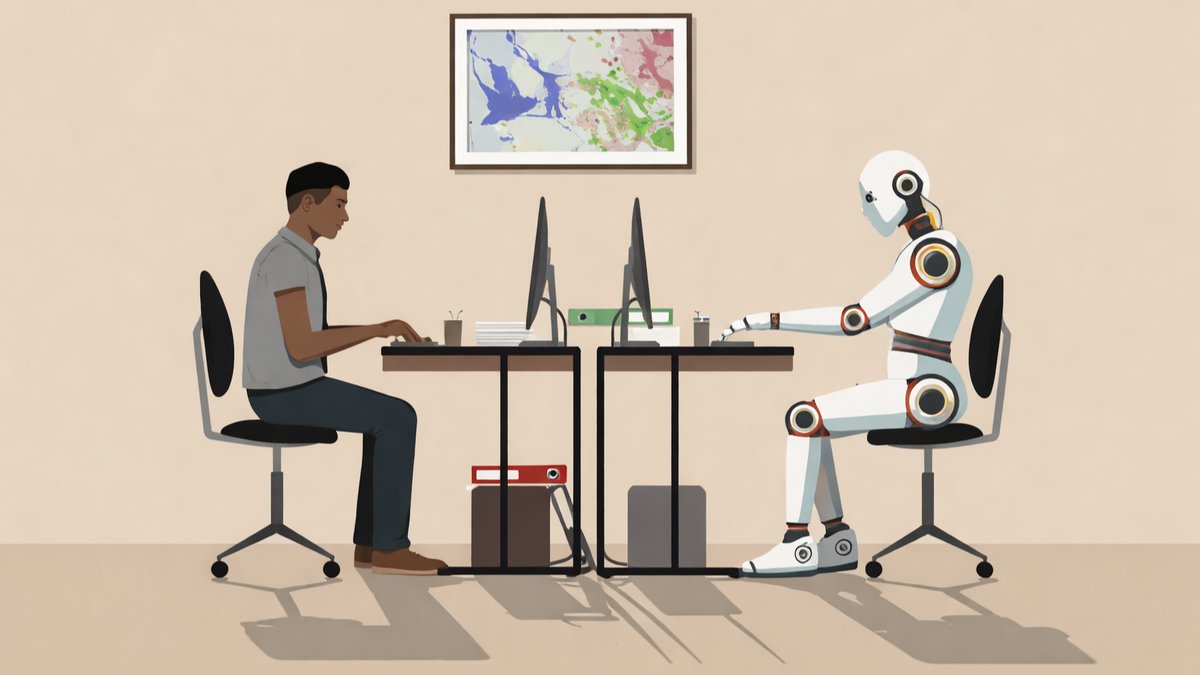
AI tools like ChatGPT are designed to help people work faster and more efficiently. However, in many cases, they create more work instead of reducing it. AI can sometimes provide incorrect or unclear responses, which means people need to carefully check and correct them.
Many employees feel frustrated because they spend a large part of their day reviewing drafts, fixing mistakes, and managing AI-generated content. Although AI is meant to save time, it often adds extra work, which can feel overwhelming.
Why AI At Work Feels Different From Using ChatGPT
Using AI at home is usually casual and low-risk, so if the answer is wrong, it may not matter much. However, at work, the situation is very different because accuracy is important. When AI provides incorrect information, it creates additional work since the output must be corrected before it can be used.
At work, AI is often used for writing emails, preparing reports, or supporting decision-making, and these tasks require reliable and accurate information. This means employees must slow down and carefully review everything that AI produces. Even when AI is connected to company systems or internal data and appears more relevant, it still cannot be fully trusted.
People must go through the content line by line, fix errors, and decide what they are comfortable sharing under their name. In the end, the responsibility always remains with the person using the AI.
Also Read: Instagram Expands Teen Accounts Inspired by 13+ Content Ratings
AI Sometimes Takes More Time Instead Of Saving It
When new technology is introduced, people often expect it to save time immediately. However, this is not always the case. In the beginning, users need time to learn how to use the tool effectively. With AI, this includes learning how to write better prompts to get useful results.
Although AI is improving, it still has limitations. Research shows that a significant portion of the time saved by AI is spent correcting its output. Studies based on employee and leadership feedback indicate that much of the expected time savings is lost because people must review, edit, and validate the results before they can be used.
Why Working With AI Feels Mentally Draining
Working with AI can be mentally exhausting because it requires constant decision-making. Every sentence generated by AI needs to be checked for accuracy and clarity, and every section must be reviewed to decide whether it should be changed or kept as it is.
This continuous process of checking and decision-making can become tiring over time. Research shows that people who spend more time reviewing AI output often experience higher levels of mental fatigue. This is because they are constantly analyzing, correcting, and deciding what information can be trusted. As a result, the work feels more demanding, even when AI is involved.
The Challenge of Trusting AI Output
One of the main challenges of using AI is knowing how much to trust it. People often react in two different ways. Some users trust the output too quickly because it sounds confident and well-written, while others question every detail, which leads to spending too much time reviewing the content.
Both approaches can create problems. Trusting AI too quickly can result in mistakes being overlooked, while checking everything too carefully can make simple tasks take longer than necessary. The key challenge is finding the right balance between speed and accuracy so that work can be completed efficiently without compromising quality.
Why It Is Hard To Tell When AI Is Actually Right
AI often presents information confidently and convincingly, even when it is not entirely correct. This makes it difficult for users to judge whether the output is accurate. Because of this, people cannot rely on the first result and must review it carefully.
Instead of simply checking grammar or wording, users need to focus on the meaning and correctness of the content. This requires more attention and time than expected. As a result, tasks that seem quick at first can take longer due to the need for deeper evaluation.
Also Read: How a Single Moth Changed the History of Computing
How To Use AI Without Letting It Take Over Your Time
One of the biggest challenges with AI is that the process can feel endless. After receiving a response, it is easy to keep making small improvements, which can lead to wasting time.
To avoid this, it is important to decide in advance how AI will be used. For example, it can be used for generating ideas, creating a draft, or improving existing content. Without this clarity, users may rely on AI for everything, which reduces efficiency.
People who use AI effectively treat it as a starting point rather than a final solution. They take the useful parts, make a few necessary changes, and then move on. Instead of trying to make the output perfect, they focus on making it good enough to complete the task. This approach helps save time and keeps the workflow efficient.
Reducing The Frustration People Feel With AI
AI is not capable of answering every question correctly. Sometimes, it will still provide an answer even when the question is unclear or impossible. At work, this becomes a problem because the output needs to be accurate and reliable.
To reduce frustration, it is important to understand the limitations of AI. Users should provide clear and specific instructions and recognize when AI may not have the correct answer. By focusing on what is useful and making necessary adjustments, people can use AI more effectively.
In the end, AI will continue to produce responses, but the amount of time spent reviewing and correcting them depends on the user. Managing how AI is used is the key to preventing it from becoming a source of extra work instead of a helpful tool.