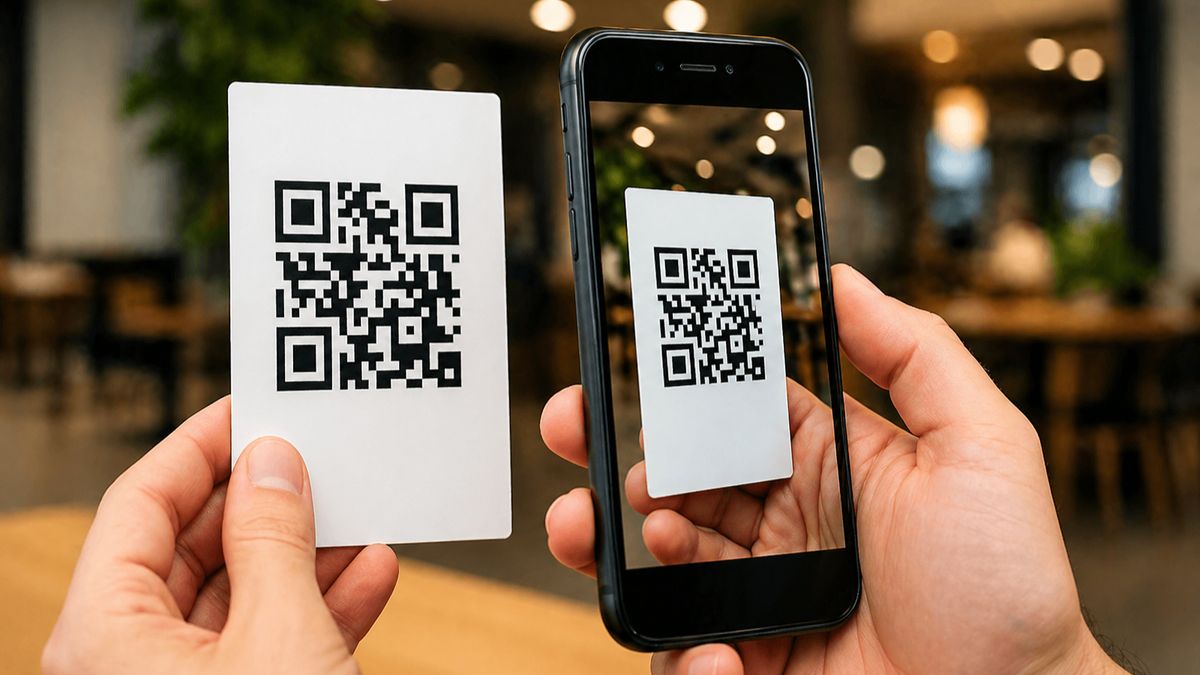
QR codes, or Quick Response Codes, may seem like a modern invention because they are used so widely today, but they have actually existed for decades. They were first introduced in Japan in 1994, and since then, they have spread all over the world. Today, QR codes can be seen almost everywhere, including restaurant menus, product packaging, factories, and transportation systems.
What many people do not know is that QR codes were inspired by an ancient board game called “Go.” The grid-based design of this game helped shape how QR codes look and work. Unlike traditional barcodes, which use simple vertical lines and can store only a small amount of data, QR codes use a square grid pattern. This allows them to store much more information in a compact space.
QR codes were originally developed by the Japanese automotive company Denso Wave. The company needed a faster and more efficient way to track parts on production lines. At that time, UPC barcodes were being used, but they were not very effective because they could only store limited data. This made inventory tracking slow and less accurate.
An engineer at Denso Wave, Masahiro Hara, led the development of QR codes. He used the grid pattern of the game “Go” as inspiration to design a system that could store a large amount of information and be scanned quickly. Over time, QR codes replaced traditional barcodes within the company’s factories because they were much more efficient.
Denso Wave later made QR code technology free for everyone to use, which helped it spread around the world. At first, the company made money by selling scanning machines. However, as technology improved, smartphones began to include built-in QR code scanners. Because of this, special scanning devices were no longer needed, and QR codes became even more popular and widely used.
Also Read: How the World’s Smallest QR Code Was Created in Austria
What Is “Go”? The Game Behind the Innovation
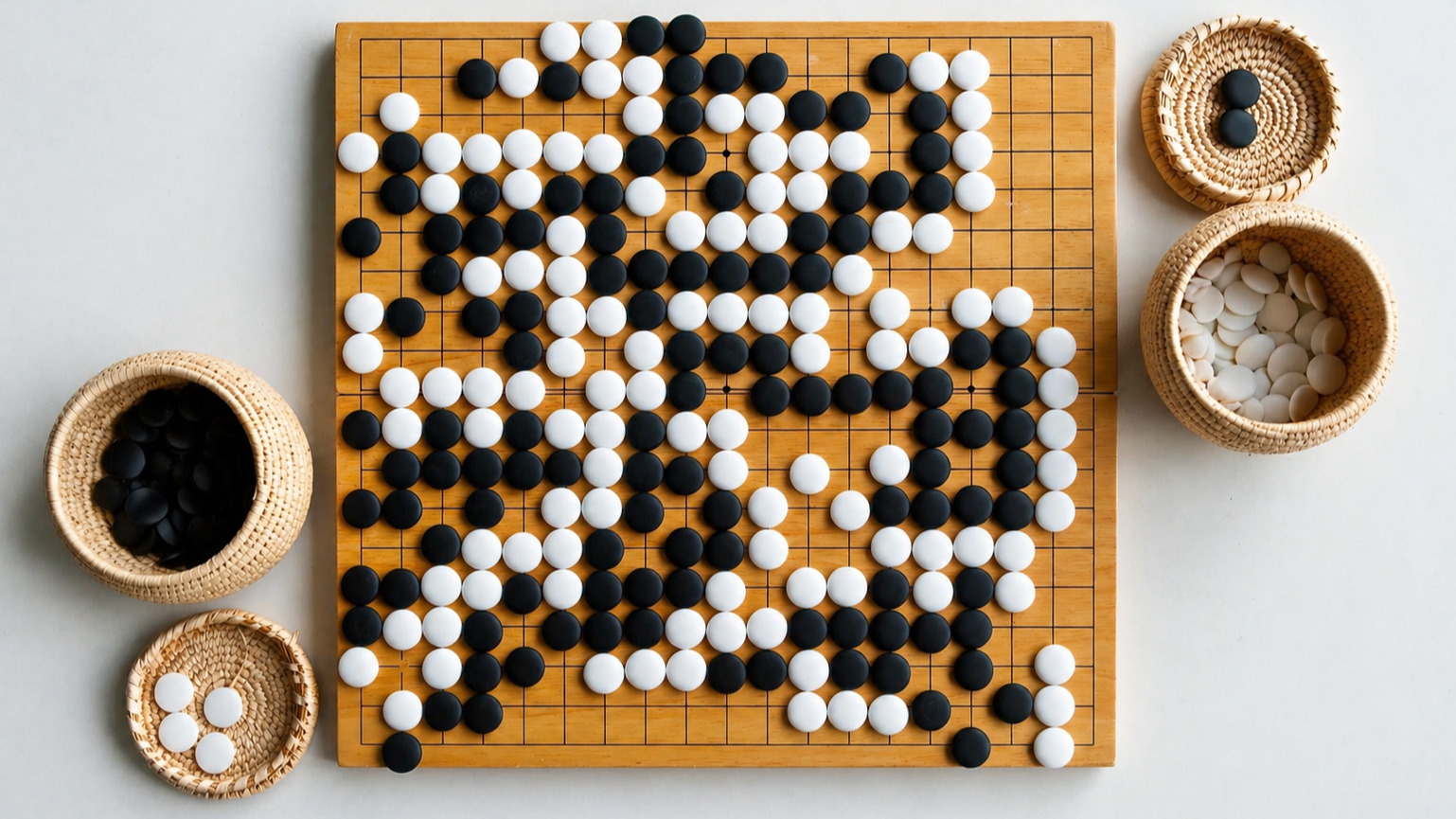
“Go” is one of the oldest board games in the world and is known for its deep strategy. It is often compared to games like chess or checkers. The earliest known reference to the game comes from China around 548 B.C. From there, it spread to Japan and Korea, where it became very popular and has remained so for centuries.
Although “Go” has been played in Asia for thousands of years, it was only introduced to Western countries in the 19th century. Even today, it is not as popular in the West as chess, which is more widely played.
The game is played on a 19-by-19 grid. Two players take turns placing black and white stones on the intersections of the lines. The goal of the game is to control as much space on the board as possible. Players capture their opponent’s stones by surrounding them. Once a group of stones is completely surrounded, it is removed from the board.
Even though the rules of “Go” are simple, the game itself is extremely complex, with countless possible moves and strategies. Because of this, it was very difficult for computers to master the game. It was not until 2016 that Google’s AlphaGo was able to defeat a human champion.
For comparison, in the game of chess, DeepBlue defeated world champion Garry Kasparov much earlier, in 1997. This shows how much more complex “Go” is compared to chess.
Also Read: Meta’s New Feature Lets Parents See What Their Teens Are Asking AI
Why QR Codes Are Better Than UPC Barcodes
One of the main reasons QR codes became so popular is that they can store much more data than traditional UPC barcodes. They are also easier to scan, especially in factories and fast-moving environments.
Barcodes can only store about 12 numbers using vertical lines. This makes them limited when more detailed information is needed. In contrast, QR codes are made up of small black and white squares called modules. These modules allow QR codes to hold much more information.
Each new version of a QR code increases the number of modules. For example, a version 1 QR code uses a 21-by-21 grid and can store up to 152 bits of data. A version 40 QR code can use up to 177 modules and store as much as 23,648 bits of data.
In terms of letters and numbers, QR codes can store far more than barcodes. While barcodes can only store 12 digits, a large QR code can store up to 4,296 alphanumeric characters. This makes QR codes much more flexible and useful.
Because of their high storage capacity, QR codes can hold links, images, and other types of information. When scanned, they can quickly open websites, digital menus, tickets, or other online content. This makes them very convenient for users.
Today, QR codes are widely used in many areas, including public transportation systems, such as train tickets in China. Businesses also use them to make things easier for customers, allowing people to access information instantly without typing long website addresses into their browsers.