
On April 23, 2026, Meta announced a new feature aimed at helping parents better understand how their teenagers interact with artificial intelligence across its platforms. The update is part of Meta’s broader push to improve teen safety and transparency on apps such as Facebook, Instagram, and Messenger. As AI becomes an increasingly common tool for teens, used for schoolwork, entertainment, and personal questions, Meta introduced this feature to give parents visibility into usage patterns while still maintaining user privacy.
Also Read: Should You Accept or Reject Cookies From a Website?
Overview of the Feature
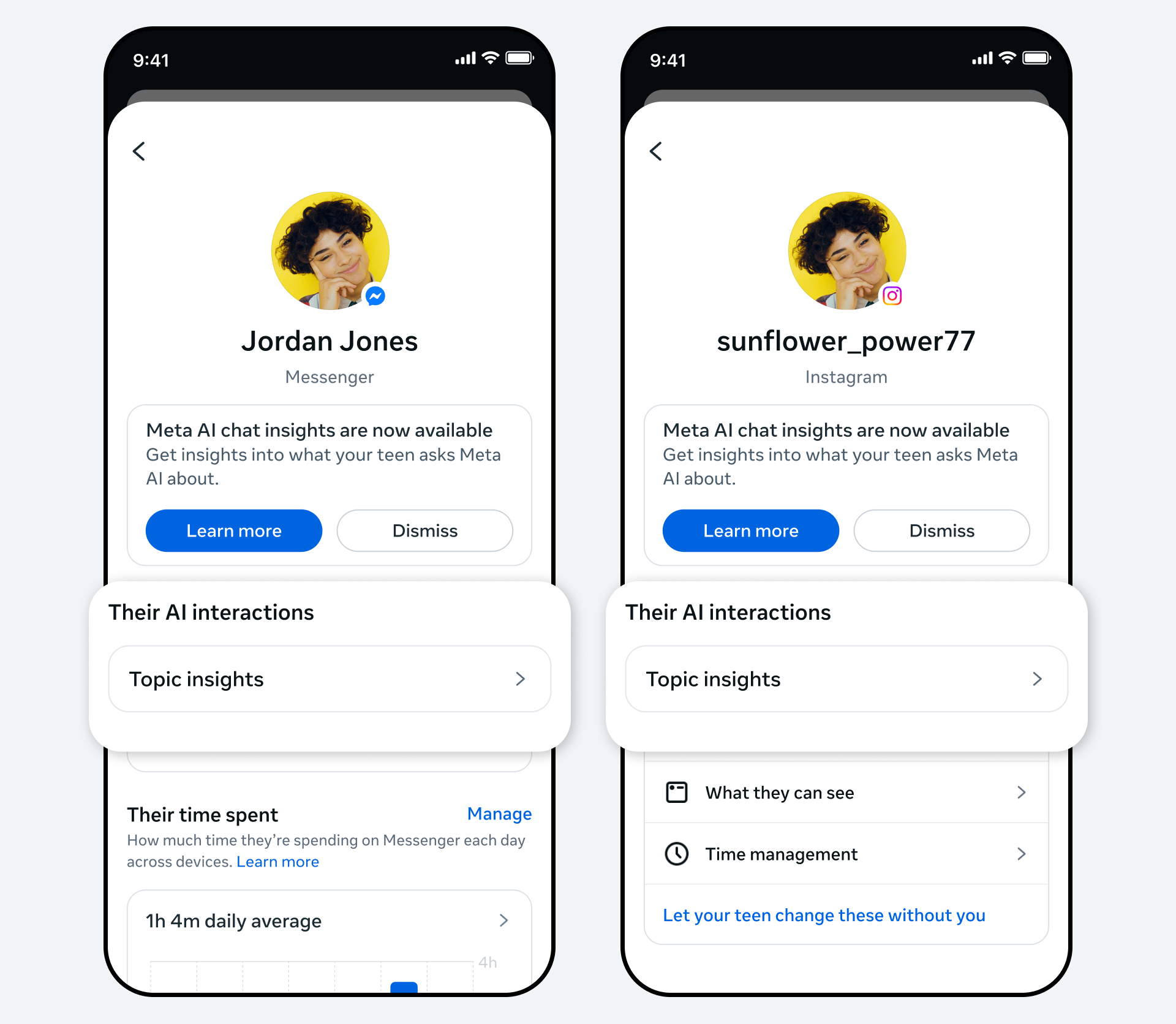
The feature introduces a new “Insights” tab within Meta’s parental supervision system for Teen Accounts, and through this tab, parents can see the topics their teens have asked Meta AI about over the past seven days. Instead of displaying full conversations or exact messages, the system presents general categories of discussion, which allows parents to understand overall trends without accessing private chats. This feature is only available when a parent is actively supervising a Teen Account, and it can be accessed both within Meta apps and through web-based supervision tools.
How the Insights Tab Works
Inside the Insights tab, parents can view a section that summarizes their teen’s AI interactions, and these interactions are automatically grouped into broad categories using Meta’s AI systems. The summaries reflect activity from the last seven days and are designed to give a clear but simplified overview of how teens are using AI. Parents can tap on each topic to explore more detailed subcategories, which helps provide additional context about the type of questions being asked without revealing the exact wording or full conversation.
Types of Topics Parents Can See
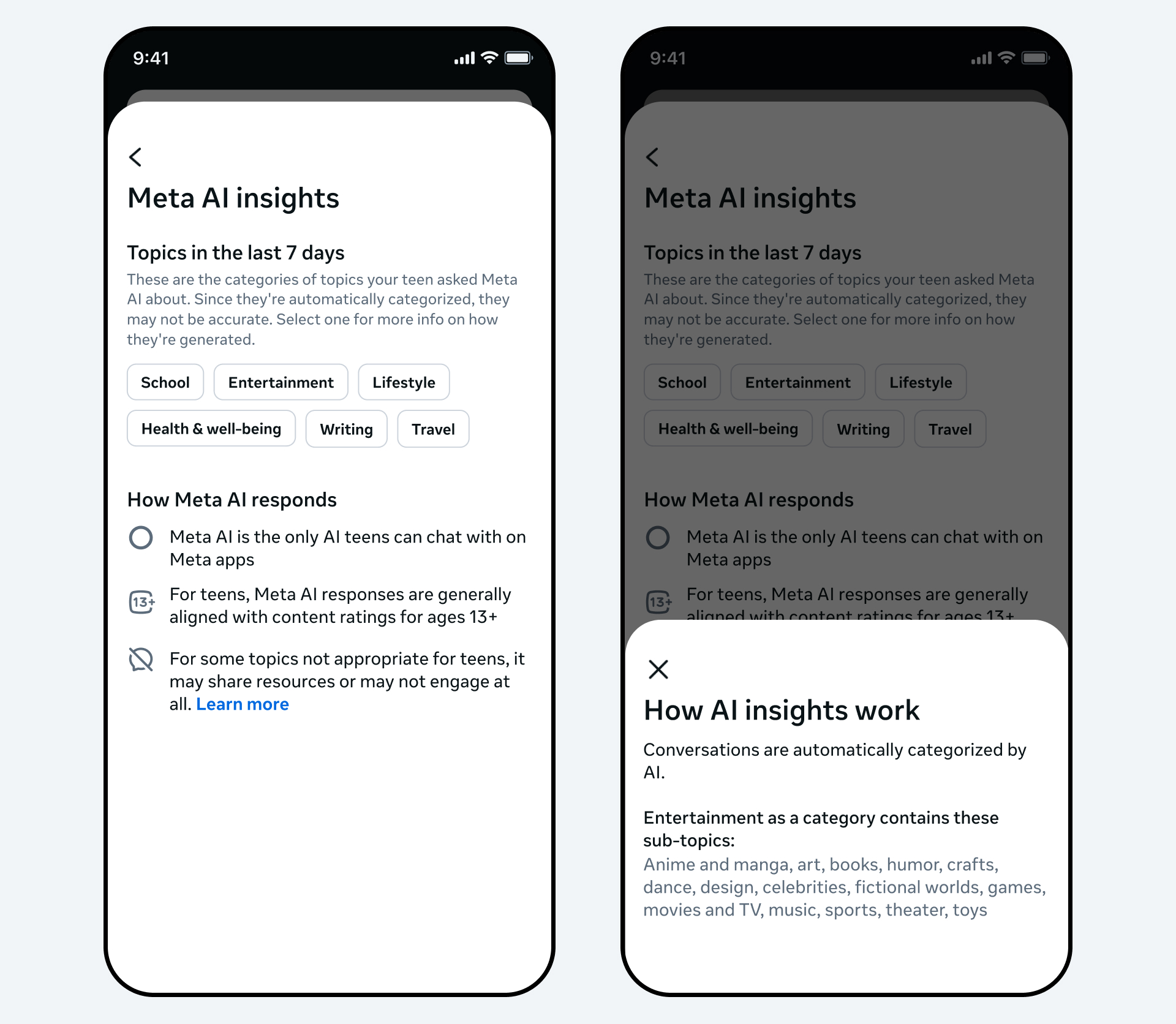
The Insights tab organizes conversations into several main categories, including school, entertainment, lifestyle, travel, writing, and health and wellbeing, and these categories represent the most common ways teens interact with Meta AI. Each category can be expanded into subcategories, so for example, lifestyle may include fashion, food, and holidays, while health and wellbeing may include fitness, physical health, and mental health. This layered system helps parents better understand the nature of their teen’s interests and concerns.
Privacy Protections
A key aspect of the feature is its emphasis on privacy, as parents cannot see full conversations, exact questions, or message transcripts, and instead, they only see summarized topics. This ensures that teens maintain a degree of independence and confidentiality while still allowing parents to stay informed. Even if Meta AI refuses to respond to a question due to safety policies, the general topic of that question may still appear in the Insights tab, which allows parents to be aware of sensitive areas their teen may be exploring.
Safety Measures and AI Restrictions
Meta has also built safety protections into its AI system for teens, and the company states that its AI responses are designed to follow standards similar to a “13+ (PG-13) content guideline,” meaning that it avoids generating inappropriate or harmful responses. If a teen asks about sensitive topics such as self-harm or suicide, Meta AI may refuse to provide direct answers and instead guide users toward appropriate resources and support services, ensuring that teens are directed to safer sources of help.
Alerts for Sensitive Issues
In addition to the Insights feature, Meta is developing proactive alerts for parents in cases where teens attempt to engage with serious topics such as suicide or self-harm, and these alerts are intended to help parents respond quickly and provide support if needed. This additional layer of monitoring is designed to complement the topic summaries by highlighting potentially urgent concerns.
Also Read: What’s the Difference Between American and British Keyboards?
Integration with Existing Supervision Tools
The new feature builds on Meta’s existing parental supervision system, which already allows parents to set screen time limits, schedule breaks, and monitor certain interactions, and the Insights tab adds another layer by focusing specifically on AI usage. It is integrated into Meta’s Family Center and works alongside other safety and monitoring tools available to parents.
Expert Guidance and Support
To support parents, Meta has partnered with the Cyberbullying Research Center to develop conversation starters, which are open-ended questions designed to help parents talk with their teens about AI use in a non-judgmental and supportive way. These resources are available through Meta’s Family Center and are also linked within the Insights tab. In addition, Meta has introduced an AI Wellbeing Expert Council, which includes specialists in youth safety, mental health, and responsible AI, and this council helps guide the development of safe and age-appropriate AI experiences.
Availability and Rollout
At launch, the feature is available in the United States, the United Kingdom, Australia, Canada, and Brazil, and Meta has stated that it plans to expand availability to more countries in the coming weeks. The feature works across Meta platforms, including Facebook, Instagram, and Messenger, as long as Teen Account supervision is enabled.
Purpose and Significance
Meta introduced this feature in response to growing concerns about teen safety in the age of artificial intelligence, as more teenagers are relying on AI tools for everyday activities, information, and advice. The company aims to provide parents with better awareness while respecting teen privacy, and the feature is designed to encourage healthy communication between parents and teens rather than intrusive monitoring.