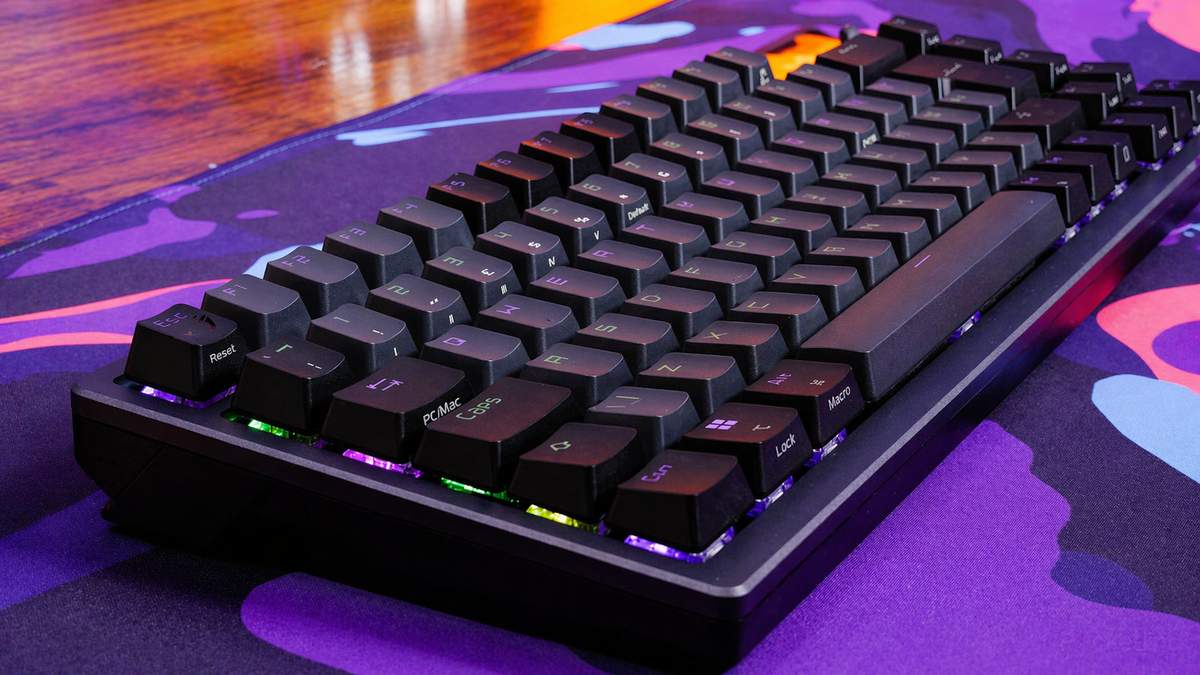
Keyboards in the United States (U.S.) and the United Kingdom (U.K.) may look the same at first, but they have several important differences. These differences come from history, language, and how people in each region use symbols and characters. There are many differences between the U.K. and the U.S., such as language, humor, and even what people call everyday items, and technology also shows some of these differences. Keyboards are a good example of this, because both countries use the QWERTY layout, but the design and arrangement of keys are not exactly the same. These small changes can affect how people type and use symbols.
Keyboard Types and Standards
The main reason for the difference is the type of keyboard standard used in each region. In the U.S. and Canada, keyboards usually follow the ANSI layout, which stands for American National Standards Institute. In the U.K. and most of Europe, keyboards follow the ISO layout, which stands for International Organization for Standardization. These standards decide how keys are shaped, where they are placed, and how many keys are included. Because of this, U.S. and U.K. keyboards look similar but are not exactly the same.
Also Read: How a Single Moth Changed the History of Computing
Main Differences Between U.S. and U.K. Keyboards
Enter Key Shape
The easiest way to tell the difference between the two keyboards is by looking at the Enter key. On a U.K. (ISO) keyboard, the Enter key is tall and shaped like an upside-down “L.” On a U.S. (ANSI) keyboard, the Enter key is wide and shaped like a horizontal rectangle. This is one of the most noticeable differences.
Left Shift Key
The left Shift key is also different on both keyboards. On a U.S. keyboard, the left Shift key is long. On a U.K. keyboard, the left Shift key is shorter. This is because the ISO layout includes an extra key between the Shift key and the “Z” key, which is used for additional symbols.
Number of Keys
Because of the extra key on the ISO layout, the total number of keys is slightly different. A full-size U.K. keyboard usually has 105 keys, while a full-size U.S. keyboard usually has 104 keys. However, this can vary depending on the keyboard size, such as laptops or compact keyboards.
Symbol Differences and Key Placement
There are several important differences in symbols and where they are placed on the keyboard. On a U.K. keyboard, the “£” symbol is on the “3” key, while on a U.S. keyboard, the “$” symbol is on the “4” key. U.K. keyboards may also include the “€” symbol, which is usually typed using the AltGr key with the “4” key. There are also differences in symbol arrangement. On a U.S. keyboard, the “@” symbol is on the “2” key, while on a U.K. keyboard, it is placed on a key near the Enter key. On a U.K. keyboard, the quotation mark is on the “2” key, while on a U.S. keyboard, it shares a key with the apostrophe. Other symbols, such as the hash (#), backslash (\), and tilde (~), are also placed differently between the two layouts.
AltGr Key
Another important difference is the presence of the AltGr key, which stands for Alternative Graphic key. U.K. keyboards usually include the AltGr key, and it is used to type extra special characters such as the euro symbol and other symbols. U.S. keyboards usually do not include a dedicated AltGr key.
Why Are U.S. and U.K. Keyboards Different?
History of Typewriters
The keyboard layout used today comes from typewriters, which were invented in the United States in the 19th century. Because of this, the original layout was designed mainly for American English, and this early design influenced modern keyboards.
Also Read: Should You Accept or Reject Cookies From a Website?
Changes in Different Regions
As typewriters spread to other countries, different regions changed the layout to fit their own needs. In the U.K. and Europe, people needed keys for their own currency symbols and additional characters, so extra keys were added, and some key positions were changed.
Language and Usage Needs
Languages used across Europe often require more special characters than American English. Because of this, ISO keyboards include extra keys and features like the AltGr key to make typing easier. In contrast, U.S. keyboards focus more on commonly used English characters and symbols like the dollar sign.
Standardization
Over time, these differences became official standards. ANSI became the standard in the U.S., while ISO became the standard in the U.K. and Europe. These standards are still followed in modern computer keyboards, which is why the differences still exist today.