Have you ever caught yourself taking a photo of a restaurant dish before even picking up your fork?
You arrange the napkin, tilt your phone to catch the light, snap the shot, and only then take your first bite. And somehow, that beautifully plated salad with a streak of beetroot puree and scattered edible flower petals taste noticeably fresher, crisper, and more vibrant than the identical ingredients tossed haphazardly into a plastic bowl at home.
It becomes easy to dismiss this as mere vanity or thinking that the social media era is running wild. But food scientists have discovered that something far deeper is napping in your brain. Beautiful food does not just look appealing; it genuinely tastes better.
Let's enter the fascinating world of the Kandinsky effect, the neurological reason your eyes eat long before your mouth ever gets a chance.
Does Food Presentation Affect Taste?

For centuries together, people believed a very simple rule about food: how it tastes depends only on biology and chemistry.
The traditional view is that your tongue acts like a simple sensory. Its only job is to detect five basic tastes, like sweet, salty, sour, bitter, and umami. Then, your nose adds the sense of smell to the mix, and your brain just adds these pieces together to create flavor.
If this old rule were completely true, the look of your food would not matter at all. For instance, a homemade birthday cake should taste exactly the same whether it is beautifully frosted with clean layers or accidentally dropped on the floor and smashed into a messy pile of crumbs. After all, the actual ingredients, the sugar levels, and the baking chemistry do not change just because the shape does.
This is why many people think worrying about how food looks is a waste of time. We see people spending hours decorating baked goods or arranging fruit bowls, and we assume it is just for show. We tell ourselves that food is just chemistry, so looks shouldn't matter. But as it turns out, that assumption is completely wrong.
Also Read: Why Do Burnt Desserts Taste So Good? The Science Of Caramelization
Why Does Food Plating Matter?
If flavor is purely chemical, why does our sensory reality shatter the moment visual cues are altered?
You can understand this concept by considering the example of wine experts. In several famous sensory studies, researchers served seasoned sommeliers a white wine dyed red with an odorless, flavorless food dye. When asked to describe the flavor profile, these trained professionals began tasting tannins, dark berries, and blackcurrants, flavors physically absent from the glass. Their brains overrode their chemical receptors simply because the liquid looked like a Cabernet Sauvignon.
The same dissonance happens on our dinner plates every single day. For instance, if you serve strawberry mousse on a stark white plate, people rate it as significantly sweeter and more intense than when the exact same batch is served on a black plate.
Likewise, when you pour tomato soup into a chipped, utilitarian bowl, diners will find it blander and less comforting than if it is served in a warm, rustic tureen.
But wait, this creates a puzzling scientific question, “If our taste buds are receiving the exact same chemical molecules, why does the subjective experience of flavor vary so dramatically based on sight?”
For a long time, food scientists chalked this up to generic “placebo effect” or learned cultural bias. But the answer to this question was finally found in 2014, when an experimental psychologist named Charles Spence at the University of Oxford, decided to test the limits of this phenomenon using fine art.
What Is The Kandinsky Effect?
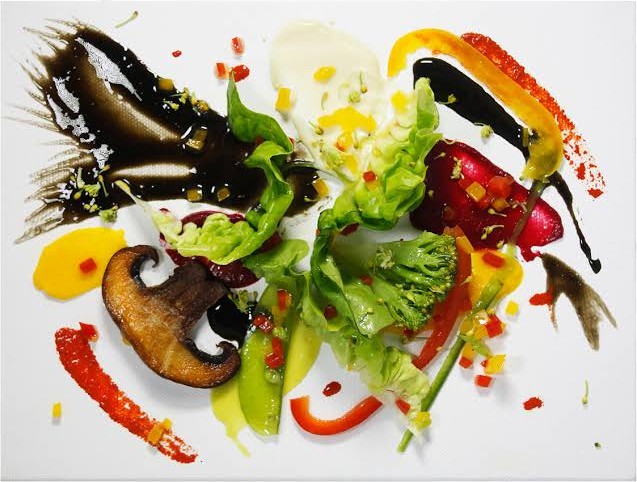
In 2014, Professor Charles Michel and his team wanted to test how looks affect our taste buds. To do this, they designed a famous experiment that gave us the term “The Kandinsky effect.”
They invited dozens of people to dinner and served them with identical salads. Every salad used the exact same ingredients, including fresh mushrooms, broccoli, peppers, greens, and dressing. The diners did not know that the food on every plate was chemically identical. The only real difference was how the chef arranged the food on the plate.
The researchers set up the plates in three different ways. The first was a basic tossed salad, where everything was mixed casually in a bowl. The second was an orderly salad, where the ingredients were lined up in neat, clean rows. The third was an artistic salad, where the chef carefully arranged the ingredients to look like an abstract painting by the famous artist Wassily Kandinsky.
The results of the experiment shocked the researchers. Even though the ingredients were exactly the same, people rated the artistic, painting-style salad as 18% tastier than the others. They also said it tasted much fresher. Most surprising of all, the diners were willing to pay up to three times more money for the beautiful salad compared to the plain, tossed version.
How Crossmodal Perception Rewires Your Palate
You might wonder, how does visual layout create such a dramatic shift in flavor perception? The answer to this lies in a neurological process, known as “crossmodal perception,” also known as multisensory integration.
Your brain does not process sensory inputs in isolated silos. Visual information travels along neural pathways that directly interface with regions responsible for taste, smell, and emotional memory.
When your eyes start to register vibrant colors, geometrical patterns, and harmonized visual balance, your brain immediately forms an anticipatory flavor model.
The first model is evolutionary encoding. Throughout human evolution, visual evaluation was our primary survival tool for foraging. Bright, saturated colors meant ripe, nutrient-dense fruit. Dull, muddy, or unappealing patterns signalled rot, mold, or toxicity. Your brain is smartly hardwired to associate visual harmony with nutritional reward.
The second model is effort heuristic. When a dish looks like a masterpiece, our subconscious assumes high levels of care, skill, and premium ingredients went into its preparation. This cognitive expectation primes the release of saliva and digestive enzymes before you even lift your fork.
The third model is sensory priming. The visual balance of a plate primes your taste buds to seek out complexity, acidity, and subtle notes that you would otherwise ignore in a messy, homogenous pile of food.
When sensory expectation is high, your brain actively interprets ambiguous flavor inputs more favourably. You do not just think the food is better; your neural receptors register a richer, more nuanced flavor experience.
How To Plate Food Like A Chef
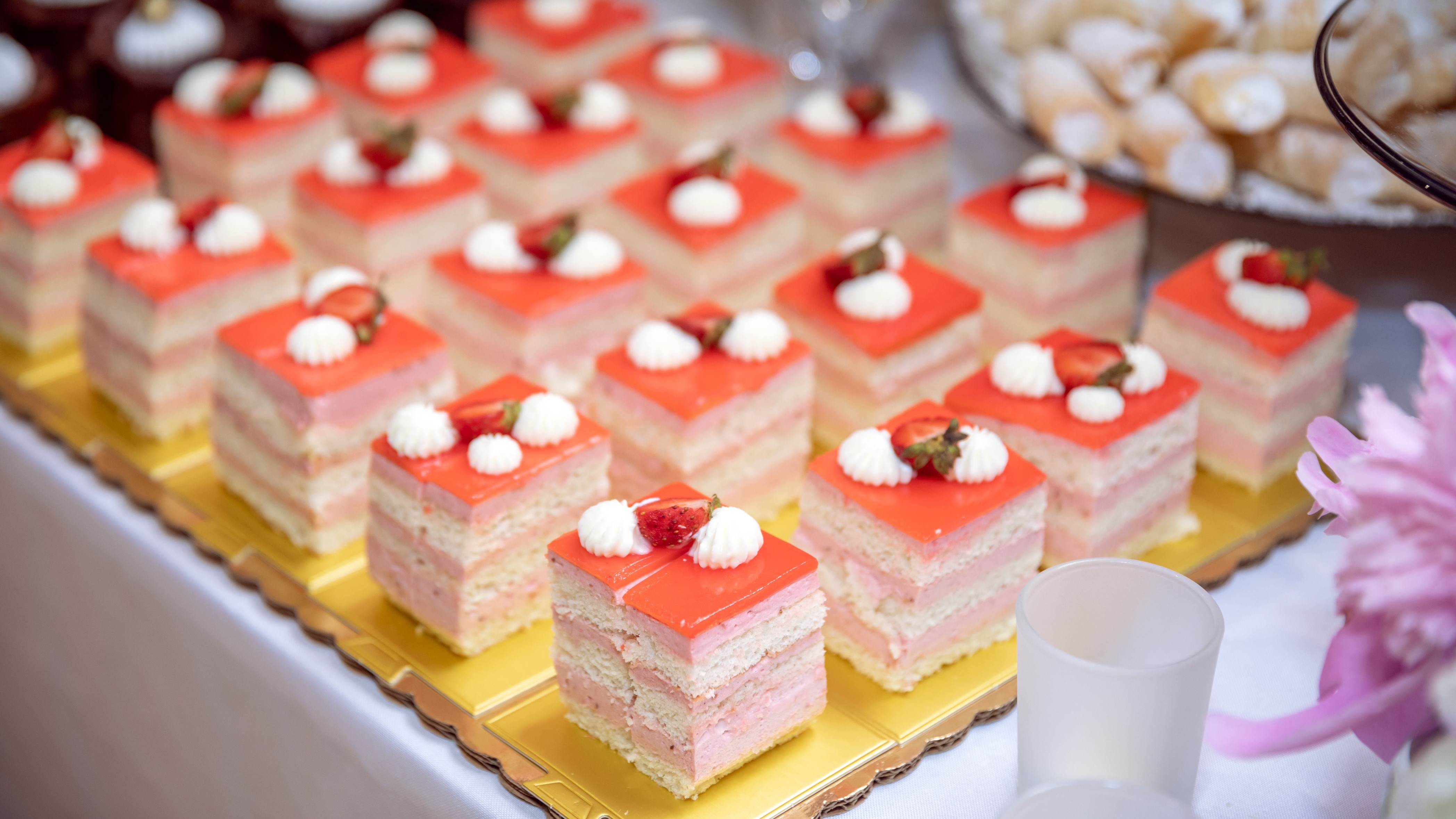
The Kandinsky effect fundamentally changes how we interact with food. Plating is not frivolous vanity; it is an active ingredient in the culinary experience.
By understanding that our visual cortex is the first stop in tasting, we can absolutely taste and use simple sensory design principles to make everyday meals healthier, more satisfying, and far more enjoyable.
To eat with your palette, you should focus on the color spectrum of your food. A meal that is all one color often tastes boring and one-dimensional to your brain. You can fix this by adding bright, contrasting colors to trigger positive survival instincts built into our biology. For instance, adding a popular green parsley, a swirl of bright yellow olive oil, or deep red roasted peppers instantly prepares your brain to expect a rich, complex flavor.
You can also improve your meals by using empty space and simple shapes on your plate. Instead of piling all your food into one big, messy mound right in the middle, try leaving clean, empty space around the edges. This will create a sharp visual contrast that makes different textures and ingredients stand out. You can even arrange your food diagonally or place crunchy garnishes next to smooth purees to mimic the pleasing rhythm of an abstract painting.
This science can easily help you transform your everyday health habits. If you want to cut back on sugar, salt, or heavy sauces, you can simply focus more on how your plate looks. Research shows that people feel just as full and happy with smaller portions when the food is arranged beautifully. For instance, serving a small slice of cake on a clean white plate with a neat drizzle of chocolate gives you far more sensory satisfaction than eating a massive double portion straight out of the box.
Finally, beautiful food encourages mindful engagement with your meals. When a dish looks like a piece of art, we naturally slow down to look at it, admire the textures, and pay closer attention to what you are consuming. This simple act of slowing down improves your body’s digestion and helps your brain register that you are full. It changes a quick, routine meal into a truly enjoyable experience.
Also Read: Gastro Nostalgia: Is Comfort Food Healing You Or Trapping You?
The Final Bite
Cooking is the only art form that engages all five human senses simultaneously. But as the Kandinsky effect proves, sight holds the master key to the entire experience.
Therefore, the next time you spend an extra minute garnishing your dinner, drizzling sauce with intention, or choosing a nice plate for a simple meal, do not feel guilty or self-conscious. You are not just being fancy, you are biologically seasoning your dish before taking the very first bite.