Imagine staring at a webpage, watching a tiny digital countdown timer tick away the seconds. Your heart rate quickens. Below the timer, a bold red alert flashes: “Only 3 items left in stock.” You don't actually need this item, and five minutes ago, you weren't even thinking about buying it. Yet, your finger hovers over the “Add to Cart” button with a sudden, intense urgency. This magnetic pull isn't accidental; it is a finely tuned behavioural mechanism at play.
Every single day, millions of online shoppers find themselves caught in this exact behavioural trap. We live in an era where consumers are smarter and more marketing-savvy than ever before. We skip advertisements, block cookies, and see right through aggressive sales pitches. Despite this high skepticism, the moment a product is labelled “limited edition” or “exclusive drop,” our logical defenses break down entirely.
But why does this strategy consistently bypass our rational minds? How can a simple restriction on supply instantly skyrocket the perceived value of a product? To understand the true power of scarcity marketing, we have to look past the flashing digital countdown banners and dive straight into the deeply hardwired quirks of human psychology.
The Rational Buyer Illusion

We like to think of ourselves as strictly rational decision-makers. In an ideal economic world, our purchasing choices would be straightforward calculation of utility, price, and personal necessity. If a product provides excellent value for its price, we purchase it; if it doesn't, we comfortably walk away.
Marketing teams recognize that building a sustainable brand requires convincing buyers that their products offer a superior balance of practical utility and cost. Because of this, standard commerce assumes that the primary path to conversion involves highlighting standard product features, giving discounts, and ensuring an abundant, frictionless supply so that anyone can buy at any time.
However, this traditional framework completely breaks down when supply is deliberately throttled. When a brand announces that a product will only be available for forty-eight hours, or that only five hundred numbered units exist globally, our standard value calculations short instantly. The practical utility of the item becomes a secondary thought.
Instead, the true value shifts to the sheer scarcity of the item itself. The core illusion of the purely logical consumer falls away, revealing a primal, emotion-driven truth: we do not just desire things for what they do; we desire them intensely simply because they are hard to get.
This is the foundational bedrock of scarcity marketing, a deliberate strategy where a business restricts the availability of a product, service, or offer to artificially drive up its perceived value and accelerate consumer demands. When supply is choked, the standard rules of commerce rewrite themselves, pushing us directly into an intense psychological conflict.
Also Read: Sony Turnaround Strategy: How A Global Triad Saved The Tech Giant
The Architecture Of The Trigger
This dramatic shift in behavior creates an immediate mental conflict. The moment an item becomes scarce, it triggers a powerful psychological phenomenon known as “psychological reactance theory.” Coined by psychologist Jack Brehm, this theory states that whenever our freedom to choose or acquire something is threatened or restricted, we experience an intense internal resistance. We interpret that restriction as a direct loss of personal freedom, and our immediate subconscious reaction is to fight to regain it by desiring the restricted object more than before.
To understand how this friction scales into commercial environments, we must credit the modern father of behavioural persuasion, Dr. Robert Cialdini. In his seminal research on influence, Cialdini formalized the scarcity principle as an evolutionary shortcut. In entire human history, items that were difficult to obtain were inherently more valuable for survival.
Cialdini proved that our brains still use this ancient heuristic today; we automatically equate low availability with exceptionally high quality. When availability of an item drops, our internal tension spikes via the “fear of missing out” (FOMO). Behavioral economics demonstrates that human beings suffer from strong loss aversion. The psychological pain of missing out on a unique opportunity looks far larger than the positive satisfaction of acquiring an equivalent gain.
When we see a product being sold out fast, our brain does not think about the money we will save by walking away. Instead, it frames walking away as a permanent loss of an exclusive opportunity. This emotional friction creates an urgent mental itch that can only be scratched by making an immediate purchase.
Turning Friction Into Fortune

To resolve this mental friction, consumers turn to immediate action. Decades after Cialdini defined the underlying science, legendary direct-response copywriter, Joseph Sugarman, bridged the gap between pure psychology and tactical sales.
In his definitive framework, Sugarman identified specific, practical psychological triggers, such as the desire to collect, the urge for instant gratification, and the feeling of exclusivity, which transforms general scarcity into a highly structured tool for revenue generation. Modern iconic brands utilize these precious variations daily.
The Hype Machinery Of Limited Product Drops
Let's take the example of the global streetwear phenomenon “Supreme.” Rather than maintaining a standard, always-available inventory, the brand relies almost entirely on orchestrated “product drops.” They release strictly limited quantities of new merchandise on specific days of the week, often without warning.
By weaponizing Sugarman’s desire to collect triggers, buyers know these items will sell out in minutes and never be manufactured again. The purchase decision must be instant. The brand restricts supply below market demand, and turns an everyday hoodie or accessory into a highly coveted collector’s item.
Enhancing Social Status and Personal Identity
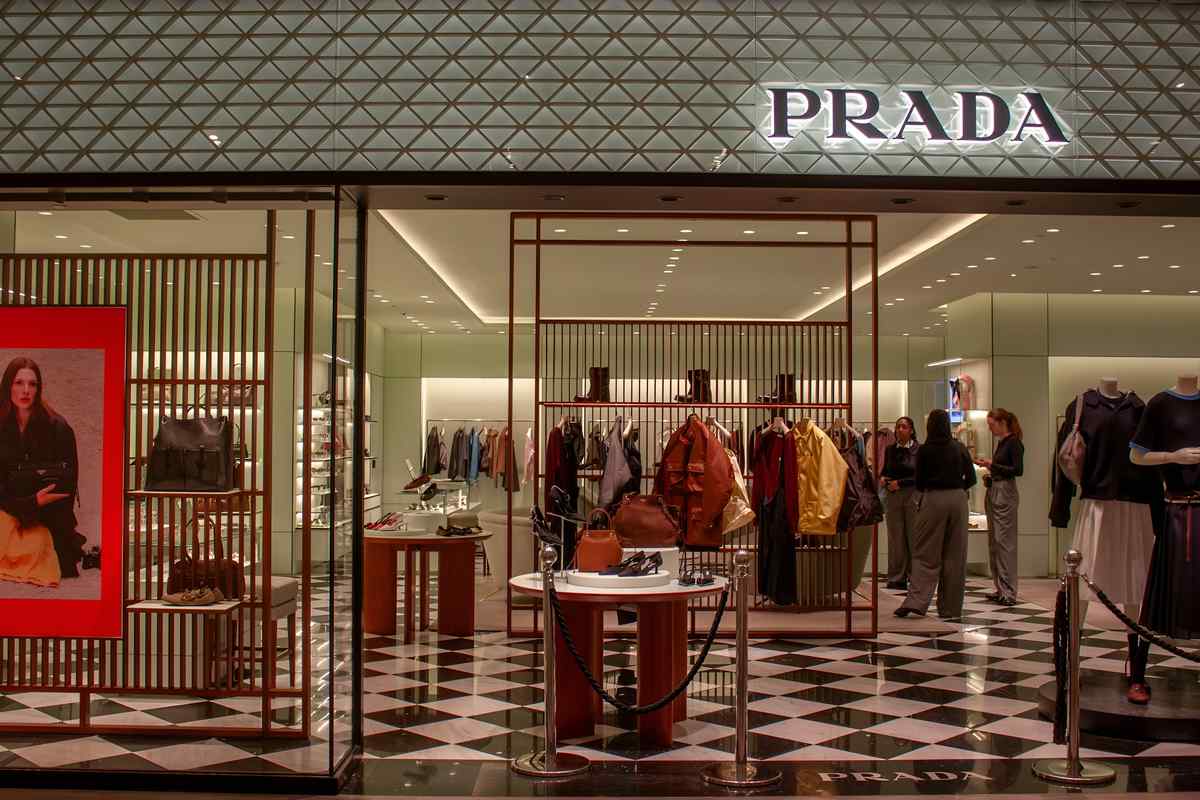
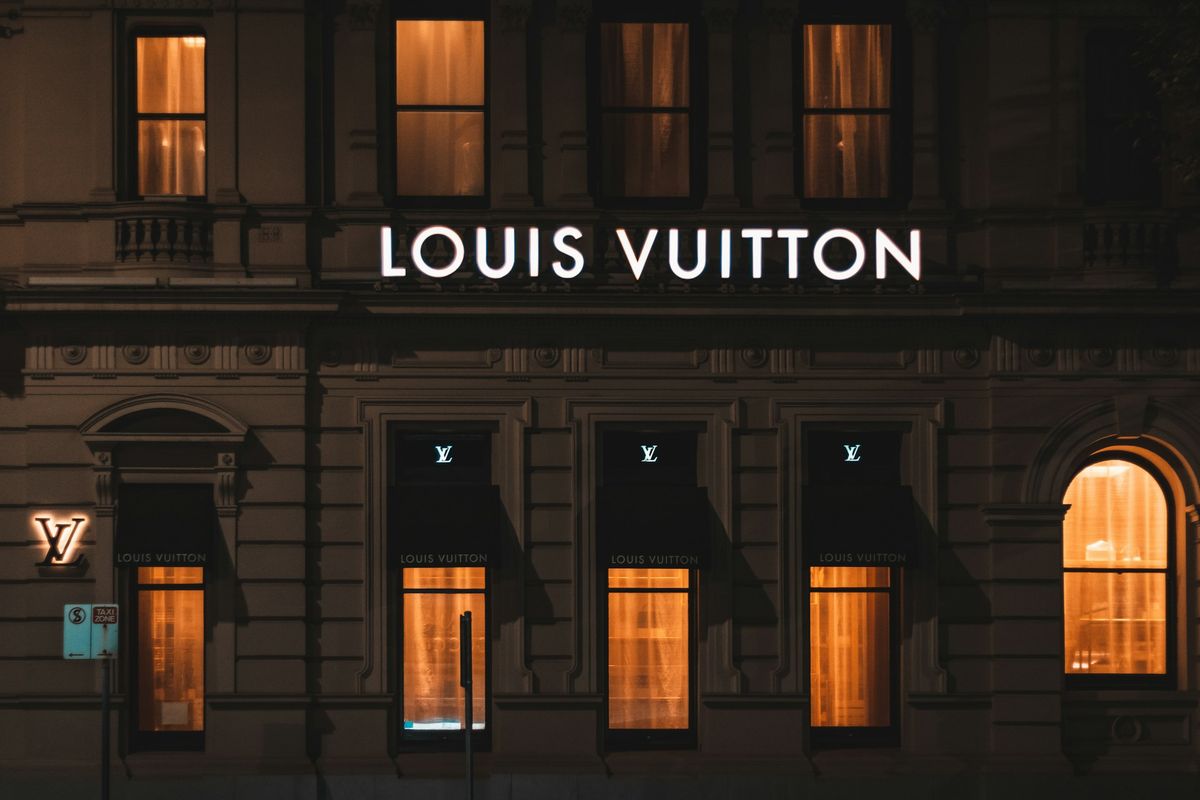
In the luxury fashion sector, the Hermès Birkin Bag serves as the ultimate masterclass in scarcity. You cannot simply walk into an elite boutique and buy one off the shelf. There is an unwritten, highly exclusive waitlist, and customers must often build a long-term purchasing history with the brand just to be considered for one.
This extreme restriction leverages Sugarman’s exclusivity and rarity to manipulate our social drive for status signalling. When an item is incredibly difficult to secure, owning it is a loud, clear symbol of wealth, influence, and insider access. The scarcity itself creates a high-prestige social barrier that mass-produced luxury items can never replicate.
Also Read: How Apple Survived Bankruptcy: The 1997 Turnaround Story
Creating Predictable, Capitalised Urgency
On the mass-consumer side, Starbucks utilizes seasonal scarcity perfectly with its iconic Pumpkin Spice Latte. By making this specific flavor profile available only during the autumn months, they create a predictable, time-limited window that brings millions of eager customers back to their stores every single year.
This activates what Sugarman classified as the sense of urgency trigger bound directly to perfect timing. Consumers know the drink will disappear as winter approaches, creating an automatic deadline that completely eliminates consumer hesitation and builds a comforting annual ritual.
| Brand | Scarcity Type | Core Pioneer Frameworks | Business Impacts |
| Supreme | Limited quantity | Sugarman's Desire to Collect; Cialdini's Scarcity Principle |
Instant sell-outs, massive secondary resale value |
| Hermès | Exclusivity & Limited Access | Cialdini's Social Proof & Authority; Sugarman's Exclusivity & Rarity |
Decades of waitlists, high luxury brand equity |
| Starbucks | Time-Bound Seasonal Scarcity | Sugarman's Sense of Urgency & Timing; Cialdini's Loss Aversion (FOMO) | Predictable spikes in high-volume seasonal revenue |
Why Authenticity Dictates Long-Term Value
When a business executes a genuine scarcity marketing strategy correctly, the rewards extend far beyond a short-term spike in revenue. By systematically restricting access, a brand completely shifts how the public perceives its entire product line. A limited-edition launch generates massive organic word-of-mouth buzz, crowdsources social proof, and keeps your community deeply engaged with your brand ecosystem.
Furthermore, this strategy protects your profit margins. When buyers are driven by absolute urgency and a deep desire for exclusivity to price changes, allowing you to avoid margin-killing discount cycles.
However, the golden rule of this strategy is that your scarcity must remain completely authentic. The moment a business utilizes a fake countdown timer or quietly restocks a “permanently retired” limited-edition item, consumer trust vanishes instantly.
When executed with integrity, scarcity marketing does not manipulate your audience maliciously. Instead, it respects the natural, evolution-driven flaws of human decision-making, transforming an everyday transaction into an exciting, high-stakes event that consumers actively want to participate in.