On a rainy Tuesday morning in mid-1997, the mood inside Apple Computer Inc.’s Infinite Loop headquarters resembled a wake. The corporate campus, which was once recognized as the vibrant epicenter of the personal computing counterculture, had grown chillingly quiet. Rumours ran rampant through the hallways that the doors would permanently close by the end of the quarter. Employees openly polished their resumes, engineers abandoned projects midway, and the financial pressure was busy drafting Apple’s corporate obituary.
Today, looking at the monolithic Apple Park “spaceship” campus, it requires a massive leap of imagination to recall that this multi-trillion dollar economic superpower was once a crashing stock. As of today, Apple sits atop the global economy as a financial fortress, generating hundreds of billions of dollars in annual revenue, commanding an unmatched supply chain ecosystem, and holding a cash reserve that frequently dwarfs the national treasuries of sovereign states. It is regarded as the “premier designer of consumer electronics,” a dominant force in global entertainment, and the ultimate gatekeeper of the modern mobile economy.
Yet, less than just three decades ago, Apple was a “sinking ship” with an estimated 90 days of operational cash remaining in its bank account. According to the reports, it was bleeding hundreds of millions of dollars every quarter, suffering from a fragmented and confusing product lineup, and completely crushed under the weight of Microsoft’s Windows 95 monopoly.
This is the definitive, untarnished history of the greatest corporate turnaround in human history; a multi-decade journey of how a bankrupt Silicon Valley icon used ruthless simplification, industrial design genius, logistical mastery, and unprecedented brand ecosystem building to defy death and transform into a global tech superpower.
The Disastrous Decade (1985-1997)
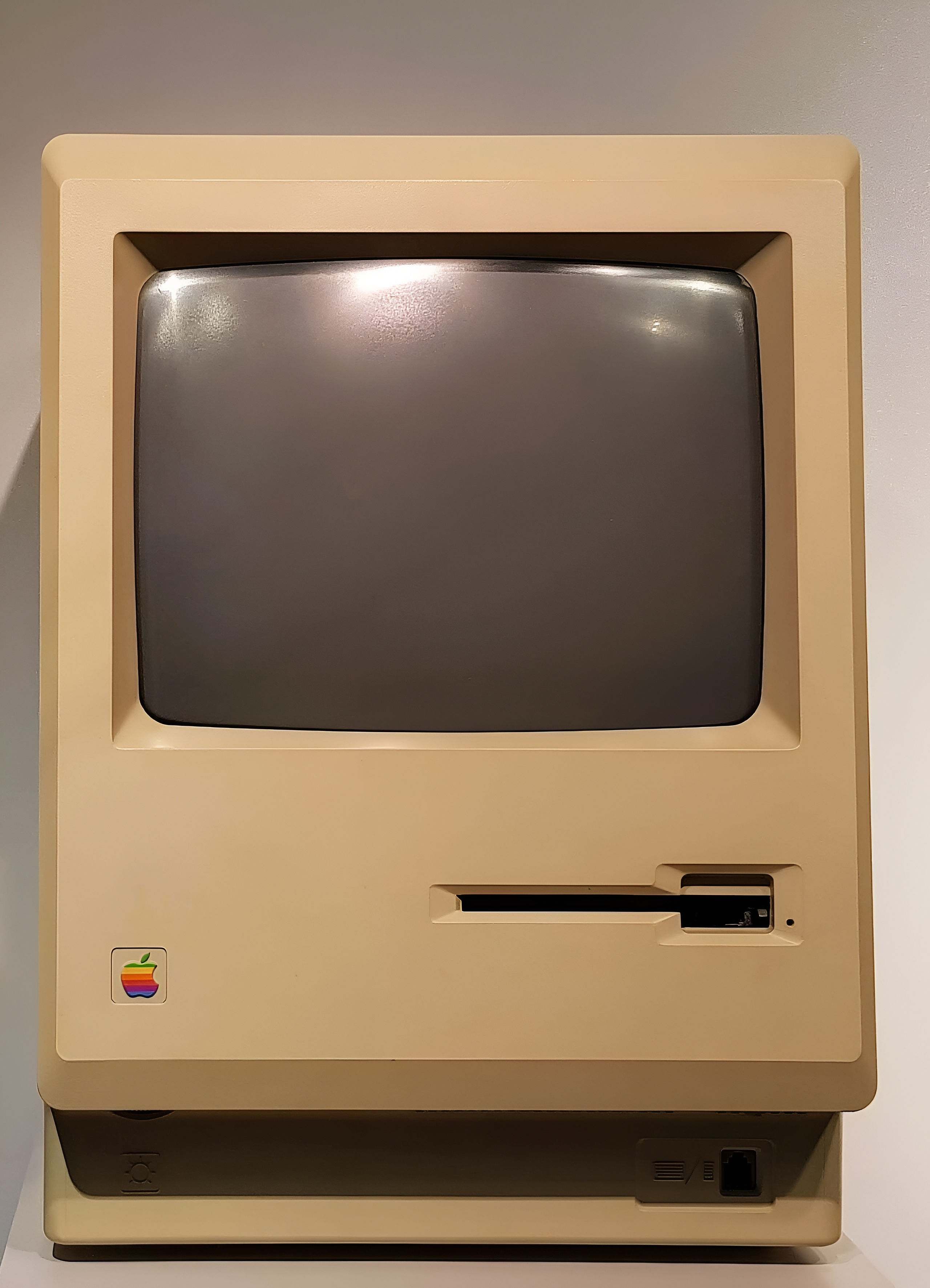
To understand how Apple nearly went bankrupt, one must first look at the vacuum left behind when its co-founder, Steve Jobs, was famously ousted from the company in September, 1985. Following a bitter power struggle with then-CEO John Sculley, who was the former PepsiCo executive whom Jobs had recruited with the legendary pitch, “Do you want to sell sugared water for the rest of your life, or do you want to come with me and change the world?” The board of directors sided with maintaining corporate stability over erratic genius.
Jobs was stripped of his operational duties and subsequently resigned, selling all but one share of his Apple stock. He went on to found NeXT Computer, an ambitious but commercially troubled workstation company, and purchased a fleeting computer graphics division from George Lucas that would eventually become Pixar Animation Studios.
Meanwhile, back in Cupertino, Apple initially enjoyed strong financial quarters. The Macintosh desktop publishing revolution was in full swing, and the company commanded high profit margins on its premium hardware. However, without a cen real product visionary, the corporate culture slowly shifted. Furthermore, the engineering teams became completely fractured, and management grew complacent, mistakenly believing that their premium brand status would forever insulate them from low-cost competition.
The Commodity Trap And The Arrival Of Windows 95
By the early 1990s, the landscape had fundamentally shifted. Microsoft released Windows 3.0, followed by the computing milestone that was Windows 95. Microsoft did not manufacture computers; instead, Bill Gates licensed the Windows operating system to any of the third-party hardware manufacturers who wanted it, like IBM, Compaq, Dell, Hewlett-Packard, and a legion of generic “white box” builders.
This strategy created a massive view of cheap, commoditized PCs. Suddenly, consumers and corporate IT buyers, who could purchase a computer that performed 90% of what a Macintosh could do, that too at half of the price. Apple’s insistence on tightly integrating its proprietary software with its premium, high-cost hardwired backfired. The company was caught in a classic commodity trap. As the Wintel (Windows+Intel) ecosystem grew exponentially, software developers naturally prioritised writing programs for Windows, leaving the Macintosh platform starved of new software tools.
Apple’s global market share, which had sat comfortably in the double digits during the 1980s, began witnessing a catastrophic freefall, eventually bottoming out of a dismal 3%. The company was relegated to a niche player, supported almost entirely by a loyal base of graphic designers, educators, and a group of creative professionals.
The Product Proliferation Disaster
As revenues dropped, Apple’s management panicked. Under succession CEOs Michael Spinder and Gil Amelio, the company tried to spend and diversify its way out of the crisis. This led to an absurd explosion of confusing product lines.
The flagship Macintosh line was fractured into a confusing maze of sub brands: Quadra, Centris, Performa, and LC. To make matters worse, individual models within these lines carried arbitrary four-digit model numbers that gave consumers no indication of performance or target audience. A customer walking to a Sears or a CompUSA store was confronted with a wall of nearly identical beige boxes, with names like the Performs 6300 or the Quadra 800, leaving them utterly baffled.
Simultaneously, Apple greenlit a barrage of non-computing consumer electronics that bled cash. Among these products was The Apple Newton MessagePad, a pioneering but heavily mocked handheld PDA with notoriously inaccurate handwriting recognition. Another notable release was The Apple QuickTake, which stood as one of the earliest consumer digital cameras but failed to gain market traction.
Apple also attempted to break into the gaming industry with The Apple Pippin, a bizarre attempt at a multimedia video game console licensed to Bandai that was completely crushed by the Sony PlayStation and Nintendo 64. Apart from gaming, the company began branding and selling a massive array of office peripherals, including printers, scanners, and monitors, diluting its engineering focus and stretching its marketing resources to a breaking point.
Also Read: Top 5 Best Power Banks To Buy In 2026
The Fatal Flaw Of Broken Mac OS
Worse than the bloated hardware portfolio was the decay of the core product: the Macintosh Operating system. System 7, while user-friendly, was built on an against architecture dating back to 1984. It lacked modern computing staples such as preemptive multitasking, protected memory, and advanced networking capabilities. If a single application crashed on a Mac, it would routinely bring down the entire system, forcing a hard reboot and destroying hours of work.
Upon recognising this vulnerability, Apple embarked on an ambitious internal project code-named “Copland” to build a next-generation operating system. Copland became a black hole for capital. It suffered from chronic feature creep, mismanagement, and non-cooperation among engineering teams. After years of development and hundreds of millions of dollars spent, Copland was a buggy, unusable message that was nowhere near public release.
During the mid-1996, CEO Gil Amelio made a brutal decision: Copland was officially cancelled. Apple had no modern operating system to compete with Microsoft, its hardware sales were plummeting, and its corporate cash reserves were disappearing. The company reported a net loss of $740 million in the first quarter of 1996 alone. Over the course of a single fiscal year, Apple burned through more than $1 billion in cash, and the company was on the verge of bankruptcy.
The Return Of The Prodigal Founder (1996-1997)
With the internal operating system project dead, Amelio looked to the outside world for a replacement. Apple initially entered into deep negotiations to acquire Be Inc., a company founded by ex-Apple executive Jean-Louis Gassee, which had developed BeOS, a modern, lightning-fast operating system built specifically for multimedia purposes. However, Gassee held out for a price tag of roughly $300 million, while Apple refused to go above $125 million.
As those talks stalled, a dark horse emerged. Steve Jobs, hearing of Apple’s plight, reached out to Cupertino executives. He pitched his own company’s operating system, NeXTSTEP, an object-oriented operating system built on a Unix foundation. NeXTSTEP was a commercial failure in the workstation market, but it possessed exactly what Apple lacked: a rock-solid stability, advanced networking, and an elegant development environment.
On December 20, 1996, Apple shocked the tech industry by announcing it was acquiring NeXT for $429 million in cash and stock. The primary motive behind the deal was to acquire the NeXTSTEP software architecture, which would eventually form the modern foundation of macOS, iOS, and watchOS. But the unstated, far more consequential payload of the acquisition was the return of Steve Jobs as an uncompensated “informal advisor.”
The Velvet Coup
Jobs’s role as a mere advisor did not last long. He quickly assessed that Gil Amelio, despite his best efforts to restructure debt, lacked the project instinct and charismatic leadership required to save the company. Gradually, Jobs started quietly winning over the board of directors, highlighting the company’s continuing quarterly possession and deteriorating public image under Amelio’s watch.
What happened next was literally the first step towards change. In July 1997, following another disastrous quarterly financial report, the board ousted Amelio. With this, Jobs was asked to step in as interim Chief Executive Officer, a title he would playfully shorten to “iCEO.”
Upon taking the helm, Jobs discovered just how to the precipice Apple truly was. The company’s financial reserve was so depleted that it had less than 90 days of cash remaining to cover payroll, vendor bills, and operational expenses. If immediate action was not taken as early as possible, then Apple would be forced to file for Chapter 11 bankruptcy before the end of the year.
The Ray Of Hope From Microsoft
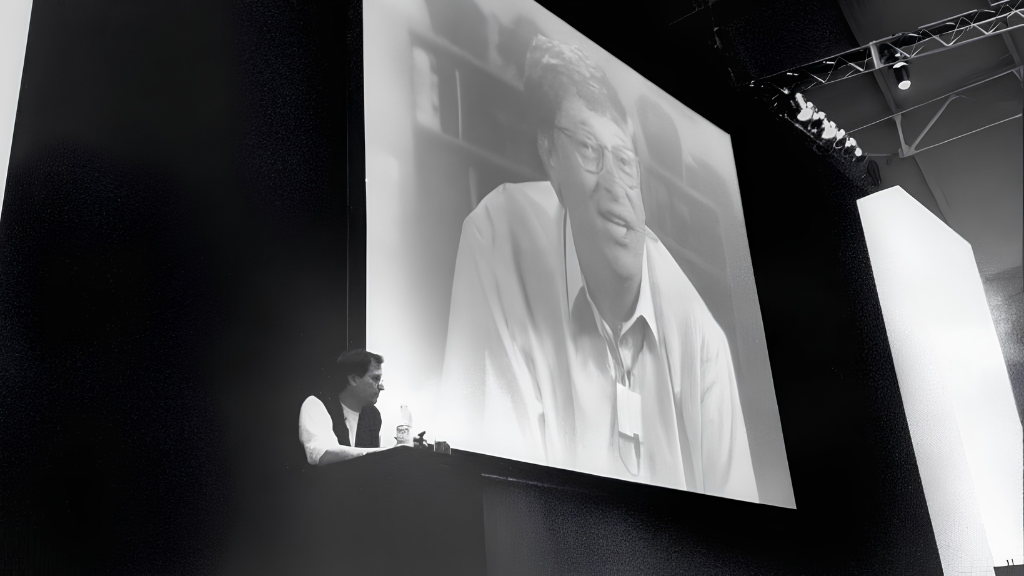
Jobs’s first major move as iCEO was a running pragmatic masterstroke that horrified Apple loyalists but saved the company. On August 6, 1997, at the Macworld Expo in Boston, Jobs took the stage to outline his plan for stabilization.
After explaining that Apple needed to stop looking at its corporate life as a zero-sum war with Microsoft, Jobs made an announcement that caused audible gasp, followed by widespread boos, from the audience. A giant video screen powered behind him, and the towering face of Bill Gates appeared via a live satellite feed from Seattle.
The Apple-Microsoft Partnership Announcement
Steve Jobs announced a sweeping partnership with Apple’s arch-rival, a Microsoft, to help stabilize the company during a critical period. As part of this historic deal, Microsoft purchased $150 million worth of non-voting Apple stock, providing an immediate injection of liquidity into Apple’s severely depleted bank accounts without granting Microsoft voting power.
Software Commitment And Patent Settlement
In addition to the financial report, Microsoft committee to develop and support Microsoft Office for the Mac platform for a minimum of five years. This crucial guarantee ensured that the corporate and educational users would not abandon Apple’s hardware. Simultaneously, the two tech giants agreed to cross-license patents, successfully settling years of bitter litigation surrounding claims that Microsoft has illegally copied the “look and feel” of the Macintosh interface for Windows.
To round out the sweeping deal, Apple agreed to bundle Microsoft's Internet Explorer as the default Web browser of the Macintosh, cementing an unprecedented collaboration between the two long-standing software rivals.
The Art Of The Cut (1997-1998)
With the financial bleeding temporarily paused, Jobs turned his attention to internal corporate cleanup. His first Target was the Macintosh Clone program, which had been authorised by his predecessors as a desperate attempt to mimic Microsoft’s operating system licensing model.
Apple had licensed its system software companies like Power Computing, Radius, and Umax, allowing them to build hardware that ran Mac OS. The plan was supposed to expand the market share of the platform. Instead, it was an operational disaster. The clone markers failed to attract new Windows users; instead, they started to build high-performance Mac- compatible that they sold at cut-rate prices, directly cannibalizing Apple’s high-margin premium hardware sales. The company was left holding the expensive bag of developing the operating system, while the third party clone companies reaped the hardwired profits.
Jobs recognized this arrangement as commercial suicide. He utilised a legal loophole in the licensing agreements regarding the upcoming release of Mac OS 8. When Apple launched Mac OS 8, Jobs refused to license it to the clone markers. To permanently end the threat, Apple bought out the computer business of Power Computing for $100 million in stock, effectively killing the clone industry in one swift stroke. Following this, Apple was once again the sole custodian of the Macintosh hardware and software ecosystem.
The Four-Quadrant Product Grid
Next, Jobs addressed the product catalogue. He gathered his top executives and product managers in a conference room. He asked them to explain the difference between the existing array of Macintosh models rather than on sale. After hours of listening to convoluted explanations about target demographic, bus speeds, and distribution channels, Jobs grew exasperated.
He walked up to a bare whiteboard, picked up a black marker, and flew a simple two-by-two matrix. He looked back at the room and announced his new strategy: “Here is what we are going to do. We are going to make four great products. One for each quadrant. Everything else is cancelled.”
Hearing this, the room went dead silent. The decision was incredibly risky; it meant immediately eliminating roughly 70% of Apple’s entire product roadmap. Thousands of projects were abandoned overnight. The consumer printers, the flatbed scanners, the digital cameras, and the beloved Newton PDA were discarded.
The radical move allowed Apple to layoff thousands of redundant workers, write off obsolete inventory, and slash its massive research and development budget. More importantly, it allowed Apple's remaining engineering talent to focus all their creative energy on building four premium machines. The company decided not to invest their energy anymore on filler products, confusing naming schemes; it was now focused on producing excellence.
Discovering Jony Ive And The Birth Of The iMac G3
During his initial corporate audit, Jobs toured Apple’s industrial design department, located in a separate building off-campus. He expected to find a typical corporate design lab. Instead, he discovered a treasure trove of conceptual models, futuristic prototypes, and a young, disillusioned British designer named Jonathan “Jony” Ive.
Ive had been on the verge of designing from Apple, frustrated by a corporate management team that consistently chose cut-cutting and boring beige boxes over artistic innovation. Jobs immediately recognised Ive as a kindred spirit who understood that industrial design was not just about how a product looked on the outside, but an intrinsic expression of how the machine worked. Jobs elevated Ive to Senior Vice President of Industrial Design, forging a historic creative partnership that would redefine global consumer aesthetics for the next two decades.
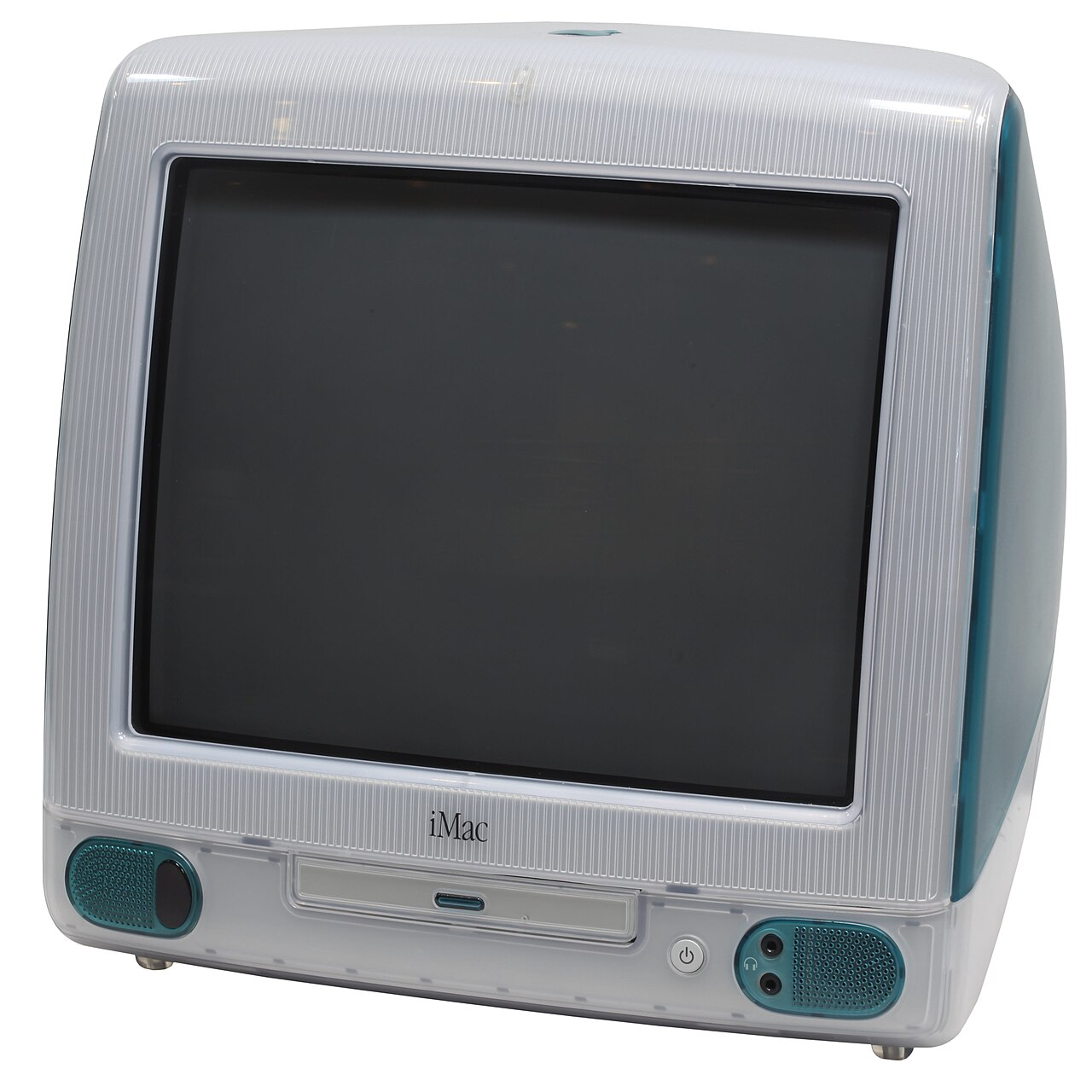
The first tangible fruit of this collaboration was the iMac G3, unveiled on May 6, 1998. The iMac G3 was a radical break from personal computer design. It was a self-contained, all-in-one desktop machine enclosed in a translucent, teardrop-shaped casing of “Bondi Blue” plastic. It looked like an artifact from a friendly sci-fi future.
Crucially, the machine made bold, forward-looking architectural choices that initially drew heavy criticism from tech columnists. Apple completely omitted the legacy 3.5 inch floppy disk drive, deleting it obsolete and forcing users to rely on local networks and the emerging internet for file transfer.
Apple abandoned its own proprietary serial ports and embraced the brand-new, unproven Universal Serial Bus (USB) standard for peripherals, single-handedly forcing the accessory industry to adopt USB.
The “I” in iMac stood for the Internet. It featured a built-in 56k modern and an incredibly simple out-of-the box setup process. Apple’s marketing campaign promised its users that they could go from opening the box to surfing the web in less than ten minutes.
The iMac G3 was an instant commercial sensation. Apple sold over 800,000 units in its first five months, dragging the company into annual profitability. It turned out that the consumers were willing to pay a premium price for a computer that was beautiful, simple, and personality driven.
How Steve Jobs Built Apple Retail To Revolutionize Electronics Shopping
After the huge success of the iMac, Jobs turned his attention to a critical structural vulnerability: distribution. For years, Apple had relied on big-box electronics retailers like CompUSA, Best Buy, and regional department stores to sell Macintoshes.
It was a terrible consumer experience. Macs were typically relegated to the dark, dusty back corners of stores, surrounded by a sea of cheap Windows PCs. The store sales staff were rarely trained on Mac software and typically steered customers towards Windows machines because they carried higher commissions or were easier to support.
Jobs realized that if Apple could not control the retail atmosphere where its products were showcased, it could never grow past a niche market share. His solution was to build proprietary retail stores. He hired Ron Johnson, a retail executive from Target, and spent months secretly building a full-scale mock retail store inside a hidden warehouse near Cupertino, testing different layouts, lighting setups, and fixture designs.
On May 19, 2001, Apple opened its first two retail stores in Tysons Corner, Virginia, and Glendale, California. The retail industry was deeply skeptical. High-profile retail analysts predicted that Apple’s stores would close within a year, claiming that the high overhead costs of prime real estate locations, combined with Apple’s low computer market share, would spell financial ruin.
Instead, the Apple Stores redefined retail architecture and unit economics. They were bright, minimalist temples of glass, stainless steel, and natural maple wood. Products were plugged in and connected to the internet, inviting visitors to touch, okay, and explore. Most importantly, the stores introduced the “Genius Bar,” a dedicated counter where customers could receive face-to-face technical support and repairs from friendly, knowledgeable staff without a corporate attitude.
Within a span of just a few years, Apple Retail became the most profitable retail space per square foot in the entire world, driving immense brand loyalty and providing a direct, unmeditated conduit to the consumer.
The Digital Hub Strategy
At the turn of the millennium, as the dot-com bubble began to burst, Jobs formulated a grand unifying theory for the future of consumer technology: The Digital Hub Strategy. He argued that the personal computer was not dying, but evolving. The PC would become the central repository, or hub, for a new lifestyle wave of digital consumer products, camcorder, digital cameras, electronic organizers, and portable music players.
In order to execute this strategy, Apple needed proprietary software that could seamlessly manage these new media types. When third-party developers failed to build software that met Job’s standards of simplicity, Apple began an aggressive acquisition spree, buying up smaller software forms and rewriting their specific codes.
Apple launched iMovie in 1999 to allow everyday consumers to edit home videos easily. Additionally, iPhoto was developed to catalog and edit digital photography, while GarageBand was built to demonstrate audio recording and music creation. Finally, iTunes was created by acquiring a popular Mac MP3 application called SoundJam MP, which Apple streamlined and rebranded.
With this robust software suit, the Mac was no longer just a word processor or an internet surfing machine; it was the digital cockpit of the modern home.
How The iPod Rewired Music (2001-2007)
While developing iTunes, Jobs and his engineering team looked closely at the portable MP3 players available on the market in 2000. They were universally terrible. They fell into two flawed categories: small, lightweight players that used flash memory but could only hold 15 to 30 songs, or bulky, heavy CD-based players that skipped constantly when users walked or ran.
Following this, Jobs tasked hardware executive Jon Rubinstein with finding an appropriate solution for this. During a routine supplier meeting in Japan, Toshiba executives casually showed Rubinstein a brand-new, tiny 1.8 inch hard disk drive they had developed but didn't know what to do with it. Rubinstein immediately realized his potential. He went straight to Jobs and told him: “I know how to build the player now. I just need a check for a few million dollars to buy exclusive rights to this drive.” Jobs signed the check on the spot.
Apple fast-tracked development under the leadership of engineer Tony Fadell, known as the “Father of the iPod.” On October 23, 2001, just a week after the September 11 terrorist attacks had thrown the global economy into chaos, Jobs courageously unveiled the iPod.
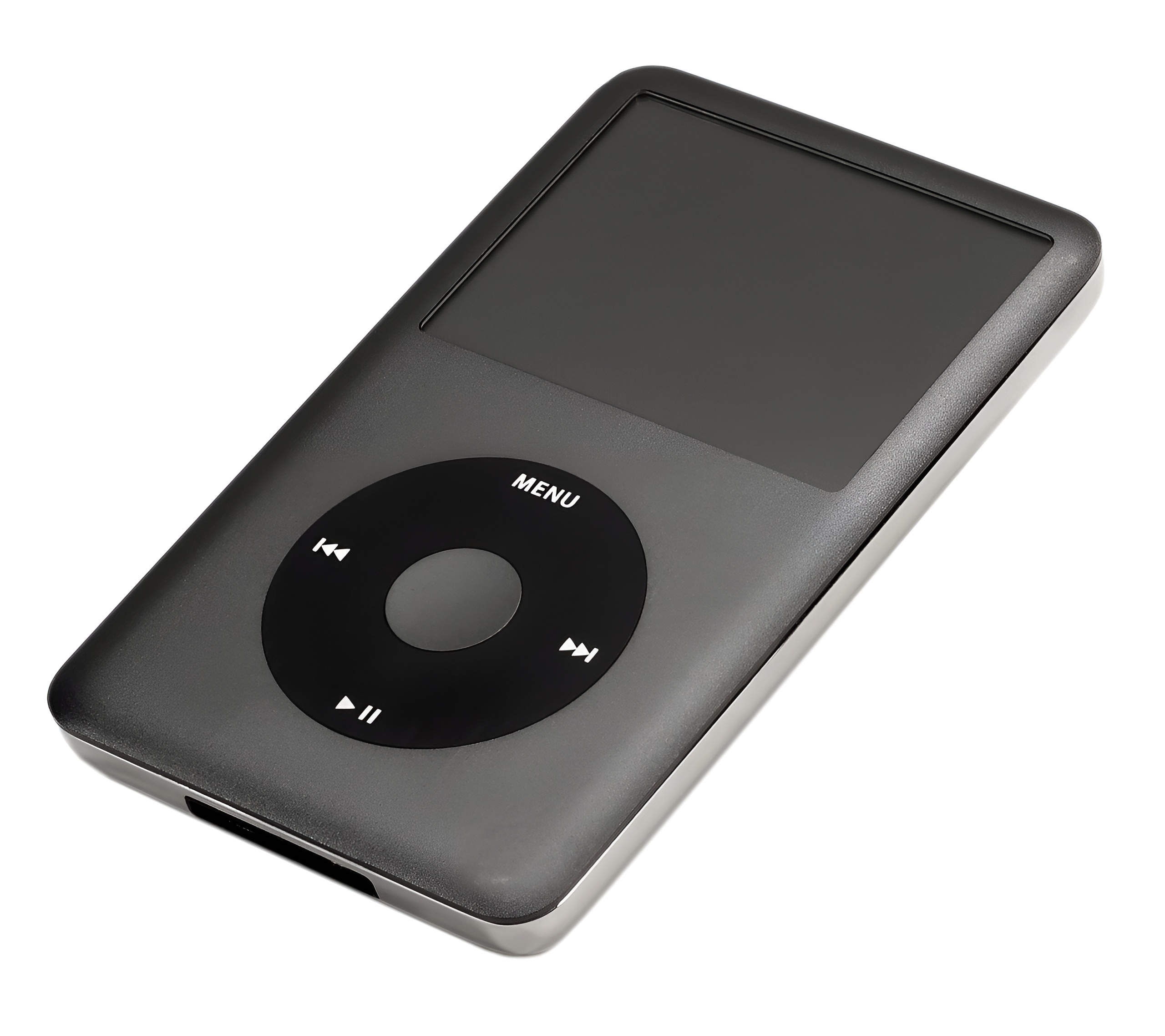
It was a beautiful, deck-of-cards-sized white device featuring a mechanical scroll wheel that allowed users to navigate through thousands of songs with one thumb. It boasted a high-speed FireWire port that could clone an entire 1,000-song music library from a Mac in less than 60 seconds, as compared to the hours it took over slow USB 1.1 connections on Windows PCs.
Initially, tech geeks were dismissive. The prominent online community “Slashdot” famously posted an iconic dismissal: “No Wireless. Less space than a Nomad. Lame.” Additionally, critics pointed to its high $399 price tag and the fact that it initially only worked with Macintosh computers.
But Apple’s marketing engine, led by the legendary "Silhouette" advertising campaign, featuring neon-coloured backdrops with energetic dark silhouette dancing with white iPods and iconic white earbuds, transformed the device from a tech gadget into an essential fashion accessory. The white earbuds cords became a silent, ubiquitous status symbol on city streets worldwide, signalling that the western was part of the modern digital generation.
How Steve Jobs Saved The Music Industry With 99-Cent iTunes
As iPod sales started increasing, Jobs came to realise that the process of acquiring digital music was broken. Consumers were faced with a choice between illegal, virus-ridden peer-to-peer file-sharing networks like Napster and Kazaa, or buying an entire $18 physical CD just to listen to one good track.
Jobs used Apple’s growing leverage to negotiate with the major global record labels, like Sony, Warner, Universal, EMI, BMG. The music industry was in a state of absolute panic, watching their revenues collapse due to digital piracy. Jobs offered them a secure, elegant lifecraft. He proposed the iTunes Music Store, launched on April 28, 2003.
His core mission was to sell songs individually for $99 cents each. The record labels flew back, terrified of breaking up the traditional album format, but Jobs convinced them to run a limited trial on the Mac platform.
The plan turned out to be a successful one, it was a massive success in those days, selling one million songs in its first five days. When Apple expanded iTunes to Windows PCs later that year, the floodgates opened. Apple, then quickly became the largest music retailer on Earth.
Critically, the iTunes Music Store was not designed to make massive profits on software sales; instead, it was after as a powerful hook. By locking users into an easy-to-use ecosystem where their music libraries were tied to their iTunes account, Apple created a virtuous ecosystem flywheel. If you bought songs on iTunes, you had to buy an iPod to listen to them on the go. The iPod quickly came to command over 70% of the global MP3 player market, generating massive, high-margin cash flows that rebuilt Apple’s financial reserve and funded its next massive leap.
How Apple Outsmarted The Mobile Revolution
By 2005, Apple was riding high. With the massive success of the iPod, it had become a cultural phenomenon and accounted for nearly half of the company’s total annual revenues. But inside the infinite loop, Steve Jobs was growing profoundly paranoid.
He looked at the rapid evolution of mobile phones. Manufacturers like Nokia, Motorola, and Blackberry were beginning to add basic MP3 playback capabilities to their handsets. Jobs realized a dangerous long-term trend: if a consumer could carry a single device that made phone calls, surfed the web, and played music, they would stop buying separate iPods.
Instead of waiting around to be disrupted by mobile competitors, Jobs made a bold decision that Apple would build its own phone, even if it meant completely destroying its own multi-billion-dollar iPod cash cow.
Project Purple: The Secrets Of Multi-Touch
Initially, Apple had attempted to enter into a partnership with Motorola in 2005, resulting in the Motorola ROKR, a clumsy, uninspired phone that jammed a limited version of iTunes onto a standard handset. It was a critical and commercial failure, and Jobs hated it, realizing that Apple could never build a great product if it had to rely on a partner for hardware design.
Apple went deep underground to curate a perfect plan. Jobs initiated a top-secret project code-named Project Purple. He cordoned off entire floors of the Apple campus, putting them under lockdown with biometric scanners, security guards, and signs reading “Fight Club.” He gave his engineering teams a blank check but a terrifying mandate to reinvent the mobile interface from scratch.
The breakthrough came from an experimental input technology Apple had been researching for a potential tablet computer: Multi-Touch. Instead of relying on a physical plastic keyboard that took up half the screen (like a Blackberry) or a fragile plastic stylus that had to be pulled out of a slot (like a Palm Pilot), Multi-Touch allowed users to interact directly with software using their fingers on a glass surface. It supported gestures like pinching-to-zoom, scrolling with a flick of a finger, and typing on an intelligent predictive software keyboard.
“An iPod, A Phone, And An Internet Communicator”
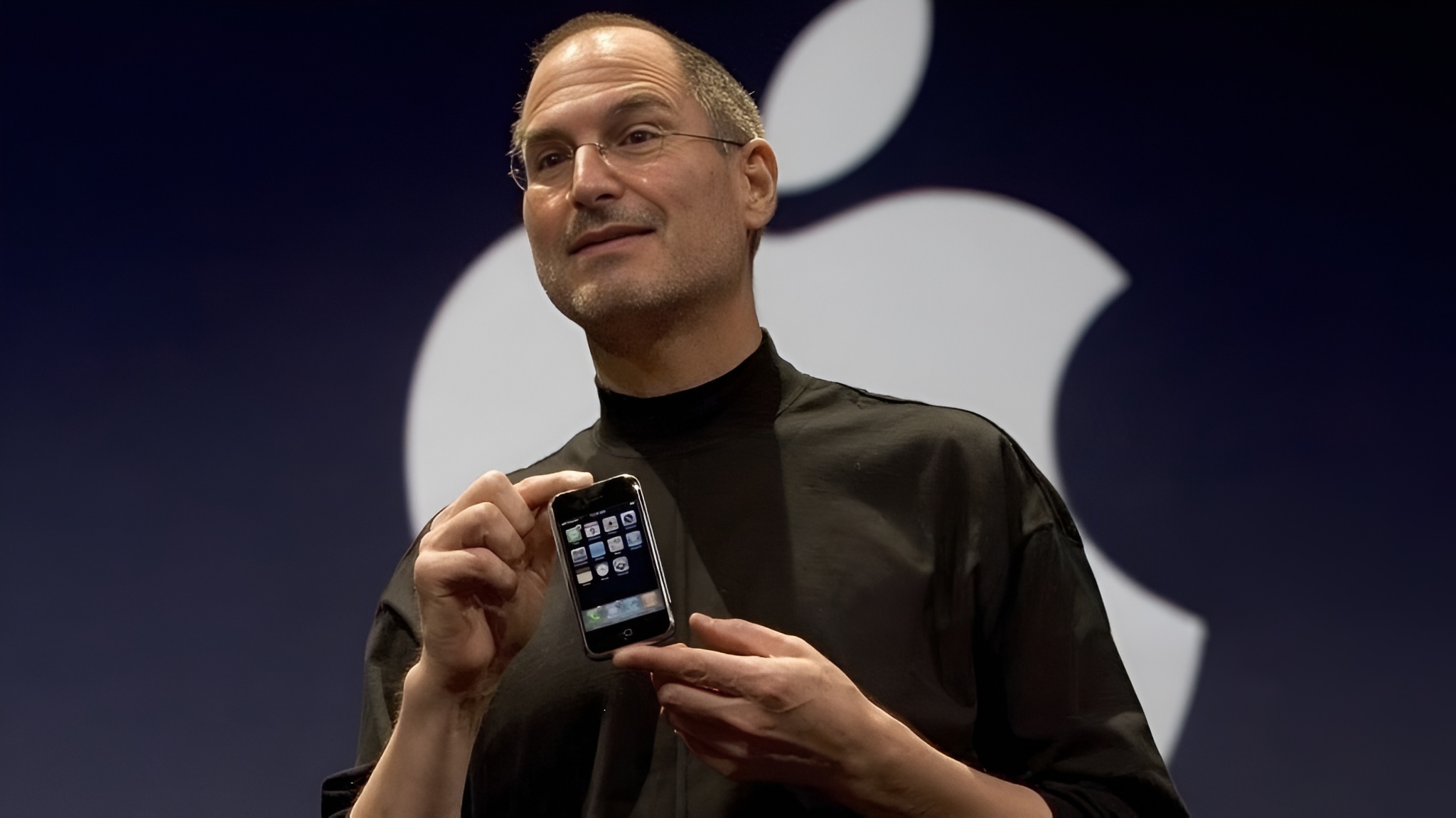
On January 9, 2007, Steve Jobs stepped onto the stage at the Moscone Center in San Francisco to deliver what is widely regarded as the most masterfully orchestrated product launch presentation in the entire corporate history.
He began by teasing the audience: "Today, we are introducing three revolutionary products of this class. The first one is a widescreen iPod with touch controls. The second is a revolutionary mobile phone. And the third is a breakthrough internet communications device.”
He repeated the list several times as the crowd cheered, before finally delivering the punchline, “An iPod, a phone, an internet communicator… Are you getting it? These are not separate devices, this is one device, and we are calling it iPhone.”
The original iPhone was a beautiful slab of gloss and alum. It ran a mobile version of desktop OS X, allowing it to display full web pages rather than the stripped-down text-only sites common on legacy mobile browsers.
The mobile establishment was deeply dismissive. Steve Ballmer, the bombastic CEO of Microsoft, laughed during an interview, saying, “There’s no chance that the iPhone is going to get any significant market share. No chance. It's a $500 subsidized item. They may make a lot of money. But if you actually look at the 1.3 billion phones that get sold, I’d prefer to have our software on 60% or 70% or 80% of them, than I would to have 2% or 3%, which is what Apple might get.” Research in motion (makers of Blackberry) executives assumed that the launch was an engineering hoax, believing that a full-screen touchscreen phone would destroy battery life or was technically impossible over cellular networks.
They were all proven wrong. The iPhone completely rewrote the rules of consumer technology, instantly rendering every other physical-keyboard smartphone on the market completely obsolete.
The App Store And The App Economy
The true power of the iPhone was unlocked on July 10, 2008, with the launch of the App Store, alongside the iPhone 3G. Originally, Jobs had resisted letting outside software developers write native a applications for the iPhone, preferring they build web apps. However, internal pressure from executives like Phil Schiller and the developer community convinced him to change his mind.
Apple released a clean, robust software development kit (SDK) and established a simple distribution model: developers could sell apps on Apple’s platform, and Apple would handle all the billing, hosting and security processes, taking a 30% cut of revenues and passing 70% back to the creator.
The App Store unleashed a massive wave of global software entrepreneurship. It birthed entirely new, multi-billion-dollar industries, like, ride-sharing, mobile gaming, social media platforms, and mobile banking, that could not exist without a location-aware, always-connected pocket computer. Within its first decade, the App Store grew from a few hundred apps to millions, transforming the iPhone from a simple consumer device into a powerful economic platform.
The App Economy: Building The World’s Greatest Platform
When Steve Jobs tragically passed away on October 5, 2011, after suffering a tragic battle with pancreatic cancer, Wall Street and Silicon Valley went into deep mourning. The prevailing media consensus was clear, Apple’s hyper-growth era was over. The creative visionary was gone, and the company would inevitably suffer the same slow decline that befell Disney after Walt Disney passed away or Microsoft in the post-Gates era.
Jobs’s chosen successor was Tim Cook, a quiet, intensely analytical industrial engineer from Alabama who had served as Apple’s Chief Operating Officer. The skeptics completely misunderstood Apple’s true operational strength. While Jobs was the product architect, Cook was the architect of the global supply chain fortress that turned Apple from a design boutique into an unstoppable economic superpower.
When Cook first joined Apple in 1998, the company’s manufacturing and logistics were an absolute mess. Apple held onto a massive stockpile of unsold components, its factories were inefficient, and it took weeks to move inventory from assembly lines to store shelves.
Cook implemented a ruthless operational overhaul based on just-in-time manufacturing principles. He shut down Apple’s internal manufacturing plants worldwide and outsourced assembly to specialized contract manufacturers, primarily Foxconn and Pegatron in China.
Once, he famously stated that inventory was “fundamentally evil,” comparing it to fresh dairy products that spoil rapidly if they sit on a shelf. He slashed Apple's days of inventory on hand from over a month to less than two days, dramatically reducing warehousing costs and financial risk.
Cook used Apple's massive cash reserves to execute forward-looking, exclusive supply contracts. When Apple needed flash memory for the iPad nano, Cook bought up 100% of the world’s available flash memory supply months in advance, starving competitors of components and driving down Apple’s unit costs through sheer volume.
Under Cook’s leadership, Apple built a supply chain machine that could manufacture, package, and ship hundreds of millions of highly sophisticated electronic devices across the globe with military precision, maintaining fat profit margins that no other hardware competitor could match.
How Tim Cook Secretly Rewrote Apple’s Business Playbook
As global smartphone penetration began to mature and hardware upgrade cycles strengthened in the mid-2010s, Cook orchestrated a brilliant strategic pivot. He shifted Wall Street’s focus away from quarterly hardware unit sales and towards the monetization of Apple’s massive, intensely loyal global active user base, a metric known as the “installed base.”
To achieve this, Apple transformed its software features into premium, recurring subscription cloud services. This suite of offerings includes iCloud for paid-device-integrated storage, Apple Music as a monthly streaming model replacing iTunes, and Apple Pay, which turned Apple into a fintech giant by taking transaction fees worldwide. Furthermore, Apple introduced Apple care+ as a lucrative warranty program, alongside Apple TV+, Arcade, and Fitness+ to provide custom digital entertainment and wellness platforms. Together, these services form a centralized revenue stream generating approximately $100 billion annually.
From $100 Billion Subscriptions To Wrist Dominance
The services strategy proved to be an incredible financial success, generating nearly $100 billion in annual revenue for Apple’s services division alone by the mid-2020s. If spun off as a standalone business, Apple services would comfortably rank as a Fortune 500 enterprise, exceeding the scale of legacy corporate giants like Boeing, Morgan Stanley, or Intel.
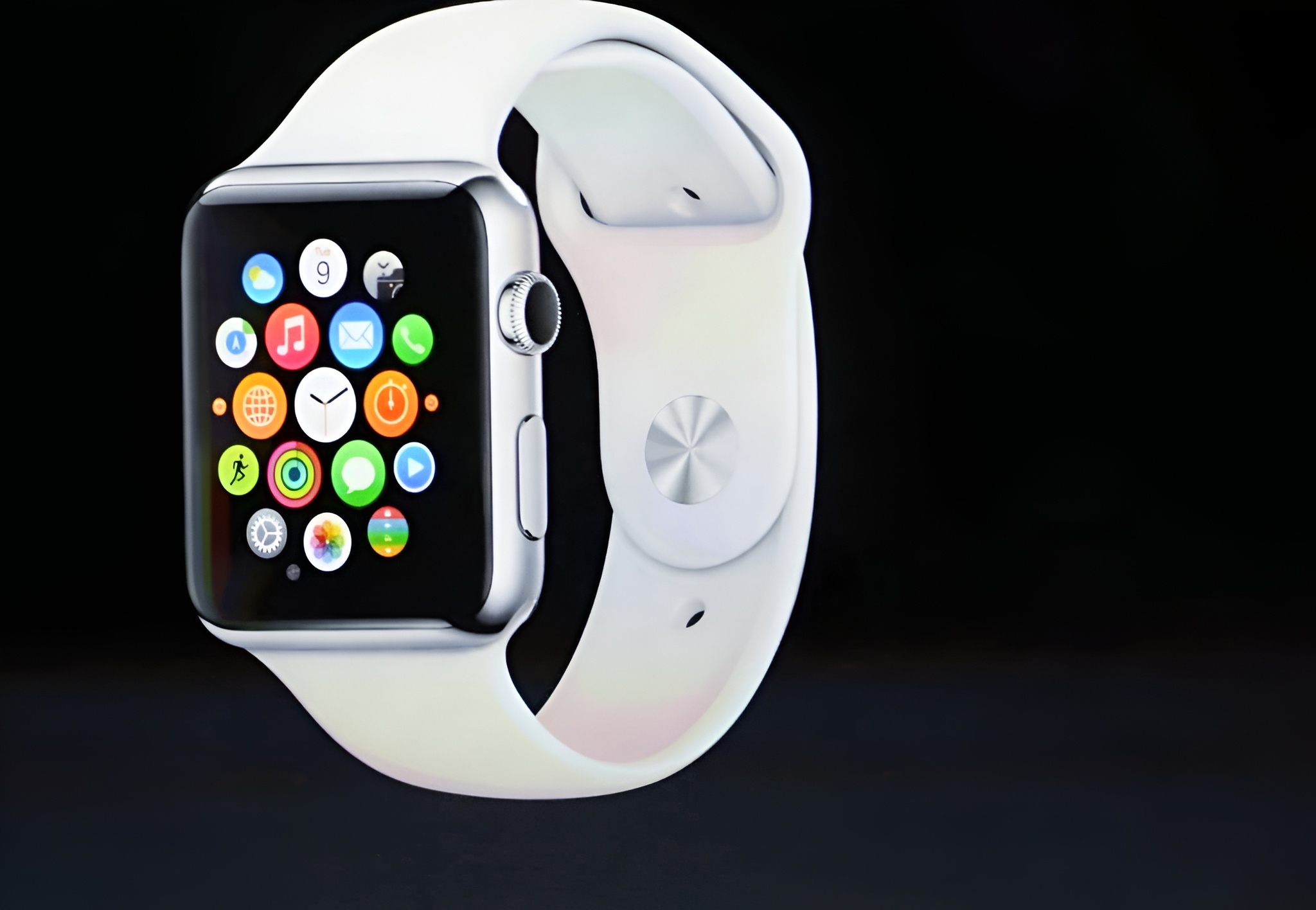
Alongside these, the Cook era oversaw the quiet creation of another economic giant: the Wearables, Home, and Accessories ecosystem. Launched in the year 2015, the Apple Watch initially struggled to find its precise marketing focus, but Cook quickly re-positioned it as an indispensable health, fitness, and life-saving medical monitoring platform. Today, the Apple Watch commands the global watch industry, outselling the entire Swiss watchmaking market combined.
In 2016, Apple removed the traditional headphone jack from the iPhone 7 and launched AirPods, wireless Bluetooth earbuds packed with custom acoustic silicon. AirPods became an instant viral cultural phenomenon. Within a few years, the AirPods product line alone generated more annual revenue than the entire global operations of Spotify, Twitter, and Snapchat combined, showcasing Apple’s unmatched ability to launch multi-billion dollar product categories directly out of its existing phone ecosystem.
The Road To Three Trillion Dollars And Beyond
The ultimate manifestation of Apple's tech superpower status if its multi-decade push into absolute vertical integration. For decades together, Apple relied on third-party silicon partners like Motorola, IBM, and Intel to supply the microprocessors for its computers and mobile devices. This left Apple vulnerable to product delays, chip shortages, and design choices made by outside firms.
In 2008, Apple quietly acquired a small, boutique chip-design startup called P.A.Semi. It was the first step in a massive, secret semiconductor R&D initiative. In 2010, Apple debited the A4 chip inside the original iPad and iPhone 4, the first system-on-a-chip designed entirely in-house by Apple engineers.
A decade later, Apple completed its silicon masterstroke. In November 2020, the company announced it was abandoning Intel processors for its Macintosh lineup, transitioning instead to its custom-designed M-series Apple Silicon.
The results completely redefined personal computing economics. The M-series chips delivered industry-leading computing performance while consuming a fraction of the electrical power of traditional chips, giving MacBooks unprecedented battery life and thermal efficiency. By designing its own silicon, Apple eliminated standard vendor markups, secured tighter hardware-software integration, and built an structural competitive advantage that left legacy PC manufacturers scrambling to catch up.
Also Read: 5 Best Screen Protectors For Galaxy S25 Ultra
Shattering Financial Records
The combination of premium hardware, highly profitable digital services, supply chain dominance, and custom silicon transformed Apple into an unprecedented wealth-generation engine for investors. The company’s stock market value charted a historic trajectory, it achieved a $1 Trillion market cap on August 2, 2018, doubled to $2 Trillion on August 19, 2020, and passed $3 Trillion on June 30, 2023, a valuation surpassing the annual economic output of major nations like the UK, France, or Italy.
This trajectory highlights a dramatic corporate turnaround. Riding from near-bankruptcy in mid-1997, when it faced a $740M quarterly loss and just 90 days of cash remaining. Apple has successfully transformed into a multi-trillion-dollar global technology leader through strategic project design and execution.
Rewrite The Rules Or Get Written Off
The epic saga of Apple Inc.’s journey from a bankrupt, directionless corporate failure in 1997 to a multi-trillion-dollar global technology superpower is more than just a series of hit consumer product launches. It is an enduring masterclass in business strategy, product design, and cultural engineering.
If Apple had tried to save itself in 1997 by simply cutting prices, licensing its software widely, or copying the standard corporate playbook of the era, it would have been ground down by the commodity PC market and dissolved into history. Instead, the company survived and conquered by doubling down on a core set of counter-intuitive business principles.
As Steve Jobs famously noted, true innovation doesn't just mean saying “yes” to every great idea, many times, it requests saying “no” to a thousand good ideas to focus all resources on the few things that can truly redefine a category.
Apple’s absolute insistence on owning the entire product user experience, the underlying silicon, the device hardware, the operating system software, the digital retail environment, and the services layer, to allow crafting a unified, magical user experience that fragmented competitors cannot replicate.
By building a seamless digital environment where the iPhone, iPad, Mac, Apple Watch, and AirPods work perfectly together, Apple created an ecosystem where customer retention is nearly absolute, as a result, getting out of the Apple ecosystem becomes an active inconvenience for consumers.
Apple consistently refused to compete in a race to the bottom for cheap, low-margin market share. It positions it's products as premium lifestyle tools, allowing it to capture over 80% of global smartphone profits despite controlling less than 20% of the global smartphone unit market share.
As Apple expands into on-device AI, enterprise computing and spatial technology, it operates from a position of absolute market dominance. What started as a struggling tech company didn't just patch its leaks to survive, it completely remade the global technology landscape, turning disciplined focus and execution into an enduring empire.