
How many tabs do you have open on your browser right now?
If you are like most people living in the digital age, the answer is probably somewhere between seven and thirty-seven. You might be skimming this very article while half-watching a video, keeping an eye on a chat window, and periodically checking your email.
We live in a world governed by pixels. From the moment our morning alarms sound on our smartphones to the late-night Netflix binge that steals our sleep, glowing glass screens dominate our visual field. We consume thousands of words every day through text messages, social media feeds, news alerts, and push notifications.
Yet, despite reading more individual words than any generation in human history, many of us feel curiously illiterate. We struggle to finish a single chapter of a book without reaching for our phones. Our attention spans feel fractured, our thoughts scattered, and our stress levels perpetually high.
It is time to make a quiet, revolutionary return to tactile reading. By returning to the physical page, the slow, focused, and deliberate art of daily reading might just be the ultimate antidote to the digital burnout of the modern age.
Why Is Reading Books on Paper Better Than Reading on Screens?
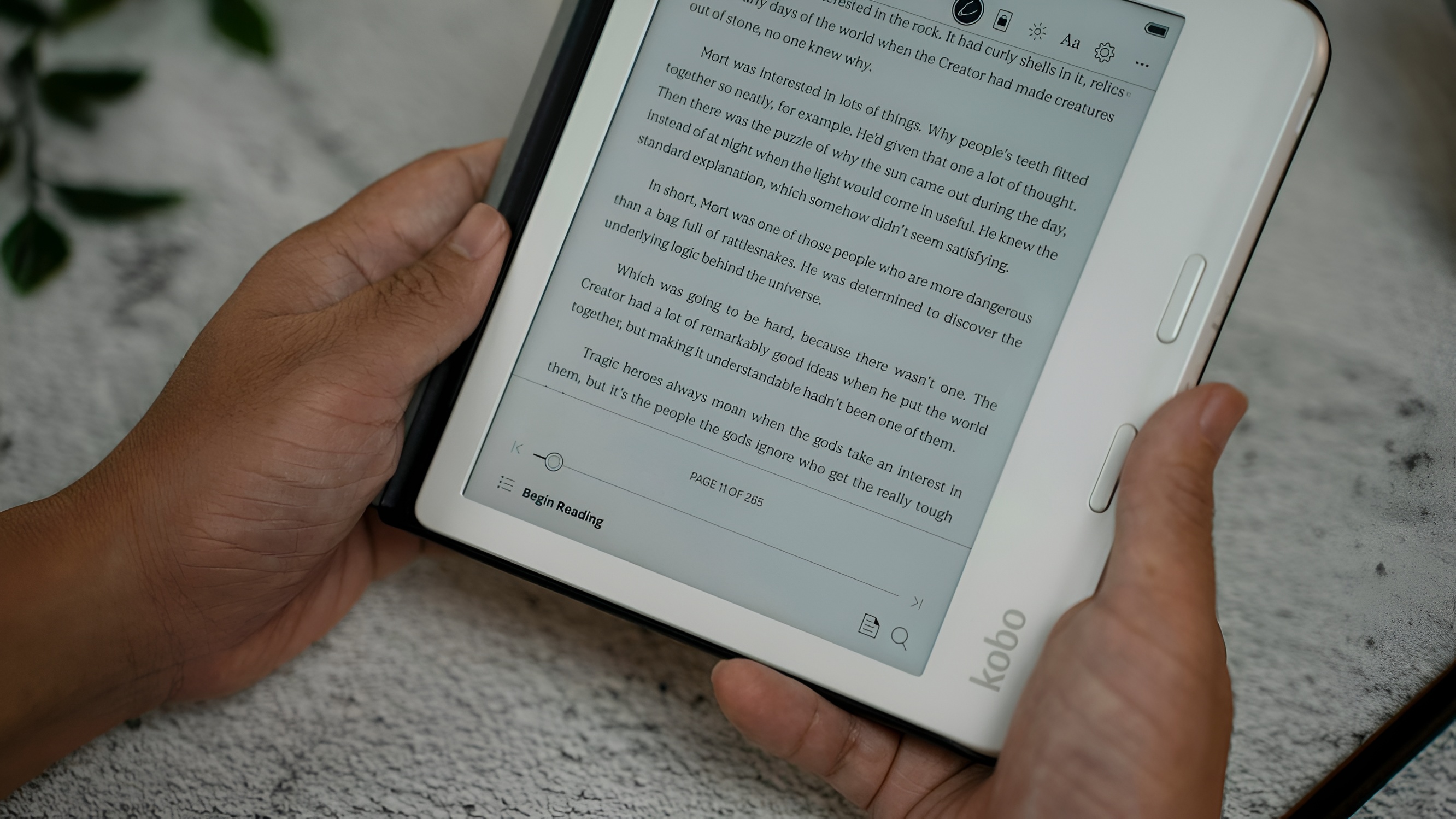
To understand why physical books feel so different, we first need to look at what screens do to our brains.
When you read on a screen, your brain enters in a state of high alert known as "hyper-reading" or "skimming mode". Because web pages are filled with visual distractions, hyperlinks, animated ads, notification banners, and pop-ups that your eye naturally jumps around. You scan for key phrases, bold headings, and bullet points rather than processing complete sentences and nuanced arguments.
Neurologists and reading researchers have found that digital reading engages different neural pathways than print reading. On a screen, we tend to read in an "F-shaped pattern," we scan the top line, drop down a bit to read a partial second line, and then plunge down the left side of the page to find specific keywords.
While skimming is fantastic for finding quick facts or checking the weather, it is terrible for deep comprehension, empathy, and memory retention. When every paragraph is competing with the irresistible urge to scroll or click, your brain never gets the chance to slip into a state of deep focus.
Also Read: Why Toyotas Never Die: The Engineering Secret To 500,000 Mile Reliability
Does Reading Physical Books Improve Memory and Focus?
Have you ever noticed that it is significantly easier to remember details from a physical book than from an ebook or an online article? That isn’t just nostalgia, it’s cognitive science.
Spatial Mapping and Memory
When you read a printed book, your brain builds a cognitive map of the text. You physically feel where you are in the journey. You know that a character died when you were about a third of the way through the left side of a thick book. You turn the physical pages, creating a tactile memory of the information. On a screen, text flows infinitely upward in a seamless digital stream, stripping away the visual and physical anchors your brain uses to anchor memories.
Deep Focus and Neural Plasticity
Deep reading is the kind that happens when you sit with a novel or an in-depth non-fiction book for an hour without interruption is actually a workout for your brain. It strengthens the neural circuits responsible for critical thinking, complex problem-solving, and emotional empathy. When you remove the threat of digital interruptions, your brain moves out of a reactive "fight-or-flight" sensory overload state and enters a calm, meditative focus.
Reduced Cognitive Load
Every hyperlink on a website presents your brain with a micro-decision, should I click this or keep reading? Even if you decide not to click, making that decision consumes a tiny fraction of your mental energy. Over time, this causes decision fatigue. Physical pages eliminate micro-decisions entirely. There is nothing to click, nothing to update, and nothing to like. There is only the text and your imagination.
What Are The Health Benefits Of Reading Books Daily?
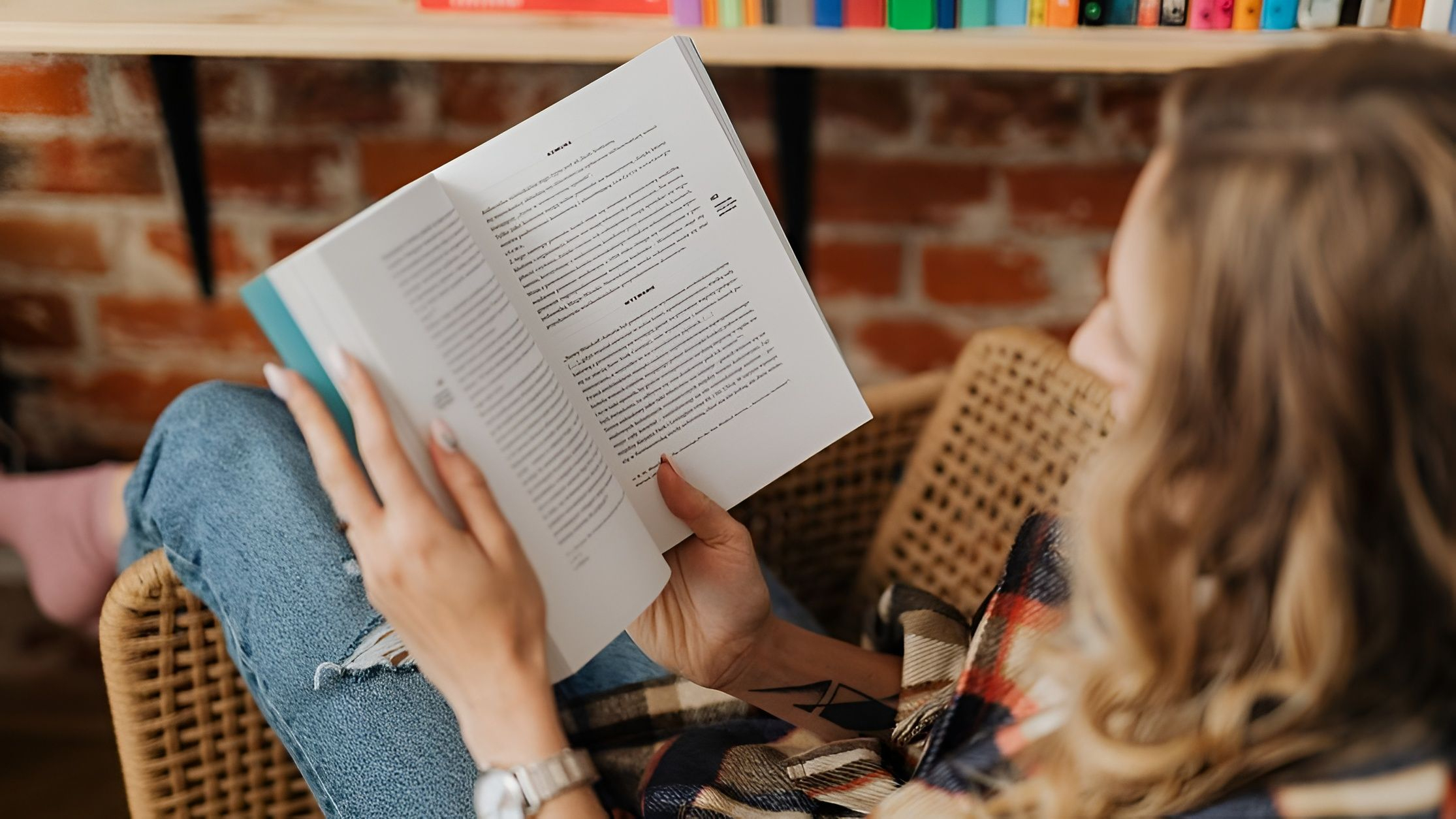
Reclaiming the lost art of daily reading isn't just an intellectual exercise; it profoundly impacts your daily mental health, emotional stability, and personal growth.
A famous study from the University of Sussex found that reading a physical book for just six minutes can reduce stress levels by up to 68%. That makes reading more effective at relaxing the nervous system than listening to music, taking a walk, or even drinking a cup of tea. Opening a book lowers your heart rate and eases muscle tension almost instantly because it forces your mind to focus on a single narrative thread away from real-world anxieties.
The blue light emitted by screens suppresses the production of melatonin, the hormone responsible for telling your body it is time to rest. By scrolling through social media in bed tricks your brain into thinking it is still daytime, keeping you wired and restless. Replacing your bedtime phone routine with 20 to 30 minutes of reading physical ink under a soft light signals to your brain that the day is over, leading to deeper, more restorative sleep.
Also Read: History Of Grasse: How It Created Chanel No 5
Does Reading Fiction Build Empathy And Intelligence?
Literary fiction, in particular, offers a unique psychological gift; the ability to step inside the mind of another human being. When you read a well-crafted book, you experience another person's thoughts, fears, joys, and struggles from the inside out. Studies show that regular readers of fiction demonstrate significantly higher levels of empathy and emotional intelligence in their real-world relationships.
How To Build A Daily Reading Habit In A Digital World
If you haven't finished a book in months or years starting again can feel daunting. Your attention span might feel broken, and picking up a 300-page book can seem like running a marathon without training.
And the good news? Attention is a muscle, and like any muscle, it can be rebuilt with consistent, gentle exercise. Here is a practical step-by-step guide to rebuilding your daily reading habit:
Start Small With The "10-Page Rule"
Don't set out with the aggressive goal of reading a book a week. Start ridiculously small. Commit to reading just 10 pages every day. Reading ten pages a day sounds almost trivial, but it adds up to 3,650 pages a year roughly 12 to 15 full books. Most importantly, 10 pages is a low enough threshold that you can easily accomplish it even on your busiest days.
Create A Dedicated Digital-Free Reading Zone
Designate a comfortable spot in your home specifically for reading, a cozy chair, a corner of the couch, or a quiet spot on your porch. Make this spot a strict digital-free zone. When you sit down in your reading chair, leave your smartphone, tablet, and laptop in another room (or at least out of arm's reach).
Swap Screen Time For Physical Book Reading
Think about all the moments throughout your day when you instinctively pull out your phone out of mild boredom: waiting in line at the grocery store, sitting in a doctor's waiting room, or riding a public transit. Carry a paperback with you wherever you go. Whenever you catch yourself reaching for your phone during these micro-moments, open your book instead.
Read What You Love Until You Love to Read
Life is far too short to read books out of obligation. Forget about what you think you should be reading to look smart or productive. If you love fast-paced thrillers, graphic novels, sci-fi sagas, historical memoirs, or romance novels, read those! If a book hasn't hooked you after 50 pages, give yourself full permission to put it down and pick up something else.
Should You Choose Ink Over Pixels?
Living in the era where digital technology is on its peak, we cannot and should not eliminate digital technology from our lives. Pixels give us unprecedented access to global communication, instant knowledge, and remote work.
However, being humans we need balance. We need a sanctuary away from the relentless pinging of notifications, the outrage algorithms of social media, and the cognitive fatigue of endless scrolling.
Physical books offer that sanctuary. When you open a book, you close out the noisy world. You choose depth over breadth, stillness over speed, and meaningful connection over cheap distraction.
Therefore, tonight, when the sun goes down and your work is finished, resist the urge to turn on another screen. Turn off your Wi-Fi, pick up a physical book, feel the weight of the pages in your hands, and let your mind wander into the quiet, magical world of ink.