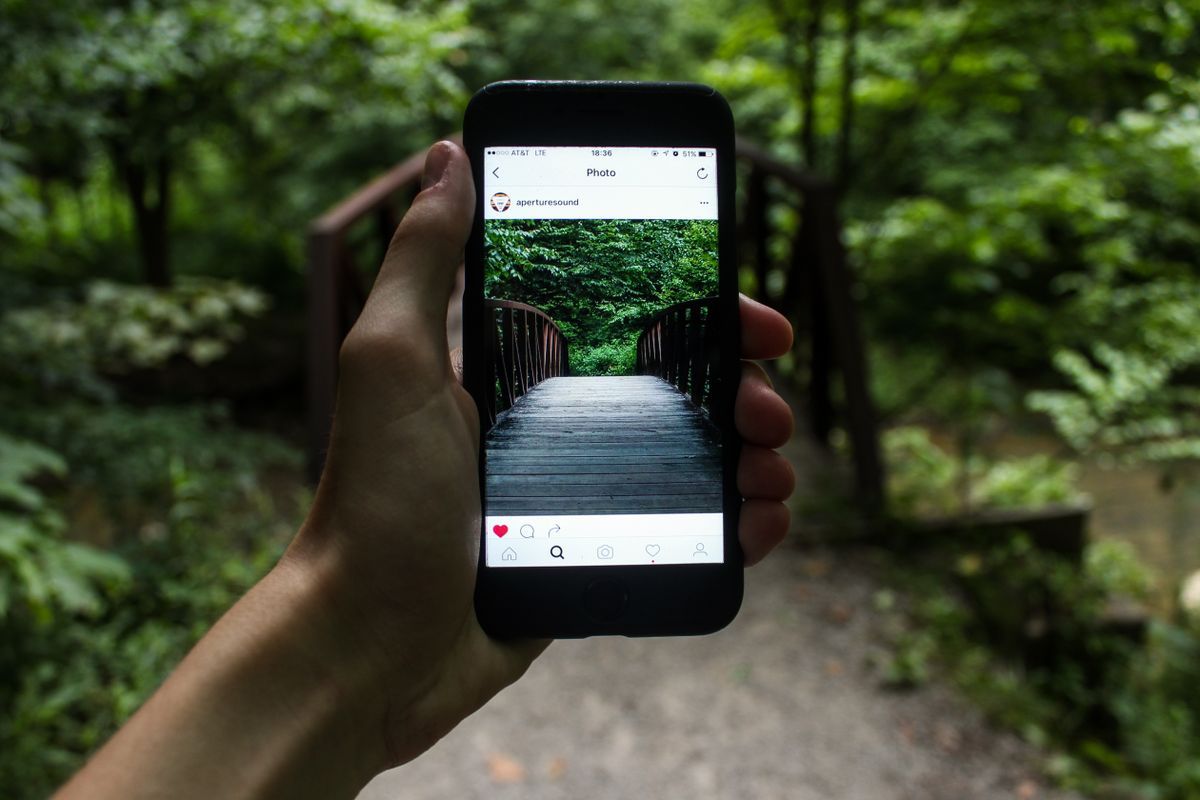
Do you need to be convinced via photos, videos and reviews of a country, a city or a natural place before visiting it? If yes, you are not alone; that's how destination marketing works. Call it a bane or a boon of technology, but you can't ignore how it has become a part of our lives.
The job of promoting places was almost entirely the job of tourism boards and travel agencies for decades. They used to design attractive, glossy brochures, run the TV ads and control every aspect of what travelers read or see about a destination before booking a flight. Thankfully, the control is gone because of the internet; people have more freedom to choose where they want to go.
In 1989, the internet was a one-way medium, where institutions had the power to publish, while everyone else read. However, in early 2004, it flipped into what we now call Web 2.0, which is a two-way space where anyone can create and share content like brands and institutions. It became a reason why people started trusting Instagram or TikTok videos more than a travel agent's brochure.
Tezpur University researchers Deep Jyoti Gurung and Chandan Goswami studied this shift and point out that tourism image sources fall into two broad camps: Content made by marketers and content that happens organically via news coverage, blogs and word of mouth. User-generated content (UGC) sits right in the second camp. It's unpaid, unscripted, and posted by travelers with nothing to sell.
Though traditional brochures still exist, they're increasingly read with suspicion because everybody knows a tourism board is going to show its destination at its absolute best. On the other hand, a stranger's travel vlog carries no such bias, which is why it carries more weight.
Also read || Dark Tourism: Why the World Travels Toward Tragedy
How Your Brain "Visits" a Place Before You Book It
Here's how it becomes interesting. Researchers distinguish between two things that sound similar but work very differently inside people's heads. These two words are destination image and destination imagery. Destination image is your overall, settled impression of a place. It's like a mental file you'd open if someone talks about "Mauritius" or "Finland".
A destination image is built from facts you know, such as safety, expensiveness or feelings you associate with that place. On the other hand, destination imagery is something more active; you can call it a mental movie you run while scrolling through someone's travel photos. And picture yourself actually standing on that beach or walking that street.
Researchers Khaled Aboalganam, Saeed Tarabieh, and Sakher AlFraihat collaborated in a 2025 study published in Administrative Sciences to test how UGC triggers this mental movie we call destination imagery. In that study, 418 Jordanian expatriates were surveyed who were emotionally connected to a destination but physically far from it. Their imagination was their main bridge before they actually planned a trip.
The study revealed surprising results, which showed that exposure to UGC had an extremely strong link to this mental simulation process, and that simulation had an equally strong link to wanting to visit that place. Researchers also found that UGC has the power to make someone want to travel through this imagination step, rather than through raw information only.
In simpler words, good travel content doesn't bore you with facts and figures about a place, but makes you picture yourself there, and people love that picture and buy a ticket. The researcher's model explained 66% of why people's mental imagery varied and 51% of why their visit interest varied, numbers that are unusually high for consumer behavior research.
Also read || The European Train Ticket Rule Most Americans Don’t Know
What Actually Makes People Book: Escape and Connection, Not Novelty
User-generated content may spark a fascination or imagination, but that alone does not swipe a credit card. There's a journey from a daydream into an actual decision. And it is proven by a 2026 study by Yusri Abdillah, Ahmad Fitri Amir, and Muhamad Robith Alil Fahmi in the Cogent Business & Management Journal published by Taylor & Francis.
In that 2026 study, they looked at 304 young travelers in East Java, Indonesia, including Gen Y and Gen Z travelers who live on social media. The objective of this study was to determine which emotional need triggers someone from "that looks cool" to "I am booking this". So, they tested three motivations, which were novelty seeking, escape seeking and interaction seeking.
Whether it is wanting something new or unfamiliar, wanting to escape daily stress, or building a social connection or shared experiences, all three motivations were triggered by UGC. However, only escape seeking and interaction seeking predicted whether someone would actually commit to visit a place.
Surprisingly, the content with exotic, never-seen-before locations grabbed attention, but it was not enough to translate into bookings. Users scrolled, admired and moved on. What actually convinced them was the content that promised relief from stress or a chance to bond with people they care about. This research should be the north star of how destinations need to do their travel marketing.
Also read || Top Workation Trends In 2026: The New Way To Travel
How Smart Destinations Turn UGC Into Actual Bookings

Realizing this shift, what should a tourism board or hotel do differently to grab attention? Researchers suggest that hotels, tourism boards or places need to make UGC a core marketing asset to manage, rather than treating it as background noise that needs to be monitored.
UGC is built around three practical pillars: curation, active engagement and reputation management. For curation, destinations need to build branded hashtags, something as simple and specific as #VisitJordan, so organic traveler content can be tracked and collected in one place. Moreover, marketers can run a photo or video campaign or contests to encourage more people to post, and the winner gets something special.
On the other hand, active engagement is difficult, and it's hard to collect content. So, the social media handler needs to like, comment and respond to traveler posts in real time. According to Aboalganam, when an official tourism account publicly recognizes a traveler's post, it validates that experience publicly. As a result, more people start posting their own content, which creates a snowball effect.
Reputation management is the least glamorous pillar but critically important for any social media account. Research by Jani and Hwang found that visitors actively search for negative reviews before booking, specifically finding reasons not to go. It means that destinations can't just celebrate good content but also use real-time social listening tools and continuously monitor what valid complaints are there. Oftentimes, a few bad reviews ruin a destination's reputation online.
Also read || Scarcity Marketing: How Limited Edition Drive Sales
Why UGC is important for brands
When you see everything as a whole, a clear pipeline appears. A traveler sees authentic and original content, not an advertisement. That content triggers a mental simulation of being there. The simulation activates the need to escape stress or connect with people. And that's how travelers fulfil their needs by actually turning interest into an actual booking.
The power has shifted from institutions and brands to ordinary travelers who post honest reviews about their experiences. Today, the destinations winning are not the ones with huge marketing budgets or the biggest advertisements. People love real stories which visitors are already telling, and they are brave enough to say what they like or dislike about the place.