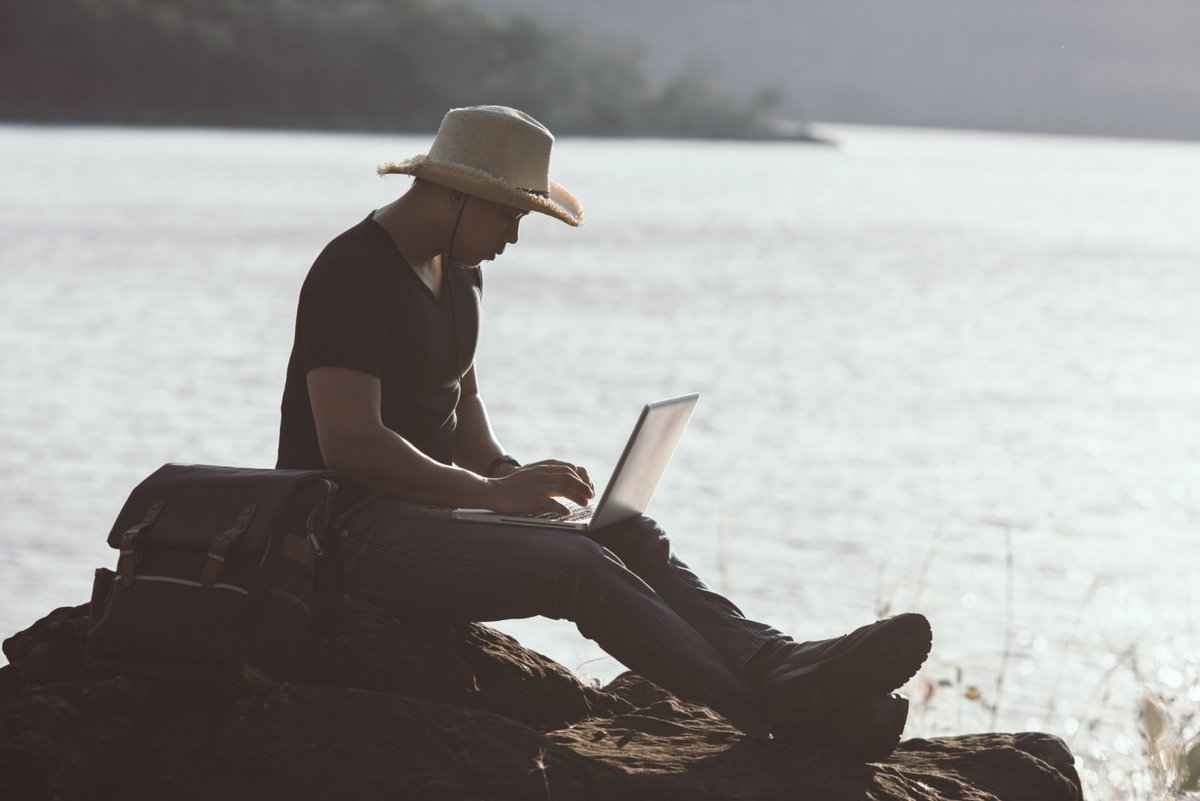
You are waking up to the sound of crashing waves in Bali, sipping a fresh coconut, and casually answering emails from a plush daybed. For years, this exact aesthetic dominated social media, captioned with aspirational hashtags #DigitalNomad and #LaptopLifestyle. It painted a picture of ultimate career freedom, convincing millions of corporate employees that the ultimate milestone was to work right from a beach towel. This fascinating vision turned the “workation,” a working vacation into a cultural phenomenon, promising an effortless blend of professional success and exotic relaxation.
The problem is that this dream tricked us. It made us think we could mix a serious job with a permanent vacation without changing anything about ordinary routines. By making it look easy, social media hid the stressful reality of trying to meet serious deadlines while constantly moving across different countries. It made us look at travel through a heavily filtered lens, ignoring the actual, unglamorous tools you need to get real work done.
The Reality Of Free-And Easy Remote Travel
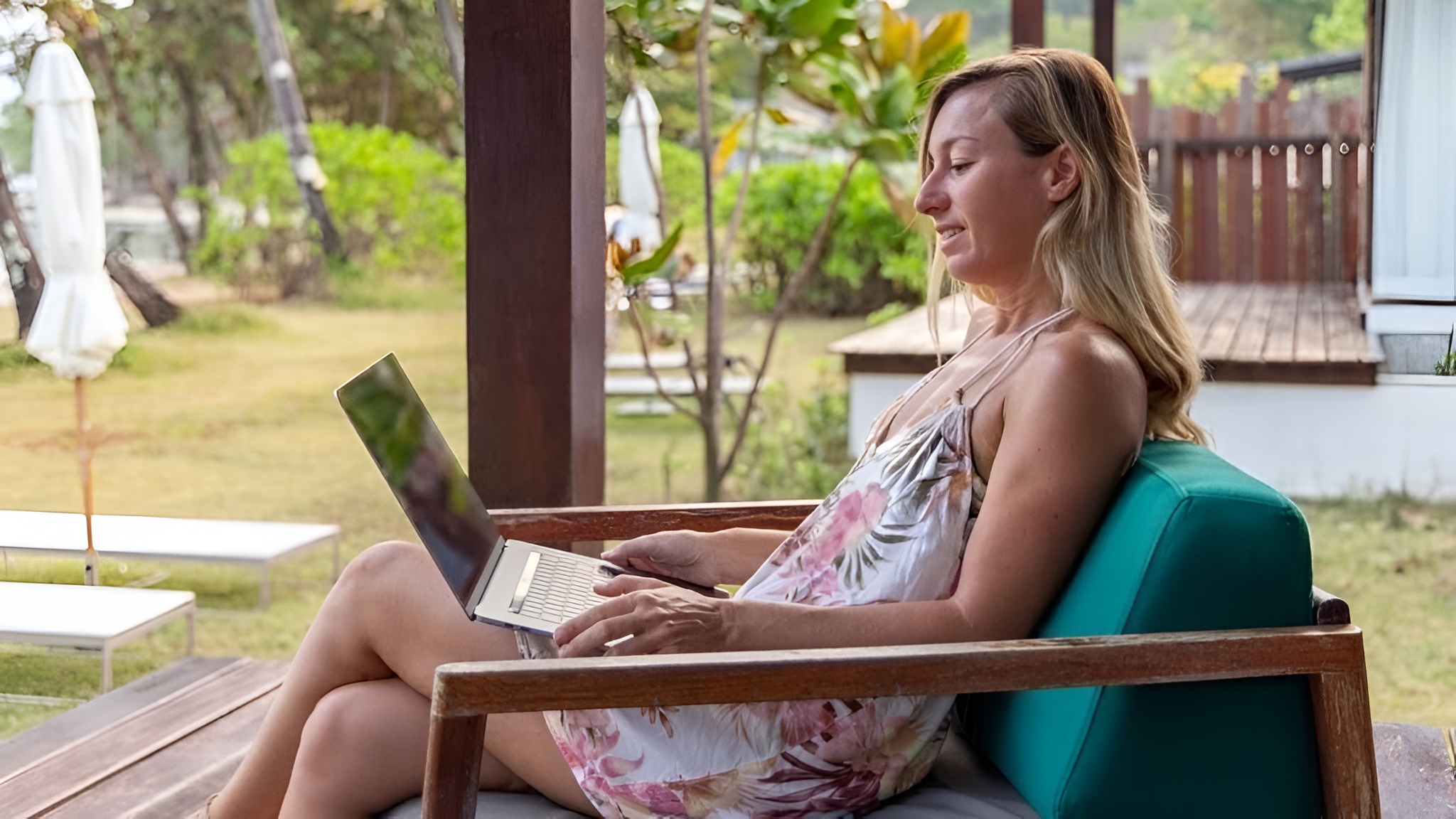
For a very long time, both employees and companies believed in a simple myth. We assumed that if you had a decent laptop, a Wi-Fi connection, and a passport, you could work anywhere on Earth. We thought softwares like Slack and Zoom had solved the location problem forever. If your job was entirely online, your office could easily move to a villa in Italy, a cabin in the Swiss Alps, or a hostel in Colombia. Even travel agencies jumped on this trend instantly, advertising standard vacation homes as “ready for remote work” without actually checking if they were suitable for professionals.
We casually assumed that blending eight hours of intense brainpower with holiday sightseeing was just a matter of simple personal discipline. We figured that remote freedom meant total liberation from the traditional office rules that keep us productive and healthy at the same time. This simple assumption led millions of us to leap into international remote travel without ever checking if local internet speeds, workspace setups, or international tax laws were actually ready to support our careers.
Also Read: 7 Highest Monasteries In The World You Must Visit
Broken Backs, Lost Wifi, And Infinite Stress
Un surprisingly, the dream of the carefree laptop lifestyle quickly ran into a wall of real-world problems. Thanks to the remote workers, who discovered that a beach chair or a soft hotel couch is an absolute nightmare for your body, causing terrible wrist, neck, and back pain. To make matters worse, that beautiful Airbnb booked for a month often had terrible, slow Wi-Fi that dropped out right in the middle of an important presentation, turning high-stakes client calls into incredibly stressful disasters.
The mental toll of this constant blending of work and life was even worse. Because the boundary between working hours and personal time vanished completely, workers got trapped in a stressful cycle. They were too distracted by the constant work messages to enjoy their travel destination, yet too exhausted by the pressure of sightseeing to do their jobs properly. Instead of feeling free, people faced severe burnout and deep loneliness, working longer hours than ever just to prove to their bosses that they weren't slacking off.
Corporate Crackdowns And Legal Nightmares
At the corporate level, the situation turned into a major headache as HR and legal departments started actively cracking down on unannounced, secret workations. The complex international tax laws meant that an employee working from a foreign country for even a few weeks could accidentally resulted in massive legal and tax liabilities for their employer.
Moreover, tax security risks multiplied over insecure public hotel networks, and working abroad on a basic tourist visa suddenly felt like a dangerous gamble that could result in deportations or hefty corporate fines. The dream of the workstation was dying, caught between the exhaustion of individual travellers and the strict demands of big corporations. Now, the big question arises, “How do we travel deeply without destroying our careers, our health, and our legal standing?” This breaking point forced the travel industry and global governments to step in and redesign the entire remote work world from scratch.
The Clever Solutions Making Workations Easy Today

The travel and hospitality sectors responded to these widespread problems by building an entirely new ecosystem engineered to eliminate operational pain points. Workations have officially transitioned from a sketchy legal gray area into an organized standard that benefits both the employee and the employer.
The Rise Of The Managed Workation Hubs
The stressful gamble of booking unreliable accommodation has been entirely eliminated by specialized co-living networks that have built premium, plug-and-play spaces around the globe. Even traditional luxury hotel chains have overhauled entire floors of their properties to build dedicated co-working sanctuaries. These modern hubs guarantee an infrastructure that easily rival any corporate headquarters in New York or London, featuring symmetrical gigabit internet, soundproof phone booths for video calls, and ergonomic zones with standing desks and dual monitors.
Why “Midcationing” Is The New Sweet Spot
The extreme choice between a rushed three-day weekend trip and exhausting, endless nomadism has been resolved by a new trend known as “midcationing.” This movement defines the optimal travel length as a dedicated block of three to six weeks, which has completely changed the pace of remote travel. However, staying in a single location for roughly a month allows professionals to establish a stable, healthy routine, giving them time to find a favorite neighbourhood cafe, hit the gym, and protect their core working hours without feeling guilty.
The Digital Nomad Visa Resolution
The terrifying legal gray area working secretly on tourist visas has been completely replaced by the widespread governmental acceptance with over 70 countries now offering streamlined, fully digital nomad visas (DNVs). European hotspots like Spain, Portugal, and Greece provide robust digital infrastructure combined with attractive tax incentives for remote professionals. In Southeast Asia and Latin America, countries offer highly accessible digital applications, low living costs, and perfect time-zone alignment with global offices.
South Korea’s New Permanent Visa Program
A massive milestone in regulatory clarity came when South Korea officially formalized its workation visa into a permanent program. In an aggressive push to attract global talent and stimulate regional economies outside of Seoul, the government completely revamped its once-rigid criteria. Under the modernized policy, the government has extended the maximum stay period to up to three years, providing one of the most stable and longest digital nomad residencies in East Asia.
Off-Grid Freedom Via Satellite Internet
The geographic limits historically imposed by the traditional cable maps have been completely shattered. The universal normalisation of low-Earth orbit (LEO) satellite networks allows the professionals to work from the most remote, pristine corners of the planet. Software engineers and creative directors can now host seamless, high-definition video calls from eco-lodges buried deep within the Costa Rican rainforest, luxury glamping tents on Icelandic volcanic plains, or custom campervans navigating the vast Australian Outback.
Also Read: Why Do We Take So Many Photos While Traveling?
Corporate Retreats 2.0
Forward-thinking corporations have realized that workations are no longer an operational hazard, but rather a powerful weapon for talent retention and team cohesion, promoting human resources departments to actively budget for structured, immersive B2B team workations instead of forcing employees into boring conference room retreats. For instance, tech giant Atlassian utilizes its “intentional gathering” policy to bring isolated departments together at collaborative villa clusters where they hammer out major quarterly strategy goals in person, before spending the weekend hiking or surfing together to build genuine human connection.
Claim Your Borderless Freedom Today

If you are ready to stop dreaming and start planning your transition under this modern framework, you must take immediate operational steps to secure your career and your sanity. First, you need to audit your digital infrastructure by demanding a verified screenshot of a symmetrical speed test from your host or workation hub before booking, ensuring it logs at least 50 Mbps upload and download speeds. Next, try to secure complete legal compliance by applying for an official digital nomad visa if your stay exceeds 30 days, which keeps you safe from the risks of working silently on a standard tourist entry.
Additionally, you must sync your time zones strategically by mapping out your destination so that you maintain a mandatory 3-to-4-hour working overlap with your core team or primary clients to prevent exhausting midnight shifts. Finally, make sure to pack an ergonomic toolkit, investing in a lightweight, folding laptop stand, a compact mechanical bluetooth keyboard, and an ergonomic vertical mouse to safeguard your posture while on the move. By executing these steps, you transform your next international trip from a chaotic gamble into a flawless, career-enhancing success.