Today, Photoshop is much more than just software. It has become a common word in everyday language, and people often use the term “Photoshopped” to describe any edited image, whether it is a professionally retouched photograph, a funny meme, or a manipulated social media post. Because Adobe’s name has been connected with Photoshop for so many years, many people naturally believe that Adobe created the software from the beginning. However, the real story is quite different. Photoshop was not originally created by Adobe. Instead, it started as a personal project by a college student named Thomas Knoll during the late 1980s, with important help and creative input from his brother, John Knoll. What began as a simple technical experiment eventually grew into one of the most important software programs in modern history.
Also Read: 10 Amazing Things You Didn’t Know IBM Invented
The Technology World Before Photoshop
To understand why Photoshop became such a revolutionary tool, it is important to look at what technology was like before it existed. During the 1980s, personal computers were becoming more popular, but digital creativity was still in its early stages. Although digital scanners already existed, they were not very useful for most people because there were very few tools available to edit scanned images. A scanner could turn a physical photo into a digital image, but users had almost no easy way to improve the image, adjust colors, remove unwanted details, or combine images together. The kind of digital editing that people now take for granted simply did not exist in a simple or accessible way. At the same time, Adobe was still a relatively young company known as Adobe Systems. It was beginning to build a name for itself in software and printing technology, but it had not yet become the global creative software leader it is today.
Thomas Knoll’s Unexpected Beginning
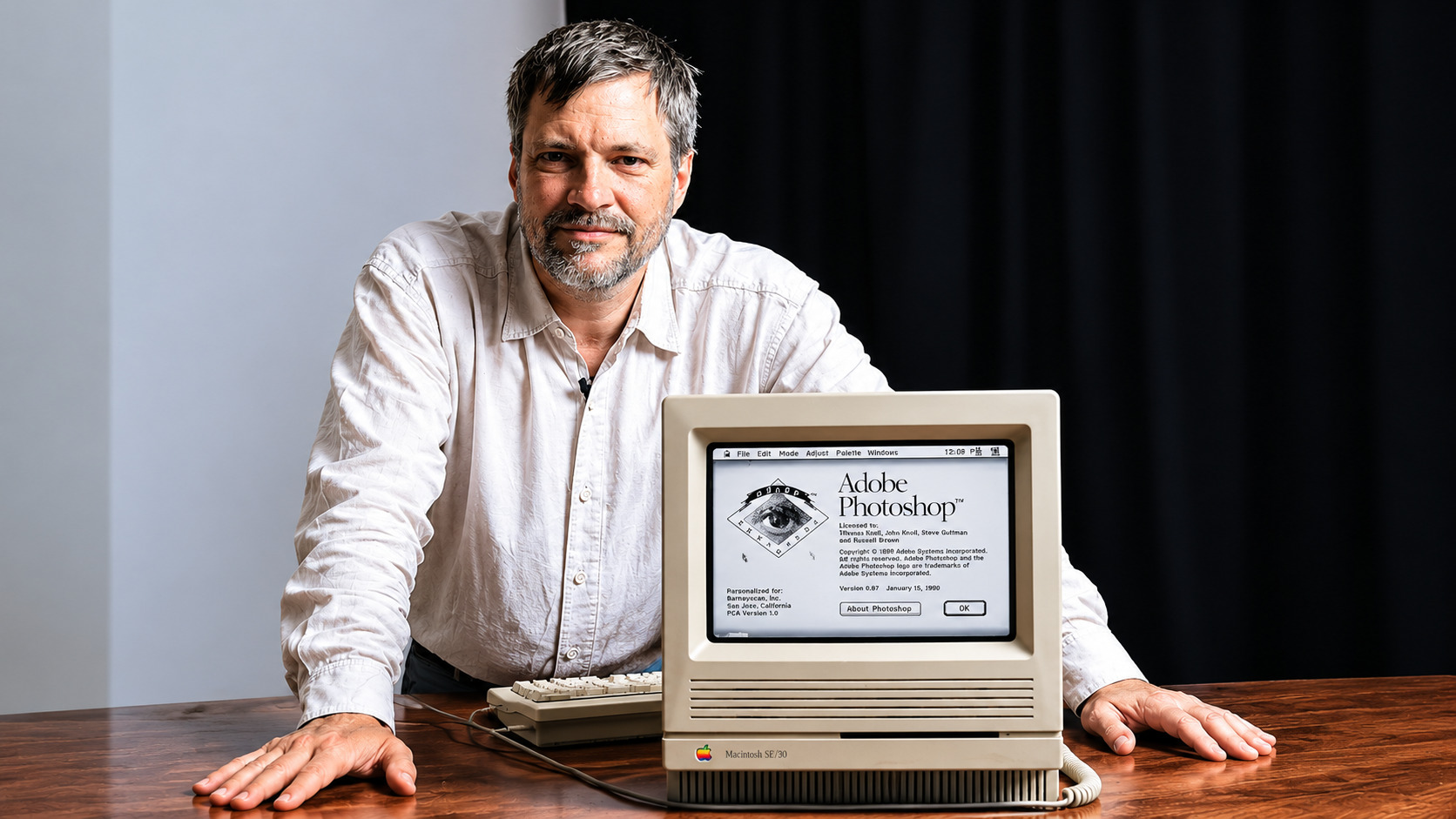
The story of Photoshop did not begin with photography or graphic design. It actually began with computer science research. Thomas Knoll was a PhD student at the University of Michigan, where he was working on image-processing algorithms. One of his projects involved creating software that could detect the edges of objects in digital images. This was originally designed to help robotic systems recognize and sort physical objects. Interestingly, a version of this same technology still exists in Photoshop today as the “Find Edge” filter. Around the same time, Thomas also became frustrated with the limitations of his Apple Mac Plus computer. The machine used a monochrome display, which meant it could only show black-and-white visuals and could not properly display greyscale images. For someone interested in image processing, this was a major problem. Rather than accept the limitation, Thomas decided to create his own software tools to solve it. What started as a personal solution to a technical problem would soon evolve into something much bigger.
John Knoll Joins the Project

Thomas’s brother, John Knoll, played a major role in turning the project into a real product. John worked at Industrial Light & Magic, the well-known visual effects company behind major Hollywood productions. Because of his background in film and digital imaging, he immediately recognized the potential in Thomas’s work. While Thomas focused on the technical programming side, John contributed creative ideas and practical suggestions based on real visual effects work. The two brothers began working together more seriously, combining their different strengths. Thomas developed several separate tools for editing images, and over time, these tools were merged into a single application called Display. As they continued improving the software, it became clear that they had created something unique. There were very few, if any, tools on the market that offered similar capabilities. This realization encouraged them to think about selling the software commercially.
From Display to Photoshop
As the software became more advanced, the Knoll brothers began exploring commercial opportunities. During this period, the software went through a few name changes. It was briefly called ImagePro, but that name did not last long. Eventually, the brothers chose the name Photoshop, which would later become one of the most recognizable names in technology. However, convincing companies to invest in the software was not easy. At the time, digital image editing was still a new idea, and many businesses did not fully understand its potential. Even Adobe initially showed little interest in the software. The market for creative digital tools was still developing, and many companies were unsure whether such software would become commercially successful.
The Barneyscan Deal
The breakthrough came when the Knoll brothers demonstrated their software to Barneyscan, a California-based company that manufactured high-end color film scanners. Barneyscan quickly recognized a major problem in the market. Customers could buy expensive scanners, but without proper software, they had very limited ways to view, edit, or improve the scanned images. The company realized that Thomas and John’s software could solve this problem perfectly. As a result, Barneyscan signed a deal with the brothers, leading to the first commercial release of the software under the name Barneyscan XP. This version was bundled with Barneyscan scanners and was specially designed to work only with those devices. Although this partnership was important in getting the software into the market, it was only a temporary step in Photoshop’s larger journey.
Also Read: How Lenovo’s AI-Powered Vision Could Transform the 2026 FIFA World Cup Experience
Adobe Changes Everything
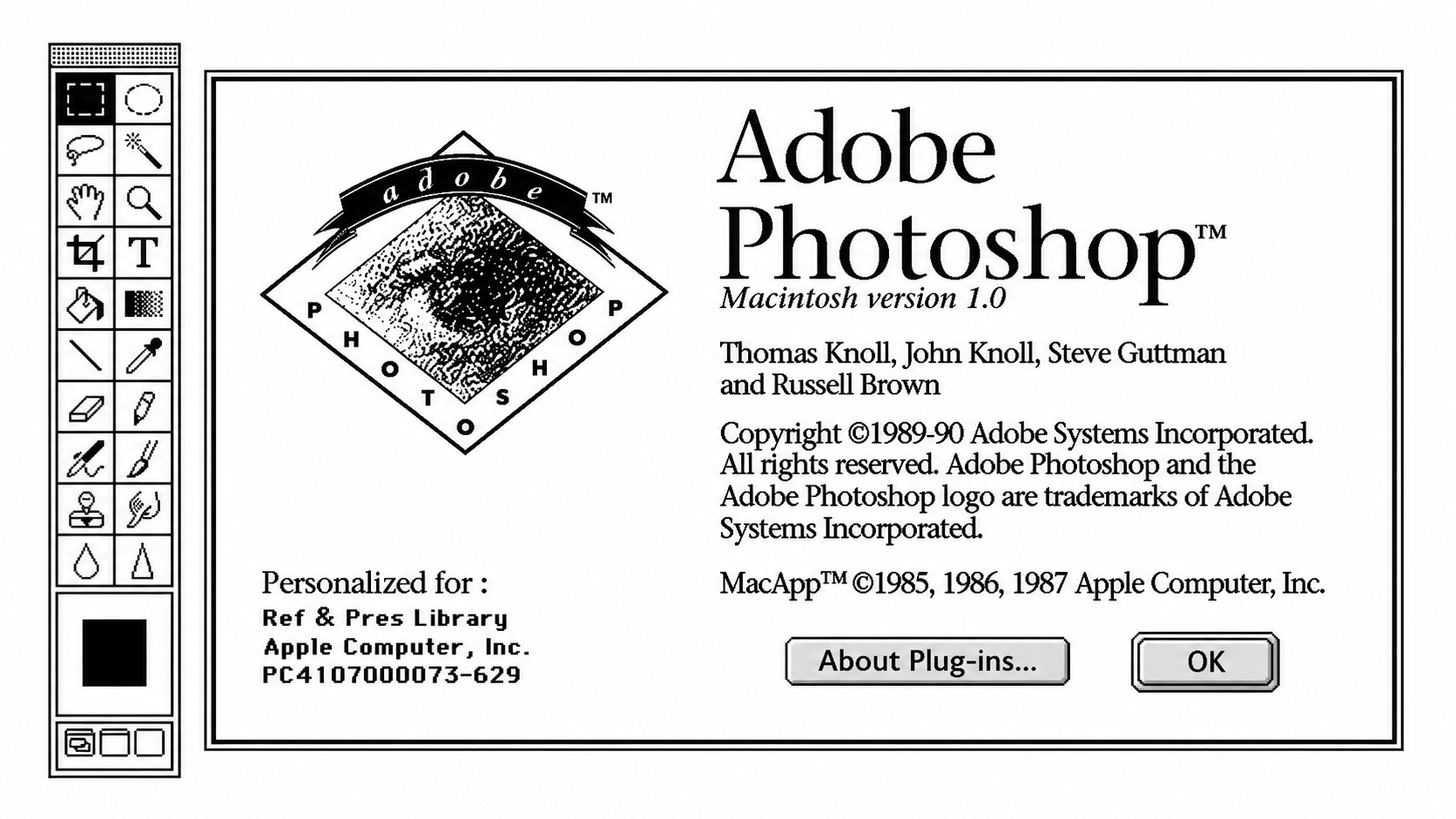
Eventually, Adobe recognized the true potential of the software. By the late 1980s, Adobe was already building a strong reputation through products like Illustrator and its PostScript printing technology, which helped computers communicate with printers for professional publishing. The company saw that image editing software could become an important addition to its growing creative software lineup. In 1988, Adobe reached an agreement with Thomas and John Knoll, bringing the software under its brand. This decision completely changed the future of the project. Adobe refined the product, prepared it for a larger audience, and officially released Adobe Photoshop 1.0 in 1990. This marked the beginning of a major transformation in digital creativity.
Photoshop’s Massive Impact
What started as a student’s attempt to solve a personal technical problem eventually transformed multiple industries. Photoshop changed the way photographers edit images, how designers create visual content, how advertisers build campaigns, and how publishers prepare professional materials. It also became a major tool in film production, web design, and eventually social media content creation. Over time, Photoshop became so influential that its brand name entered everyday language as a verb. Today, people edit images not only on computers but also on tablets and smartphones using tools inspired by Photoshop’s original innovation. Its influence can be seen almost everywhere in modern digital culture.
A Remarkable Legacy
The story of Photoshop is a powerful reminder that major innovations do not always begin inside large corporations with huge resources. Sometimes they begin with a curious individual trying to solve a personal problem. Thomas Knoll’s frustration with his computer limitations led to an experiment that eventually changed the world of digital creativity. John Knoll’s creative vision helped shape that experiment into something commercially valuable. While Adobe helped turn Photoshop into a global success and industry standard, the original spark came from two brothers working together on an idea. That human story makes Photoshop’s history even more fascinating.