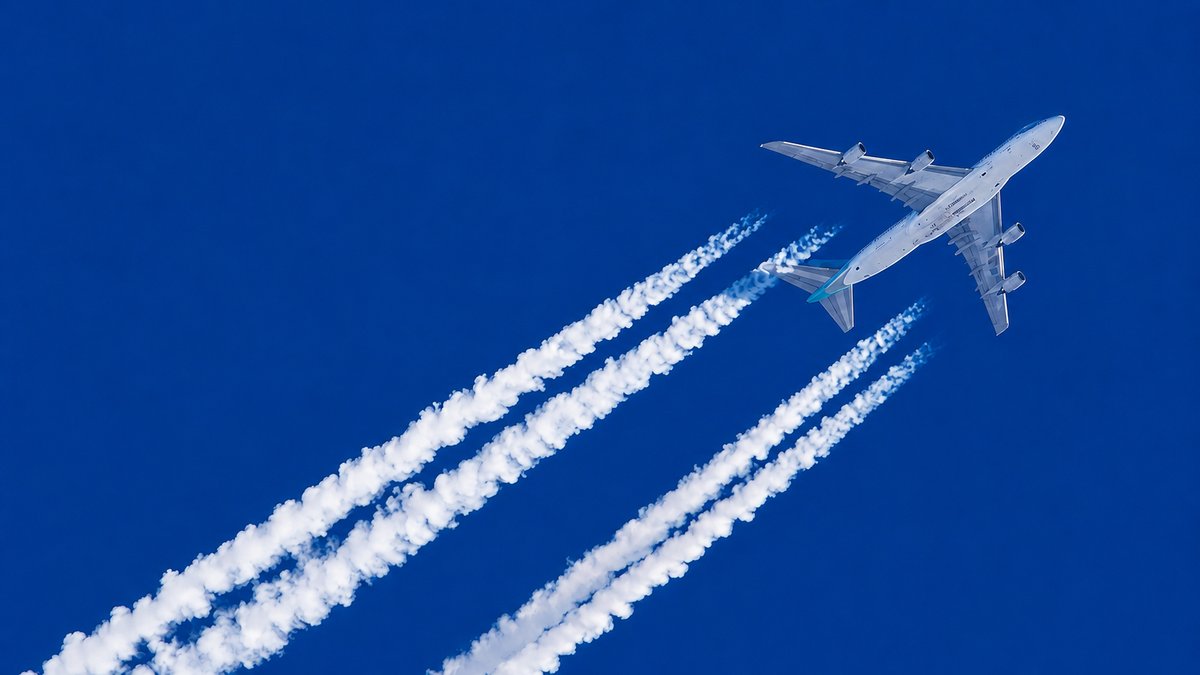
If you've ever looked up at the sky and seen long white lines stretching behind an airplane, you may have wondered what they are. For years, some people have claimed that these trails are evidence of chemicals being secretly sprayed into the atmosphere.
This idea, often called the "chemtrail" theory, suggests that governments or other organizations are releasing substances into the sky for hidden purposes, such as controlling the weather, affecting public health, or altering the climate.
While these claims have gained attention over the years, scientific evidence tells a very different story. The white trails seen behind airplanes are not secret chemical sprays. They are a well-understood atmospheric phenomenon known as contrails, and scientists have been studying them for decades.
Also Read: What Are Those Little Fins On Jet Engines For?
How the Chemtrail Theory Started
The belief that airplanes are spraying chemicals into the sky became especially popular in the early 2000s. In 2002, journalist William Thomas argued that airplane trails seemed to last longer than they had in the past. He suggested that these persistent trails were not ordinary condensation trails but evidence of chemicals being deliberately released into the atmosphere.
The theory spread widely through the internet, social media, and online forums. As more people noticed long-lasting white streaks in the sky, some began to question whether airplanes were involved in secret activities. Despite its popularity, however, no credible scientific evidence has ever supported the claim that commercial aircraft are secretly spraying chemicals over populations.
What Contrails Really Are
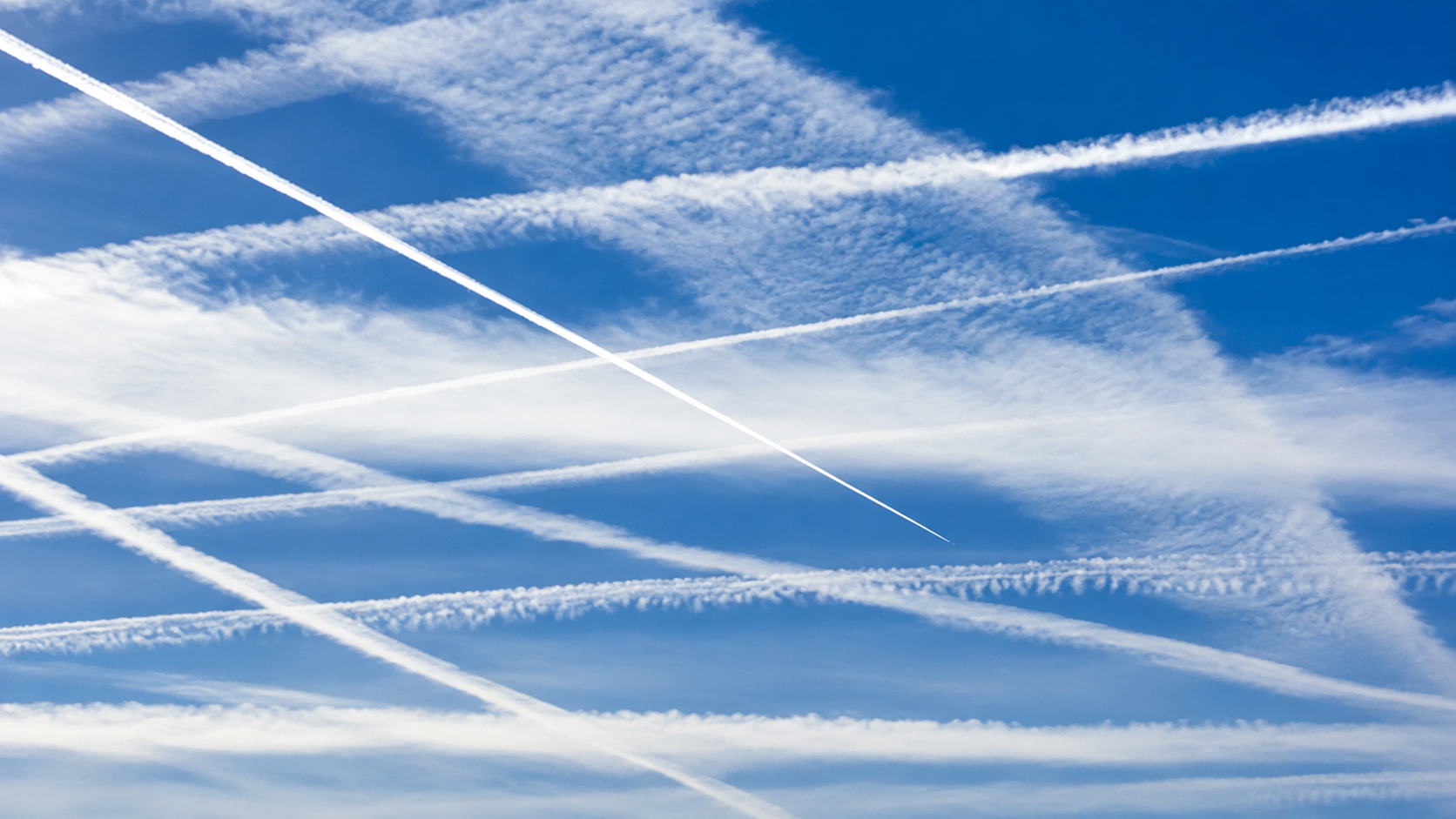
The white trails behind airplanes are called contrails, short for "condensation trails." Contrails form when aircraft fly at high altitudes where the air is extremely cold. Jet engines produce hot exhaust gases that contain water vapor. When this hot, moist exhaust mixes with the freezing air surrounding the aircraft, the water vapor quickly condenses and freezes into tiny ice crystals.
These ice crystals reflect sunlight, making them visible as bright white streaks across the sky. The process is very similar to what happens when a person breathes on a cold winter day. Warm, moist breath enters cold air and becomes visible as a cloud. Contrails form through the same basic principle, except at much higher altitudes and much colder temperatures.
Why Some Contrails Last Longer Than Others
One reason people often become suspicious of contrails is that some disappear quickly while others remain visible for hours. The explanation is simple: atmospheric conditions vary. If the air is relatively dry, the ice crystals in a contrail evaporate quickly, causing the trail to disappear within minutes.
However, if the air is humid, the ice crystals can survive much longer and may even grow larger by collecting additional moisture from the atmosphere. Under these conditions, a contrail can spread out and resemble a thin cloud layer. This can make it appear as though something unusual is happening, even though the process is completely natural. Meteorologists have understood this behavior for many years, and it is consistent with established atmospheric science.
Also Read: Why Planes Fly Over the Arctic but Rarely Over Antarctica
What Is Actually Inside Aircraft Exhaust?
Some people assume that because contrails are visible, they must contain unusual chemicals. In reality, aircraft exhaust contains many of the same substances found in automobile exhaust. Jet engines primarily produce water vapor, carbon dioxide, small amounts of nitrogen oxides, tiny particles of soot, and trace amounts of sulfur compounds.
The vast majority of aircraft exhaust consists of water vapor and carbon dioxide, while the remaining substances exist in very small quantities and are normal byproducts of fuel combustion. Importantly, there is no evidence that commercial aircraft are carrying or dispersing large amounts of secret chemicals through their exhaust systems.
What Government Agencies Say
Government aviation and environmental agencies have repeatedly investigated claims about chemical spraying. According to aviation and environmental experts, there is no evidence that commercial aircraft are being used to deliberately release harmful chemicals into the atmosphere.
The visible trails observed behind airplanes can be fully explained by known physical processes involving water vapor, temperature, and atmospheric conditions. Scientists from multiple countries have reached the same conclusion. Studies examining contrail formation consistently show that these trails are made up primarily of ice crystals formed from aircraft exhaust and atmospheric moisture.
Why Some People Continue to Believe the Theory
Even though scientific explanations exist, the chemtrail theory remains popular in some circles. One reason is that governments have conducted secret operations in the past. Historical examples of classified military projects and biological testing programs have led some people to distrust official explanations. Another factor is the growing concern about climate change.
Scientists are actively researching ways to reduce global warming, and some proposed ideas involve modifying the atmosphere or reflecting sunlight away from Earth. When people hear about these proposals, they may mistakenly connect them to ordinary airplane contrails. In addition, the internet allows theories to spread quickly, often reaching large audiences before scientific explanations can be widely understood.
Do Contrails Affect the Environment?
While contrails are not chemical weapons or secret spraying operations, scientists do study their environmental impact. Contrails can influence the climate by trapping some of Earth's heat in the atmosphere. When large numbers of contrails spread and form thin cloud layers, they may contribute slightly to warming effects.
Because of this, researchers are exploring ways to reduce contrail formation without affecting aviation safety. These efforts focus on environmental concerns rather than fears of chemical spraying. The fact that scientists study contrails does not mean they are dangerous chemicals. It simply means researchers are trying to better understand all factors that influence Earth's climate.
Also Read: Why Are Airplane Windows Round-Shaped
The Scientific Conclusion
The evidence is clear: the white trails behind airplanes are contrails, not secret chemical sprays. They form when hot engine exhaust mixes with extremely cold air at high altitudes, creating tiny ice crystals that become visible in the sky.
Their appearance, shape, and duration depend on weather conditions, especially temperature and humidity. Although aircraft exhaust contains small amounts of pollutants, there is no credible evidence that commercial airplanes are deliberately releasing harmful chemicals into the atmosphere. Decades of research have shown that contrails are a natural result of aviation and atmospheric physics.
The next time you see white streaks stretching across the sky, you are not witnessing a secret operation. You are simply seeing ice crystals formed by an airplane flying through cold, moist air thousands of feet above the Earth.