If you have ever tracked an international flight on a map, you may have noticed something interesting. Many long-distance flights between North America, Europe, and Asia travel far north, sometimes passing close to the Arctic and even near the North Pole. Yet commercial planes almost never fly directly over Antarctica. At first, this may seem strange because both the Arctic and Antarctica are polar regions, both are extremely cold, and both appear equally remote on a globe. However, the reality of modern aviation makes the two regions very different. Geography, safety rules, weather, infrastructure, economics, and history all play a major role in why airlines regularly use Arctic routes but avoid Antarctic ones.
Also Read: What Are Those Little Fins On Jet Engines For?
The Arctic Connects the World’s Busiest Regions

The biggest reason planes fly over the Arctic is simple: it lies between many of the world’s largest cities. Most global air traffic happens between North America, Europe, and Asia. Cities such as New York, London, Paris, Tokyo, Beijing, Chicago, Seoul, and Hong Kong generate enormous numbers of passengers and cargo shipments every day. Airlines constantly look for the fastest and most fuel-efficient ways to connect these destinations. Aircraft do not fly in straight lines on flat maps. Instead, they follow paths called great-circle routes, which are the shortest distances between two points on the curved surface of Earth. On most world maps, these routes appear curved toward the poles.
For example, a flight from New York to Tokyo may look as though it is taking a strange northern path, but in reality, that route is shorter than flying directly west across the Pacific Ocean. The same is true for many flights between Europe and Asia. By flying through high northern latitudes, airlines save time, reduce fuel consumption, and lower operating costs. The Arctic naturally becomes part of these routes because of the position of major population centers in the Northern Hemisphere.
Antarctica Is Far From Major Flight Corridors
The Southern Hemisphere works differently because large cities are spread much farther apart, and there are fewer major population centers. Flights between cities such as Sydney, Auckland, Cape Town, Buenos Aires, or Santiago usually cross large stretches of ocean. Even when airlines calculate the shortest possible routes, they rarely gain enough advantage by flying directly over Antarctica.
In most cases, the shortest route still remains over the Southern Ocean rather than crossing the continent itself. The distance savings from flying over Antarctica are usually too small to justify the additional risks and complications. Unlike the Arctic, Antarctica does not sit between the world’s busiest travel markets. As a result, there is little natural demand for polar routes there.
Safety Rules Are One of the Biggest Reasons
Modern aviation operates under strict international safety regulations. Airlines must always prepare for emergencies, including engine failures, medical situations, sudden weather problems, or technical issues. One of the most important rules for long-haul flights is that planes should remain within a safe distance of diversion airports. These are airports where an aircraft can land if something goes wrong during the flight.
The Arctic has many such options. Airports in Alaska, northern Canada, Greenland, Iceland, Norway, Sweden, and Finland can support large commercial aircraft. These airports are maintained year-round and are included in regular airline planning. This network of airports allows airlines to safely operate flights across northern polar regions while still meeting international safety standards.
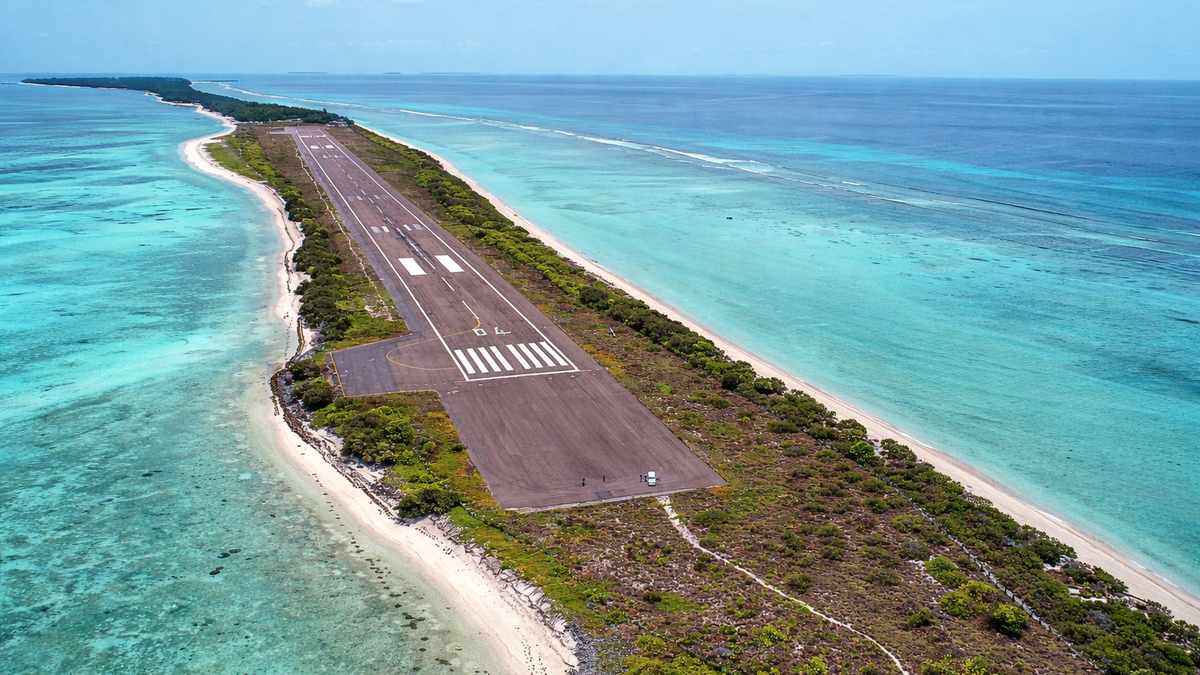
Antarctica is completely different. The continent has only a handful of research and military airstrips. Many are temporary, seasonal, or built directly on ice. Harsh weather can quickly make them unusable. Most are not certified for large-scale commercial airline operations, and they lack the infrastructure needed for emergency passenger support. For airlines, this creates a major problem because flying over Antarctica would mean traveling extremely long distances with almost no reliable emergency landing options nearby. From a safety perspective, that is not attractive.
Antarctica’s Environment Is Much More Extreme

Although both poles are cold, Antarctica is far colder than the Arctic in many ways. Antarctica is the coldest continent on Earth. Temperatures in some regions can fall below -60°C, especially during winter. It is also the windiest continent, with powerful katabatic winds that can reach very high speeds.
The continent’s average elevation is also extremely high, making weather conditions even harsher. In addition, Antarctica experiences long periods of darkness during winter, creating difficult conditions for navigation and rescue operations. Weather forecasting is harder there because there are relatively few observation stations across the continent. Sudden storms and whiteout conditions can reduce visibility to almost zero.
If a commercial aircraft experienced an emergency landing in Antarctica, rescue efforts would be difficult, slow, and dangerous. The continent has very limited infrastructure, very few nearby settlements, and almost no large-scale search-and-rescue capability. The Arctic, while still harsh, is surrounded by countries with established transportation systems, military bases, airports, and emergency services. That difference matters greatly in aviation planning.
Airlines Follow Demand, Not Adventure
Airlines are businesses, and their routes are based mainly on economics and passenger demand. The Arctic lies directly between some of the busiest travel markets in the world. Millions of people travel between North America, Europe, and Asia every year, creating constant demand for efficient polar routes.
Antarctica, however, has no cities, no permanent civilian population, and almost no regular commercial activity. Very few passengers need to travel there. Even southern long-haul routes rarely benefit enough from an Antarctic crossing to justify the extra operational complexity. Fuel savings would often be minimal compared to the added safety concerns and planning requirements. For airlines, there is little financial reason to create regular routes over Antarctica.
Also Read: Why Spirit Airlines Failed
History Helped Build Arctic Aviation
Another important factor is history. During the Cold War, Arctic routes became strategically important because the shortest paths between the United States and the Soviet Union crossed the North Pole. Military planners invested heavily in Arctic navigation, communications, weather forecasting, radar systems, and airfield construction.
Over time, commercial aviation benefited from this infrastructure. As aircraft technology improved and planes gained longer ranges, airlines began using transarctic routes more regularly. By the late 20th century, flying over the Arctic had become routine for many international airlines.
Antarctica never experienced similar development. There was little military or commercial pressure to build a large aviation network there, so infrastructure remained limited mainly to scientific research operations.
Some Flights Do Travel Far South
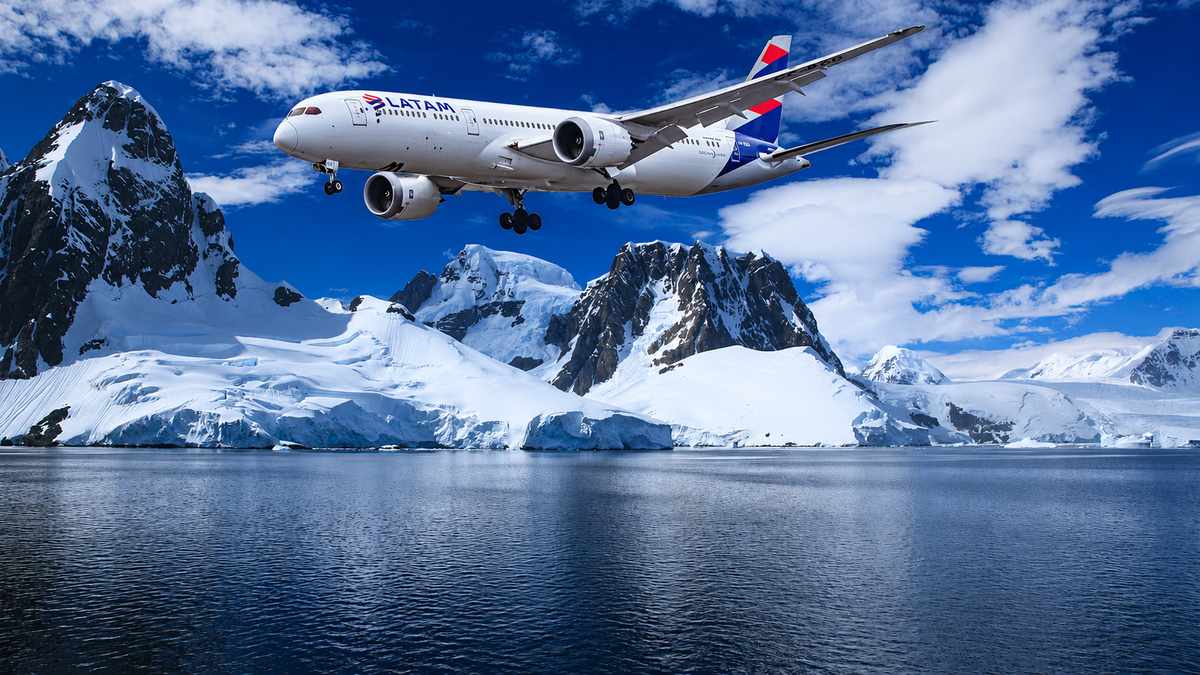
Although commercial flights rarely cross Antarctica itself, some routes do travel far south over the ocean. Flights between Australia and South America, or between New Zealand and southern destinations, may sometimes move closer to Antarctica depending on weather conditions and jet streams. Passengers on these flights occasionally get distant views of Antarctic ice from high altitude.
However, these flights still avoid crossing deep into the Antarctic interior. They remain within safer operating zones and closer to approved diversion airports. There are also special flights to Antarctica itself. These flights usually support scientific research stations, logistics missions, military operations, or controlled tourism expeditions. They are carefully planned and operate very differently from regular passenger airline services.