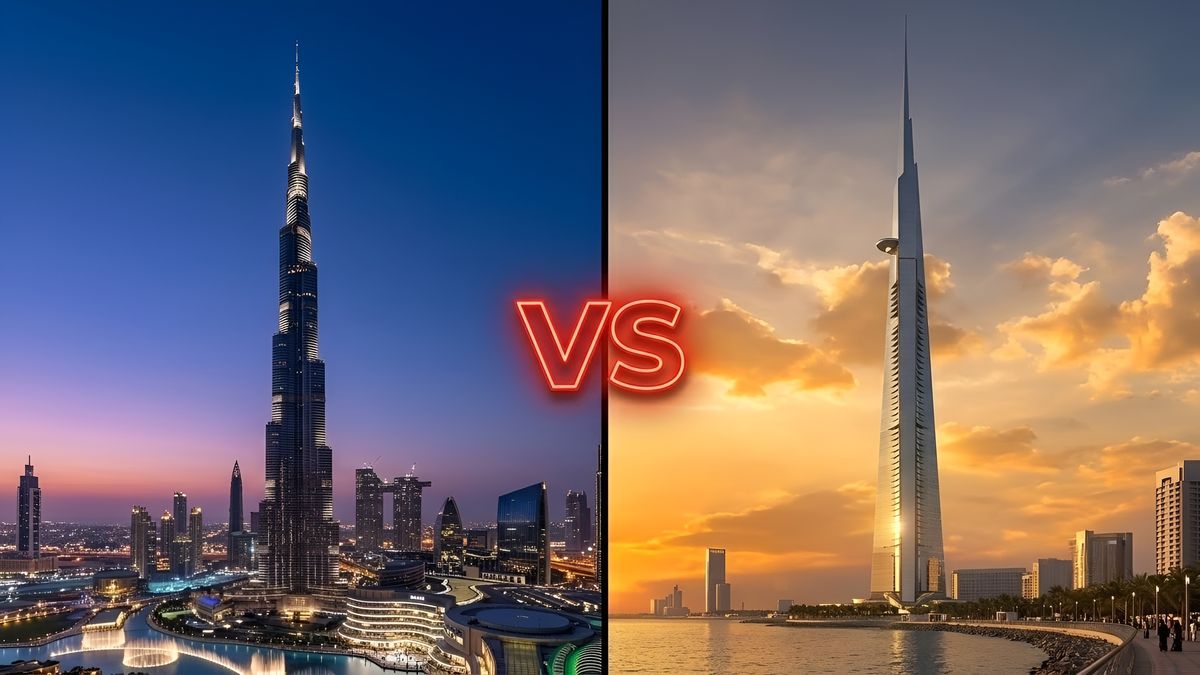
Upon its targeted completion, Saudi Arabia’s Jeddah Tower is planned to stand over 1,008 meters (3,280 feet) tall, surpassing Dubai’s 828-meter (2,717-foot) Burj Khalifa as the world's tallest building.
Following a six-year construction freeze caused by political shifts in late 2017, work officially resumed after developers signed a $1.9 billion (7.2 billion SAR) completion agreement with the Saudi Binladin Group under a 42-month contract schedule pointing toward an August 2028 target completion.
Since 2010, Dubai’s Burj Khalifa has held the official Guinness World Record for the tallest building on Earth. Soaring 828 meters into the desert sky, nearly three times the height of the Eiffel Tower. It stands as the undisputed global icon of modern supertall architecture.
However, just across the Arabian Peninsula, a high-stakes regional rival set out to shatter that record. The ambitious goal? Construct the Jeddah Tower in Saudi Arabia, a megastructure engineered to break the 1,000-meter mark, becoming the first true 1-kilometer skyscraper in human history.
Then, in early 2018, construction came to a sudden, screeching halt. For nearly six full years, a half-built concrete core sat frozen on the Red Sea coast. International media labeled it a "ghost tower," and industry critics declared the project dead in the water.
However, everything took a different turn when developers signed a massive $1.9 billion completion deal, bringing thousands of workers back to the site. Heavy machinery roared back to life, facade glass installation began on the lower levels, and construction turned upward once again.
As of 2026, the building has officially crossed 113 floors and stands over 430 meters tall. The battle for the world’s ultimate skyline is officially back on!
Will Jeddah Tower Beat Burj Khalifa?
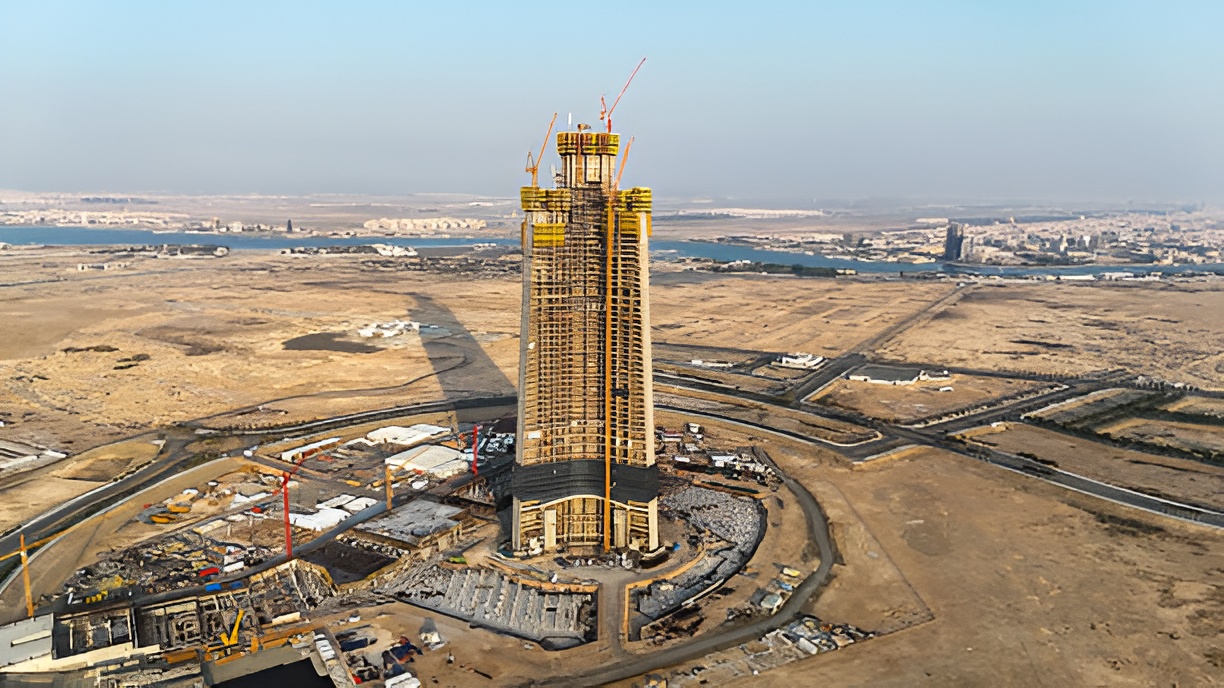
To understand this architectural war, two underlying questions must be answered; why build a 1-kilometer tower, and who is financing it?
A persistent misconception is that Gulf nations build record-shattering skyscrapers purely to display extra oil wealth or outspend their neighbors. Accompanying this is the assumption that Dubai possesses vastly superior financial reserves compared to Saudi Arabia.
In reality, Saudi Arabia’s total national economy (GDP) is more than double the size of the United Arab Emirates. Dubai was simply smarter early on at deploying its capital to build transformative global destinations.
Therefore, constructing a record-shattering skyscraper is a calculated urban economic strategy known in architecture and urban planning as The Bilbao Effect:
Standard commercial towers: Generate standard square-footage leasing fees.
World-record landmarks: Transform an entire city into a prime international destination.
An iconic megastructure attracts millions of global tourists, skyrockets adjacent land values, and secures billions in foreign direct investment. This exact blueprint allowed Dubai to convert raw desert terrain into "Downtown Dubai," anchored by the Burj Khalifa.
Also Read: What Really Caused The 2026 Himalayan Flash Flood In Nepal?
Who Is Financing the Jeddah Tower Project?
Seeing this economic model succeed, Saudi Arabia launched its own vision in 2011. Spearheaded by Prince Alwaleed bin Talal through Kingdom Holding Company in partnership with the Jeddah Economic Company (JEC), the objective went far beyond beating Dubai by a few meters; they aimed to anchor a brand-new $20 billion urban district along the Red Sea coast by breaking the 1,000-meter threshold.
What Are the Main Engineering Challenges of 1-Kilometer Skyscraper Design?
Building a structure 1,000 meters straight up pushes structural physics, materials science, and civil engineering to their absolute limits. Long before the construction freeze, lead architect Adrian Smith, who, ironically, also designed the Burj Khalifa right before this had to conquer three massive natural obstacles:
Aerodynamics & Wind Mitigation
High above ground level, powerful wind currents create vortex shedding, a phenomenon where wind wraps around a structure, creating alternating pressure waves that can cause rigid buildings to sway or snap.
To counteract these lateral forces, the Jeddah Tower features a sloped, three-petaled footprint modeled after a native desert plant. This aerodynamic shape continuously interrupts wind patterns so forces cannot build uniform pressure against the glass facade.
Corrosive Soil & Subterranean Foundations
Located directly on the Red Sea coast, the ground consists of porous coral rock saturated with saltwater. Salt rapidly degrades standard concrete and structural steel. To support the building's 900,000-ton load, specialized crews poured low-permeability concrete into 270 massive friction piles extending 110 meters beneath the earth directly into bedrock.
Gravity-Defying Vertical Concrete Delivery
Pumping dense liquid concrete straight up past 600 meters against gravity without it curing inside the delivery lines required custom hydraulic pumps operating under unprecedented pressure levels. These ultra-high-pressure pumps were engineered specifically for this site to ensure a continuous single-lift pour.
By late 2017, the primary contractor, the Saudi Binladin Group (SBG) had successfully raised the core past 60 floors. Then, the project abruptly collapsed.
Why Was Jeddah Tower Abandoned for 6 Years?
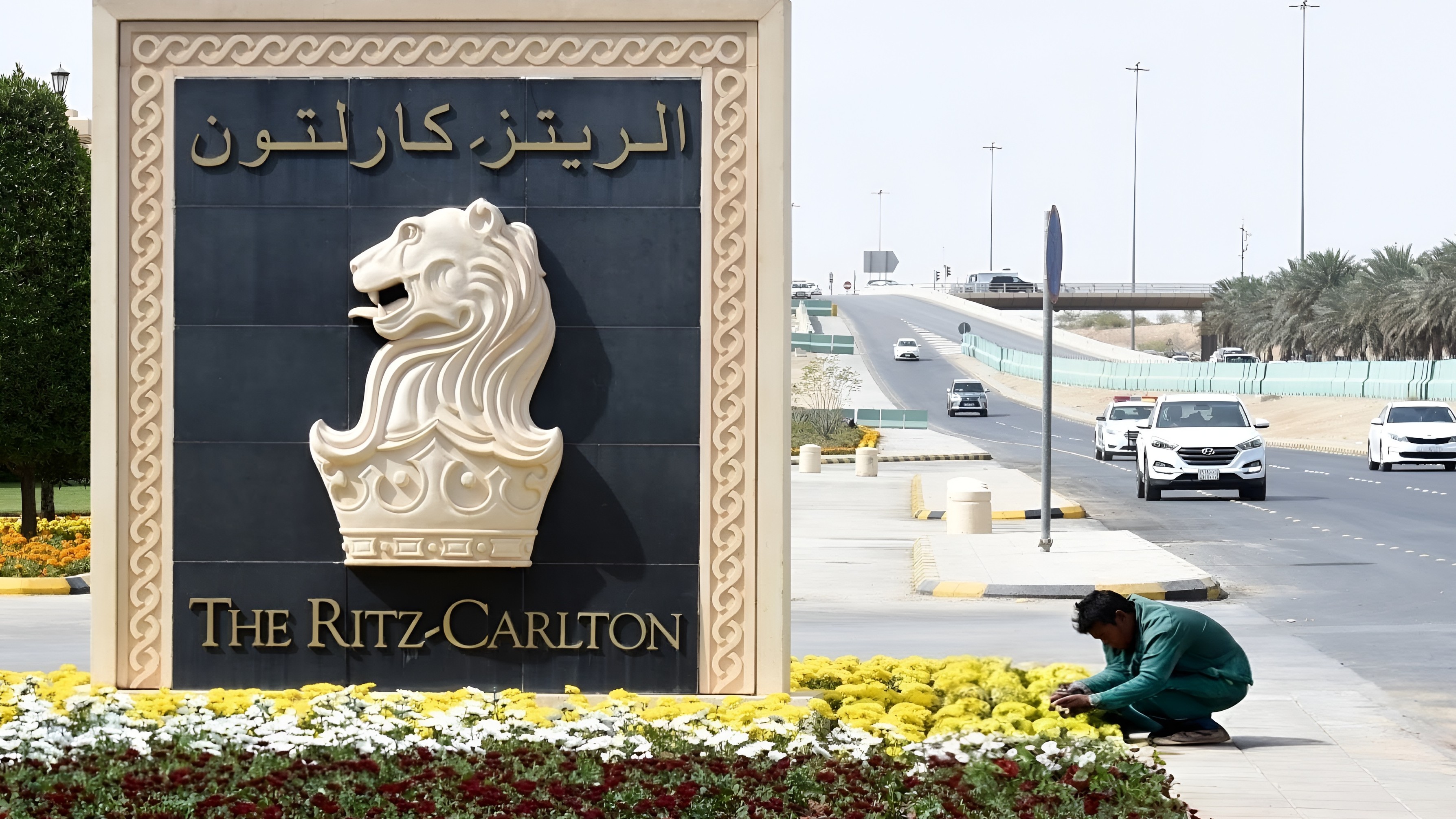
The project did not freeze because of engineering flaws, financial bankruptcy, or geological instability. It was halted by a sudden political shockwave. In November 2017, Saudi Crown Prince Mohammed bin Salman launched an extensive anti-corruption campaign. Hundreds of high-profile individuals were detained at the Ritz-Carlton hotel in Riyadh.
Among them were the tower's primary financial driver, Prince Alwaleed bin Talal, and Bakr bin Laden, chairman of the Saudi Bin-ladin Group. With key financial backing frozen and construction leadership disrupted, funding dried up, site operations collapsed, and workers walked off the site in early 2018. The partially completed structure stood frozen at Floor 63 for six years.
Also Read: Seattle's SR 520 Floating Bridge: The Engineering Behind It
How Was the Abandoned Jeddah Tower Project Resumed?
Leaving an unfinished concrete stump along the coastline ran directly counter to Saudi Arabia’s Vision 2030 framework, a national master plan reliant on global credibility, tourism, and massive non-oil development.
In late 2023, the Jeddah Economic Company officially issued new tenders to select a contractor to finish the job. To this, Fourteen major international construction firms submitted bids. But ultimately, the contract was awarded back to the Saudi Bin-ladin Group.
The two primary factors behind this decision:
State Restructuring and Control: Following the 2017 purge, the Saudi government restructured SBG, taking a 36% controlling state stake. The company was brought under direct government oversight, integrating its operations into the nation's broader development goals.
Technical and Legal Realities: SBG had built the original foundation, engineered the concrete mix, and held all proprietary structural designs.
By bringing in a completely new foreign contractor to take over a half-finished 60-story megastructure would have created legal friction, massive engineering liabilities, and billions in unnecessary costs. Therefore, signing the $1.9 billion completion contract with the restructured Saudi Bin ladin Group kicked off full-scale operations.
As a result, thousands of workers returned to the site, glass panel installation began climbing the lower facade, and concrete operations resumed to push the central core past 113 floors.
Jeddah Tower vs. Burj Khalifa: How Do Their Heights and Specs Compare?
When finished, the Jeddah Tower will claim multiple international engineering records currently held by Dubai.
| Specification | Burj Khalifa (Dubai, UAE) | Jeddah Tower (Jeddah, Saudi Arabia) |
| Total architectural height | 828 meters (2,717 ft) | 1,008+ meters (3,307+ft) |
| Official world status | World record holder (since 2010) | Under construction (Target: August 2028) |
| Observation deck elevation | 555 meters (1,820 ft) | 630 meters (2,067 ft) |
| Elevator travel speed | 10 meters per second | 10 meters per second (Double-decker) |
| Primary architect |
Adrian Smith (SOM) Skidmore, Owings & Merill |
Adrian Smith (AS+GG) Adrian Smith + Gordon Gill |
| Estimated project cost | $1.5 Billion USD | $1.9 Billion USD (Restart Contract) |
What Features Will Be Inside the World's Tallest Tower?
The Jeddah Tower is set to become the world's tallest building, shattering records by soaring over 1,000 meters into the sky. More than just a skyscraper, this futuristic vertical city blends ultimate luxury with groundbreaking design.
The World’s Highest Sky Terrace: A cantilevered outdoor observation deck located 630 meters above ground level.
Luxury Hospitality & Real Estate: A multi-story Four Seasons hotel, executive office complexes, serviced residences, and high-altitude penthouses.
Advanced Transit Systems: 57 high-speed elevators, including double-decker cabs designed for rapid vertical transit across 167 floors.
Frequently Asked Questions
Is Jeddah Tower taller than Burj Khalifa?
Yes. Upon completion, Jeddah Tower is engineered to reach a total height of over 1,008 meters (3,280 feet), surpassing Dubai's 828-meter (2,717-foot) Burj Khalifa by more than 180 meters.
What is the current Jeddah Tower construction status?
Work on the tower has officially resumed. Developer Jeddah Economic Company signed a $1.9 billion contract with the Saudi Binladin Group to complete all remaining floors, successfully driving core progress past 113 floors and 430 meters.
What is the official completion date for Jeddah Tower?
Under the active construction agreement signed upon restarting, the project is scheduled for targeted completion in August 2028.
Who designed both the Burj Khalifa and Jeddah Tower?
Both record-breaking megastructures were designed by renowned American architect Adrian Smith. He designed the Burj Khalifa while at Skidmore, Owings & Merrill (SOM) and designed the Jeddah Tower with his firm, Adrian Smith + Gordon Gill Architecture (AS+GG).
When Will Jeddah Tower Be Finished and Open?
Under the signed 42-month completion schedule, the targeted opening date is set for August 2028.
This supertall skyscraper race was never just about steel, glass, and concrete. It represents a story of national ambition, political shifts, structural engineering, and strategic economic transformation.
If completed on schedule, architect Adrian Smith will accomplish something unprecedented in human history; breaking his own world record with the world's first 1-kilometer skyscraper.