At the end of the 20th century, the world was preparing for a historic moment. The year 2000 was approaching, a new millennium was about to begin, and people everywhere were looking toward the future with excitement. But alongside that excitement was a growing fear. People were worried that the world's computers might not understand what the year 2000 meant. The problem became known as Y2K, short for "Year 2000." For years, experts had warned that computer systems could malfunction when the calendar changed from December 31, 1999, to January 1, 2000.
Some feared that banks could lose financial records, airplanes could be affected, power systems could fail, government systems could stop working, and businesses could be thrown into chaos. The most extreme predictions went much further. Some people imagined computers shutting down completely, society returning to a pre-computer age, nuclear weapons launching by themselves, and civilization itself being pushed toward collapse. Then midnight arrived. January 1, 2000 came, and the world continued. There was no global technological collapse. Computers continued to operate. Banks remained open. Power grids continued functioning. Airplanes did not suddenly fall from the sky. For many people, Y2K became a joke.
But there was an important part of the story that was often forgotten: Y2K was a real problem. The reason it did not become a worldwide disaster was not because the problem never existed. It was because governments, businesses, engineers, programmers, and technology experts spent years identifying and fixing the problem before the deadline arrived. The story of Y2K is therefore not simply a story about a disaster that never happened. It is a story about how a real technological vulnerability created worldwide anxiety and how massive preparation helped prevent the worst possible outcomes.
Also Read: 9 Most Expensive Scientific Experiments Ever
What Exactly Was the Y2K Problem?
To understand why people were so worried about Y2K, it is necessary to understand how computers stored dates. Today, storing a date such as 2026 is relatively straightforward. Modern systems have plenty of storage and are designed to handle dates in many different formats. The situation was very different in the early days of computing. Computer memory was expensive and limited, and every byte of storage mattered. Programmers therefore looked for ways to reduce the amount of information computers needed to store.
One common solution was to represent years using only two digits. Instead of storing 1987, a computer might store 87. The assumption was simple: if the system saw "87," it understood that the year was 1987. Since computers were operating in the 20th century, programmers could assume that the missing first two digits were "19." This approach saved valuable memory, and for decades it worked. But eventually, the calendar approached the year 2000, and that created a problem. What would happen when the computer saw 00? Would it understand that the year was 2000, or would it interpret it as 1900? If a computer interpreted "00" as 1900, calculations involving dates could suddenly become incorrect.
A system could believe that a date in 2000 happened 100 years earlier than it actually did. That might sound like a small problem, but dates are deeply connected to computer systems. Banks use dates to calculate interest and payments. Businesses use dates for invoices and contracts. Governments use dates for records and benefits. Transportation systems use dates for schedules. Manufacturing systems use dates for maintenance and production. Software programs use dates to determine when events should occur. A wrong date could therefore create a much bigger problem.
Why Was Y2K More Than a Wrong Date?
The Y2K problem was never simply about computers displaying the wrong year. The real concern was what computers might do when they received an incorrect date. Imagine a computer program that calculates someone's age. If the system thinks that 2000 is actually 1900, its calculations could become meaningless. Now imagine a banking system that calculates interest based on the number of days between two dates.
If one of those dates suddenly appears to be 100 years earlier, the calculation could be completely wrong. The same basic problem could affect databases, billing systems, scheduling programs, accounting software, industrial equipment, and embedded computer systems. This is what made Y2K so difficult. The world had become increasingly dependent on computers, but many of the systems in use had been created decades earlier.
Some of those systems were connected to other systems, meaning that a problem in one place could potentially spread into another. The concern was not that every computer on Earth would suddenly explode or stop working. The concern was that nobody could be completely certain which systems would fail, how they would fail, or what other systems might be affected.
The Problem Was Identified Decades Before 2000
Y2K did not suddenly appear in December 1999. People working with computers had been aware of the problem for many years. Some of the earliest known public discussions about the issue appeared on message boards in the mid-1980s, when people were already considering what might happen when computers encountered the year 2000.
There were also discussions about another possible computer problem involving leap years and differences between the Julian and Gregorian calendars. This became known as the "Leap Day bug." Earlier still, Jerome and Marilyn Murray published a book in 1984 called Computers in Crisis. The book was connected to an experience Marilyn had while entering a date from the early 2000s into a computer. The system interpreted the date as belonging to the early 1900s. This demonstrated something important: the problem was not simply a theoretical idea.
Some computer systems were already showing what could happen when they encountered dates from the 21st century. However, Y2K remained largely an issue for technology professionals for many years. The general public did not immediately understand the problem or its potential consequences. That changed during the 1990s.
The Warning Becomes Public
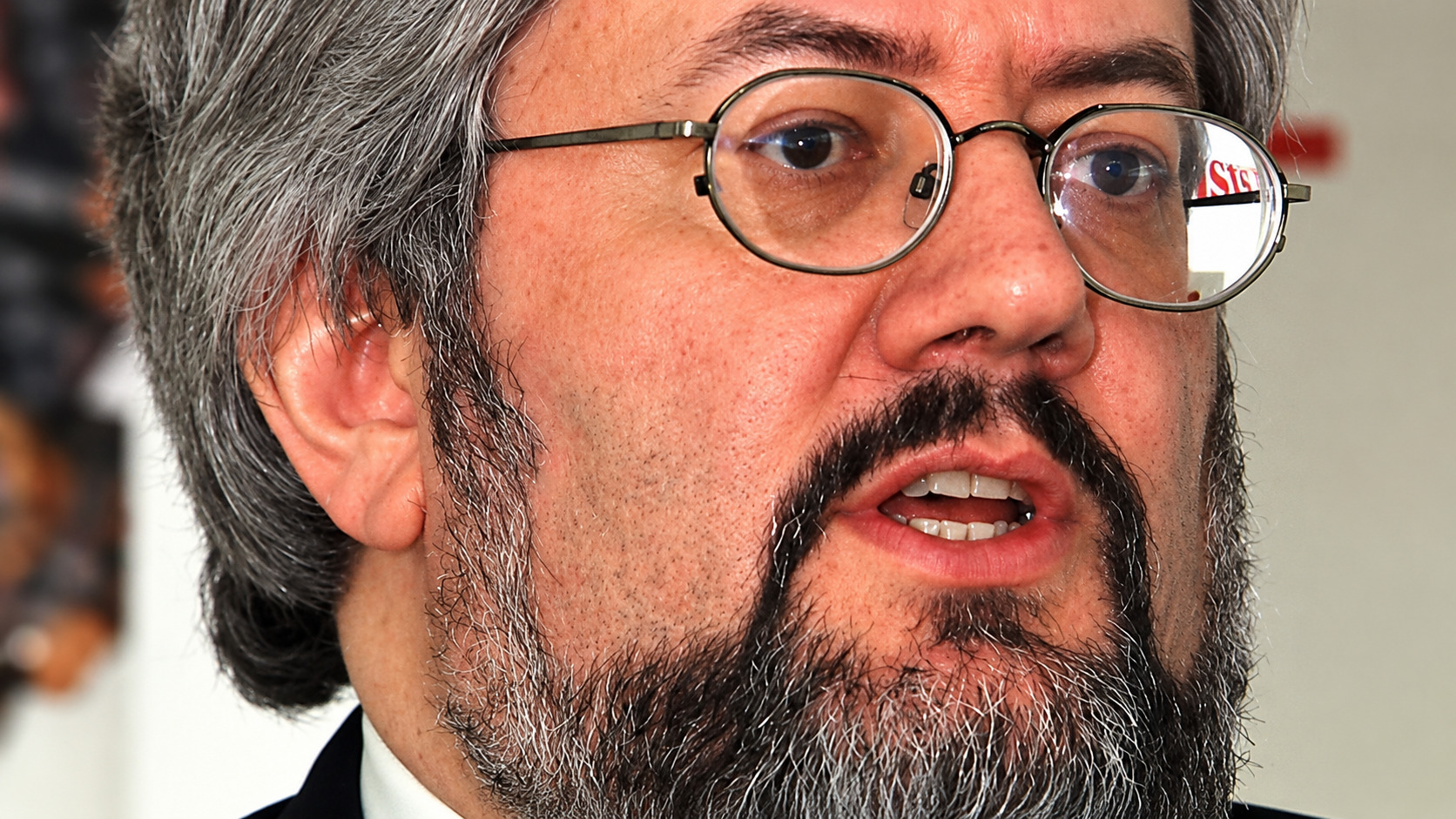
By the middle of the 1990s, governments and major organizations were beginning to take Y2K more seriously. Technology professionals were examining older systems and trying to determine which ones needed to be changed. One of the people who became closely associated with the Y2K warning was Peter de Jager.
De Jager became something of a public face of the Y2K issue. He said that he had recognized the problem as early as 1978 while working at IBM, although his concerns were dismissed by his boss at the time. In 1993, he published an important warning about Y2K in Computerworld. His warnings helped bring the issue to a wider technology audience. By 1998, The New York Times described de Jager as "the Paul Revere for the year-2000 computer crisis." The comparison was appropriate in one sense because de Jager was warning people about something that was still in the future.
But he was not alone. Governments, technology companies, engineers, programmers, and other experts were also beginning to warn that the problem needed to be addressed. The closer the year 2000 came, the more attention Y2K received. Eventually, that attention moved beyond technology professionals and into the mainstream public.
When Y2K Became a Public Panic
By the late 1990s, Y2K had become a major media story. Newspapers, television programs, magazines, and other media outlets began discussing what might happen when the calendar changed. Some reporting was responsible and focused on the actual technical problem, while other coverage was much more dramatic. The technical issue was complicated, but the most frightening possibilities were much easier to explain.
Instead of explaining the details of date fields, computer code, and legacy systems, stories could simply ask: What if the world's computers stop working? That question was enough to create fear. People began imagining what a massive computer failure could mean. What if banks could not access accounts? What if ATMs stopped working? What if power plants experienced problems? What if transportation systems failed?
What if businesses could not process payments? What if government services stopped? Then the questions became even more extreme. What if nuclear weapons launched? What if machines turned against humans? What if civilization returned to the Stone Age? The distinction between a genuine technological risk and an apocalyptic fantasy began to disappear.
Why Did the Fear Become So Extreme?
One reason Y2K created so much anxiety was that modern society had become deeply dependent on technology. By the late 1990s, computers were everywhere. They were used by banks, airlines, hospitals, governments, manufacturers, retailers, telecommunications companies, military organizations, and countless other businesses.
At the same time, the Internet was growing rapidly, and the modern world was becoming increasingly connected. That meant people could easily imagine a problem spreading from one computer system to another. The fear was understandable. If a computer stopped working in someone's home, the consequences might be small.
But if thousands of computers inside important organizations experienced problems at the same time, the consequences could potentially be much more serious. This uncertainty was one of the biggest reasons the public became so nervous. Nobody could simply look at one computer and say, "Everything is fine." There were millions of different systems, many of them old, customized, poorly documented, or connected to other systems.
Y2K and the Apocalypse
As the fear grew, Y2K began to move beyond technology and into popular culture. By 1999, some people were describing Y2K as "The End of the World as We Know It." Some newspapers and magazines published stories about catastrophic possibilities. Some people began buying supplies in preparation for a possible collapse. A CNN article in December 1999 suggested that people keep various supplies available for the turn of the year, including food, comfort foods, baby formula, cash, whistles, traveler's checks, and local maps.
For some people, preparation was simply a sensible precaution. For others, it became something much more serious. People began storing large amounts of food, water, and other supplies. The Y2K fear also entered religious discussions. Some Christian communities connected the approaching year 2000 with ideas about the end times. Televangelist Jerry Falwell described Y2K as "God's instrument to shake this nation, to humble this nation."
He compared the situation to the biblical story of the Tower of Babel. Falwell even sold a $38 video called A Christian's Guide to the Millennium Bug. Other books also presented Y2K from a religious perspective. But religion was only one part of the larger Y2K culture. There was a huge market for survival guides, preparedness books, technology services, and other products related to the coming crisis. Some books provided useful information, while others were highly sensationalist and predicted disaster.
The Billions Spent Behind the Scenes
While the public was becoming increasingly frightened, something very different was happening inside governments and companies. People were working. A huge amount of effort was being devoted to identifying and fixing Y2K problems.
Programmers had to inspect old computer systems, find places where two-digit years were being used, determine how those systems would behave when the year changed, and then modify the software. In some cases, this meant rewriting or updating enormous amounts of code. The work was tedious, but it was also extremely important. There was no single "Y2K button" that could solve the problem. Every organization had to understand its own systems and determine what needed to be changed.
Some systems were relatively simple, while others were extremely complicated and had been running for decades. Some were connected to other systems, making the process even more difficult. The problem required cooperation between technology workers, managers, businesses, governments, regulators, and international organizations.
Governments Take Action
Governments around the world began creating special programs and task forces to deal with Y2K. In the United States, the Congressional Committee on Government Reform and Oversight described the work required to address Y2K as potentially "the most massive and coordinated repair efforts in human history." The statement reflected the enormous scale of the challenge.
The U.S. government also took legislative action. In 1998, President Bill Clinton supported efforts to encourage companies to cooperate and address Y2K problems. The government also established deadlines for bringing systems into compliance with updated standards. Other countries followed similar approaches. In December 1998, the United Nations called for coordinated international efforts to address the Y2K problem.
This international cooperation was important because technology systems did not stop at national borders. Companies operated internationally, financial systems were interconnected, communication networks crossed countries, and airlines and transportation systems operated globally. A problem in one country could potentially affect organizations elsewhere. Y2K therefore became an international technology project.
The Unsung Heroes of Y2K
The people who played the most important role in preventing a Y2K disaster were often the least visible. They were programmers, engineers, database administrators, IT managers, system administrators, consultants, government employees, and countless other technology workers.
They spent years checking computer systems, searching through old software, testing dates, fixing errors, replacing outdated systems, rewriting code, running simulations, and testing systems again. Then they tested them again. Much of the work was incredibly boring.
There were no dramatic explosions and no exciting demonstrations. There were simply people sitting in offices, laboratories, and computer rooms trying to make sure that nothing happened. That was the entire point. If the work was successful, there would be no disaster to report.
Why Didn't Companies Simply Tell Everyone Everything Was Fine?
One of the interesting parts of the Y2K story was the silence from many organizations that had spent years preparing. You might expect companies to announce that their systems were ready, but there was a problem: what if they were wrong?
If a bank announced that its systems were completely prepared and then experienced a major Y2K problem, the consequences could be serious. Customers might panic, they could withdraw their money, investors might lose confidence, and the company's reputation could suffer. For that reason, many organizations were careful about making strong public statements.
Financial institutions were particularly cautious because they did not want to create unnecessary fear or encourage customers to take drastic actions. Governments did provide reassurance, but the media coverage was often much louder than the official statements. As a result, the public continued to wonder whether the world was actually ready.
Also Read: 5 of the Strangest Programming Languages Ever Created
The Final Year: 1999
By 1999, Y2K preparation was operating at full speed. Governments had created special teams, companies were testing their systems, software companies were releasing updates, and technology workers were checking critical infrastructure. The goal was to make computers "Y2K Compliant."
But the scale of the task was enormous. There were countless computer systems around the world. Some systems were new, while others were decades old. Some were connected to the Internet, while others were isolated. Some were easy to update, while others were difficult to understand because the people who originally wrote the software were no longer available.
The rapid growth of the Internet added another layer of complexity. Systems were increasingly connected to one another, making it important to understand how different technologies interacted. The final months of 1999 therefore became a massive global testing operation.
The Y2K Business Boom
Y2K also created an entirely new business industry. Companies began offering specialized Y2K consulting services. Technology professionals were hired to inspect computer systems. Businesses purchased new software and hardware. Companies paid consultants to test their systems and help them become Y2K compliant.
Books and survival guides became popular. The Y2K industry became so large that it eventually had its own stock index, called the de Jager Year 2000 Index. For businesses, Y2K represented both a threat and an opportunity. Organizations had to spend money to protect themselves, while technology companies could make money by helping them do it.
December 31, 1999
After years of warnings, preparation, testing, spending, and anxiety, the moment finally arrived: December 31, 1999. People around the world watched the clock. Television networks broadcast New Year's celebrations. Crowds gathered in major cities. Businesses monitored their computer systems.
Technology teams waited in control rooms. Governments watched critical infrastructure. Some people stocked their homes with supplies, while others simply celebrated the arrival of the new millennium. As midnight approached, the world waited. It was 11:59 p.m. Then came 12:00 a.m., January 1, 2000. And nothing catastrophic happened.
What Actually Happened?
The idea that "nothing happened" is not completely accurate. There were real Y2K-related incidents, but they were generally limited and nowhere near the catastrophic scenarios that had been predicted.
In one unusual case, a person in New York reportedly received a $91,000 late fee from a video rental store because of a date-related computer error. There were also more serious incidents. U.S. spy satellites were reportedly affected and were out of commission for multiple days at the beginning of the year. A nuclear plant in Japan experienced a minor problem when an alarm sounded at midnight, but nothing more serious followed.
The Naval Observatory also briefly displayed the date as "January 1, 19100." These incidents demonstrated that Y2K problems were real, but they also demonstrated something else: the world had avoided the widespread catastrophe that many people had feared.
Why Was There No Disaster?
This is the most important question in the entire Y2K story. Why did the disaster not happen? There are two possible ways to look at it. The first is that Y2K was exaggerated and never posed a serious threat. The second is that the preparation worked. The evidence strongly supports the second explanation.
The problem was real. The systems were vulnerable. But enormous amounts of work had been done to fix those systems before the deadline. The lack of a major disaster was therefore not evidence that Y2K had been imaginary. In many ways, it was evidence that the preparation had succeeded. Imagine a bridge that engineers discover has a serious structural weakness.
They spend years repairing it. When the bridge remains standing, nobody says, "There was never a problem with the bridge." The same principle applies to Y2K. The fact that nothing terrible happened was partly the result of people working very hard to make sure that nothing terrible happened.
From Fear to Laughter
Once January 1, 2000 passed safely, the public mood changed quickly. The fear turned into relief, and then relief turned into humor. People began laughing about the food they had stored and joking about the survival equipment they had purchased.
The dramatic predictions suddenly looked ridiculous. The world had not returned to the Stone Age. Computers had not taken over. Nuclear weapons had not launched themselves. Banks had not disappeared. Civilization had continued almost normally. Over time, Y2K became a cultural joke.
The term started to represent an exaggerated crisis that had supposedly never existed. Some people argued that the billions of dollars spent on Y2K preparation had been wasted. Others claimed that the entire crisis had been a hoax. But that interpretation missed an important part of the story.
Y2K Was Not a Hoax
There were certainly people who exaggerated the threat. There were businesses that benefited financially from public fear. There were sensationalist books and media reports. There were extreme predictions that were never realistic. But that does not mean the underlying problem was fake.
Y2K was a genuine technical challenge. The two-digit year system really existed. Computer systems really could misunderstand dates. Businesses really did have to inspect and modify their software. Governments really did spend enormous amounts of money and resources preparing.
Technology professionals really did rewrite millions of lines of code. The reason people eventually forgot about the technical problem was simple: the problem was successfully prevented. Ironically, successful preparation made the original danger easier to forget.
The People Who Warned About Y2K
After the crisis passed, some of the people who had warned about Y2K were treated as if they had simply created unnecessary panic. That was not entirely fair. There were certainly people who used the Y2K panic for attention or profit.
But there were also experts who genuinely wanted organizations to take the problem seriously. Peter de Jager was one of the most visible examples. His warnings were sometimes criticized for being too alarming, but the basic problem he warned about was real. This creates an interesting lesson about technological risks.
Experts sometimes warn about problems that never become disasters. That does not necessarily mean their warnings were wrong. Sometimes the warning causes people to act early enough to prevent the disaster.
The Hidden Success of Y2K
The greatest success of Y2K may be the fact that most people barely noticed it when the new year arrived. That sounds strange. Normally, when billions of dollars are spent on a global problem, people expect to see the result. With Y2K, the result was mostly the absence of something.
There was no global computer collapse. No worldwide financial meltdown. No technological Stone Age. No nuclear apocalypse. The boring outcome was actually the achievement. Thousands of people had spent years working to make January 1, 2000 feel like an ordinary day. And for most of the world, it was.
Lessons From Y2K
The Y2K story provides several important lessons about technology.
Small technical decisions can create huge future problems
The original decision to store years using two digits made sense when computer memory was limited. It saved space. At the time, nobody could necessarily predict how widespread computers would become decades later. But a small design decision eventually created a worldwide problem. Technology decisions can have consequences far beyond their original purpose.
Old technology can remain important
Many of the systems affected by Y2K were old. But "old" does not mean "unimportant." Some older computer systems continue to run important infrastructure because they are reliable and deeply integrated into existing organizations. Replacing them can be expensive and risky. Y2K showed why old systems need to be understood and maintained.
Preparation can make a crisis invisible
The public often sees disasters, not prevention. If preparation succeeds, there may be nothing dramatic to report. That can create the false impression that the preparation was unnecessary. Y2K demonstrates the opposite. Sometimes the absence of a disaster is the result of successful preparation.
Fear can grow when technical problems are misunderstood
The original Y2K problem was complicated. The public discussion often became much simpler: "Computers might stop working." From there, the story could quickly become: "Society might collapse." Then it could become: "The world might end." The gap between a real technical problem and an imagined apocalypse can become enormous.
Technology requires constant maintenance
Computer systems do not remain safe forever. Technology changes. Software becomes outdated. Hardware is replaced. Old assumptions eventually become new problems. Y2K showed that technology needs continuous maintenance and review.
The Next Y2K? The Year 2038 Problem
The story did not end with Y2K. Another computer date problem is associated with the year 2038. It is commonly known as the Year 2038 Problem. The issue affects certain systems that use a 32-bit representation of time. In simplified terms, some systems may eventually reach a limit in how they represent dates and times.
The problem is expected to occur in 2038, and affected systems could potentially interpret the date incorrectly, with the system's time effectively moving back toward 1970. It is not exactly the same problem as Y2K, but the basic lesson is similar.
A technical decision made years ago can eventually create a serious problem when the system reaches a date or value that its designers did not originally expect. The difference is that experts have known about the Year 2038 Problem for a long time. That gives technology companies and organizations an opportunity to replace or update vulnerable systems before the deadline arrives.
What About 2050?
There are also concerns about some older systems and the year 2050. Some older computers may still interpret two-digit years above "50" as beginning with "19." For example, a system might interpret "51" as 1951 instead of 2051.
However, this problem is expected to be much smaller than Y2K. Most systems that could be affected have already been retired or replaced. Still, the example demonstrates the same fundamental issue. Technology systems are built according to assumptions. When those assumptions eventually become outdated, problems can appear.
Also Read: Why Kodak Lost the Digital Photography Revolution
The Real Legacy of Y2K
More than two decades after the year 2000, Y2K has become a cultural relic. Many people remember it as a strange moment when the world was convinced that computers might destroy civilization. The reality was more complicated. Y2K was neither a complete hoax nor the apocalypse.
It was a genuine technological vulnerability surrounded by a huge amount of public fear, media exaggeration, commercial opportunity, and political attention. Most importantly, it was a problem that was successfully addressed. The world did not experience the predicted catastrophe because millions of people worked to prevent it.
Programmers fixed code. Companies replaced systems. Governments created task forces. Organizations tested their infrastructure. Technology experts worked through the night. International organizations encouraged cooperation. And eventually, the deadline arrived. The world crossed into the year 2000. And the computers kept running.
The Crisis That Never Happened Because People Prevented It
Y2K is often remembered as an example of a technological crisis that never happened. That description is only partly correct. The crisis did not happen because people ignored it. It did not disappear because the problem was imaginary. It did not fail because computers were somehow immune to the issue. It was largely avoided because people recognized the problem and spent years working to solve it. That is what makes Y2K such an interesting chapter in the history of technology.
The public remembers the panic. It remembers the survival guides, the predictions of disaster, the stockpiled food, the alarming headlines, and the jokes that followed. But behind all of that was something much less entertaining and much more important: an enormous global effort to prevent a technological problem from becoming a technological disaster. The biggest lesson of Y2K is therefore not that people were foolish to be afraid.
It is that fear can sometimes lead to preparation, and preparation can prevent the very disaster people fear. Y2K became a joke because the world survived the transition into 2000. But perhaps the better way to remember it is as a rare example of a potential global technology crisis that was identified early, taken seriously, and largely solved before the deadline. The world did not end on January 1, 2000. And that was, in large part, because countless people worked very hard to make sure it didn't.