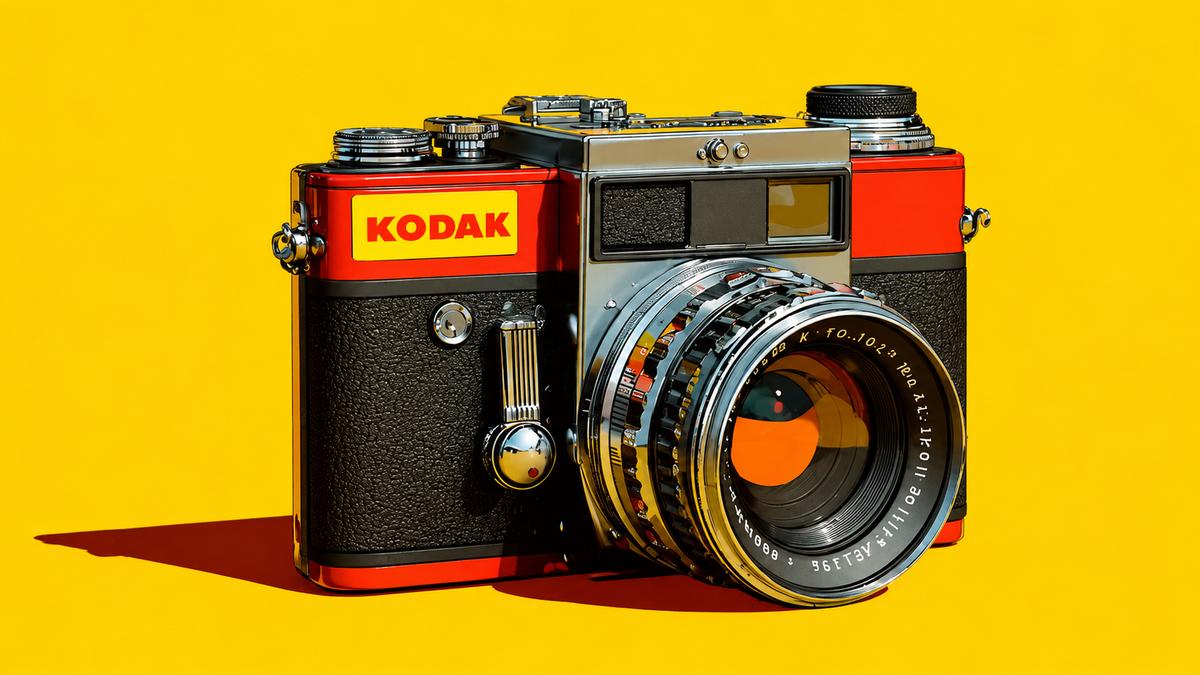
For many years, one story has been repeated again and again: Kodak invented the digital camera but deliberately hid it because the company did not want to damage its highly profitable film business. While this popular narrative contains some truth, it does not present the complete story. Kodak did invent the world's first digital camera, but it did not simply lock the invention away and ignore it.
Instead, company leaders believed that the technology was not yet ready for consumers and feared that moving too quickly toward digital photography would undermine their successful film business. These two concerns shaped Kodak's strategy for decades. As a result, the answer to whether Kodak really hid the digital camera is far more complex than a simple yes or no.
Kodak Changed Photography Forever

Long before digital cameras existed, photography was expensive, complicated, and inaccessible to most people. Cameras were large, heavy, and difficult to operate, making photography a specialized activity rather than something ordinary people could enjoy.
Everything changed in 1888 when George Eastman founded Kodak and introduced smaller cameras along with roll film, making photography simple enough for the general public. The company's famous slogan, "You press the button, we do the rest," reflected its mission of making photography easy for everyone. Over the next century, Kodak became the dominant force in the photography industry, earning billions of dollars from selling cameras, film rolls, photographic paper, and photo-printing services.
By the 1970s, Kodak was one of the world's most successful companies and controlled a significant share of the global film market. Ironically, the same company that revolutionized film photography would later create the technology that ultimately replaced it.
Also Read: Meet Katharine Burr Blodgett: The Scientist Who Helped Cameras See More Clearly
The Birth of the First Digital Camera

In 1975, Kodak engineer Steven Sasson built the world's first working digital camera. The prototype looked nothing like the compact digital cameras or smartphones used today. It was roughly the size of a toaster and weighed nearly 8 pounds (3.6 kilograms). Sasson assembled it using electronic circuits, components from a Super 8 movie camera, a digital cassette recorder, and several other electronic parts.
Instead of recording images on photographic film, the camera converted light into electronic signals and stored them digitally on a cassette tape. It successfully captured black-and-white photographs with a resolution of only 10,000 pixels, or approximately 0.01 megapixels, which is insignificant compared to the tens of millions of pixels found in even the most affordable smartphones today. Viewing an image was also a slow process.
After taking a photograph, the camera required about 23 seconds to save it onto the tape, after which a separate machine had to read the tape and display the image on a television screen because there were no LCDs, memory cards, or computer monitors available for this purpose. Although the invention was revolutionary, it remained far from becoming a practical product for everyday consumers.
Why Kodak Wasn't Excited
When Steven Sasson demonstrated his invention to Kodak executives, they recognized it as an impressive technological achievement but did not view it as the future of photography. Sasson later recalled that company leaders believed consumers would never want to look at their photographs on a television screen, an opinion that seemed reasonable at the time.
The prototype had numerous limitations. It produced extremely poor image quality, captured only black-and-white photographs, required 23 seconds to save a single image, was large and heavy, and relied on expensive technology. During the mid-1970s, consumers expected much higher photographic quality.
According to Sasson, the photography industry considered around one million pixels necessary for acceptable black-and-white images and about two million pixels for color photography, while his prototype delivered only a tiny fraction of that resolution. Rather than rejecting the technology altogether, Kodak allowed Sasson to continue improving it and invested in digital imaging research for many years after the invention.
Kodak Patented the Technology
Kodak understood that digital photography had significant long-term potential, even if it was not yet ready for the consumer market. In 1978, the company patented its digital camera technology to protect its innovation.
However, development of the project remained largely internal, and Sasson later explained that he was only permitted to discuss his work with fellow Kodak employees. This secrecy has led many people to believe that Kodak intentionally hid the invention from the world.
In reality, many technology companies keep new inventions confidential while continuing research and development. Filing patents before releasing products is a common business strategy because it protects intellectual property while companies determine the best way and time to introduce new technology to the market.
The Fear of Losing the Film Business
Kodak's greatest challenge was not technological but commercial. Throughout the 1970s and 1980s, the company generated enormous profits by selling film, disposable cameras, photographic paper, and photo development services. Every photograph taken required customers to purchase more film and pay to have it developed.
Digital photography threatened this highly successful business model because consumers could store photographs electronically and print only the images they wanted, reducing the demand for film and photo-processing services. Many company executives worried that widespread adoption of digital cameras would eventually destroy Kodak's most profitable products.
However, this did not mean the company ignored digital photography entirely. Instead, Kodak attempted to balance two competing priorities: protecting its profitable film business while simultaneously preparing for a digital future. As digital technology advanced, maintaining this balance became increasingly difficult.
Kodak Eventually Entered the Digital Market

Contrary to the popular myth, Kodak did not avoid digital photography indefinitely. Throughout the 1980s and 1990s, the company continued investing in digital imaging technology and developed professional digital cameras and imaging systems that were widely used by businesses, news organizations, and government agencies.
During the 1990s, Kodak finally introduced digital cameras for consumers, although the earliest models were priced at around $20,000, making them affordable only for professionals and large organizations.
As digital technology became less expensive, companies such as Sony, Canon, Nikon, Fujifilm, and later smartphone manufacturers rapidly expanded the consumer digital camera market. Although Kodak participated in this transition, it was no longer the industry leader driving innovation.
Also Read: Soap Opera Effect: What It Is and How It Works
A Missed Opportunity
Kodak's greatest mistake was not inventing the digital camera too early but failing to recognize how rapidly digital photography would improve and eventually replace film. The company continued investing heavily in traditional film products even as digital cameras became increasingly popular worldwide.
Meanwhile, competitors concentrated on improving image quality, reducing costs, and making digital cameras more accessible to consumers. Kodak did earn substantial revenue by licensing its digital camera patents to other companies, and these patents remained valuable until they expired in 2007.
However, licensing income could not compensate for the enormous profits the company had previously earned from selling photographic film. As digital photography became the global standard, Kodak's traditional business declined rapidly.
The Fall of an Industry Giant
By the early 2000s, digital cameras had become mainstream, and millions of consumers no longer needed film or photo development services. Kodak struggled to adapt to this dramatic shift in consumer behavior and market demand.
After years of declining sales and mounting financial difficulties, the company filed for bankruptcy protection in 2012, marking what many considered the end of one of the greatest photography companies in history.
Although Kodak later reorganized and continues to operate today, it has never regained the market dominance it once enjoyed during the height of the film era.
Did Kodak Really Hide the Digital Camera?

The simplest answer is not exactly. Kodak did invent the world's first digital camera in 1975, and the company kept the technology private while it remained under development. However, the original prototype was bulky, slow, expensive, and capable of producing only very low-quality images. Kodak believed the technology required years of improvement before consumers would be willing to adopt it.
At the same time, company executives feared that digital photography would eventually undermine Kodak's highly profitable film business, and this concern significantly influenced the company's strategic decisions over the following decades. Ultimately, Kodak's story is not merely about hiding an invention but about the difficulty even highly successful companies face when confronted with disruptive technologies that threaten their existing business models.
The company that helped make photography accessible to millions of people also invented the technology that eventually replaced film. Unfortunately for Kodak, it failed to embrace the digital revolution quickly enough, allowing competitors to take the lead while the pioneer of photography was left behind.