You pour your heart into a paper or a Google document, make countless edits, proofread for accuracy, precision, tone, and whatnot. But the moment you run it through an AI-detector, it pops up with the "AI-generated content" label. Can there be a more hurtful feeling for a writer than his original work getting discredited? The situation mentioned above is not hypothetical; it happens to most writers, academicians, and students. It raises the question of whether AI detectors are truly accurate or just a gimmick.
People think these tools are highly reliable and trust them blindly, but they are nowhere near as reliable as humans. Writing, editing, and proofreading are very human-centric activities, and there are nuances that only humans can understand. The dangerous thing is that employers, publishers, and schools are relying on it, which affects real people who write technically correct, engaging, and academic language. It is 2026, and getting your content flagged as AI can not only cost you a grade and a byline but also your professional reputation.
Also read || The Power Of The Pen! Master The Art Of ‘Journaling!’
How AI Detectors Work
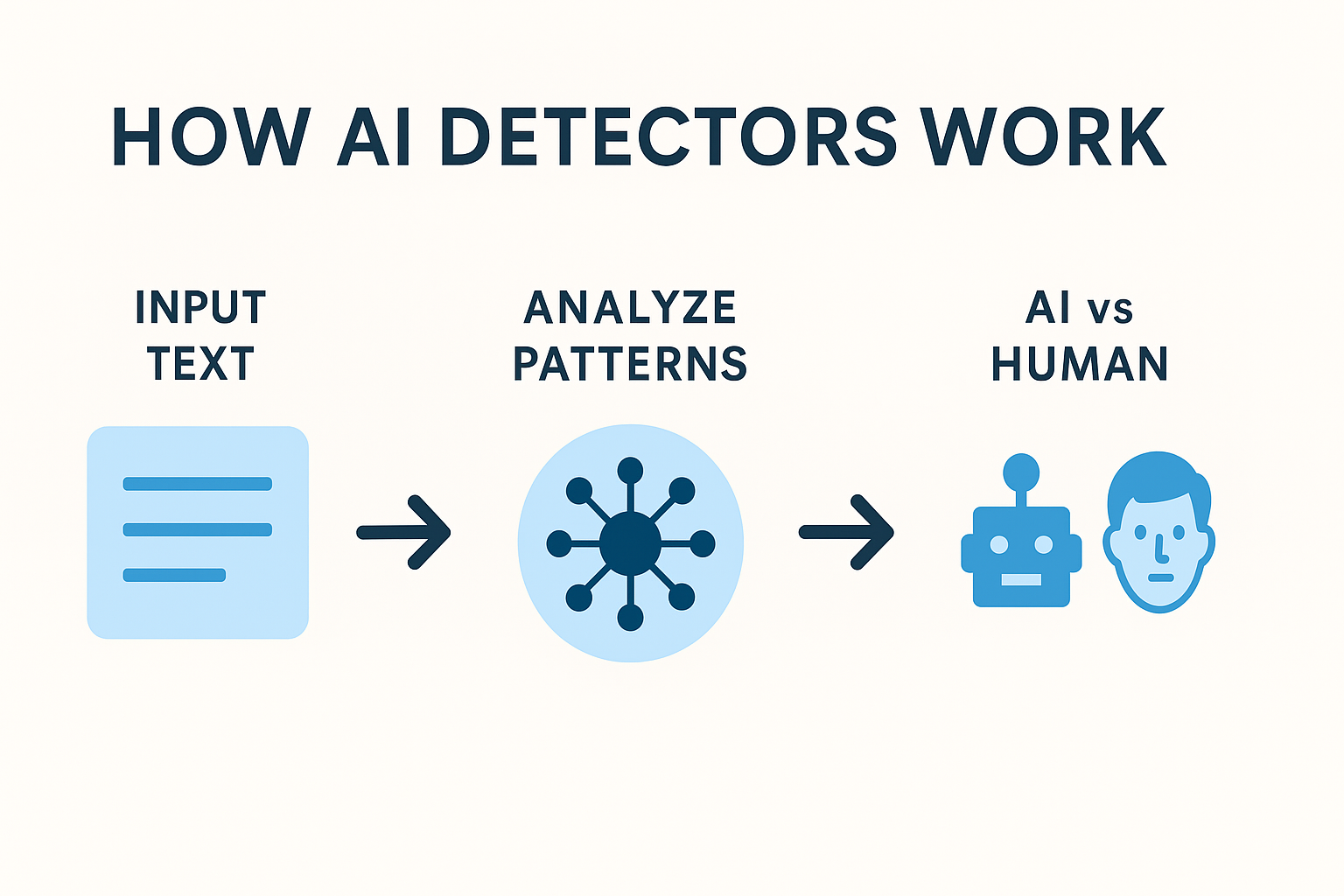
Acknowledging why these tools fail is the first step to understanding how they actually work. Though the creation of these tools was intended to minimize the rapid surge in AI-generated text, they don't read your writing the way a real human editor does. All they can do is run your text through statistical models trained to identify patterns commonly associated with AI-generated content. So, if you are a non-native English writer, the chances of you getting flagged as AI are even higher than for a native writer.
These tools rely on two power metrics, perplexity and burstiness. Perplexity is all about how predictable your piece of writing is, whereas the Burstiness measures how much variation exists in sentence structure and length. We humans tend to write in bursts. Long, complex sentences followed by short, punchy ones. AI ignores this point. Theoretically, high perplexity and high burstiness should point to a human writer, but that does not happen.
Also read || Why AI At Work Often Creates More Work Instead Of Saving Time
Here's Where They Are Going Wrong
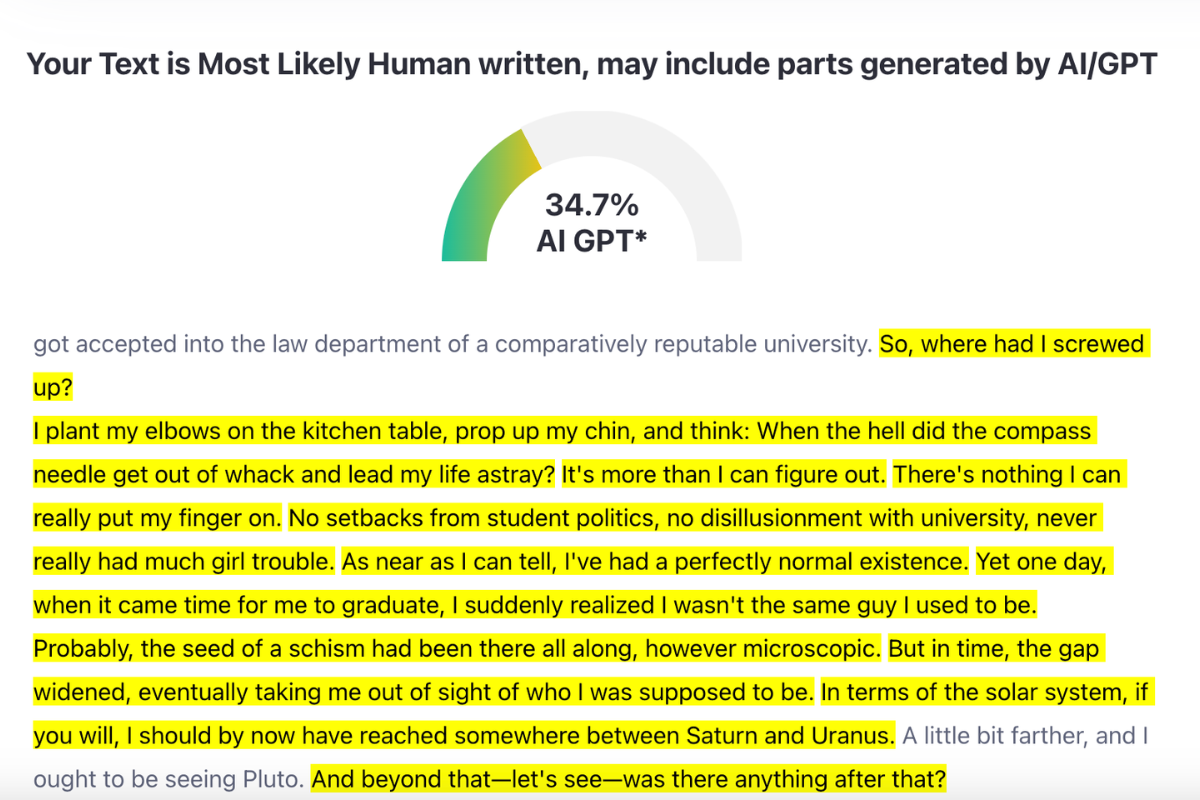
Just as reality is often disappointing, theory rarely meets the real world. Writing is not a "one-size-fits-all" thing, and no one writes the same way. Being a non-native English speaker means you're likely to be flagged most often. And here's why? Non-native writers usually write clearer, more careful, grammatically clean sentences, because English is either their second or third language. AI-detectors read that consistency as machine-like.
Ironically, millions of non-native English speakers around the world get penalized not for using AI, but for writing precise, technically correct, and structured English. Isn't it like getting punished for being on the right side? A research paper titled "GPT detectors are biased against non-native English writers" by Stanford University found that AI detection tools incorrectly flag human-written essays as AI-generated at a shocking rate. With an average false-positive rate of 61%, it is not a margin of error but a broken system applied to real people's lives.
If you are a native-English speaker, and think you are safe. You aren't. Suppose you use AI for brainstorming and then rewrite everything in your own voice, which many professional writers do. Detectors will either miss the AI involvement entirely or over-flag it. This is not precision, but a coin flip with consequences. More importantly, the moment a detection pattern becomes widely known, writing models adjust, making it even more difficult to write correctly.
AI-generated text is becoming harder to distinguish from human writing, suggesting the gap between AI detection and real human writing is widening faster than imagination can keep up. Most of these platforms do not publicly disclose their error rate or how they've been trained and tested. You must trust a black box with someone's personal academic or professional future on the line.
Also read || Cybersecurity Pioneer Peter G. Neumann Dies at 93
The Future of Writing Careers

Let's talk about the elephant in the room. While it's a cliché to say that "AI won't replace you, the person using AI will replace you," it's true. AI clearly does have a role in writing, and it is only going to grow. However, treating every clean, well-structured sentence as suspicious will create a climate of distrust that would affect people who write with real effort.
Whether you are a marketer, writer, researcher, journalist, or content creator, AI won't spare anyone, and getting better at it is the only viable option. Once you learn what AI detection tools can or cannot do, you will thrive and be able to defend your work confidently. The future of writing is not AI vs. humans. It is for humans who understand AI, its failures, and acknowledge that the tools you are using are far from perfect.