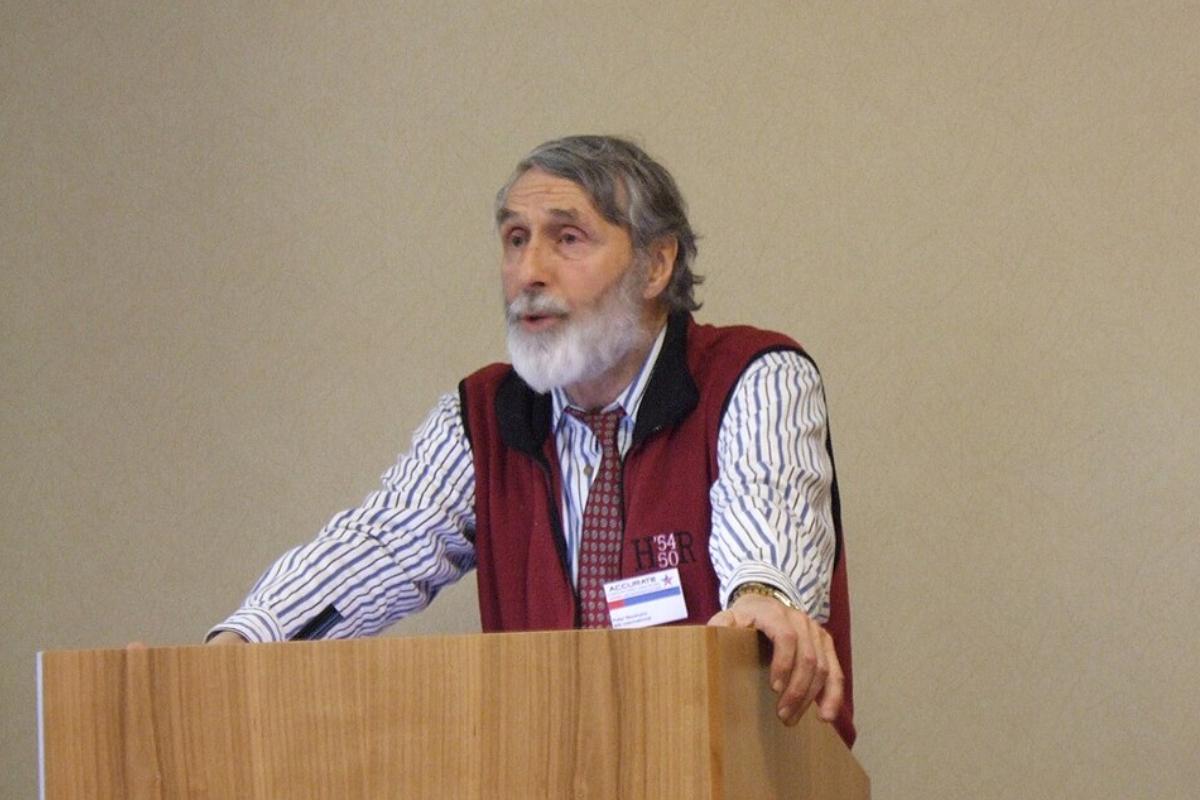
The death of a researcher is not just overwhelming, but an immeasurable loss to society. In a world full of answers, Peter Gabriel Neumann was the one who asked uncomfortable questions that could solve bigger problems. On May 17, 2026, Sunday, Peter passed away at Santa Clara Hospital due to complications. He left behind a legacy and shoes that might not get filled any sooner.
Peter was born in Manhattan, New York, on September 21, 1932, and had always been an intellectually restless kid. When he grew up, he went to Harvard in 1954 for an undergraduate degree in Mathematics, followed by a Master's degree in Applied Mathematics in 1955. His excellence and curiosity led him to receive a Fulbright scholarship to Germany, where he earned his first doctorate from the well-reputed Technische Hochschule Darmstadt in 1960 under Alwin Walther.
In 1961, he returned to the United States to pursue his second doctorate under Anthony Oettinger, where he completed a thesis on efficient error-limiting codes. His intellectual power made him a rare cross-disciplinary scholar who not only understands mathematics and engineering but also systems — a design decade at Bell Labs in Murray Hill, New Jersey, made him one of the most significant figures in computing of the century.
The list of his achievements and accolades is endless, including co-designing the Multics file system, introducing hierarchies, access-control lists, dynamic linking, and hardware-supported virtual memory. He even worked on Multics I/O design alongside Ken Thompson, Stan Dunten, and Joe Ossanna, which eventually evolved into Unix pipes. If there were no Multics, the operating systems running your phone and laptop today would look very different.
Also read || 10 Modern Technologies That Are Older Than You Think
Seventy Years of Asking "What Could Go Wrong?"
The summer of 1953 was when Neumann started his career as a computing professional for the U.S. Naval Ordinance Laboratory on an IBM Card-Programmed Calculator, a machine with four registers and no memory whatsoever. From his first job to his final years at SRI International, his biggest obsession was "What happens when computer systems fail, get breached, or behave counterintuitively?"
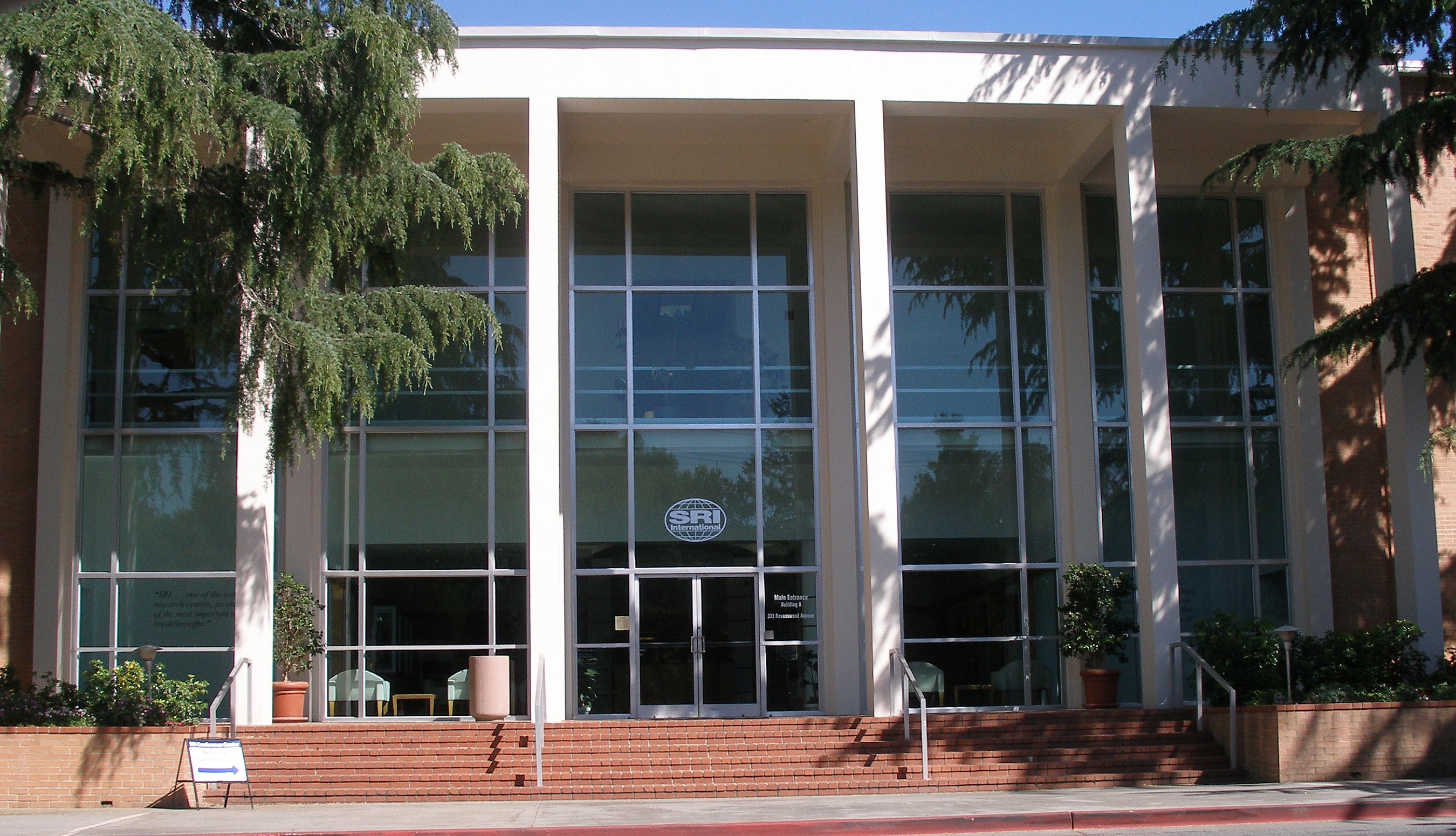
After spending a decade at Bell Labs, Neumann joined SRI International's Computer Science Laboratory in Menlo Park, California, in September 1971, where he spent the next 54 years as a Principal Scientist, then Chief Scientist, and finally SRI Fellow. In 1985, he founded and began personally moderating the Association for Computing Machinery (ACM) Risks Forum, later known as the Risks Digest, where topics such as system failures, safety, ethics, privacy, security, and public policy were discussed.
During this time, he also co-developed IDES (Intrusion Detection Expert System) with Dorothy E. Denning in the mid-1980s. IDES combined rule-based detection with statistical anomaly profiling, and the 1985 SRI requirement report that is a direct ancestor of modern EDR, NDR, and XDR enterprise security products. From 1990, he wrote over 230 magazine columns on technology risks, including a record 216 consecutive monthly issues. He also published a foundational textbook in 1995. Ultimately, his consistent writing shaped how the world studies computer safety.
Also read || Cloudflare Layoffs: What Do They Mean for the Tech Industry?
A Legacy Built Not in Spotlights, But in Safe Systems

Peter G. Neumann had every reason to be in the spotlight, yet he never wanted it. In 1996, he received the Pioneer Award from the Electronic Frontier Foundation. For his immense contribution, he also received the ACM Outstanding Contribution Award in 1992. The Computer Professionals for Social Responsibility presented him with the Norbert Wiener Award for his commitment to socially responsible computing. And finally, he received the EPIC Lifetime Achievement Award from the Electronic Privacy Information Center in 2018.
Also read || Meet Gabi, South Korea’s First Humanoid Robot Monk
The later years at SRI were no different, during which he co-led the CHERI project with Robert N.M. Watson and the University of, funded by DARPA. CHERI (Capability Hardware Enhanced RISC Instructions) was designed to solve some of the oldest and most persistent memory-safety flaws in computer systems at the hardware level. In October 2019, Arm's Morello experiment was announced as part of the UK's £187 million Digital Security by Design program. ARM's type boards were shipped to developers in January 2022 and served as a historic validation of Neumann's ideas, which were set at SRI as far back as 1973.
Peter Neumann was not just his intelligence or his awards. It was his consistency that made him different. For 93 years, he spent 80% of his life at the center of computing, and never once stopped asking whether the systems were truly safe, trustworthy, and serving humans. Technology is all about make-or-break, and Peter was a rare human who advocated slowing it down to do it right. He testified before the US Congress, contributed to the landmark National Research Council Studies, and co-founded People for Internet Responsibility. His absence will be felt by the entire cybersecurity community and the technology world for a long time to come.