If you are a Gen Z or millennial, SanDisk might be one such name that hits nostalgia real hard. Most of us remember the name from a flash drive in a desk drawer. In May 2016, Western Digital (WD) acquired the brand for $16 billion to establish itself as a comprehensive storage solutions provider.
However, that marriage did not work. SanDisk and Western Digital split up, and now both operate as standalone companies. While SanDisk focuses on flash memory products, Western Digital exclusively designs and manufactures traditional Hard Disk Drives. In February 2025, SanDisk relisted as a fully independent company on the Nasdaq at $48.60 per share. Ever wondered how much you would have made if you were an early investor?
Also read || How FIFA Data Feeds Power Live Betting Apps
Why Did SanDisk's Stock Explode?
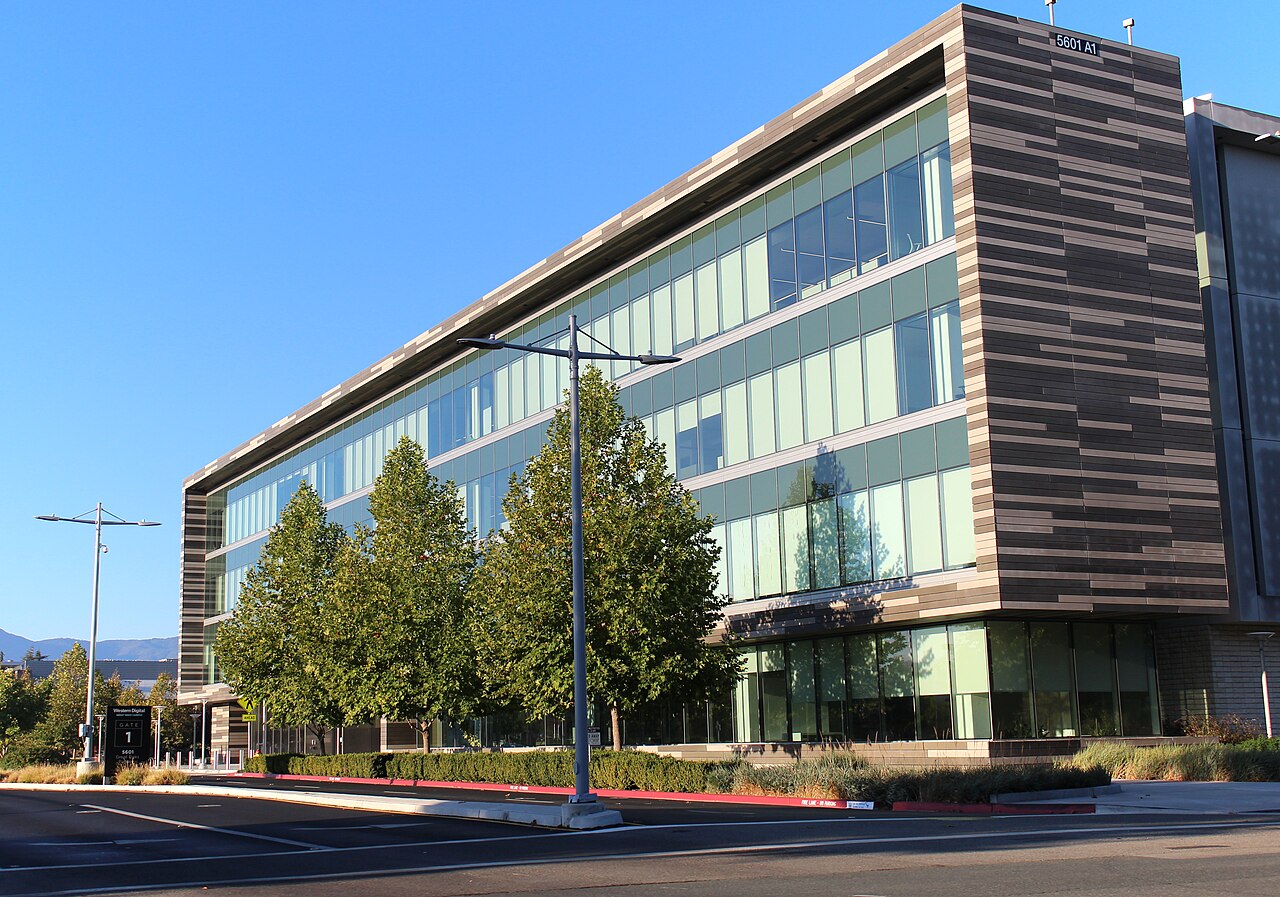
Up until February 2025, SanDisk came under Western Digital Corporation. The idea of the acquisition by WD was to diversify its product offerings, stabilize NAND flash memory supply, and utilize SanDisk's solid-state technology with WD’s hard drive dominance. Later, investors realized that WD’s market capitalization had steadily declined post-acquisition.
Separating the two core technologies was the best idea to be valued properly on the stock market. The separation allowed WD to focus exclusively on high-capacity storage for data centers and AI, while SanDisk operated as a pure-play flash innovator. What worked against SanDisk was the artificial intelligence boom, which was reshaping data infrastructure globally, and cloud storage was the need of the hour for companies.
Being one of the five largest NAND flash memory global suppliers, SanDisk was right at the centre of demand. NAND flash is the core technology inside SSDs that power data centers, AI servers, and everyday consumer devices. SanDisk supplies SSDs directly to cloud service providers, private data centers, and original equipment manufacturers, and that demand is not slowing down.
The stock prices reflect that almost instantly. To give you a perspective, SNDK was initially trading at $40.10 at its 52-week low, and now it has climbed to $2,273.73, with a 52-week high of $2,354.39 already on record. The numbers don’t lie and are not theoretical, credit to the rise of AI infrastructure.
Also read || China Has Made a Supercomputer Work Without a GPU: Here’s How
How Did SanDisk Become a $336 Billion Company in Under Two Years?
SanDisk’s rise is not an MBA case study or a market sentiment story alone. It has all the right fundamentals: a trailing twelve-month revenue of $13.18 billion and a profit margin of 34.19 percent. For a fact, the revenue reached $5.95 billion, and earnings came in at $3.67 billion in the last quarter alone. For an independently traded company, these numbers are extraordinary.
Now, they have multi-year data centre supply agreements worth at least $42 billion with major cloud and AI infrastructure. The company confirms that it is running out of its entire 2026 production capacity. Since they do not rely on external suppliers, they have a structural edge over rivals like Micron or Kingston.
SanDisk produces nearly all of its flash chips through a joint-venture manufacturing framework with Kioxia across facilities in Japan. That control over the supply chain, combined with explosive enterprise demand, allowed it to scale profitably. With a return on equity of 39.3 percent and return on assets at 22.82 percent, SanDisk is growing more rapidly than ever.
Also read || NVIDIA vs Huawei: The Chip War Nobody Saw Coming
What Would $1,000 Have Made You?
Now, the most important aspect is how much you would have made if you were an early investor. On February 24, 2025, SanDisk listed at $48.60 per share. Now, the stock is trading at $2,273.73 per share. So, a $1000 investment at the IPO price would have brought roughly 20 shares. Those 20 shares are now worth around $46,600, which is 4,560% growth in sixteen months. That is not speculation, but what the numbers show.
For a fact, even if you had purchased $1000 worth of SNDK shares on January 24, 2026, you would have seen growth from $470.8 per share to $2,273.73 per share in June. Within six months, your shares would have grown by 383%, and your $1000 would have become approximately $4800 in just six months. Very few stocks have delivered that scale of return in a short time.
While past performance does not guarantee future results, and the stock market is volatile, knowing your financial fundamentals is the key to being a smart investor. The AI wave is real, but the valuation demands sustained growth to justify it. Whether this stock still has room to run is a question only the market can answer in time.