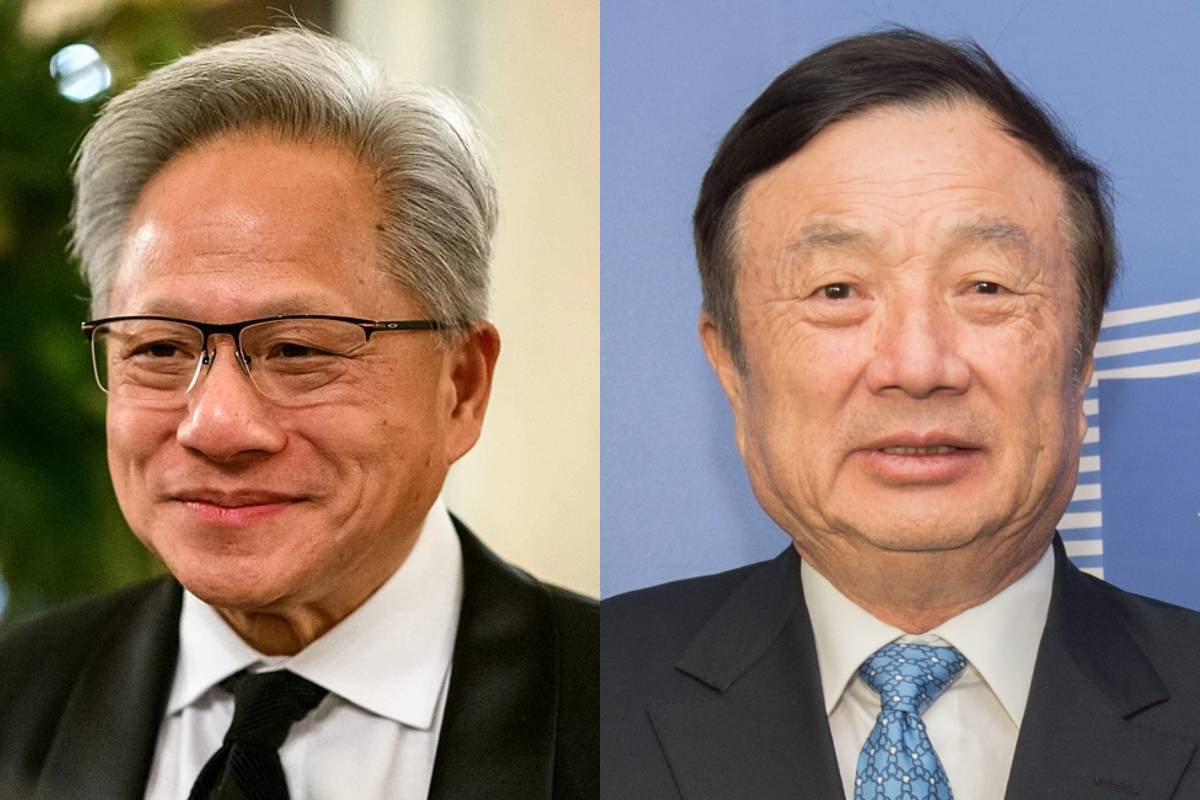
The world's biggest chip company, making billions in quarterly revenue, yet losing an entire country's market to a rival that produced domestically subsidized chips. It is no fiction but reality. On May 21, 2026, Jensen Huang, CEO of NVIDIA, said that the company "largely conceded" the Chinese AI chip market to Huawei due to U.S. export restrictions.
Interestingly, the statement came just a day after NVIDIA posted a record quarterly revenue of $81.62 billion. Contrary to belief, Chinese tech giant Huawei, which was on America's trade denylist in 2019 due to security concerns, is not only surviving but thriving more than ever. Shipping chips, sealing deals, and exporting its technology worldwide to compete with American companies on their own turf. Was NVIDIA ready for this chip war, or did the world even see it coming? Let's explore.
Also read || Cybersecurity Pioneer Peter G. Neumann Dies at 93
How Washington's Ban Handed Huawei the Keys to China
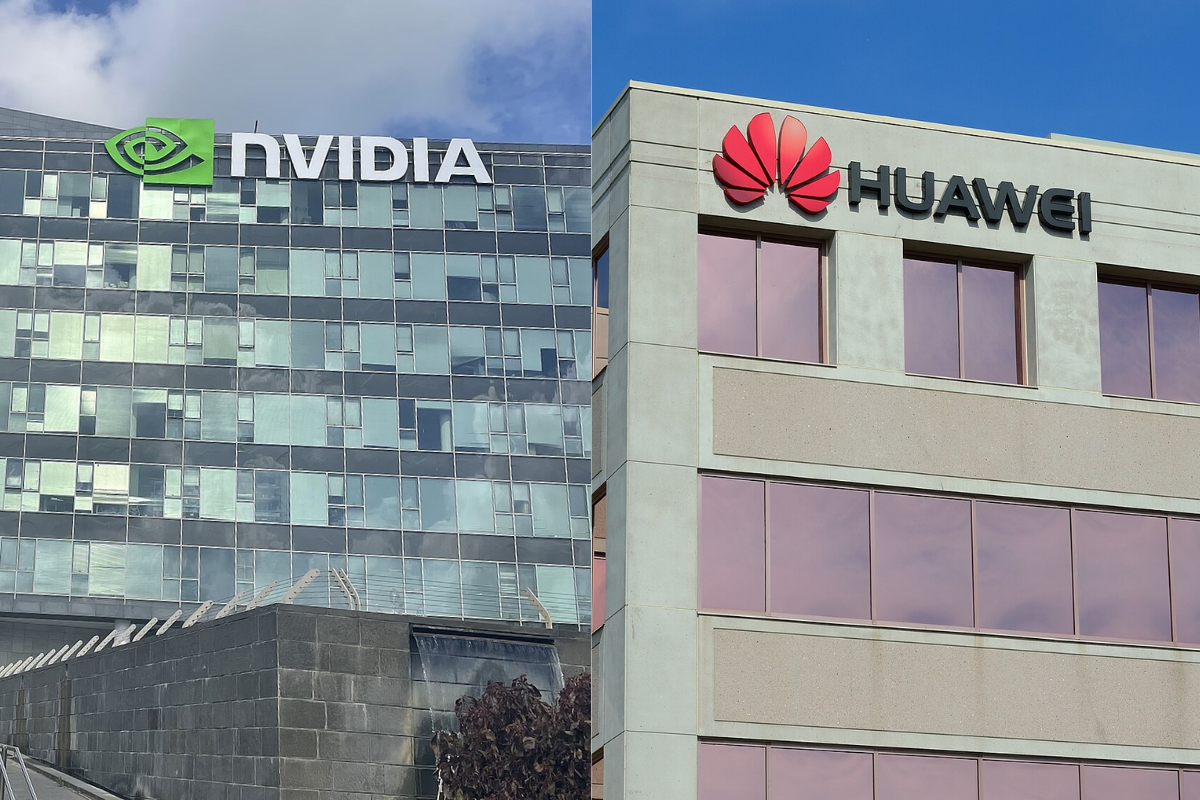
NVIDIA is undoubtedly the market leader in AI chips, with quarterly revenue of $81.62 billion and 85% year-over-year growth. For once, China was a cornerstone of this business, and accounted for at least one-fifth of NVIDIA's data center revenue, but now it's shut off. They have halted production of their H20 AI chip and recorded a $4.5 billion write-down, shifting to rely on existing inventory as Chinese firms prefer domestic alternatives. The move shows the shift in geopolitical trade rules and the rise of local AI hardware options.
Huawei's AI chips are expected to generate roughly $12 billion in sales in 2026, a huge jump from $7.5 billion in 2025, thanks to its new Ascend 950PR processor, which entered mass production. Dominating roughly half of China's AI chip market, they received a $5.6 billion investment from ByteDance in Huawei's Ascend chips in 2026, due to the United States export restrictions limiting NVIDIA GPU availability. As of now, the Chinese giant is targeting shipments of 750,000 AI chips in 2026, with its Ascend 950PR model projected to capture approximately 60% of China's domestic AI-accelerator demand, according to Tech Insider.
Interestingly, the Huawei Ascend 950PR delivers 1.56 petaflops of FP4 compute and 112 GB of HiBL 1.0 memory, outperforming NVIDIA's GB200 NVL72 at the system level. However, the software-lock-in risk is a concern in Huawei's chip architecture. Once Chinese AI developers build their software stacks around Huawei's architecture, returning to NVIDIA hardware would be a massive, costly engineering effort rather than a simple procurement decision.
Also read || Tata & ASML: Is India Finally Making Its Own Chips?
Burner Phones, Diplomatic Deals, and Jensen's Diplomatic Silence

The Trump-Xi summit brings a new angle to the story. Before boarding Air Force One back to the United States, all personnel, including President Donald Trump, Apple CEO Tim Cook, and NVIDIA CEO Jensen Huang, had to leave behind any gifts from China, whether identification badges, pins, or burner phones. Everything was thrown into a trash bin next to the plane's stairs. It was no ordinary or casual trip, but a dialogue between two superpowers on trade tensions, humanitarian issues, and geopolitical conflicts.
The positive aspect is that the United States government approved the sale of NVIDIA's advanced H200 AI chips to 10 major Chinese technology companies, including Tencent and Alibaba. Nevertheless, Huang remains mindful about getting too much into it. He has advised investors to "expect nothing" regarding approvals to resume advanced chip sales to China, even though NVIDIA would be "more than delighted to serve the market" if the situation changes.
Also read || NVIDIA’s New Chip: The Secret Strategy to Own AI Inference
"China obviously has all the chips they need. That's the reason why they don't need ours. And Huawei has done a very good job there...They had a record year. They are flourishing in our absence. And they're now exporting their technology out to the rest of the world, competing with American companies around the world," says Jensen Huang. He emphasized that the aggressive United States tech decoupling backfired, driving China towards self-sufficiency rather than halting its progress.