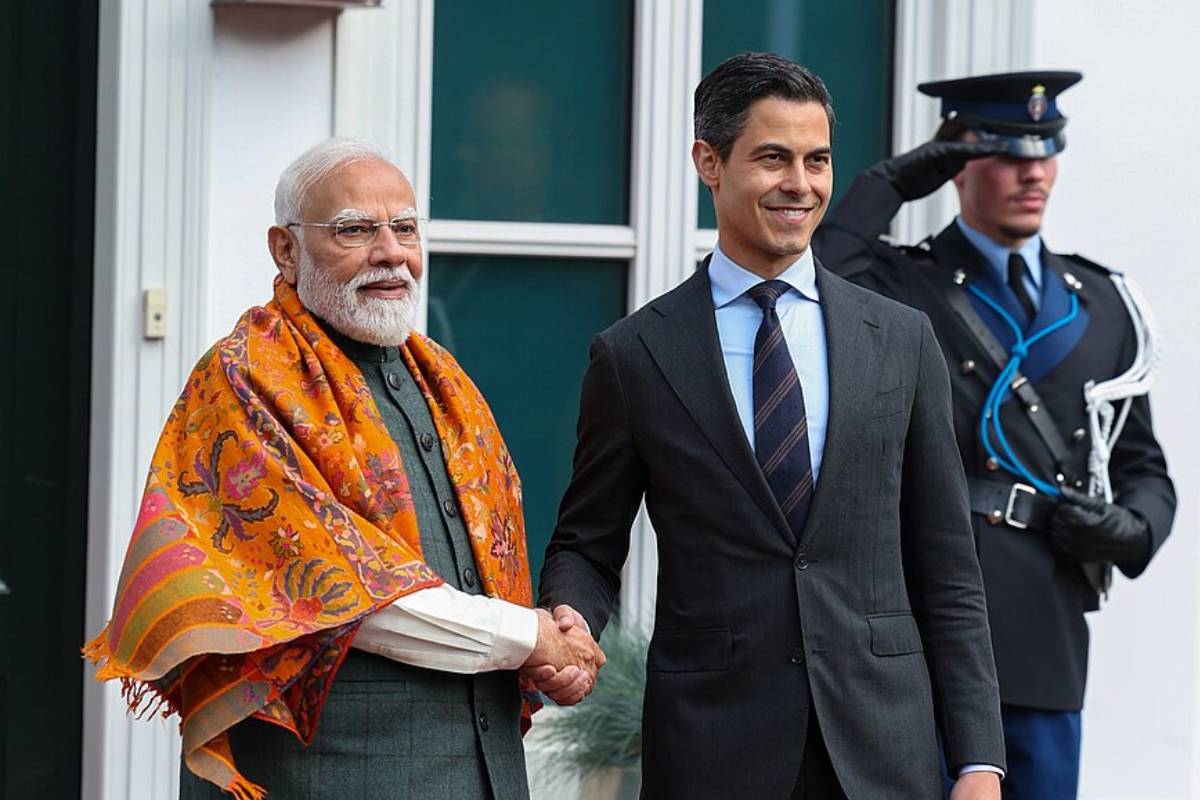
The Hague, Netherlands - Two CEOs sat across the table and signed a document that might change how India makes and thinks about semiconductor chips. Randhir Thakur of Tata Electronics and Christophe Fouquet of ASML signed the Memorandum of Understanding (MoU) outlining ASML's role in setting up and ramping up production at Tata's upcoming semiconductor fabrication facility in Dholera, Gujarat.
It would be India's first front-end semiconductor fabrication plant. With Tata's $11 billion investment and ASML's supply of advanced DUV (Deep Ultraviolet) Lithography machines, these plants will use the standard 300mm wafers to manufacture chips. The Dutch company ASML makes the only machines in the world capable of printing the most advanced semiconductor circuits. From supplying lithography tools to training Indian engineers and building a sustainable local supply chain, ASML would be covering everything.
Also read || Everything to Know About the US-Ukraine Drone Deal in 2026
What India Already Has
India might not have been a semiconductor hub, but the story didn't begin last month. It has been quietly building its foundation. In 2021, the India Semiconductor Mission (ISM) was launched with a $10 billion government support package and has already approved over 10 manufacturing projects across six states, namely Gujarat, Assam, Andhra Pradesh, Uttar Pradesh, Odisha, and Punjab, with cumulative investment commitments crossing $18 billion.
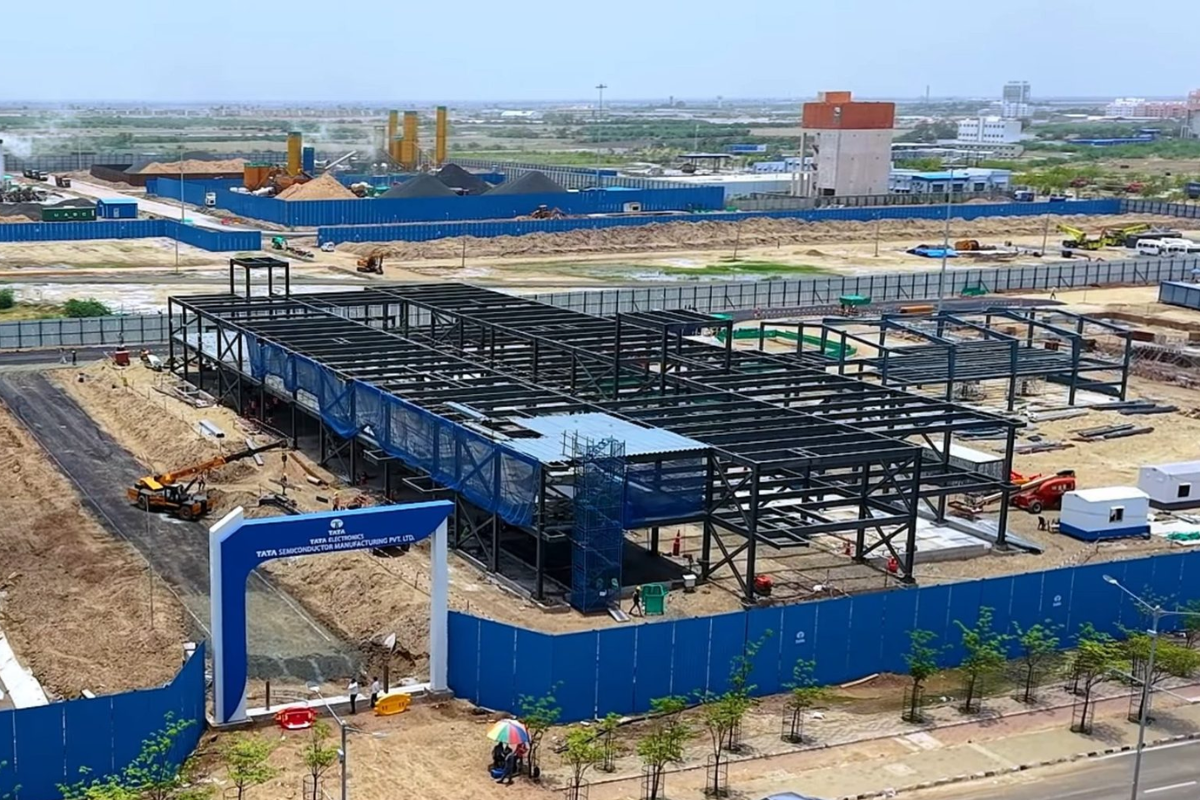
Tata's Dholera Fabrication Plant is the result of that effort. With a collaborative effort from Taiwan Semiconductor Manufacturing Company (TSMC), it provides process technologies for chips at 28nm, 40nm, 55nm, 90nm, and 110nm nodes. While these chips might not be leading-edge like Apple's, they are real, manufacturable chips for products ranging from cars and consumer electronics to AI hardware.
The Dholera plant is designed to produce 50,000 wafers per month, covering power management ICs, display drivers, microcontrollers, and high-performance computing logic across those application areas. Moreover, the back-end ecosystem of India is also growing. There are Outsourced Semiconductor Assembly and Test (OSAT) facilities in Sanand, Gujarat, where Kaynes Semicon, CG Power, and Micron are already being scaled.
The talented design base is also a genuine asset for India; engineers have been part of global chip design teams for decades. Their expertise and depth will be channeled into domestic startups supported under the Design-Linked Incentive (DLI) scheme. Over the last two years, India's semiconductor funding has grown from $5 million to $50 million, indicating a clear direction for the industry.
Also read || Cybersecurity Pioneer Peter G. Neumann Dies at 93
Where India Still Lacks

Though there is no better news than a major investment in a country's economy, an honest assessment matters more than celebration. While India's semiconductor journey is commendable, there are still structural gaps that need to be filled. And self-reliance is one of them. Let us decode these gaps, one by one, and learn what India needs to do about them.
India is import-reliant in the semiconductor segment. It depends on imports, and still imports over 90% of its semiconductor needs. Whether it is a wafer, a speciality chemical, an industrial gas, or a piece of manufacturing equipment used in domestic production, everything comes from abroad. ISM may have built entry points into manufacturing, but the upstream supply chain remains almost entirely external. That is the core problem ISM 2.0 is trying to address.
Talent crunch is yet another gap. There is a deficit of 250,000 to 300,000 semiconductor professionals in India by 2027, according to the TeamLease Degree Apprenticeship report. The fabrication facilities require specific skills and expertise, such as process technicians, cleanroom engineers, and materials scientists, which Indian universities have not yet systematically produced at scale.
Capital costs are another huge gap for India. While India runs at 8-10%, Taiwan, South Korea, China, and Japan are manufacturing at 1-6%, making India structurally more expensive to set up and operate fabrication plants here. To counter that, there needs to be some extraordinary government subsidy or competitive advantage in other areas to offset it.
Finally, the Dholera fab will use DUV (Deep Ultraviolet) lithography, not EUV (Extreme Ultraviolet), which is a relatively advanced technology. Though not a problem for the chips India plans to make, it does not mean the country is not entering into a new era of chip manufacturing yet. Since EUV machines can cost up to $380 million each, India's focus is on mature-node chips, which still covers a comprehensive range of real-world applications.
Also read || This Royal City Was Abandoned In Just 15 Years- Why?
What It Means for India's Semiconductor Future
Growth is always appreciable, even if it's a baby step. The Tata-ASML partnership operates at three levels: strategic, industrial, and symbolic. The Dholera plant is targeting its first chip output by late 2026, with a commercial ramp-up expected by 2028, according to Ashwini Vaishnaw, the Union Minister for Electronics and IT of India.
Getting a chip off the line is one thing, and achieving consistent, high-yield production at scale is another. If Tata hits target yields at 28nm and 40nm nodes within six to twelve months of first output, it will be manufacturing chips for AI, automotive, and other sectors domestically, reducing import bills and giving Indian hardware companies a local supply option for the first time.
The India-Netherlands strategic partnership is another strategic aspect of this collaboration. The deal places India firmly in the Western semiconductor supply chain alongside the US, the Netherlands, Japan, and Taiwan. Since China's share of ASML's revenue is expected to fall from 33% in 2025 to roughly 20% in 2026 due to restrictions, India is positioned as a credible alternative destination for technology, for investment, and for trust.
Symbolically, it is the first time a company of ASML's calibre has signed a direct partnership to establish and ramp a fabrication plant in India. The move implies that India could become a serious manufacturing destination, and not just a services hub or a future promise. Gaps might be real, the timeline is tight, and there are significant execution risks, but the Tata-ASML deal is not just another MoU; it brings together lithography tools, training, supply chain development, and extensive research and development infrastructure.