As of 2026, FIFA has had 22 editions of the FIFA World Cup and has 17 fundamental laws by the International Football Association Board (IFAB) that dictate the fate of the game. Most football fans know the basics like offside penalties and bookings, but there's more to World Cup than just standard rules.
Some rules are so strange they feel like someone made them up for fun, whereas some of them changed the game permanently. Others have been quietly sitting in the rulebook for decades, and nobody enforces or even cares about them. Here, we have created a list of the five of the weirdest rules in FIFA World Cup history, and each one of them is real.
Also read || 7 Highest Goal Scorers in FIFA World Cup History
Your Yellow Card Tally Can Eliminate You from the World Cup
If two teams finish the group stage on the same level of points, goal difference, goals scored, and head-to-head result, the World Cup tiebreaker comes down to yellow cards. It's called FIFA's fair play system. Each yellow card deducts one point from the team's conduct score, and the team with fewer bookings advances to the next stage.
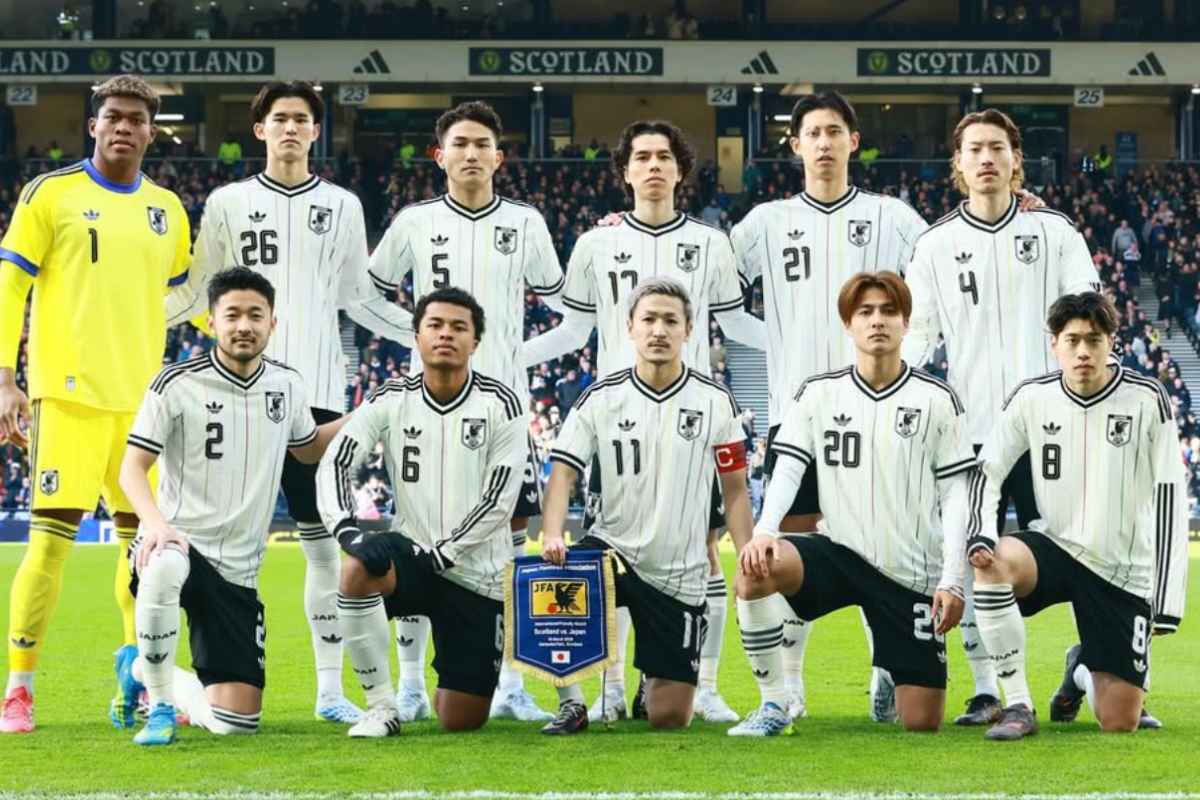
For a fact, Japan and Senegal finished Group H in the 2018 World Cup in a similar fashion; they had the same points, goal difference, goals scored, and a 2-2 draw in their head-to-head match. However, Japan had accumulated four yellow cards, while Senegal had six. As a result, Japan qualified and ended up playing Belgium in an iconic match of the round of 16.
Also read || Vikings Return to the Field After 28 Years
Throw-In within time or lose possession
If a player takes too long on a throw-in or goal kick, the referee raises one hand and begins a visible five-second countdown. For throw-ins, if the ball is not in play at the end of the countdown, a throw-in is awarded to the opponents. Similarly, if a goal kick is not taken at the countdown, a corner kick is awarded to the opponents.
While the throw-in makes a lot of sense, the corner kick penalty is where this gets genuinely strange. It implies that if a goalkeeper is slow, he will concede a corner kick to the opponents. Besides, a corner kick has higher goal probability than a regular goal kick. Thus, it means all you need is a five-second error to give opponents an undeserved goal-scoring opportunity.
Also read || 5 FIFA World Cup Injuries That Changed Careers
Goalkeepers Have a Time Limit on Holding the Ball
Initially, goalkeepers had six seconds to release the ball, and the rule was not well-enforced by referees. If a keeper held the ball longer, an indirect free kick was awarded to the opposing team. Now, the goalkeeper can hold the ball for eight seconds, but violating the time limit would lead to a corner kick for the opposition team.
You may have witnessed how many keepers used to hold the ball for 10 or 15 seconds, and referees almost never called it a violation under the old rule. But, stakes are higher now, and it could cost your team a goal. That's not a theoretical concern; it's a crisis for the defending team. Would this rule give underdogs an opportunity to dominate?
Also read || Hydration Breaks Dividing FIFA World Cup 2026
Covering Your Mouth Is an Automatic Red Card
There were a lot of discussions around why Lionel Messi did not get a red card for covering his mouth, while Paraguay midfielder Miguel Almirón was given one. The answer was this rule. You can not cover your mouth during a confrontation with an opponent, regardless of what they said. If you do so, you can be automatically sent off with no question asked.
Argentine star Messi covered his mouth during Algeria, but he was communicating to his teammate, which is not a violation. The International Football Association Board introduced this rule in April 2026 following a Champions League incident between Real Madrid and Atletico Madrid. In that match, Atletico's Gianluca Prestianni covered his mouth while speaking to Vinicius Jr., prompting a 10-minute stoppage and unverifiable allegations of racial and homophobic abuse.
Also read || 5 FIFA World Cup Injuries That Changed Careers
Walking Off the Pitch to Protest Is Now a Sending-Off
2026 FIFA World Cup came up with another new rule, where if a player deliberately leaves the field to protest a referee's call, they can be sent off immediately. Interestingly, the rule also covers coaches and team officials who encourage players to walk off. What prompted this rule was the January 2026 final of the Africa Cup of Nations, where Senegal faced Morocco, and Senegalese players left the pitch for nearly 15 minutes to protest a penalty call.
The rule has an unusual scope, and not only does it punish the act of walking off, but it also punishes the instructions to do so. A coach who signals players to leave the field can be dismissed alongside the team. Walkoffs used to be treated as dramatic but harmless displays of frustration, but with this rule, every walk-off can cost the team the next match.
Also read || 10 Oldest Players at FIFA World Cup 2026
Why these rules are strange
The World Cup has been running since 1930. In that time, the rules have been rewritten over and over because of a scandal, a loophole, or someone deciding football needed fixing. The strangest rules often tell the most interesting stories. A yellow card in a dead rubber. A five-second clock on a throw-in. A goalkeeper bouncing the ball in slow motion. The game keeps changing.
Also read || FIFA World Cup 2026: New Format Explained
Ultimately, these strange regulations transform minor moments into massive, match-deciding penalties. Whether it is a strict booking tally, sudden mouth-covering prohibitions, or harsh countdowns on simple goal kicks, professional football continues to adapt aggressively, proving that the beautiful game's tactical evolution never truly stops.