For centuries, many talented women artists remained hidden from history. Their paintings and sculptures were often ignored, stored away in museum collections, or mistakenly credited to male artists. In some cases, their work was so exceptional that experts simply refused to believe a woman could have created it. Today, art historians are working to correct these mistakes by re-examining old collections, uncovering forgotten signatures, and restoring recognition to women whose contributions were overlooked.
One of the most remarkable examples is Michaelina Wautier, a seventeenth-century Flemish artist whose masterpiece, The Triumph of Bacchus, was neglected for centuries before being rediscovered. Her story forms part of a broader effort to restore women artists to their rightful place in art history. The following examples highlight five important artworks that were once wrongly attributed to men and the women who created them.
Also Read: Travelling to Japan? Don’t Miss Tokyo’s Incredible Transparent Public Toilets
Michaelina Wautier and The Triumph of Bacchus
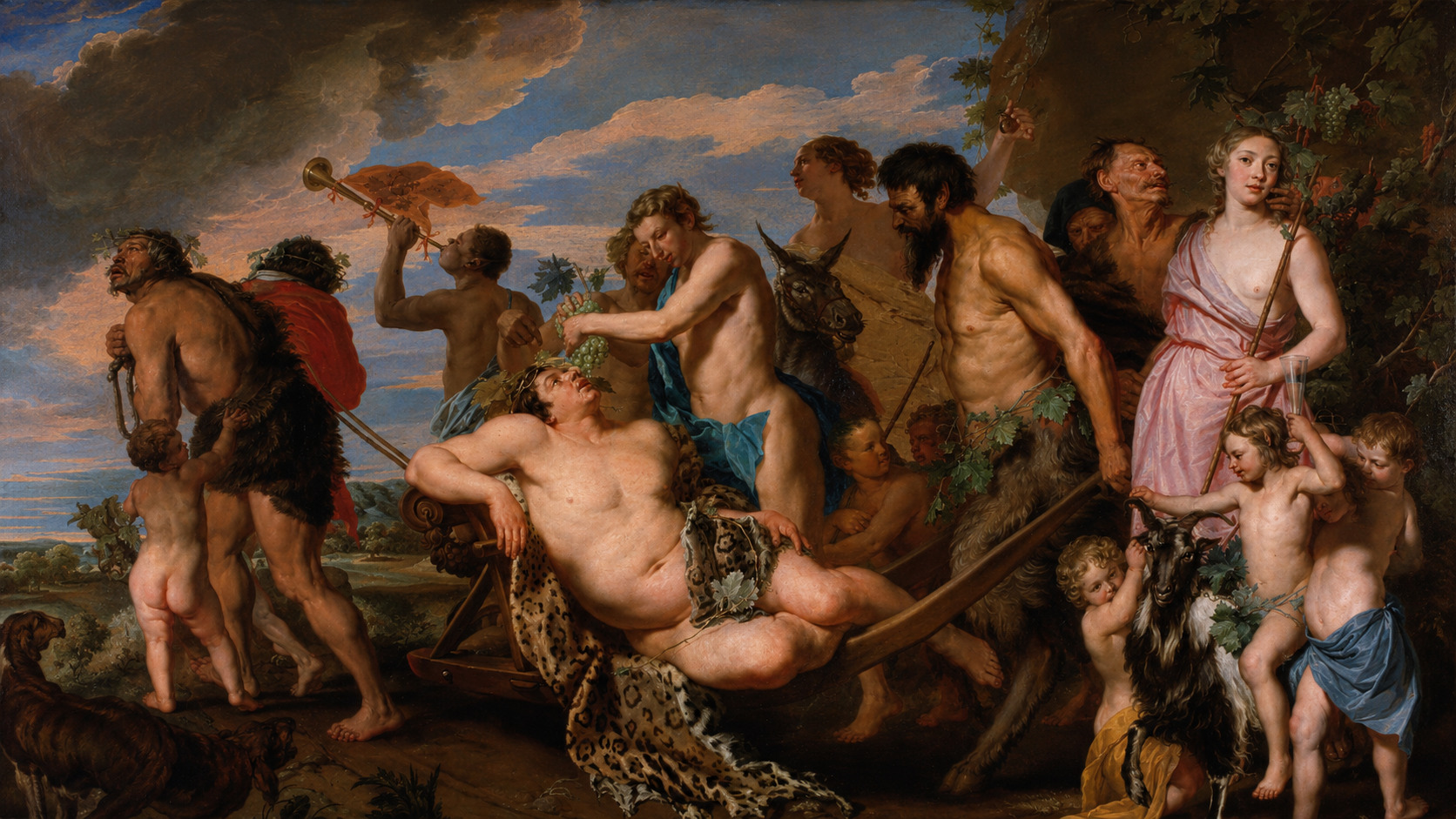
In 1993, Belgian art historian Katlijne Van der Stighelen was studying artworks in the storage rooms of the Kunsthistorisches Museum in Vienna when she encountered a large painting titled The Triumph of Bacchus (1655–1659). Filled with life-sized figures and intricate details, the painting was a striking work of art, yet it had spent years hidden away from public view. Curious about why such a remarkable painting had been neglected, Van der Stighelen discovered a simple explanation: it had been painted by a woman. At the time, many experts assumed the work must have been created by Michaelina Wautier’s brother, Charles Wautier, because women were generally excluded from life-drawing classes, which were considered essential training for producing large historical paintings.
However, further research confirmed that Michaelina Wautier was the true artist. The painting even contains a self-portrait of Wautier standing confidently among the figures and gazing directly at the viewer, almost as if she anticipated future doubts about her abilities. Over time, several other paintings previously credited to famous male artists, including Anthony van Dyck, were also reassigned to Wautier. Today, she is recognised as one of the most significant artistic rediscoveries of recent decades. Her work demonstrates extraordinary talent across multiple genres, including portraiture, still life, historical painting, and scenes of everyday life. The Royal Academy’s exhibition devoted to her work represents an important step in acknowledging her achievements and correcting centuries of neglect.
Artemisia Gentileschi and Self-Portrait as St Catherine of Alexandria
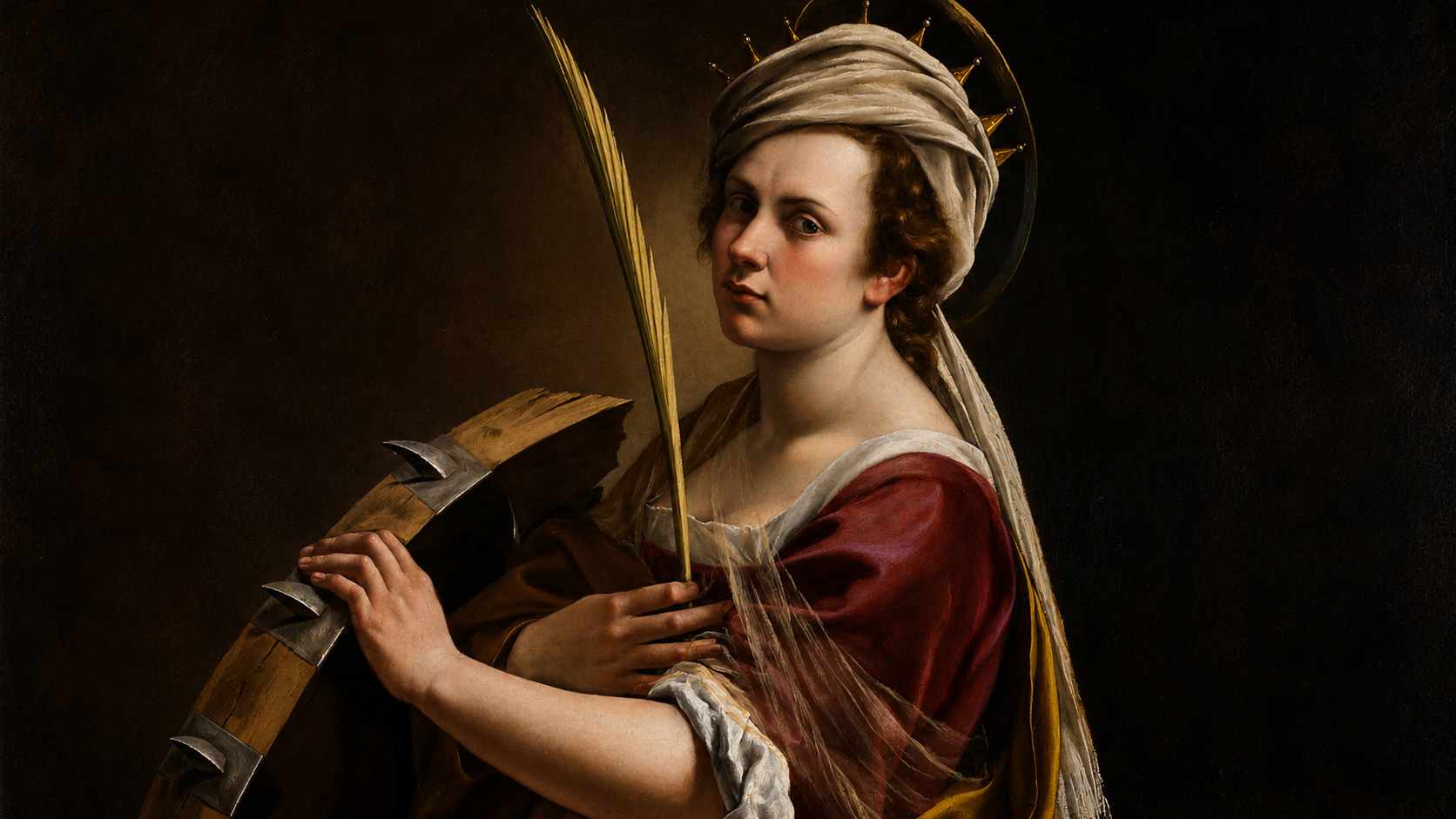
Another artist whose work was frequently attributed to men is Artemisia Gentileschi, one of the most important painters of the Baroque period. Artemisia began painting as a teenager and quickly earned recognition for her dramatic and emotionally powerful artworks. Although she enjoyed considerable respect during her lifetime, many of her paintings were wrongly attributed after her death to her father, Orazio Gentileschi, or to the renowned painter Caravaggio. One notable example is Self Portrait as St Catherine of Alexandria (c. 1615–1617), which was not officially recognised as Artemisia’s work until 2017.
The painting portrays the artist as Saint Catherine, a Christian martyr who suffered torture because of her faith. Many scholars see parallels between this image and Artemisia’s own experiences. As a young woman, she survived sexual assault and later endured a highly publicised and painful court case against her attacker. These experiences often influenced her art, which frequently depicted strong women resisting oppression and fighting for justice. Even today, researchers continue to uncover works by Artemisia. In 2020, a restoration process revealed her signature hidden on the sword in David and Goliath, while in 2023, another painting, Susanna and the Elders, was rediscovered in the Royal Collection. Artemisia once remarked that people doubted her abilities simply because she was a woman, but her artistic achievements ultimately proved otherwise.
Also Read: 9 Timeless Micro-Architecture Moments That Last Beyond Trends
Judith Leyster and The Carousing Couple
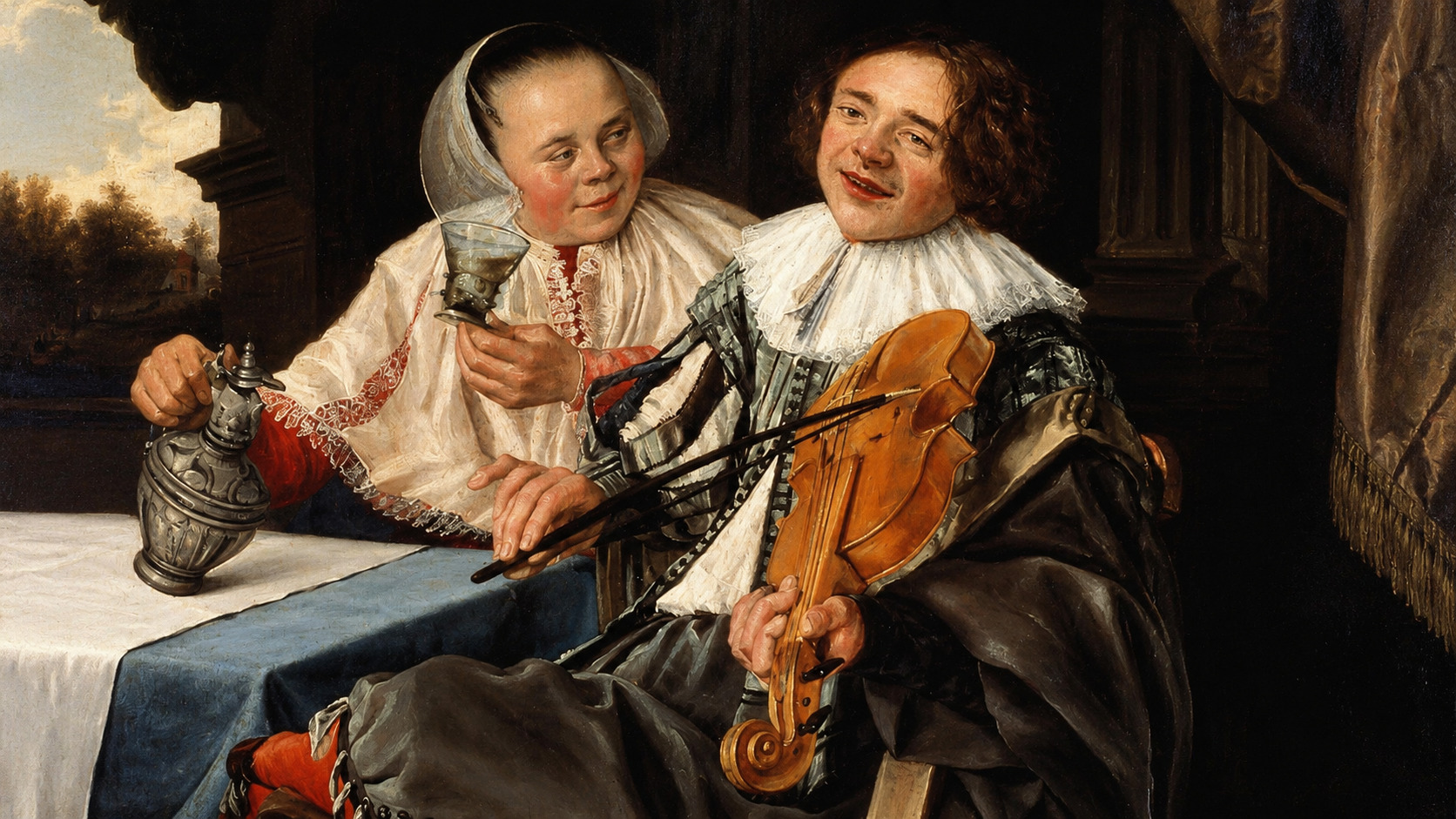
During the Dutch Golden Age, Judith Leyster was a successful and highly respected painter. However, after her death, her reputation faded, and many of her artworks were mistakenly credited to male artists. One of the most famous examples is The Carousing Couple (1630), a lively scene depicting people drinking and making music. For many years, experts believed the painting had been created by Frans Hals, one of the most celebrated Dutch painters of the era. The truth emerged in 1892 when an art dealer discovered Leyster’s hidden signature beneath Hals’s name. Her signature included the initials “JL” accompanied by a star, a symbol linked to her surname, which means “guiding star” or “lodestar.”
This discovery highlighted how easily women’s accomplishments could disappear from historical records. Paintings associated with famous male artists were often worth more money, giving collectors and dealers little incentive to acknowledge female creators. Leyster’s career was also shaped by the social expectations of her time. After marrying, she devoted much of her energy to raising five children and supporting her husband, fellow artist Jan Miense Molenaer. Although she may have collaborated on some of his paintings, only his name appeared on them. Today, however, Leyster is recognised as one of the leading painters of the Dutch Golden Age.
Baroness Elsa von Freytag-Loringhoven and God
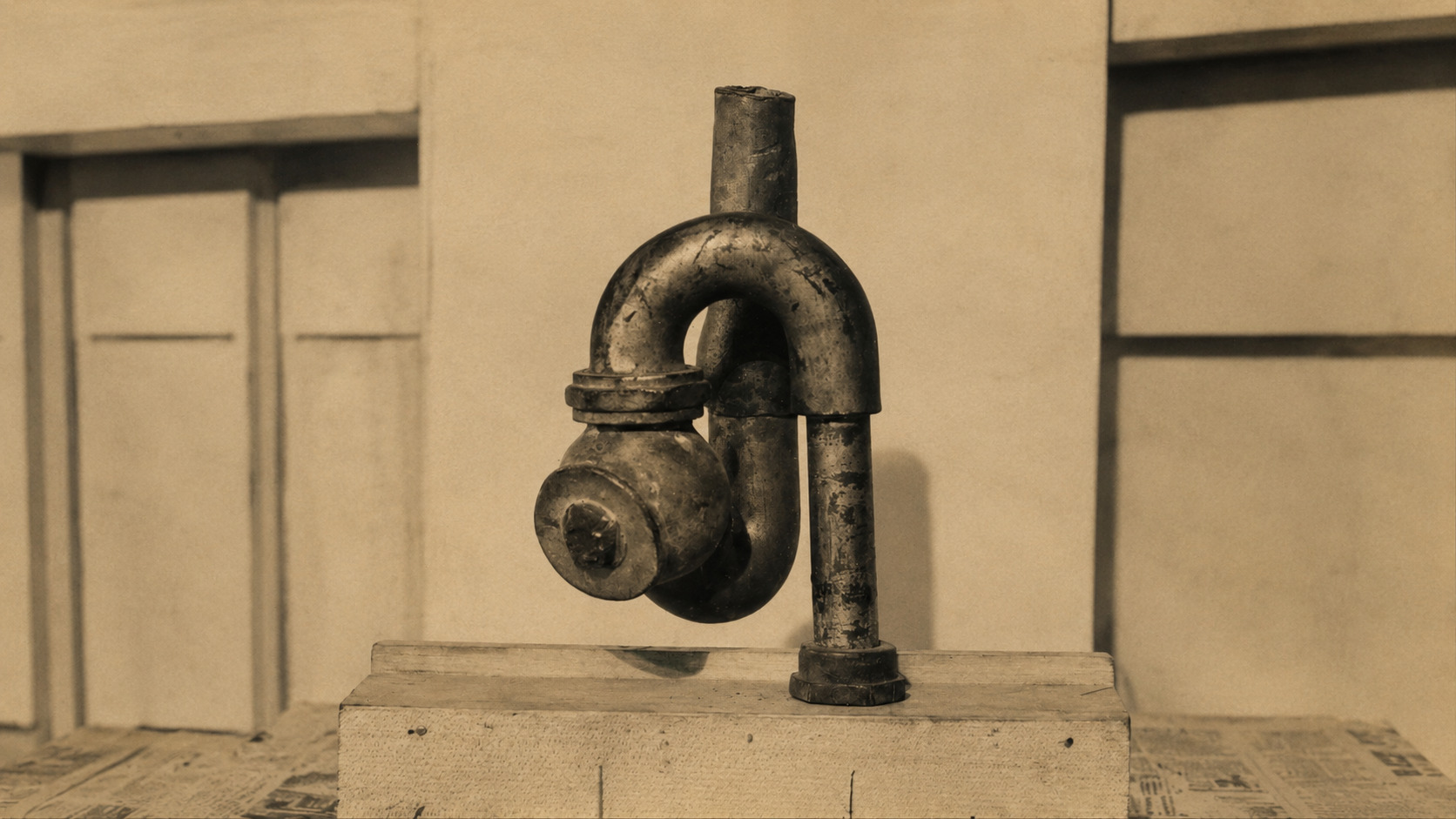
By the early twentieth century, women artists still struggled to receive equal recognition, even within avant-garde movements that claimed to challenge traditional ideas about art. One such overlooked figure was Baroness Elsa von Freytag-Loringhoven, a German artist known for her bold personality and unconventional creativity. She worked across multiple disciplines as a painter, sculptor, poet, and performance artist, frequently using unusual materials and provocative performances to challenge social norms. One of her most significant works is God (1917), a sculpture consisting of a cast-iron plumbing trap mounted on a wooden box. The piece is considered one of the earliest examples of a “readymade,” in which an everyday object is transformed into a work of art.
For decades, the sculpture was credited solely to the American artist Morton Schamberg. It was not until the early 2000s that the Baroness was officially recognised as a co-creator. Some scholars also believe that she may have contributed to the creation of Marcel Duchamp’s famous artwork, Fountain, an upside-down urinal that became one of the most influential works in modern art. Although definitive proof remains elusive, researchers have uncovered letters and historical evidence suggesting she may have played a role in developing the concept. If these claims are correct, one of modern art’s most iconic works may have been influenced or perhaps even created by a woman who received little recognition during her lifetime.
Margaret Keane and Her Big-Eyed Paintings
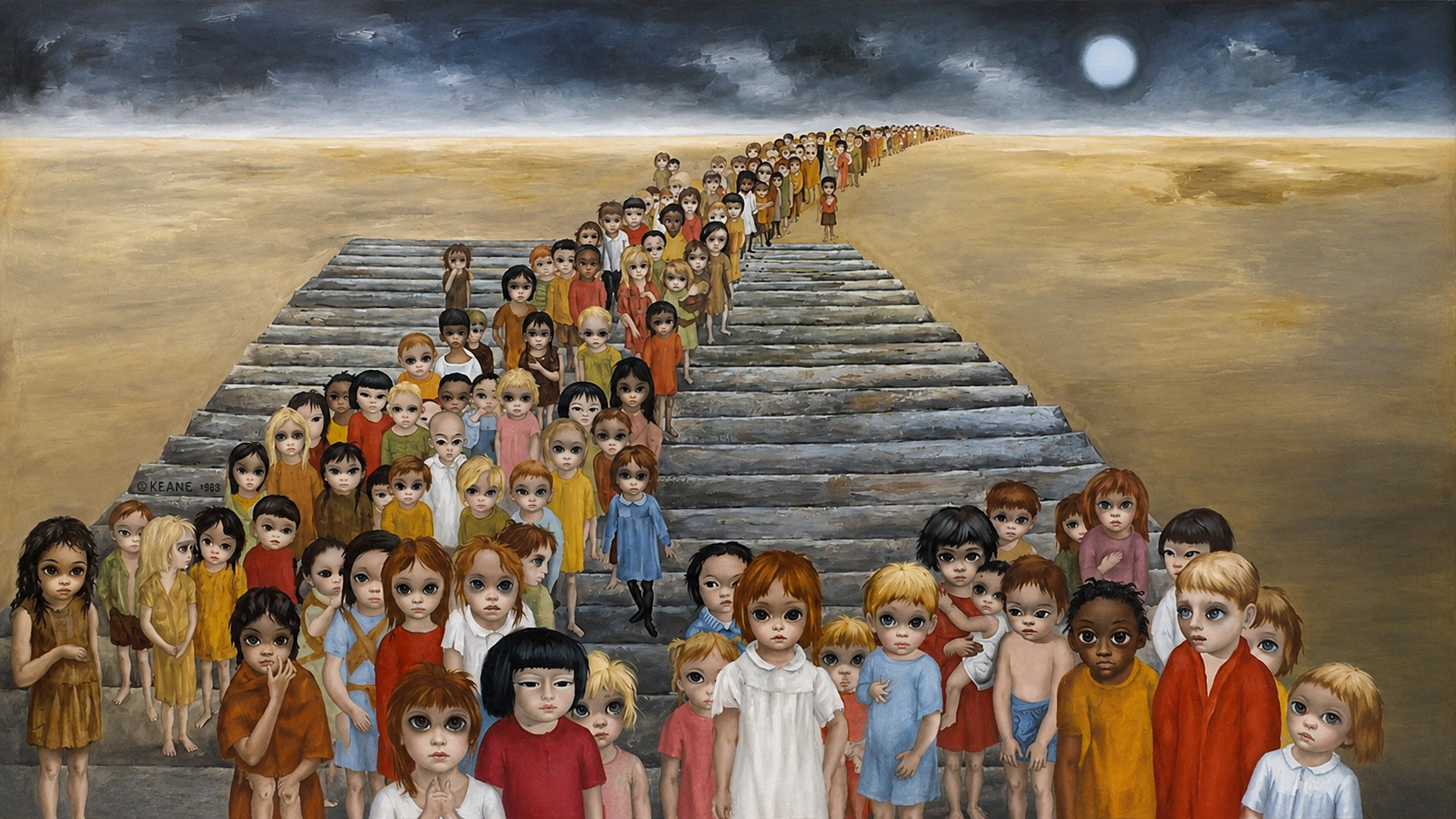
The story of Margaret Keane is more recent but no less remarkable. During the 1960s, Keane became famous for her paintings of children with large, expressive eyes. Her artworks appeared on posters, postcards, and prints, achieving enormous popularity across the United States. However, most people believed the paintings had been created by her husband, Walter Keane. Because Margaret signed her work simply as “KEANE,” Walter was able to use his skill as a salesman to convince the public that he was the artist. For years, he accepted full credit for paintings that Margaret had actually created.
Even after their divorce, Walter continued to claim ownership of the work, leading to a legal dispute that eventually reached the courtroom. In one of the most unusual episodes in art history, a judge asked both Walter and Margaret to paint in court. Walter claimed he had a shoulder injury and refused, while Margaret immediately picked up a brush and completed one of her famous big-eyed portraits in less than an hour. This demonstration provided undeniable proof that she was the true artist. Her struggle later inspired the 2014 film Big Eyes, introducing a new generation to her fight for recognition and artistic ownership.
Also Read: How Bombay Transformed from a Fort City to a Bustling Metropolis
Restoring Women's Place in Art History
The stories of Michaelina Wautier, Artemisia Gentileschi, Judith Leyster, Baroness Elsa von Freytag-Loringhoven, and Margaret Keane reveal a recurring pattern in art history. Their talents were often questioned simply because they were women, and as a result, their work was ignored, forgotten, or attributed to men who received the fame and financial rewards instead.
Today, scholars, museums, and galleries are working to address these historical injustices through exhibitions, research, and new discoveries. As a result, these artists are finally receiving the recognition they deserve all along. Their rediscovery is not only about correcting the historical record but also about ensuring that future generations understand that great art has always been created by women as well as men.