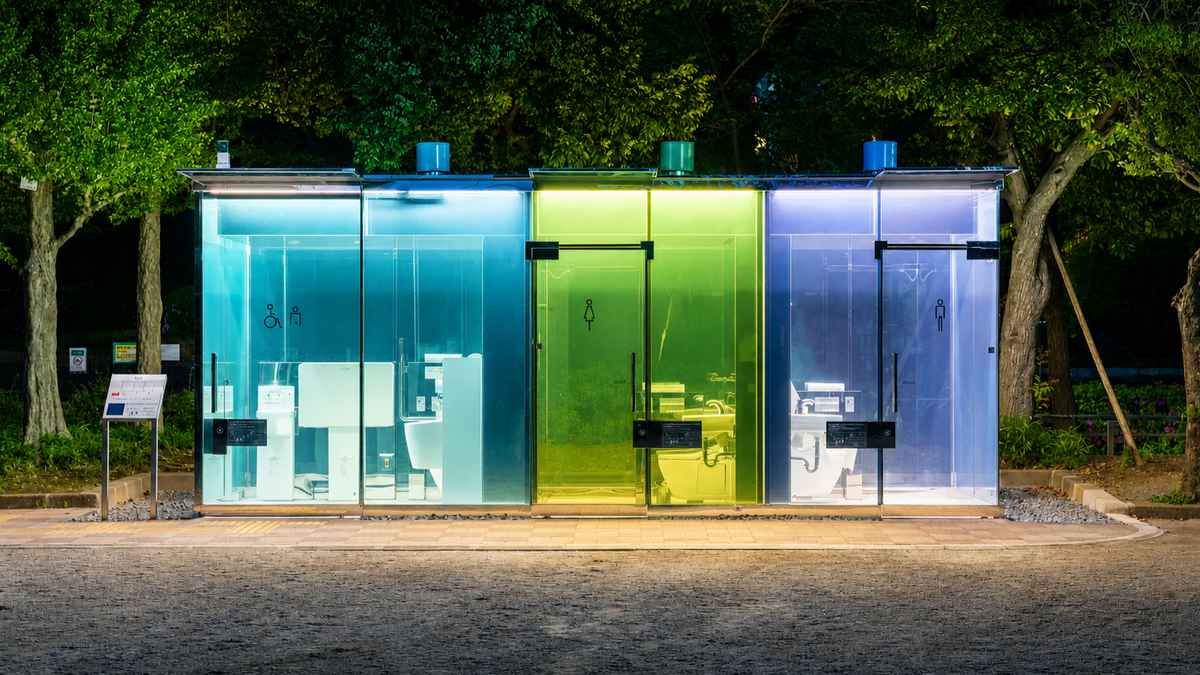
When planning a trip to Japan, most travelers look forward to exploring ancient temples, bustling shopping streets, world-class cuisine, and futuristic technology. However, one of Tokyo’s most fascinating attractions is something few visitors expect to find on their sightseeing list: public toilets. While public restrooms are rarely considered tourist attractions, Tokyo has transformed them into remarkable examples of innovation, architecture, and design. Among the most famous are the transparent public toilets located in Yoyogi Fukamachi Park and Haru-no-Ogawa Park in Tokyo’s Shibuya district. Designed by renowned Japanese architect Shigeru Ban, these unique facilities have attracted attention from visitors around the world for their unusual appearance and ingenious functionality.
Also Read: How Bombay Transformed from a Fort City to a Bustling Metropolis
A Toilet You Can See Through
At first glance, the idea seems impossible. How can a public toilet have transparent walls while still providing privacy? The concept was developed to address two common concerns people have when using public restrooms. According to the project designers, users are primarily worried about cleanliness and privacy, and many people hesitate to enter public toilets because they cannot tell whether the facility is clean or occupied. Shigeru Ban’s solution was both simple and revolutionary. During the day, the toilets appear completely transparent, allowing people outside to see inside the facility and check whether the restroom is clean and available before entering. The real innovation, however, lies in the technology behind the glass. Once a user enters and locks the door, the transparent walls instantly turn opaque, ensuring complete privacy while maintaining the benefits of transparency when the restroom is unoccupied. The result is a design that combines convenience, hygiene, and security in a way that challenges traditional ideas about public toilets.
Glowing Landmarks in the Park
The transparent toilets are not only functional but also visually stunning. Located within two popular parks in Tokyo, the structures are made from brightly colored glass panels in shades of blue, orange, green, and purple. During the daytime, the colorful transparent walls stand out against the surrounding greenery, while at night the toilets become even more striking. Illuminated from within, they glow like giant lanterns, creating a magical atmosphere in the parks. Their distinctive appearance has turned them into popular landmarks and photography spots, with visitors often stopping to admire the design and witness the glass changing from transparent to opaque when occupied. Beyond their appearance, the facilities are carefully designed to accommodate different users, with separate sections provided for women, men, and people with disabilities to ensure accessibility and comfort for everyone.
Part of a Larger Vision
The transparent toilets are just one part of a much larger initiative known as The Tokyo Toilet Project. Launched in 2019 by the Nippon Foundation, the project aimed to rethink how public toilets are perceived and used. Historically, public restrooms have often been associated with poor maintenance, unpleasant conditions, and safety concerns, but The Tokyo Toilet Project sought to change these perceptions by combining excellent design with advanced technology and high standards of cleanliness. To achieve this goal, the foundation invited sixteen of Japan’s most respected architects and designers to create unique public toilets at seventeen locations throughout Tokyo’s Shibuya district. The project transformed ordinary public facilities into architectural landmarks, demonstrating that even everyday structures can contribute to a city's beauty and quality of life.
Also Read: 18 Amazing Buildings Designed by Women Architects
World-Class Architects Join the Project
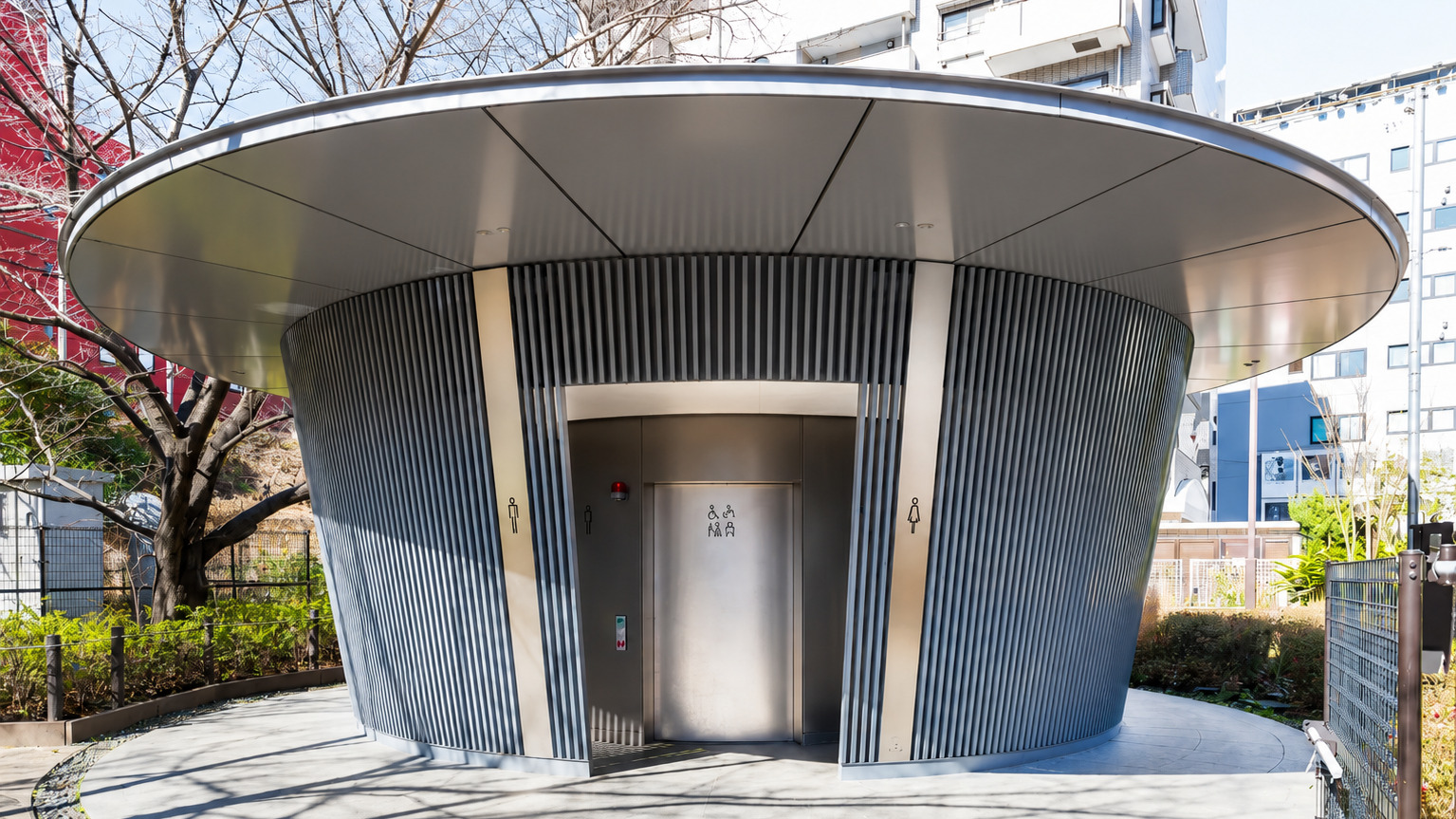
Shigeru Ban was not the only celebrated architect involved in the initiative. Several internationally recognized designers contributed their own creative interpretations of what a public toilet could be. Among them was Kengo Kuma, known for blending modern architecture with natural materials and traditional Japanese aesthetics, while Sou Fujimoto also contributed innovative designs that challenge conventional architectural thinking. Perhaps one of the most notable participants was Tadao Ando, whose minimalist concrete structures have earned global recognition. For the project, Ando designed a circular pavilion-like toilet called "Amayadori" in Jingu-Dori Park. Rather than creating a simple restroom, he envisioned a peaceful architectural space integrated into the surrounding landscape. His design allows natural light and fresh air to flow through the structure while creating a sense of safety and openness. Visitors can move through the circular layout and experience the surrounding environment, making the facility feel more like a small public pavilion than a conventional toilet. Other toilets in the project take inspiration from nature and Japanese culture, with some resembling snowballs, mushrooms, or bamboo forests, while others incorporate modern artistic elements that reflect Tokyo’s contemporary identity.
Why Cleanliness Matters So Much in Japan
The success of projects like The Tokyo Toilet is closely linked to Japan’s deep cultural appreciation for cleanliness. Cleanliness has long been an important value in Japanese society, influenced by Shintoism, the country's indigenous religion. In Shinto beliefs, purity is closely connected to spiritual well-being, and various purification rituals have been practiced for centuries. This respect for cleanliness extends beyond personal hygiene to public spaces, with streets, parks, train stations, and public facilities generally kept exceptionally clean. Many Japanese people view maintaining public spaces as a shared social responsibility. Traditional practices such as visiting onsens, or hot spring baths, also reflect the country's emphasis on cleanliness and purification, as individuals carefully wash themselves before entering communal baths. This cultural mindset has influenced the design and maintenance of public toilets throughout Japan, where many facilities are treated not simply as necessities but as important public services that should provide comfort, safety, and dignity to users.
Japan’s Reputation for High-Tech Toilets
Japan is already famous worldwide for its advanced toilet technology. Modern Japanese toilets often feature heated seats, automatic lids, built-in bidets, air dryers, deodorizing systems, and water-saving technologies. Since becoming popular in the 1980s, these high-tech toilets have become a standard feature in Japanese homes and can now be found in the majority of households across the country. The Tokyo Toilet Project builds upon this tradition of innovation. Instead of focusing solely on technological features, it combines technology with architecture, accessibility, and urban design. The transparent toilets designed by Shigeru Ban perfectly embody this philosophy by solving practical problems while creating a memorable visual experience for visitors.
Also Read: Beyond the Taj Mahal: 9 Romantic Buildings Around the World
A New Way to Think About Public Spaces
Tokyo’s transparent toilets demonstrate how thoughtful design can transform even the most ordinary aspects of urban life. What could have been a simple public facility has become a symbol of creativity, hospitality, and innovation. For travelers visiting Tokyo, these unique structures offer more than just a place to stop during a day of sightseeing; they provide insight into Japanese culture, design thinking, and the country's commitment to improving everyday experiences through innovation. In a city known for blending tradition with cutting-edge technology, Tokyo’s transparent public toilets stand as a perfect example of how even the simplest necessities can be reimagined into something extraordinary.