Saudi Arabia is preparing to host one of the biggest sporting events in the world, the 2034 FIFA World Cup. Although FIFA is expected to officially announce the host nation in December, Saudi Arabia is the only country that submitted a bid, making its selection almost certain. Hosting the World Cup is about much more than football. It is also an opportunity for Saudi Arabia to showcase its rapid development, ambitious infrastructure projects, and bold architectural designs.
Over the past few years, the country has launched several mega projects as part of its Vision 2030 plan, which aims to diversify the economy, boost tourism, and create modern cities and attractions. For the World Cup, Saudi Arabia plans to build 11 brand new stadiums while renovating four existing venues. The matches will be played across five host cities: Riyadh, Jeddah, Al Khobar, Abha, and The Line, the futuristic city being built in the NEOM region along the Red Sea coast.
The tournament preparations go beyond stadiums, with Saudi Arabia also developing 134 training facilities, including 73 newly built sites, along with hotels, transport networks, and entertainment districts to welcome millions of visitors from around the world. FIFA has unveiled the designs for the 15 stadiums that will host the 2034 World Cup. Each venue has its own unique architectural style and reflects different parts of Saudi Arabia's culture, history, and natural landscape. Here's a closer look at every stadium.
King Salman International Stadium, Riyadh
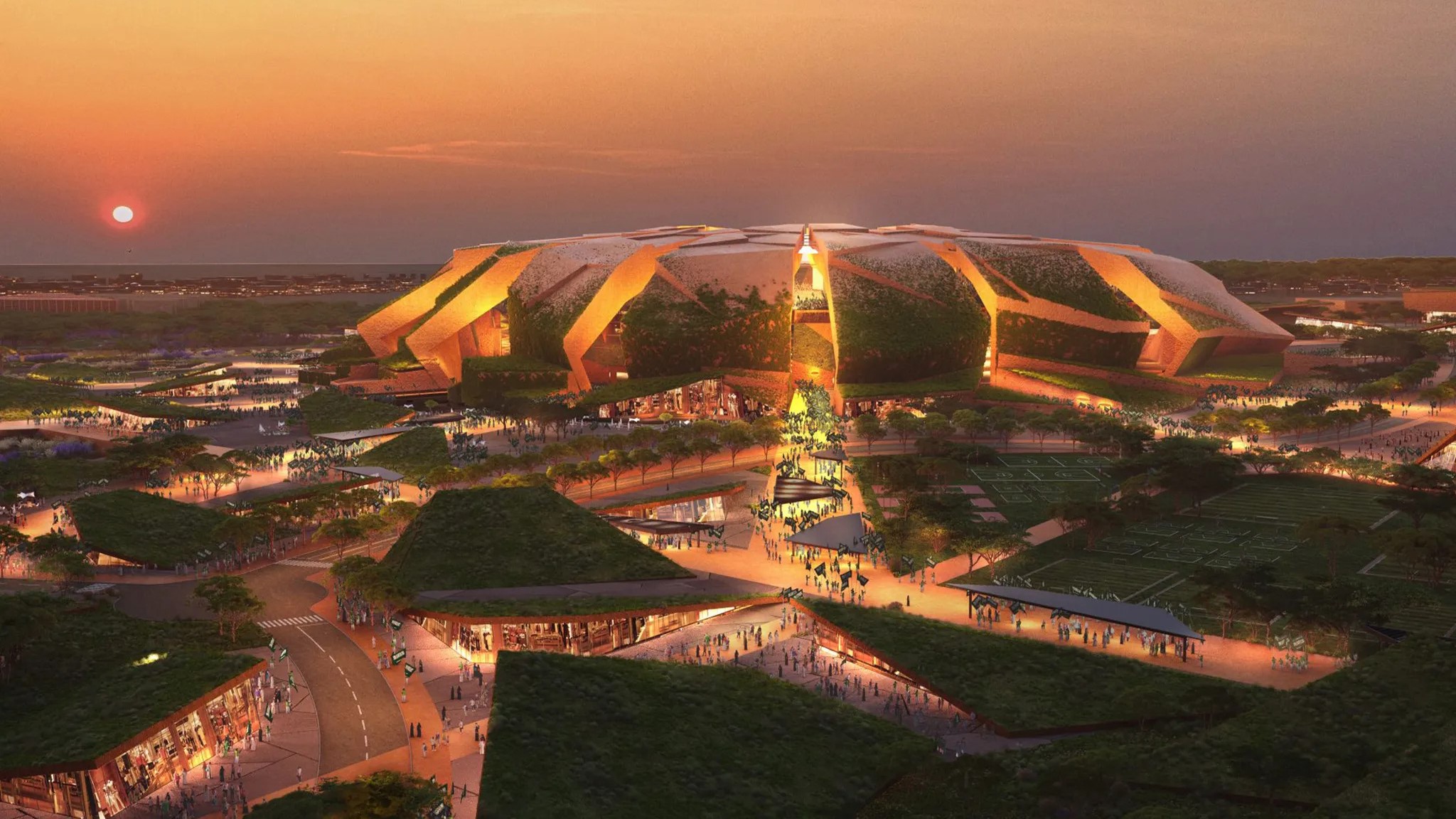
The King Salman International Stadium will become the largest football stadium in Saudi Arabia and one of the biggest in the world. Designed by the global architecture firm Populous, the stadium takes inspiration from the country's rocky mountain landscapes, with green walls covered in plants rising along its exterior to give the massive structure a natural appearance.
With a seating capacity of 92,000 spectators, it will serve as the centrepiece of Saudi Arabia's World Cup plans. The stadium has been specially designed for the country's hot climate, using natural ventilation systems and shaded areas to keep fans comfortable during matches.
Once completed in 2029, King Salman International Stadium will become Saudi Arabia's new national stadium and is expected to host both the opening ceremony and the opening match of the 2034 FIFA World Cup, making it one of the tournament's most important venues.
King Fahd Sports City Stadium, Riyadh
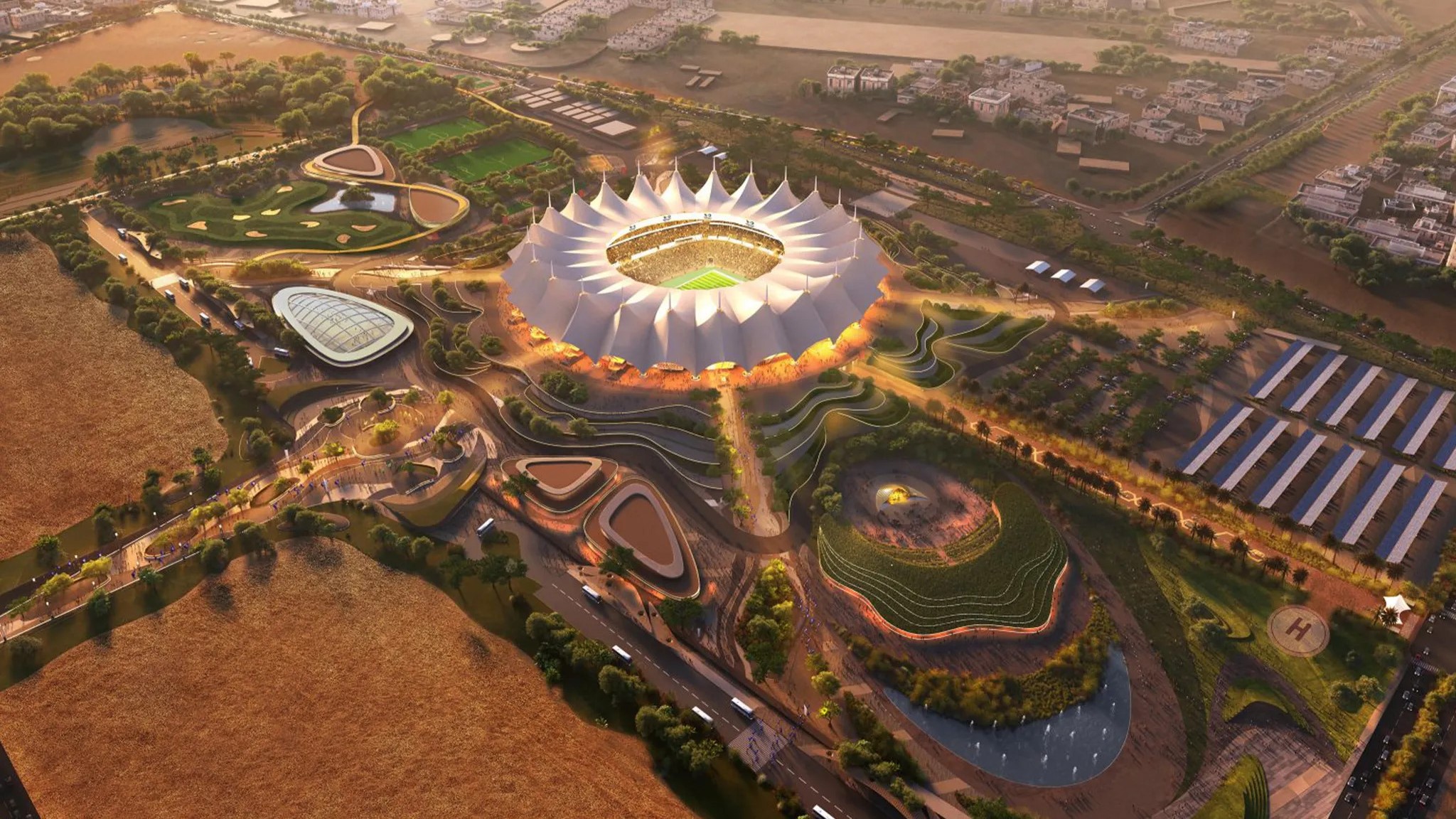
One of Saudi Arabia's most famous sporting venues, the King Fahd Sports City Stadium is already home to the Saudi national football team. Opened decades ago, the stadium is instantly recognisable because of its distinctive roof, which resembles the traditional tents used across the Arabian Peninsula.
To prepare for the World Cup, the stadium is undergoing a major renovation led by Italian architecture firm Schiattarella Associati. The project will increase its seating capacity from 58,000 to 70,200 spectators while also upgrading player facilities, fan amenities, technology, and accessibility. The renovated stadium is expected to reopen in 2026 and will continue to play a major role in Saudi football before and after the World Cup.
Prince Mohammed bin Salman Stadium, Riyadh
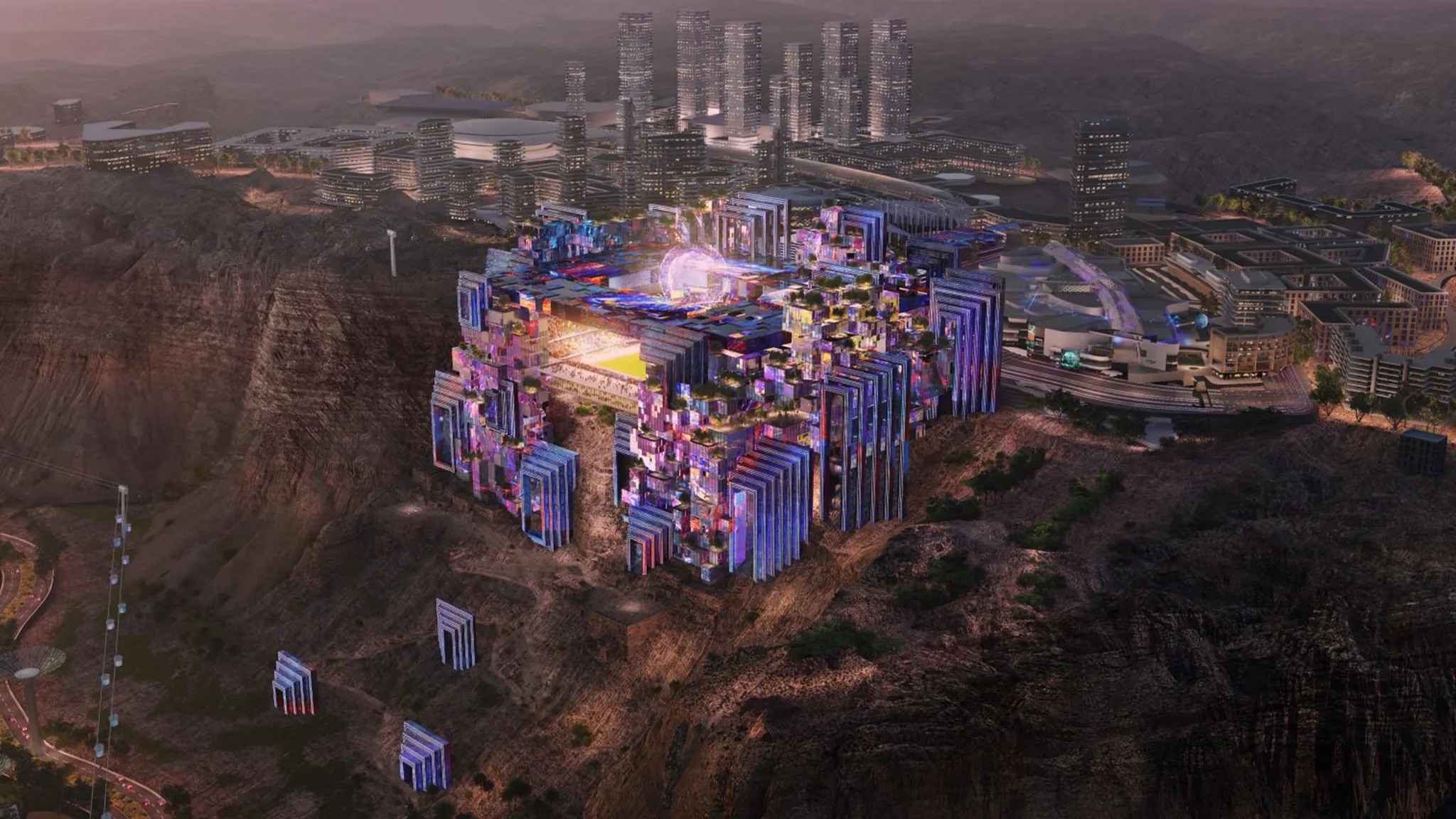
Among all the proposed venues, the Prince Mohammed bin Salman Stadium is expected to become one of the tournament's most spectacular landmarks. Designed by Populous, the stadium features a bold geometric design with metallic surfaces, colourful LED glass screens, and modern lighting that will make it stand out both day and night.
The 46,979-seat stadium is located in Qiddiya, southwest of Riyadh, overlooking the dramatic Tuwaiq Escarpment, one of Saudi Arabia's most famous natural landmarks. However, the venue is designed to be much more than a football stadium.
After the World Cup, it will become part of Qiddiya City, Saudi Arabia's future entertainment and sports destination, hosting concerts, major sporting events, and cultural programmes throughout the year. It will also include an Olympic Museum, adding another attraction for visitors. Construction is expected to finish in 2029, making it one of the newest and most advanced stadiums in the tournament.
New Murabba Stadium, Riyadh
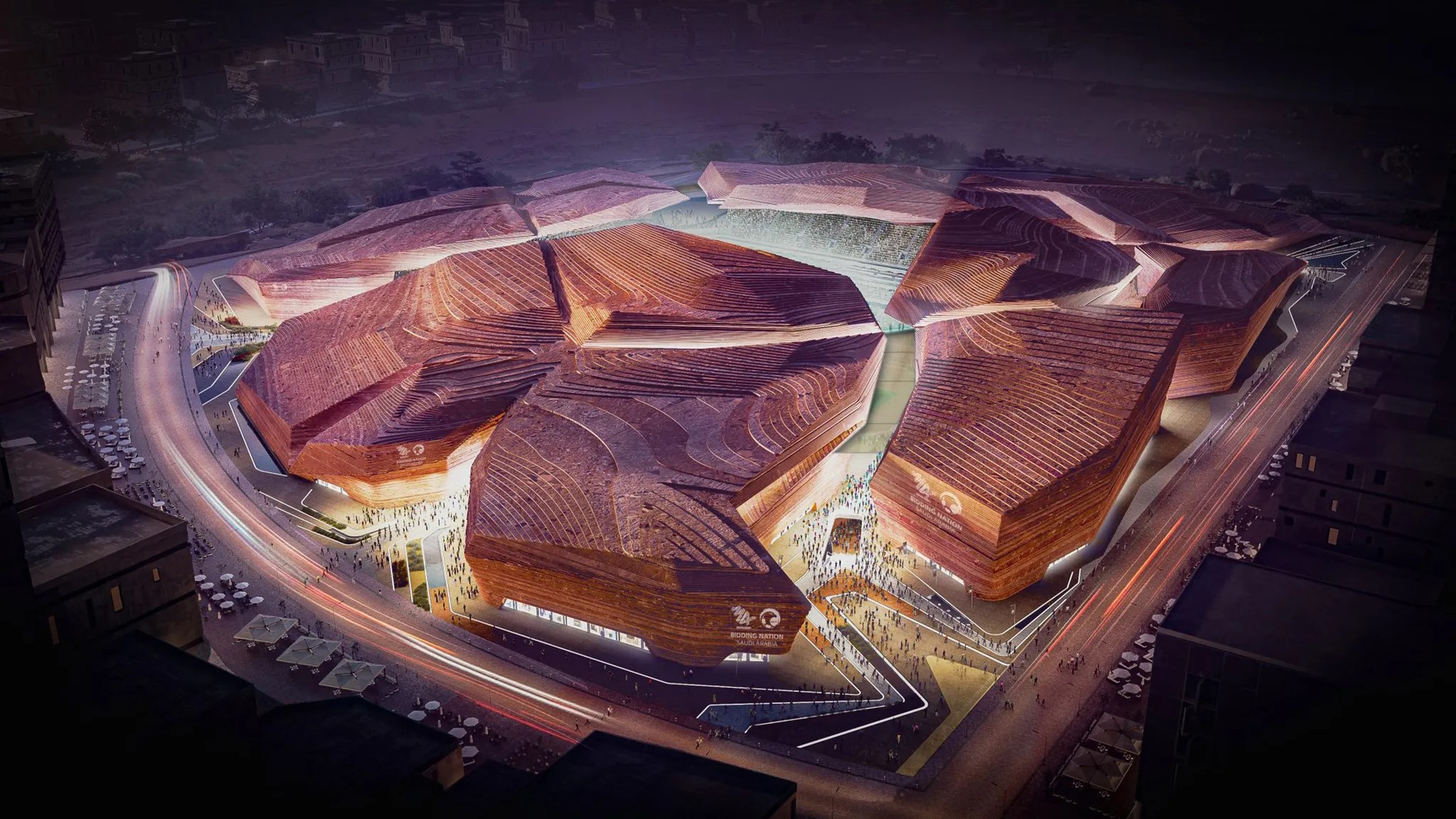
The New Murabba Stadium is inspired by the natural beauty of Saudi Arabia, with its roof canopy designed to resemble the peeling bark of native acacia trees, creating a distinctive appearance unlike traditional football stadiums. The project is being developed by internationally renowned engineering company Arup and architecture firm BIG, founded by Danish architect Bjarke Ingels.
The stadium will seat more than 46,000 fans and is scheduled to open in 2032. After the World Cup, it will continue to serve the public by hosting concerts, festivals, outdoor dining experiences, and other entertainment events, making it a year-round destination rather than a venue used only for football.
Also Read: 9 Unusual Architectural Styles from Around the World
ROSHN Stadium, Riyadh
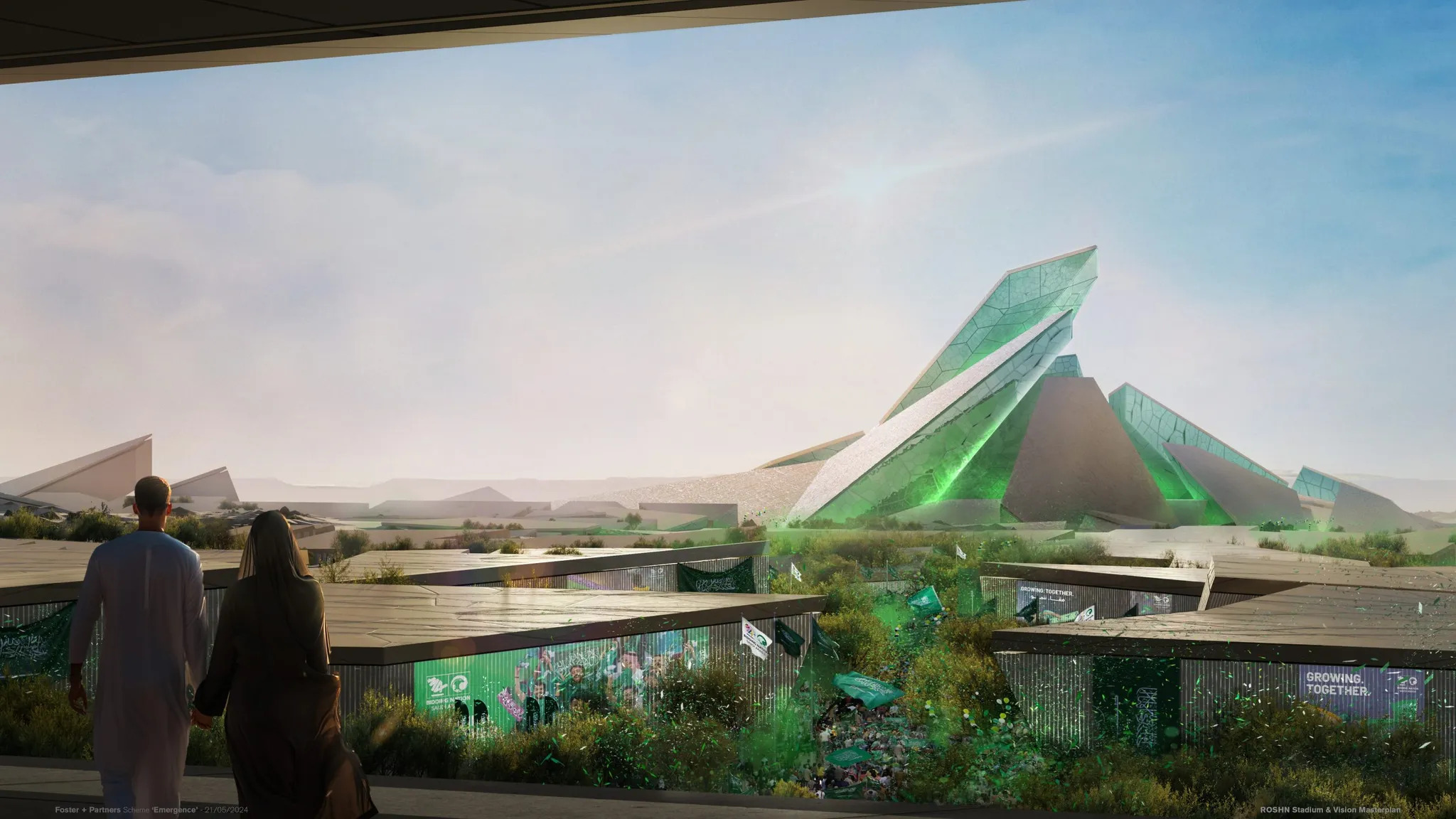
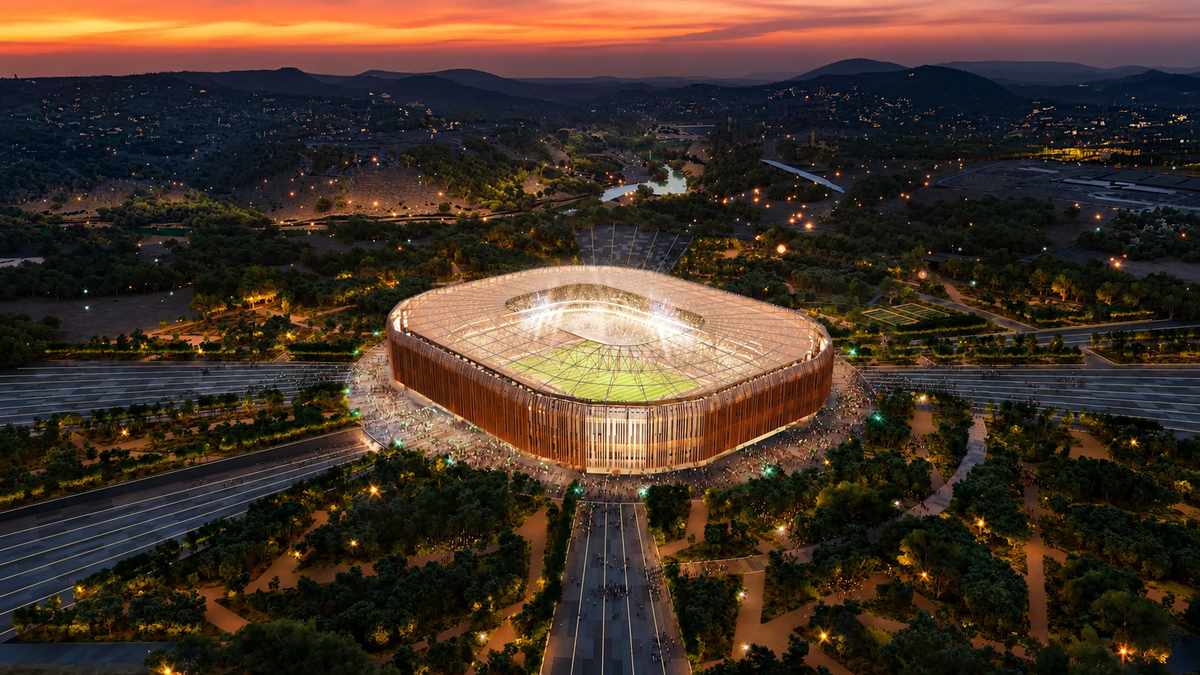
Developed by Saudi property company ROSHN, this futuristic stadium is designed to shine like a giant crystal after sunset. The 46,000-seat venue combines striking architecture with sustainable design.
Its saddle-shaped seating bowl helps improve airflow while providing more shade for spectators, while the parabolic structure enhances sound quality during sporting events and concerts.
The surrounding development will include landscaped parks, restaurants, cafés, retail stores, and hospitality facilities, creating a complete entertainment district rather than simply a football stadium. Construction is expected to begin in 2028, with the stadium opening in 2032.
Prince Faisal bin Fahad Sports City Stadium, Riyadh
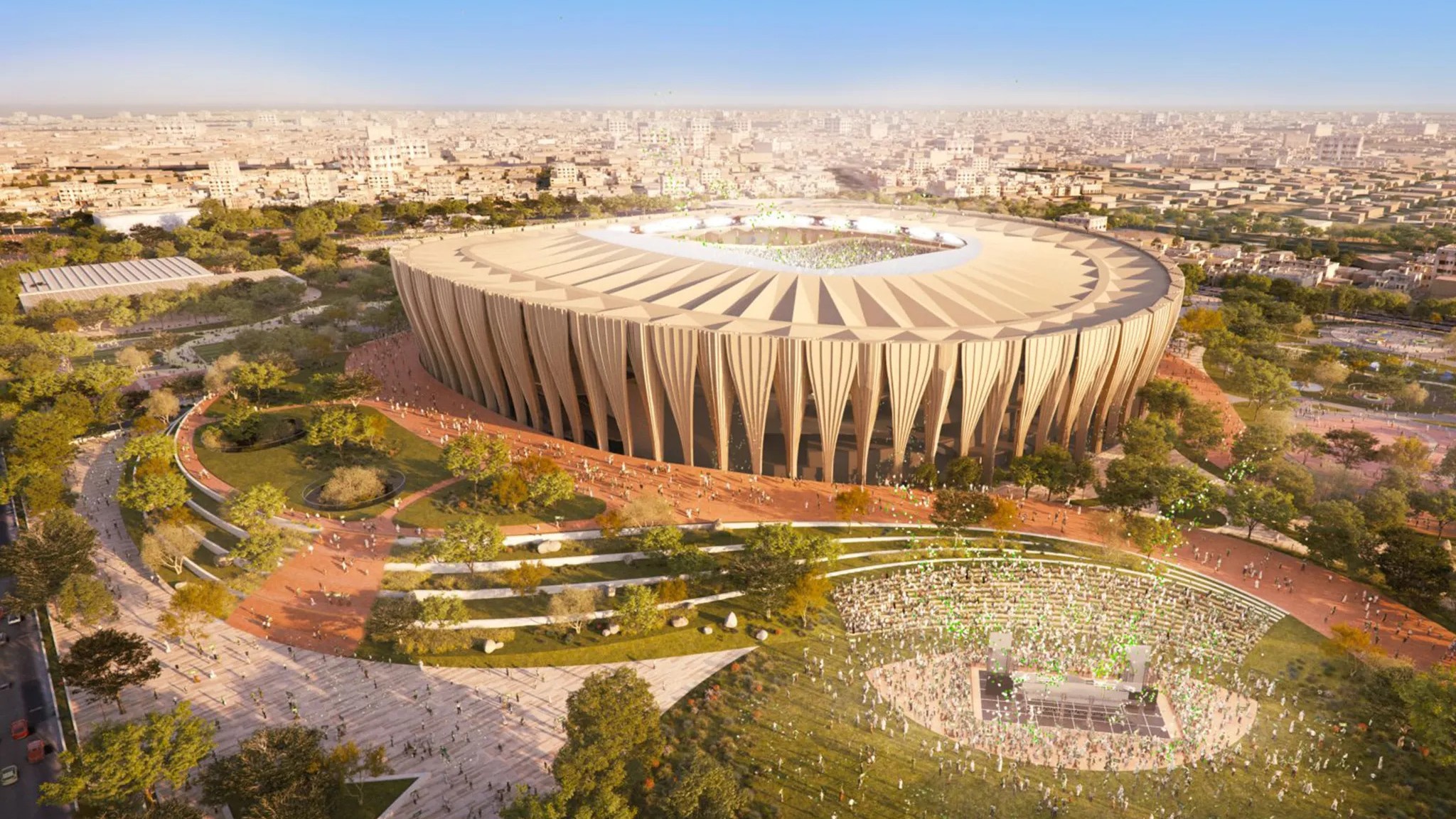
Originally opened in 1971, the Prince Faisal bin Fahad Sports City Stadium is one of Riyadh's oldest sporting venues. Rather than simply renovating the existing structure, Saudi Arabia plans to completely redesign the stadium ahead of the 2034 FIFA World Cup.
The new venue will have a seating capacity of 46,865 spectators and will be inspired by Salmani architecture, a style that blends modern design with traditional Saudi building techniques while respecting the natural environment. The stadium will be built using locally sourced materials and energy-efficient technologies, making it one of the country's most environmentally friendly sports venues.
It will also become part of a larger public park development, providing local residents with new recreational spaces long after the World Cup ends. Construction is expected to be completed in 2027.
South Riyadh Stadium, Riyadh
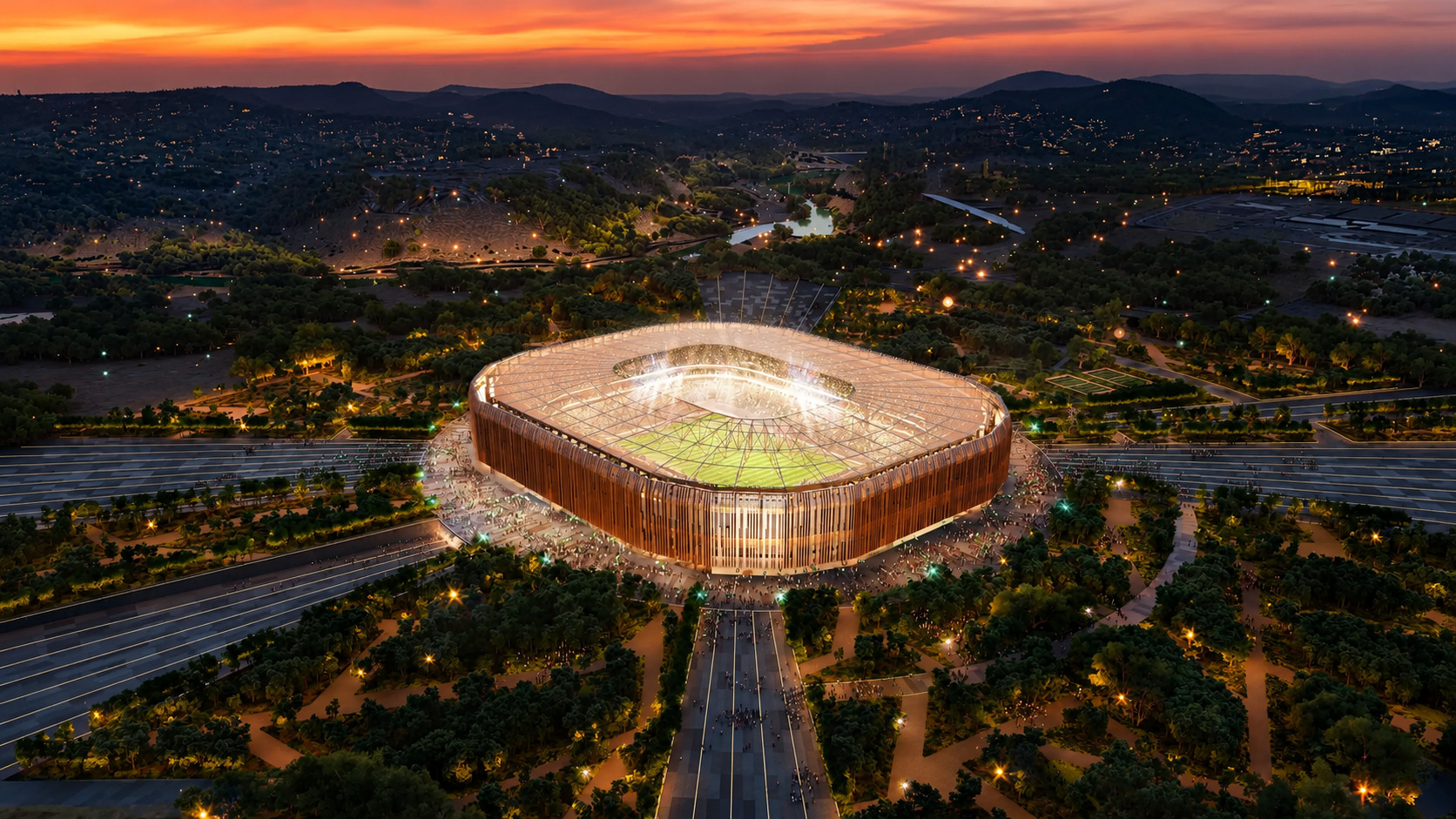
Another impressive project designed by Populous, the South Riyadh Stadium has been created with sustainability at its core. The 45,000-seat stadium will feature drought-resistant landscaping to reduce water use, rainwater harvesting systems for irrigation, and solar panels to help power the facility, reflecting Saudi Arabia's growing focus on environmentally responsible development.
Computer-generated images show a modern square-shaped structure with a semi-transparent exterior surrounded by open green spaces. The stadium will form part of the Green Riyadh Project, one of the world's largest urban greening initiatives. After the World Cup, South Riyadh Stadium will continue to host football matches, community events, concerts, and other major sporting competitions. It is scheduled to open in 2032.
King Saud University Stadium, Riyadh
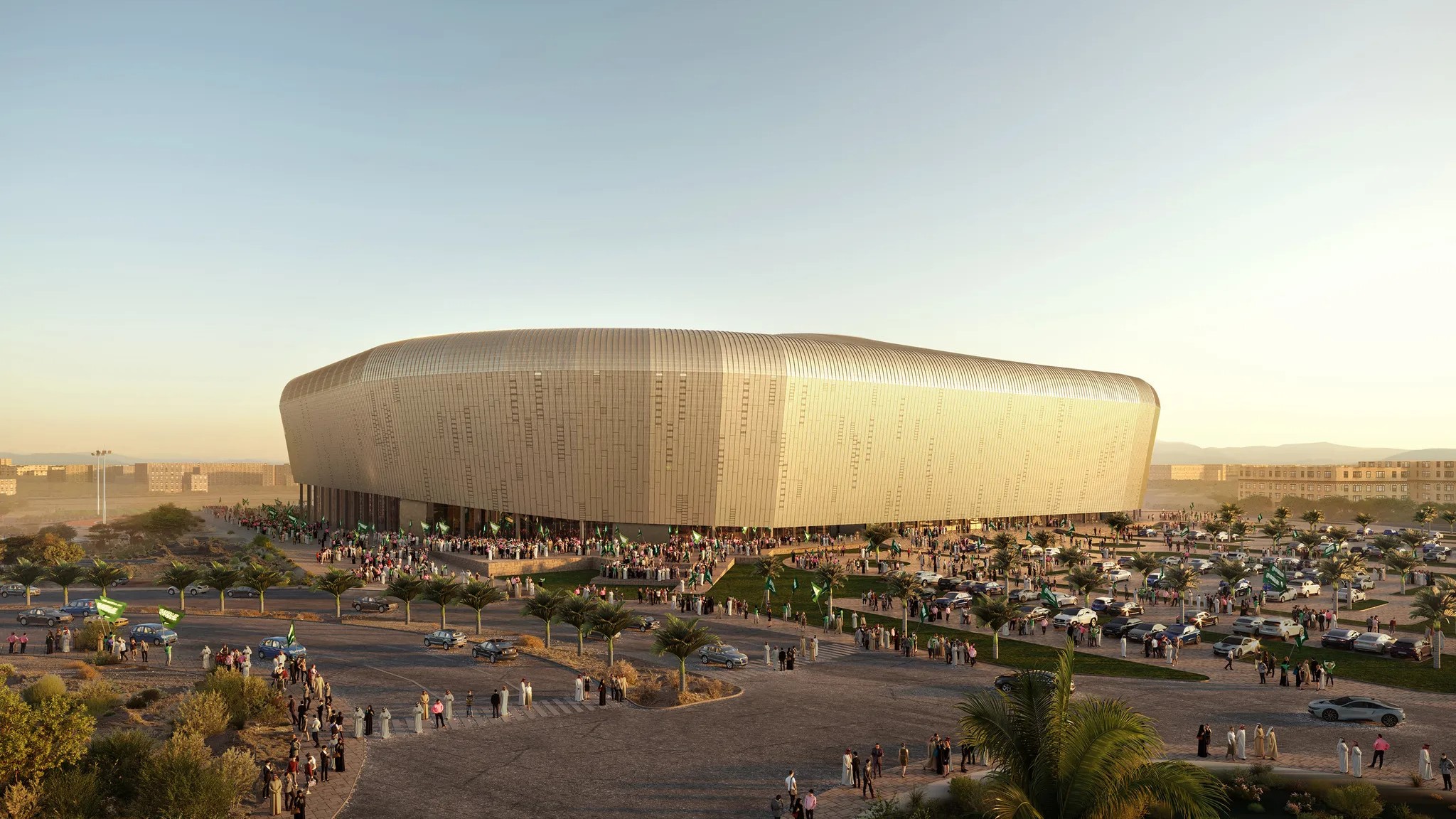
Unlike many of the newly planned venues, King Saud University Stadium already exists. Instead of constructing a completely new facility, the stadium will be temporarily expanded for the World Cup, increasing its seating capacity from 25,000 to approximately 46,000 spectators to meet FIFA's tournament requirements.
The renovation, designed by Populous, includes a lightweight elliptical roof inspired by the shape of wheel spokes, providing shade while giving the stadium a modern appearance. Once the World Cup concludes, the temporary seating will be removed, and the venue will return to hosting university sports competitions and community events.
King Abdullah Sports City Stadium, Jeddah
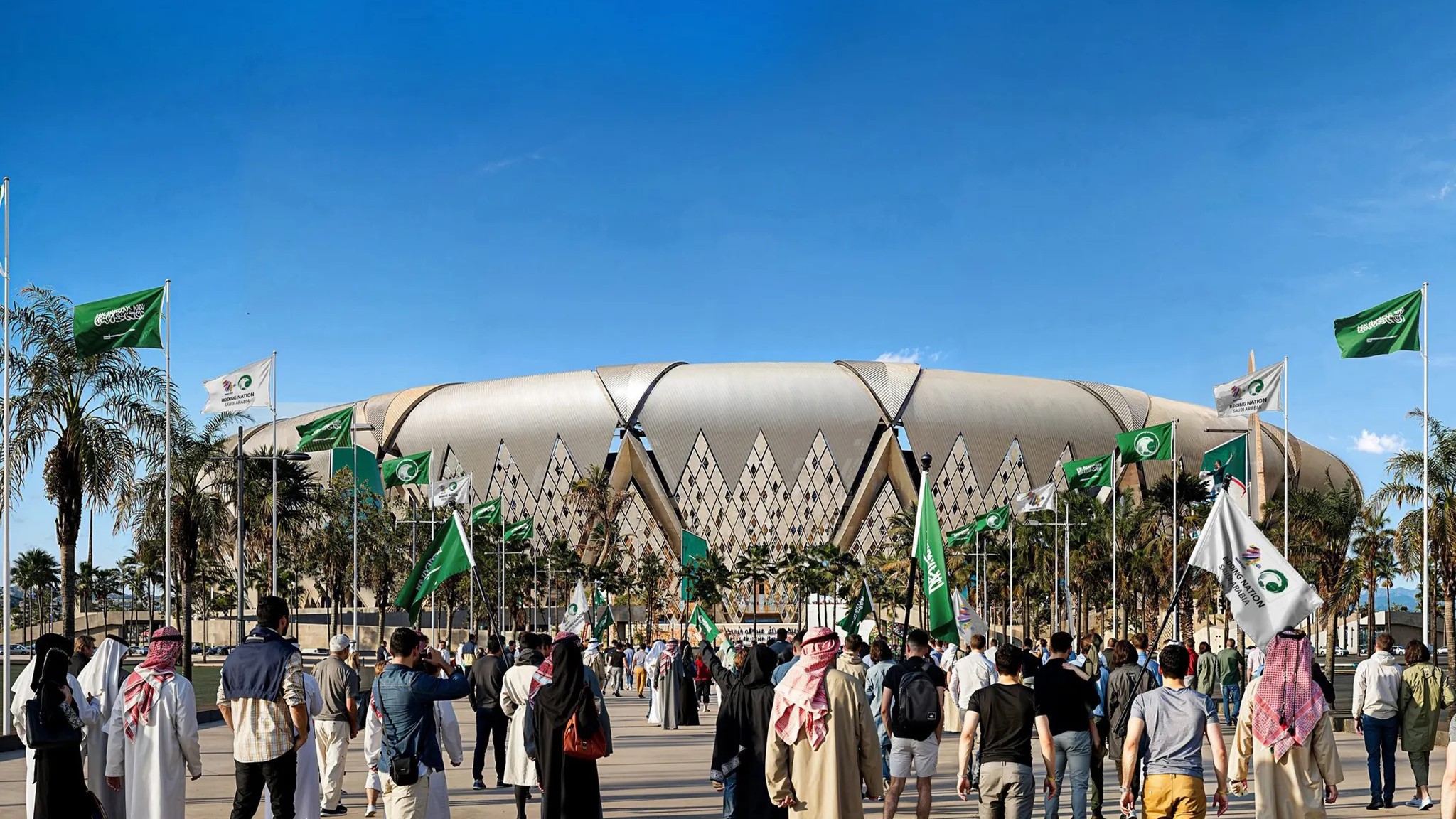
Known throughout Saudi Arabia as "The Shining Jewel," the King Abdullah Sports City Stadium is already one of the country's premier football venues. Built in 2014 by engineering firm Arup, the stadium has a seating capacity of more than 57,000 spectators, making it Saudi Arabia's second-largest stadium. Its nickname comes from its striking faceted exterior, which sparkles in the sunlight and gives the venue its distinctive appearance.
Ahead of the 2034 FIFA World Cup, the stadium will undergo major upgrades to improve technology, fan experience, accessibility, and player facilities while preserving its original architectural identity. The renovation is expected to be completed by 2032, ensuring the stadium remains one of Saudi Arabia's leading football venues before and after the tournament.
Qiddiya Coast Stadium, Jeddah
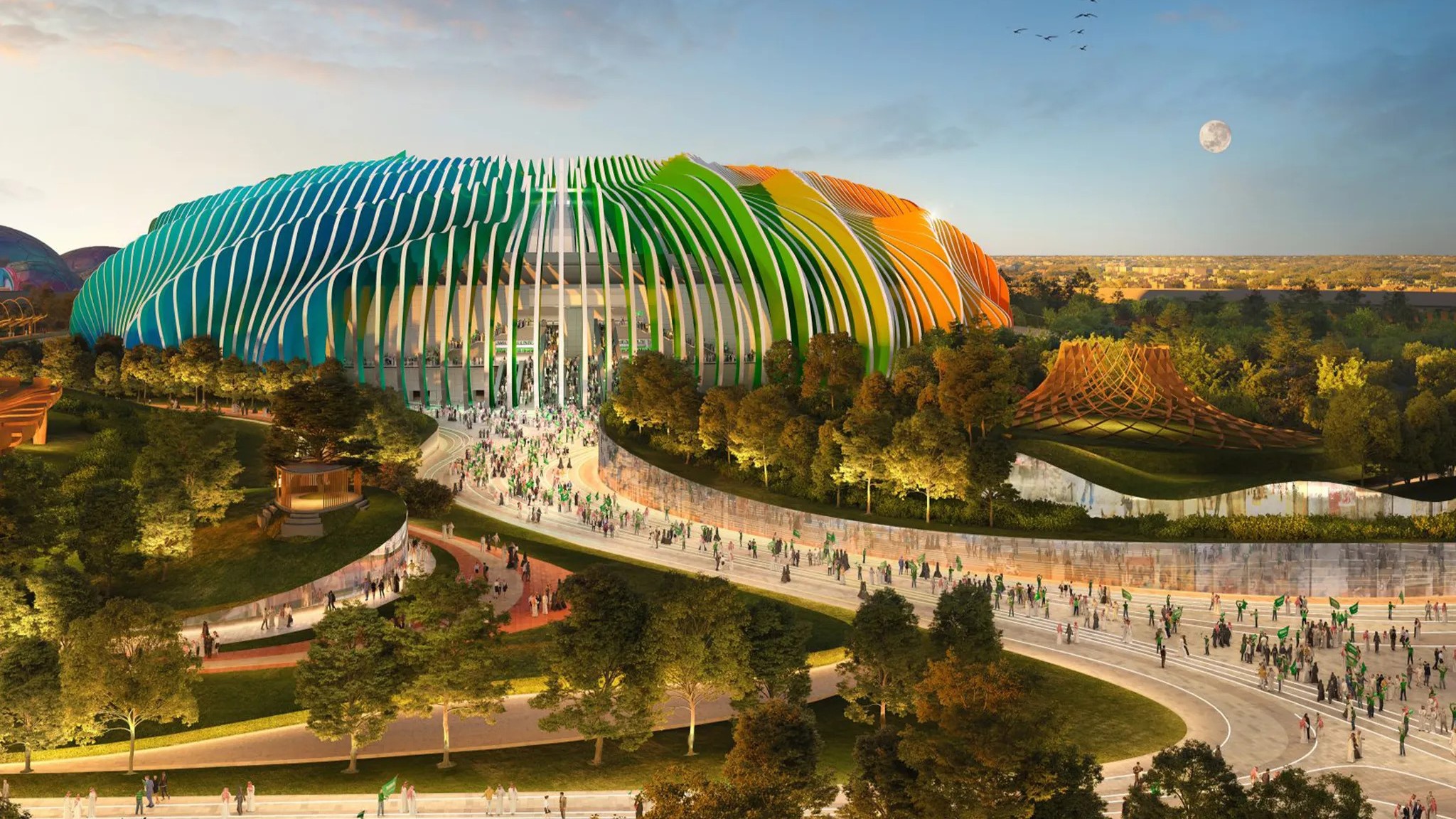
Located along Jeddah's northern Red Sea coastline, the Qiddiya Coast Stadium is designed to celebrate the relationship between the sea, nature, and modern architecture. Designed by Populous, the 46,000-seat venue features a colourful rippled exterior inspired by the movement of water, energy, and natural forms.
One of its most innovative features is a removable football pitch that allows the playing surface to be taken out after the World Cup, transforming the venue into a flexible space capable of hosting concerts, exhibitions, conferences, indoor sporting events, and entertainment shows throughout the year.
The stadium will become part of the larger Qiddiya Coast Development, which will also include hotels, beaches, sports facilities, shopping areas, and community spaces. Construction is expected to be completed in 2032.
Also Read: 7 Weirdest Buildings On Earth That Actually Exist
Jeddah Central Development Stadium, Jeddah
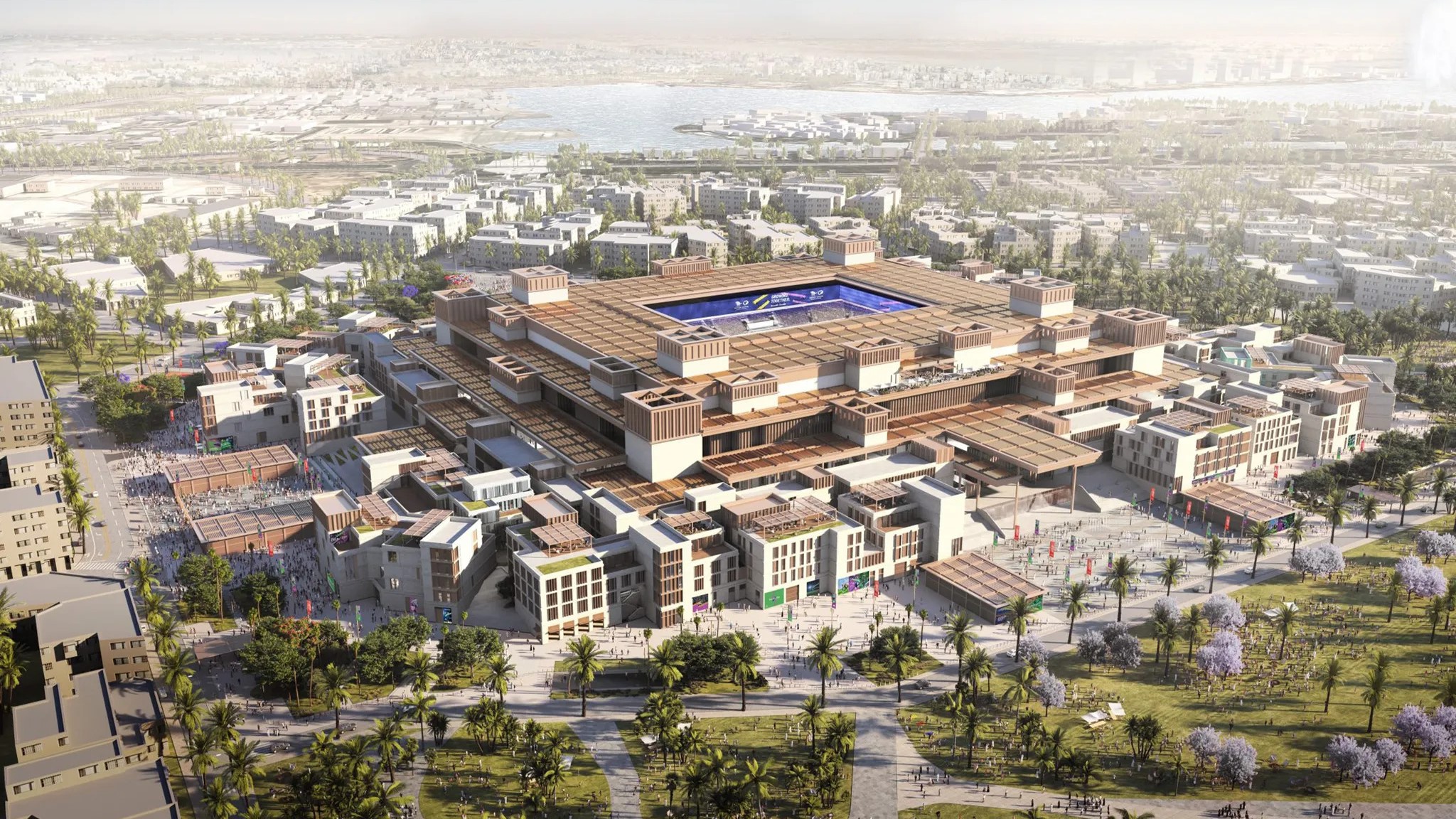
The Jeddah Central Development Stadium combines Saudi Arabia's architectural heritage with cutting-edge stadium technology. Its design draws inspiration from Al Balad, Jeddah's historic district, which is renowned for its narrow streets, traditional buildings, and intricate urban layout.
Designed by German architecture firm GMP in collaboration with Khatib & Alami, the 45,000-seat stadium features a three-tier seating bowl covered by a semi-transparent roof. Surrounding the stadium will be four themed "villages" offering shops, restaurants, leisure facilities, healthcare services, and entertainment spaces, creating a vibrant destination for both residents and visitors.
A massive 360-degree LED screen will wrap around the inside of the stadium, delivering an immersive viewing experience for spectators. Scheduled to open in 2027, the venue will continue hosting concerts, conferences, and sporting events long after the World Cup concludes.
King Abdullah Economic City Stadium, Jeddah
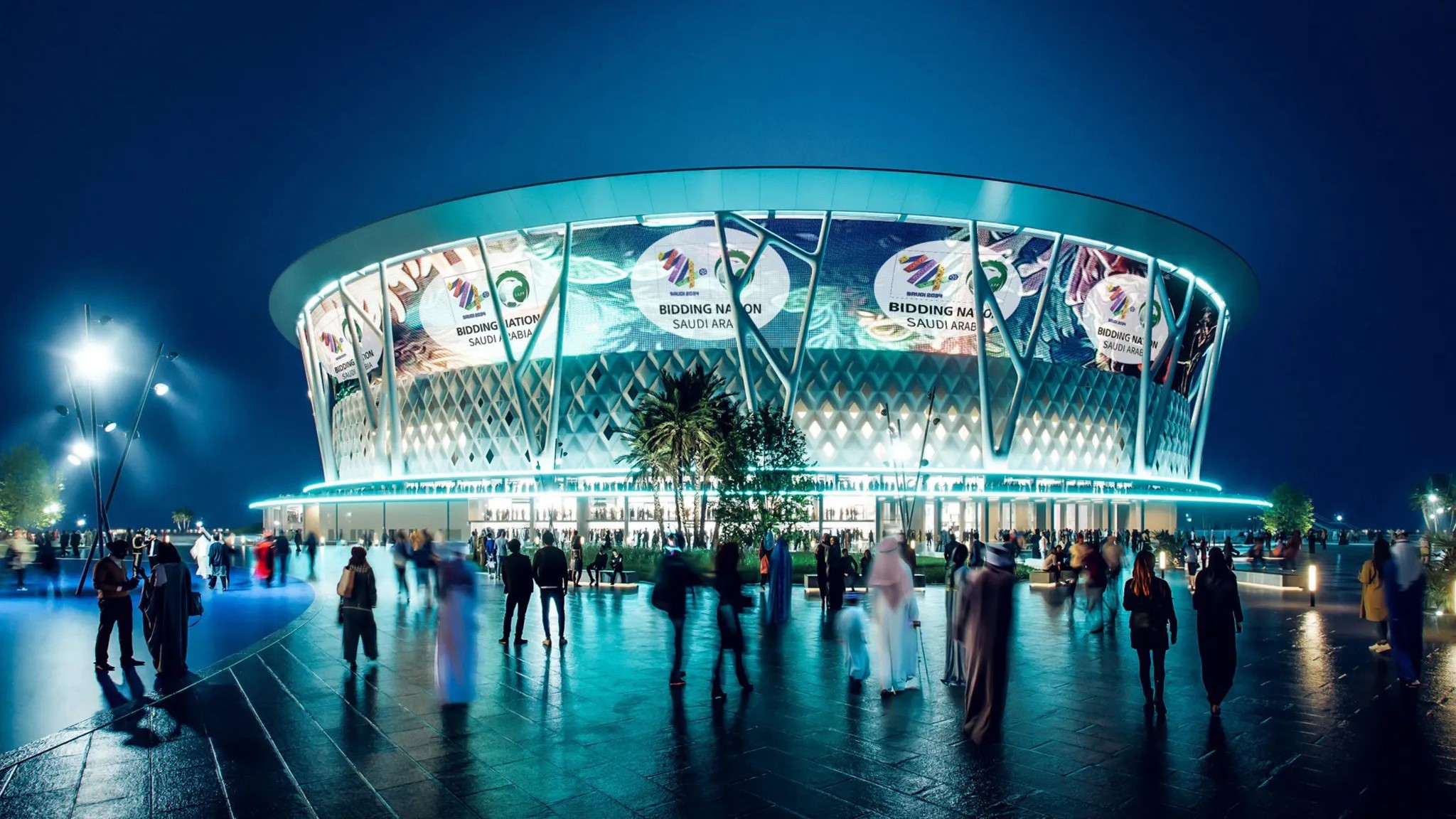
Located along Saudi Arabia's Red Sea coast, the King Abdullah Economic City Stadium takes inspiration from the colourful coral reefs found beneath the sea. The 45,000-seat venue features an organic, flowing design that blends naturally into its coastal surroundings. The stadium forms part of a much larger mixed-use development that includes luxury hotels, residential neighbourhoods, retail districts, public parks, and a sports medicine centre.
Sustainability is one of the project's main priorities, with extensive green spaces, energy-efficient systems, and environmentally friendly construction methods helping to minimise its environmental impact. After the World Cup, the stadium will remain active by hosting football matches, concerts, exhibitions, and community events throughout the year.
Aramco Stadium, Al Khobar
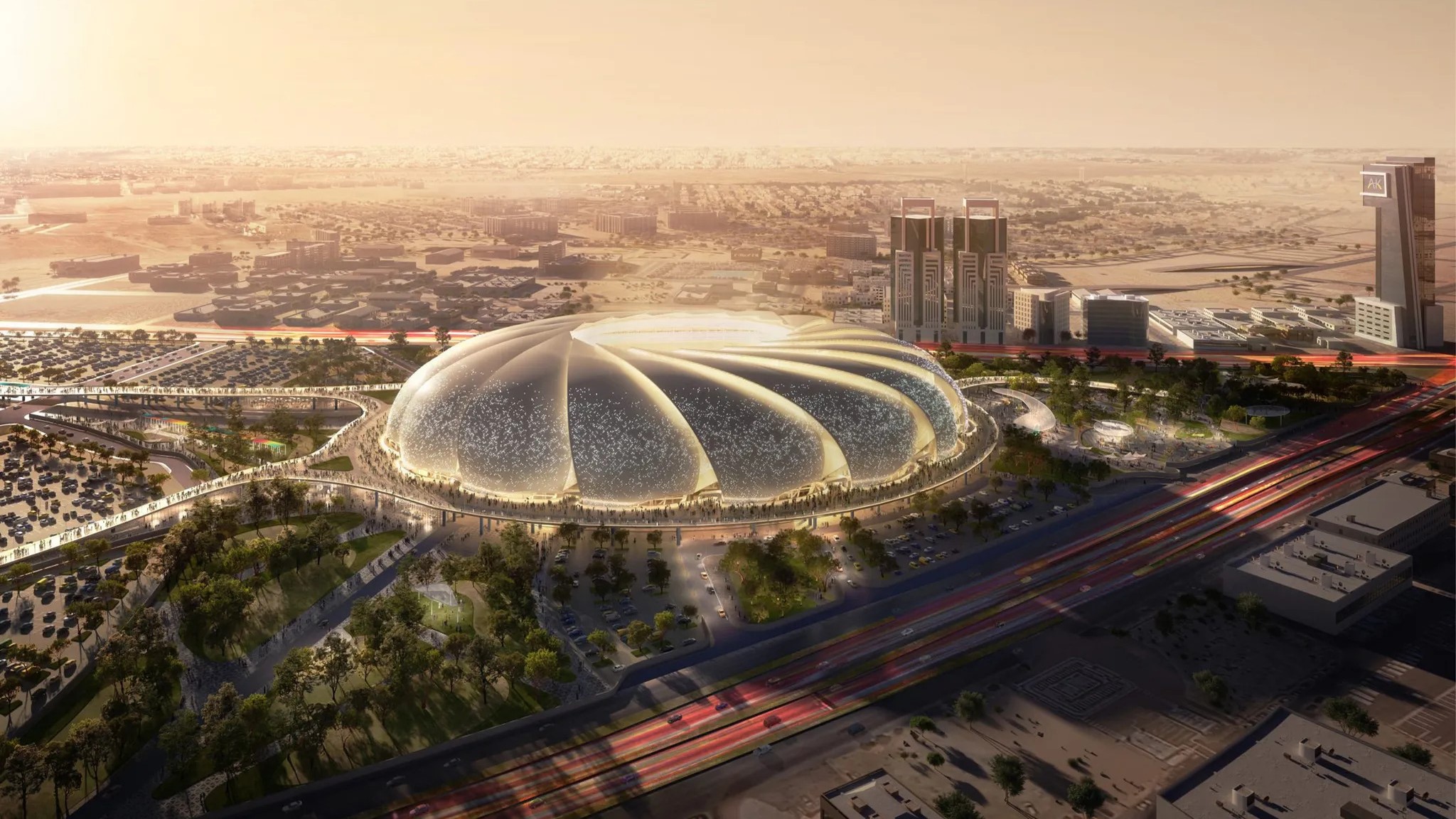
Currently under construction near the Corniche in Al Khobar, the Aramco Stadium is one of Saudi Arabia's most visually striking new sports venues. The original concept was developed by Foster + Partners before being refined by Populous. Its dramatic swirling architecture is inspired by the dawwama, the natural whirlpools that sometimes appear in the waters of the Arabian Gulf during the summer months.
The overlapping roof structures resemble sails, while decorative patterns reflect the movement of ocean waves, creating a strong connection to the surrounding coastline. The 46,000-seat venue will be well connected by public transport, cycling routes, and pedestrian walkways, making it easily accessible for fans. Following the World Cup, Aramco Stadium will become the home ground of a professional football club while also serving as a retail and entertainment destination for the wider community.
King Khalid University Stadium, Abha
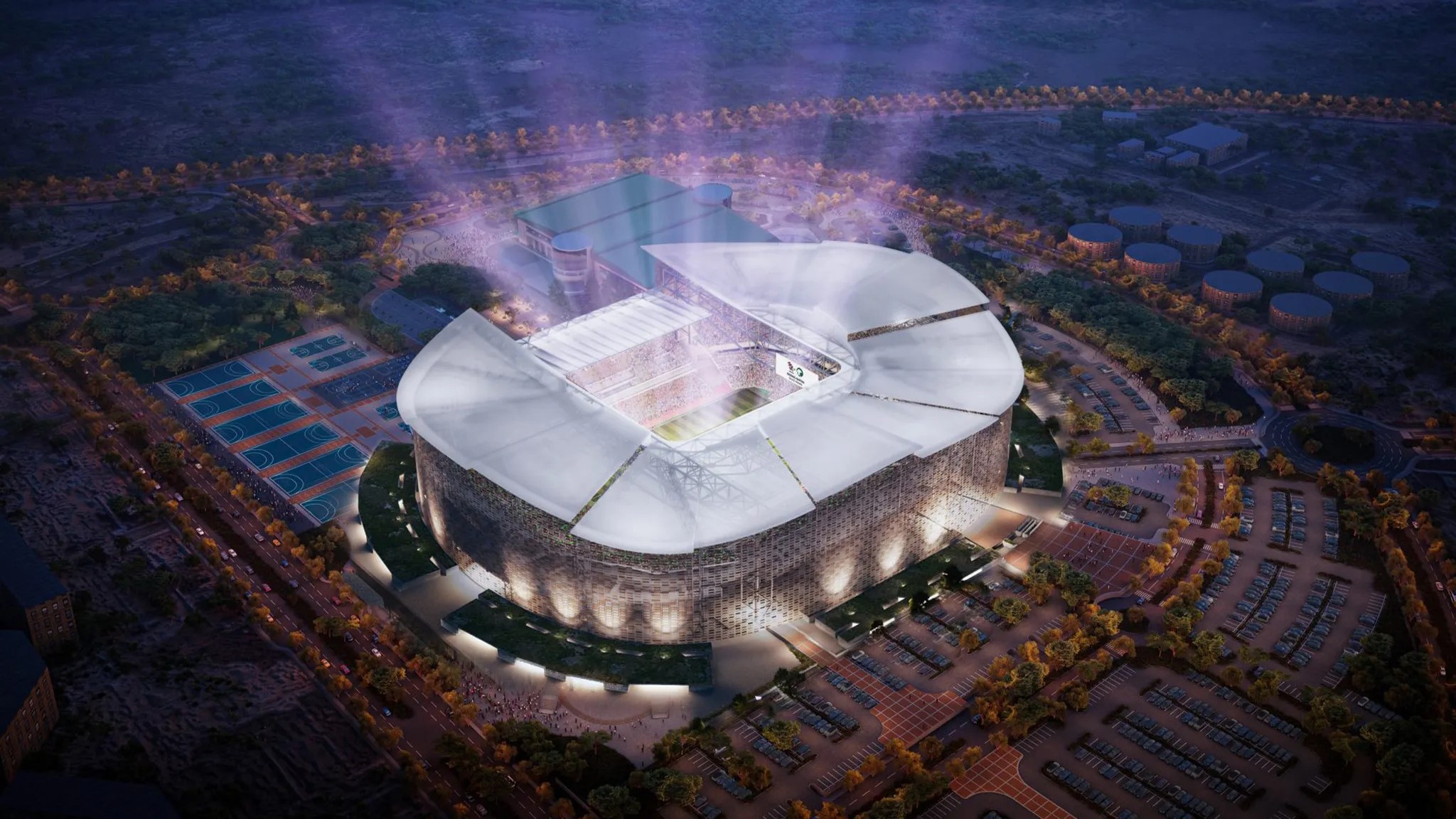
Located on the campus of King Khalid University, this existing stadium will undergo one of the most significant transformations ahead of the 2034 FIFA World Cup. Its seating capacity will more than double from 22,000 to 45,000 spectators, enabling it to host international matches during the tournament.
Designed by Populous, the renovation will include a new western stand, upgraded facilities for players and supporters, and enhanced technology while preserving the stadium's original character. Situated close to Dalaghan Park Nature Reserve, as well as swimming pools, basketball courts, and other sports facilities, the venue will continue serving as an important community hub long after the World Cup has ended.
Neom Stadium, The Line
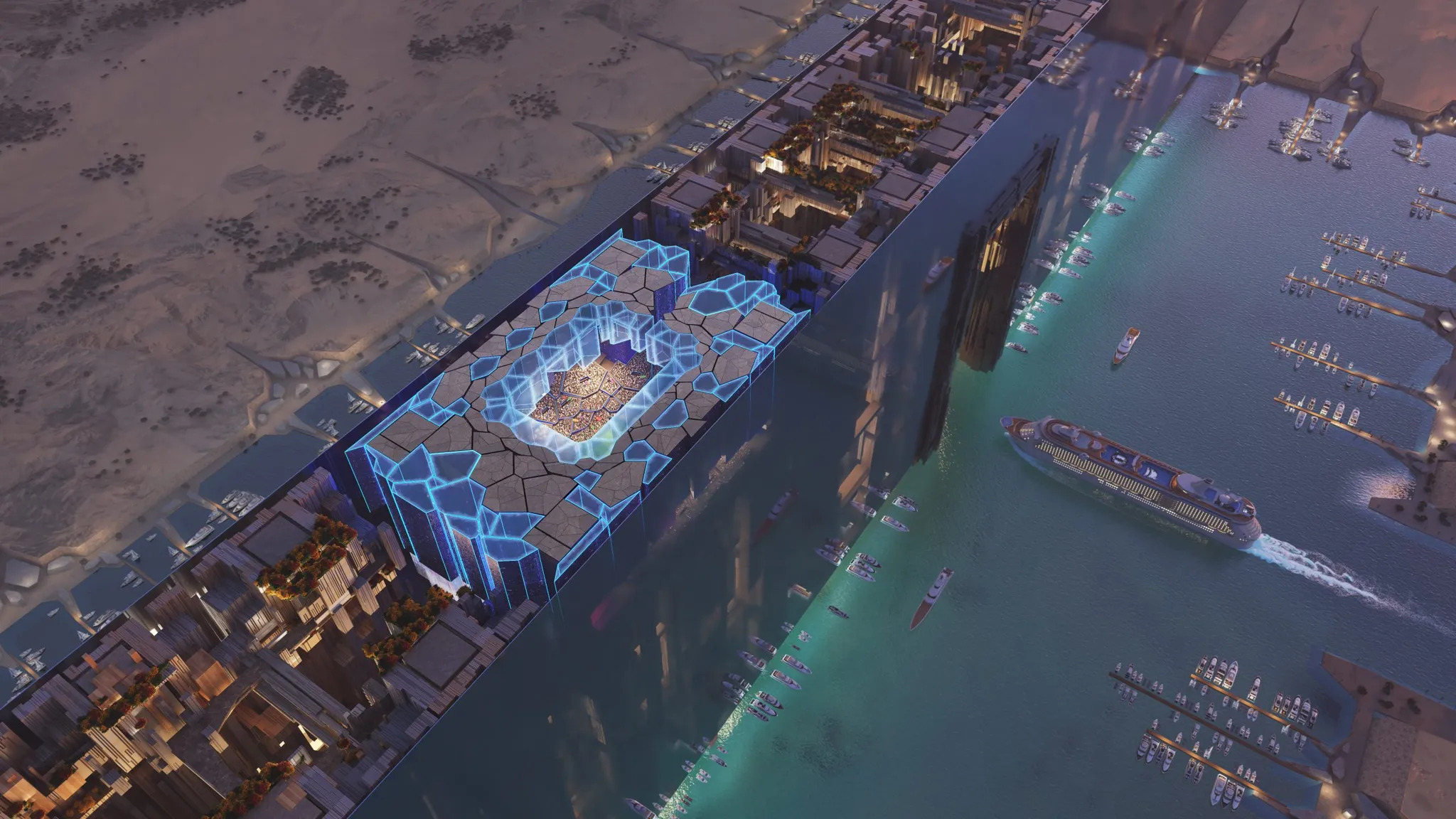
Perhaps the most ambitious venue of the entire tournament is the Neom Stadium, which will be built inside The Line, Saudi Arabia's futuristic city currently under construction in the Neom region. Unlike any football stadium ever built, Neom Stadium will be suspended 350 metres above the ground, with its roof forming part of The Line's larger urban structure.
The 46,000-seat venue will serve as the centrepiece of a sports-focused neighbourhood while offering breathtaking views across the surrounding desert and mountain landscapes. It will feature some of the world's most advanced stadium technology, including fully digital ticketing systems, smart crowd management, and 4K Ultra HD broadcasting capabilities.
In keeping with The Line's sustainability goals, the stadium will operate entirely on renewable wind and solar energy. Thanks to the city's innovative five-minute accessibility model, fans will be able to walk to the stadium easily without relying on cars, making it one of the most futuristic and environmentally conscious sporting venues ever envisioned.
A World Cup Designed for the Future
The 2034 FIFA World Cup will be much more than a football tournament. It represents one of the largest construction and infrastructure programmes ever undertaken by Saudi Arabia, showcasing the country's ambition to redefine the global sporting experience through innovation, architecture, and sustainability.
From mountain-inspired stadiums and environmentally friendly designs to futuristic venues built hundreds of metres above the ground, the 15 World Cup stadiums highlight Saudi Arabia's vision of combining sport, technology, culture, and modern urban development. Beyond hosting World Cup matches, many of these venues have been designed as year-round destinations that will continue to stage football matches, concerts, exhibitions, conferences, festivals, and community events long after the final whistle of the 2034 FIFA World Cup.
Together, they are expected to leave a lasting legacy by strengthening Saudi Arabia's sporting infrastructure, supporting tourism and economic growth, and offering football fans from around the world one of the most memorable and technologically advanced World Cup experiences in history.