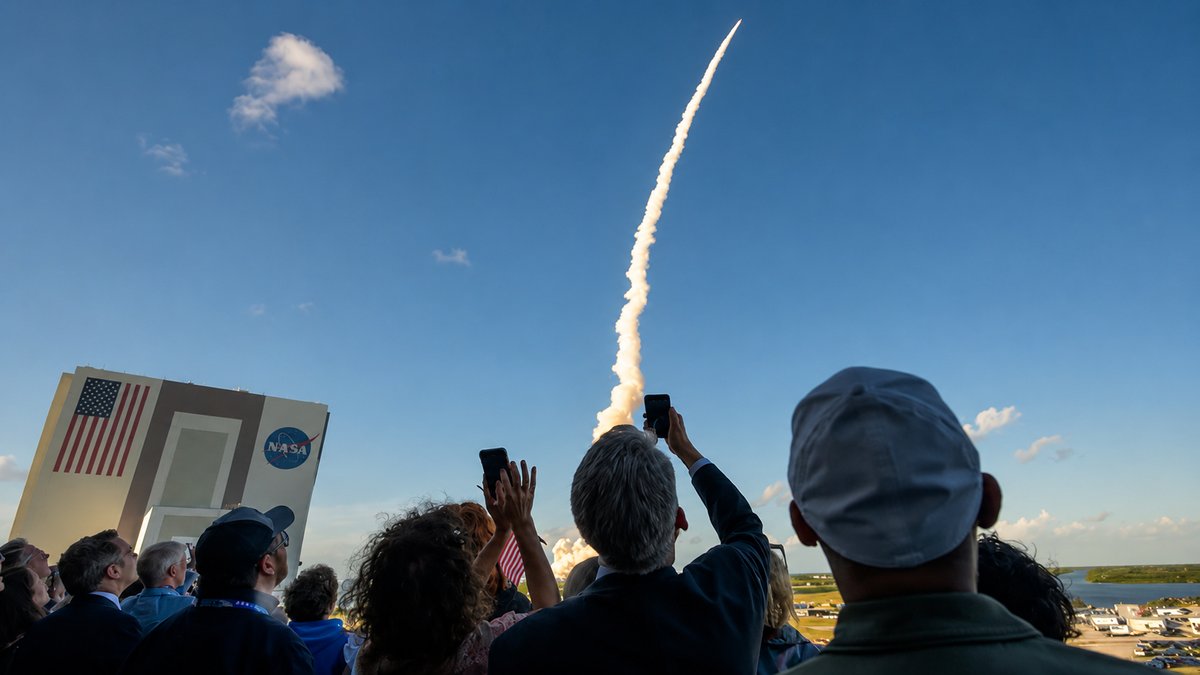
Watching a rocket launch is one of the most exciting sights in science and technology. At liftoff, rockets rise straight into the sky with huge flames and clouds of smoke. However, if you continue watching closely, you will notice something interesting. After climbing higher into the atmosphere, the rocket slowly begins to tilt and curve sideways instead of continuing straight upward. For many people, this seems confusing because rockets are supposed to go into space, so it may appear logical for them to travel only upward. The real reason rockets curve during launch is connected to physics, gravity, speed, and fuel efficiency. In fact, the curved path is one of the most important parts of a rocket’s journey.
Also Read: The Story Behind the Floppy Disk
Rockets Must Fight Gravity
When a rocket first launches from Earth, its greatest challenge is gravity. Earth constantly pulls everything toward its center, so the rocket needs a huge amount of thrust to lift off the ground. During the first stage of launch, the rocket travels almost straight upward because this helps it move quickly through the thick lower atmosphere, where air resistance is strongest. Going straight up also helps keep the rocket stable during the most powerful stage of the launch. However, continuing vertically for too long would create a serious problem because it would waste a massive amount of fuel. Rockets carry only a limited amount of fuel, and most of that fuel is used during launch. If a rocket kept climbing straight upward, it would spend too much energy fighting gravity instead of building the speed needed to remain in space. Eventually, the rocket could run out of fuel and fall back toward Earth. This is why rockets begin to curve after reaching a certain altitude.
Space Is Not Just “Up”
Many people think that reaching space simply means going higher and higher, but that is not completely true. Spacecraft also need to travel extremely fast sideways in order to stay in orbit around Earth. To remain in low Earth orbit, a spacecraft must move horizontally at about 28,000 kilometers per hour, or 17,500 miles per hour. Orbit occurs when a spacecraft moves so quickly sideways that, while gravity pulls it downward, the Earth curves away beneath it at the same rate. As a result, the spacecraft keeps “falling” around Earth without crashing into the ground. This is why rockets do not continue straight upward for the entire flight. After reaching a certain height, they gradually turn sideways to build the horizontal speed needed for orbit.
The Gravity Turn
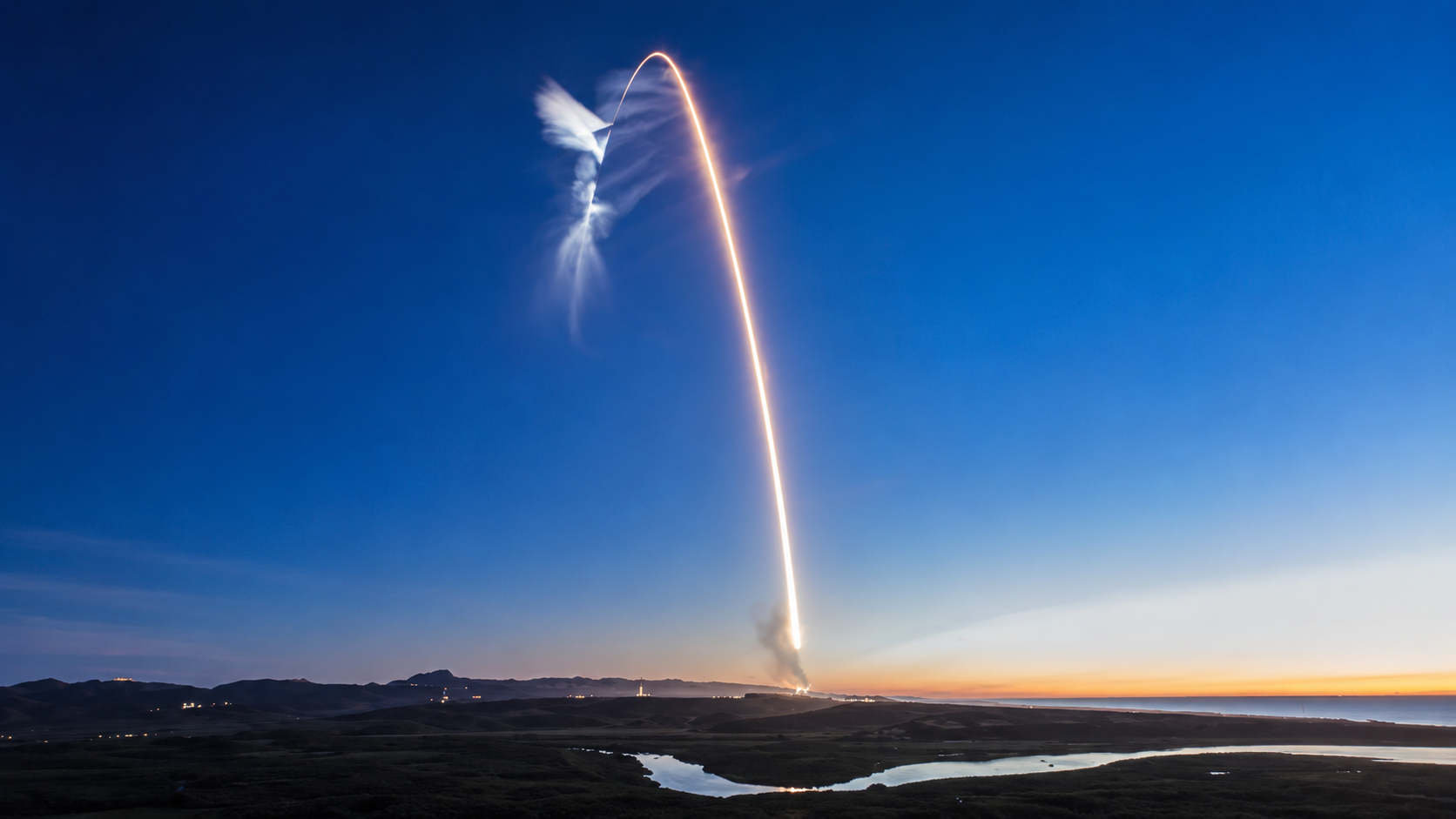
The curved movement rockets make during launch is known as a gravity turn. This maneuver allows rockets to use gravity efficiently instead of constantly fighting against it. During a gravity turn, the rocket slowly tilts away from a vertical path. As the rocket tilts, part of its thrust pushes it sideways instead of only upward. This helps the spacecraft gain the horizontal velocity required for orbit. Earth’s gravity naturally helps pull the rocket into this curved path, which allows the rocket to save fuel while still accelerating efficiently. The gravity turn is carefully controlled by onboard computers and guidance systems because even a small mistake in angle or timing could affect the success of the mission.
Why Fuel Efficiency Matters
Fuel is one of the most important factors in rocket science. Rockets must carry not only astronauts, satellites, or other payloads, but also the fuel needed to move all that weight. As the rocket burns fuel, it becomes lighter. This is why many rockets use multiple stages. When one stage finishes using its fuel, it separates and falls away, making the rocket lighter and easier to accelerate. By curving during flight, rockets avoid wasting fuel fighting gravity unnecessarily. This improves efficiency and increases the chances of successfully reaching orbit or traveling deeper into space.
Also Read: The Fascinating Story Behind the Name “Bluetooth”
Leaving Earth’s Orbit
For some missions, reaching orbit is only the beginning. Missions traveling to the Moon or deeper into space require additional maneuvers after entering orbit. For example, NASA’s Artemis II mission uses the Orion spacecraft to carry astronauts around the Moon. After reaching Earth orbit, Orion performs a powerful engine burn called a translunar injection burn. This maneuver increases the spacecraft’s speed enough to escape Earth’s gravity and travel toward the Moon. Later, the spacecraft can also use the Moon’s gravity to adjust its path and help guide it back toward Earth. This method, known as a gravity assist, allows missions to save even more fuel.
A Carefully Planned Journey
Every rocket launch follows a carefully designed flight path. Engineers calculate the exact angle, speed, timing, and fuel usage required for the mission. The rocket’s curve is not random; it is part of a precise plan based on physics and mathematics. Without this curved path, rockets would struggle to reach orbit, waste enormous amounts of fuel, and increase the risk of mission failure. Therefore, the next time you watch a rocket launch, remember that the sideways turn is not a mistake. It is a smart and essential maneuver that allows spacecraft to travel farther, faster, and more efficiently through space.