
Online gaming has become one of the most popular forms of entertainment worldwide, and Minecraft continues to be one of the most played games, especially among younger audiences. Because of its huge popularity, cybercriminals have started using Minecraft as a way to spread malware. A recently discovered malware campaign called WeedHack is taking advantage of players' trust by disguising itself as Minecraft-related content. Security researchers at McAfee have warned that this threat is not just another computer virus but a sophisticated malware operation that allows cybercriminals to infect victims and steal valuable information.
What Is WeedHack?
WeedHack is a type of malware designed to steal information from infected computers and provide hackers with remote access to victims' systems. Unlike traditional malware that is used by a single attacker, WeedHack operates as a "Malware-as-a-Service" platform. This means that anyone interested in conducting cyberattacks can obtain and use the malware without having advanced technical skills. Once installed, WeedHack can gather personal data, monitor user activity, access webcams, steal login credentials, and even give attackers control over infected devices. According to McAfee, the malware first appeared online in early 2025 and has since become increasingly popular among cybercriminals.
Also Read: The Top 10 Worst Computer Viruses in History
How Hackers Spread WeedHack

The creators and users of WeedHack primarily target Minecraft players by disguising the malware as unofficial mods, clients, and game enhancements. Since Minecraft has a large community that frequently downloads custom content, many players are willing to install files from third-party sources. Attackers take advantage of this behavior by creating fake mods that appear useful or exciting.
Hackers often promote these fake downloads through videos that showcase special Minecraft features, performance improvements, or exclusive content. The videos usually include download links that seem legitimate. However, when users download and run the files, they unknowingly install the WeedHack malware instead.
Another common method used by attackers is known as SEO poisoning. In this technique, hackers create websites that appear trustworthy and optimize them to rank highly in search engine results. These websites claim to be the official source for a particular Minecraft mod or client. Unsuspecting users who find these sites through online searches may download infected files and compromise their computers. Attackers also spread these links through Discord servers, Reddit communities, and gaming forums to reach a larger audience.
How the Malware Works
The WeedHack infection process begins when a victim downloads what appears to be a Minecraft-related file. Initially, the malware is packaged as a Java Archive, or JAR file, which does not immediately raise suspicion because Minecraft itself is built using Java. This makes the malicious file look legitimate to many users.
Once launched, the malware relaunches itself as an executable program and begins communicating with remote servers controlled by the attackers. During this process, it decrypts a list of Ethereum-related server domains and smart contract addresses that help it locate and download additional malware components. These components are then installed on the victim's computer, allowing the infection to expand and become more powerful.
After installation, WeedHack unpacks additional files and executes hidden scripts that prepare the system for long-term compromise. One of the malware's most dangerous features is its ability to modify antivirus settings. It attempts to add itself to antivirus exclusion lists, which instruct security software to ignore certain files and folders associated with the malware. According to McAfee's testing, Microsoft Defender was unable to stop the malware from completing its installation process.
As the infection progresses, WeedHack collects a wide range of information from the victim's computer. This includes Wi-Fi network details, browser cookies, saved login credentials, Discord authentication tokens, and system information. The malware also searches for cryptocurrency wallet credentials, which can be used to steal digital assets.
Avoiding Detection
One reason WeedHack is particularly dangerous is its ability to remain hidden on infected systems. By adding itself to antivirus exclusion lists, the malware reduces the chances of being detected or removed by security software. This allows it to continue operating in the background while collecting information and maintaining access to the victim's device. Such tactics demonstrate the growing sophistication of modern malware and the challenges faced by traditional cybersecurity tools.
Also Read: The Psychology Behind Cybersecurity: How cyberconIQ Tackles Human Cyber Risk
Information Stolen by WeedHack
Once fully installed, WeedHack begins harvesting as much valuable information as possible. The malware targets browser cookies, saved passwords, Discord tokens, Wi-Fi network information, cryptocurrency wallet credentials, and other sensitive data stored on the computer. This information can be used for various forms of cybercrime, including identity theft, account hijacking, financial fraud, and unauthorized access to online services.
The consequences of such data theft can be severe. While some victims may only lose access to gaming accounts, others may face much larger problems if attackers gain access to their email accounts, social media profiles, financial services, or cryptocurrency wallets. Stolen credentials can also be sold on underground marketplaces, allowing other criminals to exploit the victim's information.
Remote Access and Surveillance
In addition to stealing information, WeedHack gives attackers remote access capabilities that allow them to control infected devices. Once a computer is compromised, hackers can monitor user activity, browse files, execute commands, and install additional malware. They can also activate the victim's webcam and secretly observe them without their knowledge.
The malware establishes persistence through scheduled tasks and other techniques that help it survive system restarts and remain active for long periods. This means that even if a user suspects something is wrong, removing the infection may not be easy without proper security tools and technical knowledge.
Malware as a Subscription Service
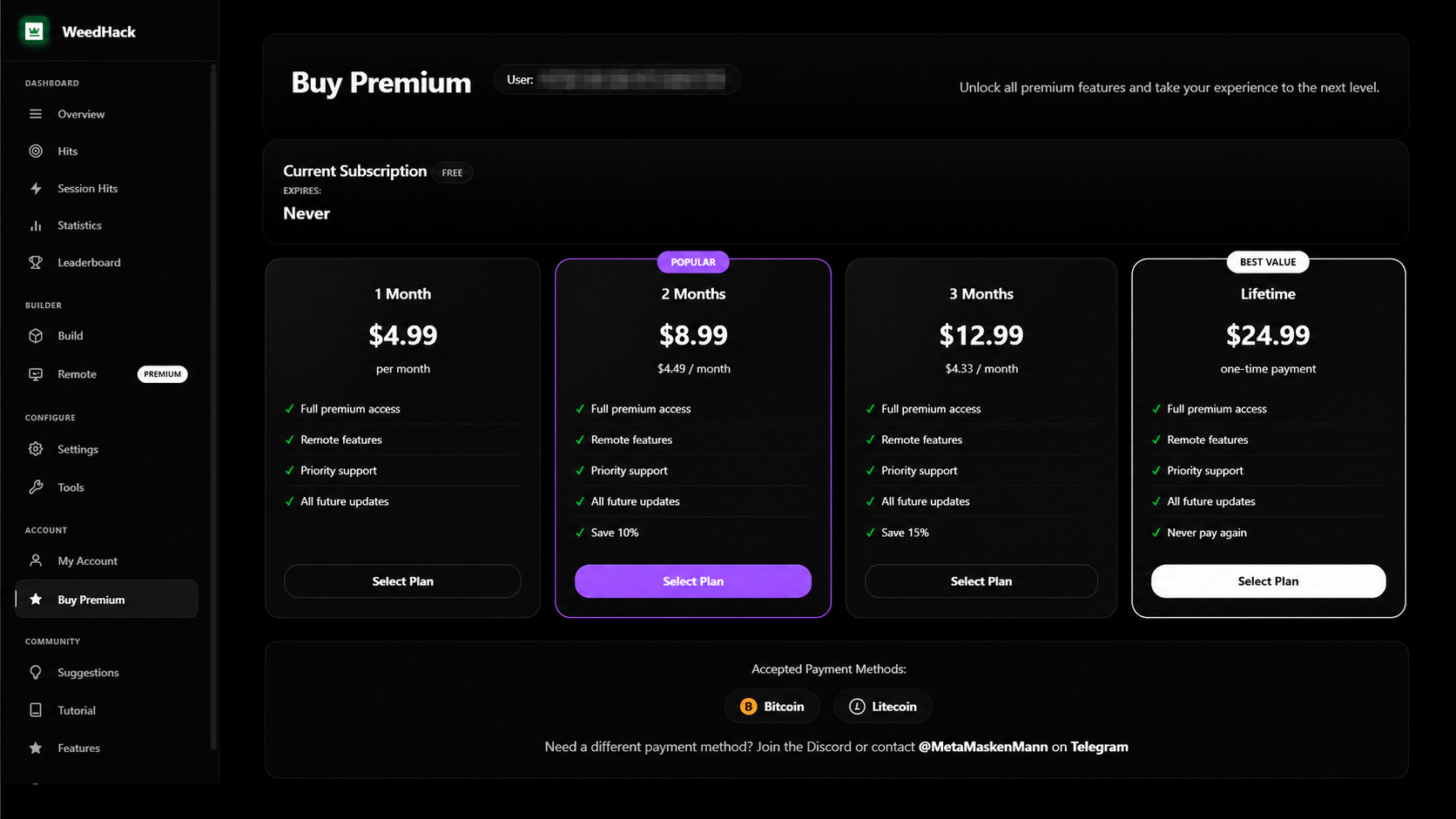
One of the most unusual aspects of WeedHack is its business model. According to McAfee's findings, the malware is offered in different tiers. A free version provides basic information-stealing capabilities, while paid subscriptions unlock more advanced features such as webcam access, keylogging, and enhanced remote-control functions. Subscription prices reportedly start at around $5 per month.
This approach mirrors the business strategies used by legitimate software companies. Instead of selling productivity tools or entertainment software, however, WeedHack's creators are selling cybercrime capabilities. The low subscription cost makes the malware accessible to a wide range of users, including individuals with little or no hacking experience.
A Community Built Around Cybercrime
Perhaps the most alarming aspect of WeedHack is the community that has formed around it. McAfee discovered that the malware's creator provides tutorials and guidance for users, teaching them how to use the software, choose targets, and improve their attacks. This effectively turns WeedHack into both a malware platform and a training program for aspiring cybercriminals.
The WeedHack community reportedly operates much like a legitimate online service. It includes feature-request systems, support channels, custom malware builders, and leaderboards that reward users for infecting large numbers of victims. Subscribers can even create customized malware payloads and insert them into seemingly legitimate Minecraft modifications. This combination of malware distribution and community support helps attract new users and contributes significantly to the malware's continued growth and effectiveness.
Also Read: DarkSword Spyware and How to Stay Protected from It
Why Minecraft Players Are Being Targeted
Minecraft remains one of the most popular games in the world, with millions of active players. Many of these players regularly download mods, texture packs, and custom clients from unofficial sources. Because community-created content is such a normal part of the Minecraft experience, players may be less cautious when downloading files from unfamiliar websites.
Cybercriminals understand this behavior and exploit it to spread malware. Younger players are particularly vulnerable because they may not fully understand online security risks or recognize warning signs that indicate a file may be dangerous. By disguising malware as Minecraft content, attackers increase their chances of successfully infecting victims.
How to Protect Yourself
Protecting against threats like WeedHack requires a combination of caution and good cybersecurity practices. Users should only download Minecraft mods and software from trusted and reputable sources. Unknown websites, suspicious download links, and files shared through random online messages should be avoided.
Keeping operating systems and security software updated is also important, as updates often include protections against newly discovered threats. Users should enable multi-factor authentication whenever possible, regularly back up important data, and scan downloaded files before opening them. Taking these precautions can significantly reduce the risk of infection.