A FIFA World Cup is more than just a football tournament. Every four years, it creates unforgettable memories, legendary players, and moments that stay with fans for a lifetime. Along with the goals, celebrations, and trophies, another important part of World Cup history is the jerseys.
Some football shirts become much more than uniforms. They become symbols of victory, unforgettable matches, and legendary players. Years later, fans still remember them, collect them, and proudly wear them. Here are the 10 most iconic World Cup jerseys of all time.
Cameroon (2002): The Sleeveless Jersey That Changed Football Fashion
.jpg)
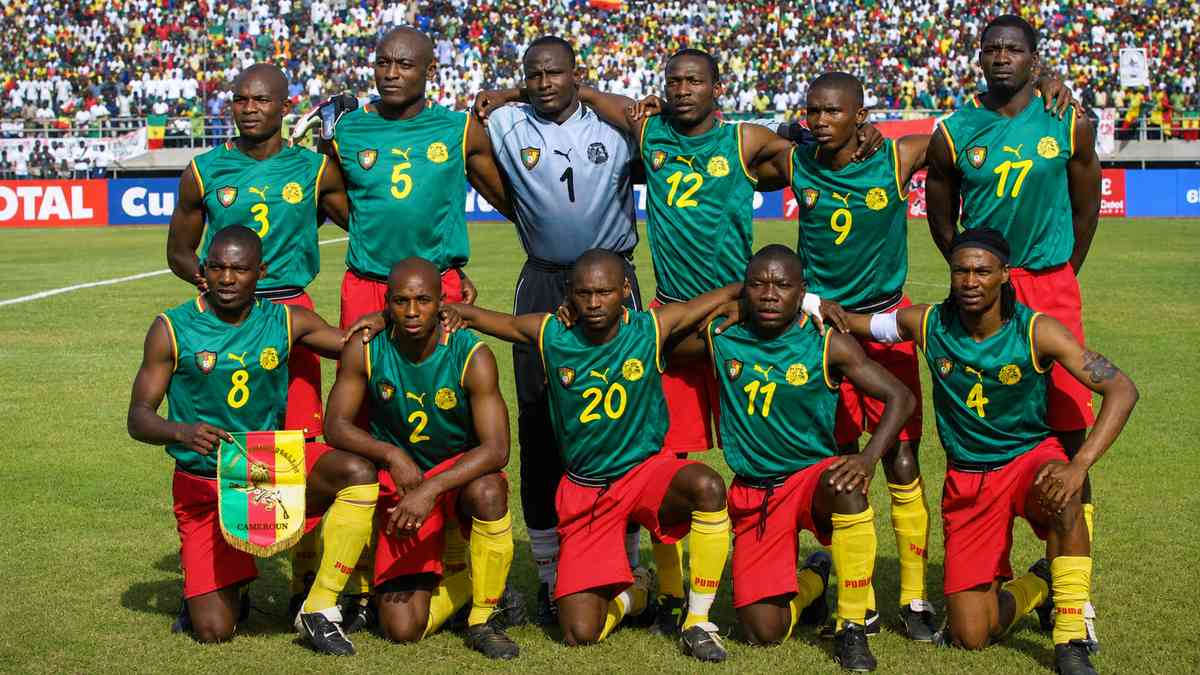
Cameroon's sleeveless jersey remains one of the most unusual football shirts ever made. Interestingly, it was never actually worn at the World Cup. The team first introduced the sleeveless design during the 2002 Africa Cup of Nations, where its bold appearance immediately attracted attention and became extremely popular across Africa.
Former Cameroon midfielder Eric Djemba-Djemba later recalled that everyone wanted to wear the shirt. The design even inspired the world of tennis, with Serena Williams wearing a Cameroon-inspired outfit at the French Open the same year.
However, FIFA did not allow sleeveless jerseys at the World Cup, forcing Puma to redesign the shirt by adding sleeves before the tournament in Japan and South Korea. Cameroon later pushed football fashion even further with a one-piece kit that combined the shirt and shorts into a single garment, but FIFA banned that design as well, cementing Cameroon's reputation as one of football's boldest kit innovators.
Also Read: Adidas vs. Puma: The Family Fight That Created Two Famous Sportswear Brands
England (Away Jersey, 1966): The Shirt That Witnessed a Historic Triumph
.jpg)
England's red away jersey is forever associated with the country's greatest football achievement. It was worn when England defeated West Germany in the 1966 World Cup final at Wembley Stadium to win its first and, so far, only World Cup title.
The shirt evokes memories of Geoff Hurst's historic hat-trick, Bobby Moore lifting the Jules Rimet Trophy, and one of football's most controversial moments, when the ball appeared to bounce near or over the goal line.
Although England has produced many memorable jerseys over the years, particularly those from 1982 and 1990, the 1966 red away shirt remains the nation's most iconic because it symbolizes its greatest sporting triumph.
France (1982): A Jersey Forever Linked to Football's Greatest Drama
.jpg)
France's blue jersey from the 1982 World Cup became legendary because it was worn during one of the greatest matches in football history. France faced West Germany in a dramatic semi-final in Seville, a match filled with unforgettable moments.
German goalkeeper Harald Schumacher's dangerous challenge on Patrick Battiston shocked the football world, while the game itself ended 3-3 after extra time before becoming the first World Cup match ever decided by a penalty shootout.
Although France ultimately lost, captain Michel Platini later described it as the greatest match of his career because of its extraordinary emotion and drama. As a result, the elegant blue jersey became permanently linked with one of football's most unforgettable nights.
Netherlands (1974): The Two Stripes That Made History
.jpg)
The Netherlands revolutionized football with its exciting style known as "Total Football," and the team's 1974 jersey became one of the sport's greatest classics. The side's biggest star, Johan Cruyff, wore a shirt that looked slightly different from those of his teammates.
While the Dutch squad wore Adidas kits featuring three stripes on the sleeves, Cruyff had a personal sponsorship agreement with Puma. Following discussions between the two companies and the Dutch Football Association, his shirt was produced with only two stripes.
Cruyff later explained that although the football association owned the shirt, the player wearing it should also have a say. That subtle difference made his jersey one of the easiest football shirts to recognize.
Croatia (1998): The Checkered Shirt That Introduced a New Football Power
.jpg)
Croatia's famous red-and-white checkered jersey quickly established itself as one of football's most recognizable designs. Inspired by the Croatian national coat of arms, the pattern gave the team a unique identity on the field. The 1998 World Cup carried special significance as it marked Croatia's first appearance in the tournament following the country's independence.
Led by striker Davor Šuker and supported by talented players such as Zvonimir Boban, Robert Jarni, and Robert Prosinečki, Croatia stunned the football world by reaching the semi-finals. Although they lost to host nation France, they defeated the Netherlands to secure third place, and their remarkable success helped make the checkered jersey famous around the globe.
Also Read: 5 Strange FIFA World Cup Rules in Football History
Nigeria (1998): The Classic Kit That Inspired a Global Fashion Phenomenon
.jpg)
Nigeria has produced several memorable football jerseys over the years, but the designs from the 1990s later inspired one of football's greatest fashion successes. Designer Matthew Wolff explained that the hugely popular 2018 Nigeria World Cup jersey drew inspiration from the country's earlier kits, particularly those from 1994 and 2002.
Rather than creating a completely new design, Wolff wanted to celebrate Nigeria's football identity. The result became a worldwide sensation, with more than three million people pre-ordering the jersey before its release and long queues forming outside Nike stores in London.
The shirt became popular not only among football supporters but also in fashion, music, and popular culture. Wolff emphasized that its success reflected the efforts of an entire design team rather than a single individual.
Brazil (1970): The Yellow Jersey That Became a Football Icon
.jpg)
Few football shirts are as closely associated with a single color as Brazil's famous yellow jersey. The 1970 World Cup team is widely regarded as one of the greatest teams ever assembled, featuring legends such as Pelé, Carlos Alberto, Jairzinho, and Rivelino.
Wearing the iconic yellow shirt, Brazil won the tournament in Mexico while playing an attractive and entertaining brand of football. The simplicity of the jersey perfectly reflected the beauty of the team's style, and even today, footage of Brazil's victory over Italy in the 1970 final reminds fans why the yellow jersey remains one of football's greatest symbols.
USA (Away Jersey, 1994): The Denim Design That Won Over the World
.jpg)
The United States surprised football fans by introducing one of the boldest jersey designs ever seen. The away shirt featured large white stars across a faded denim-style background, making it unlike any traditional football jersey.
When Adidas first unveiled the design, many American players worried they would become a laughingstock because of its unconventional appearance. Fortunately, fans quickly embraced the shirt. The United States also enjoyed a successful tournament by reaching the Round of 16 before narrowly losing to eventual champions Brazil.
Over time, what was initially considered a strange design became one of football's most beloved jerseys, and today the famous "denim jersey" is regarded as one of the most collectible football shirts ever produced.
Argentina (Away Jersey, 1986): The Blue Shirt Behind Maradona's Magic
.jpg)
Argentina's blue away jersey became famous during one of the greatest matches in football history. Facing England in the World Cup quarter-finals, Diego Maradona scored two unforgettable goals. The first became known as the "Hand of God," while the second was a breathtaking solo run from midfield that was later voted FIFA's Goal of the Century.
The story behind the jersey is almost as remarkable as the match itself. Argentina's original blue shirts were considered too heavy for the hot weather in Mexico, prompting coach Carlos Bilardo to reportedly send members of the team to Mexico City's Tepito market in search of lighter blue shirts. Maradona is said to have personally chosen the final design, declaring, "What a beautiful shirt.
With this we'll beat England." Before kickoff, the team's staff spent the night sewing the national badge and player numbers onto the new shirts. Decades later, the jersey Maradona exchanged with England midfielder Steve Hodge sold at auction for £7.1 million (US$9 million), making it one of the most valuable sports shirts ever sold.
Also Read: 5 FIFA World Cup Injuries That Changed Careers
West Germany (1990): The Jersey That Revolutionized Football Kit Design
.jpg)
West Germany's 1990 World Cup jersey is widely regarded as one of the greatest football shirts of all time. Before its release, football jerseys were generally simple and understated, but this design transformed football kit aesthetics. Featuring a striking black, red, and yellow pattern across the chest, the shirt introduced a bold new style that influenced football kit design for decades.
Ironically, Adidas nearly replaced the jersey after the 1988 European Championship, but coach Franz Beckenbauer insisted the team continue wearing it. The shirt was designed by Ina Franzmann, who usually worked on tennis clothing rather than football kits. She later revealed that Horst Dassler, the son of Adidas founder Adolf Dassler, suggested incorporating the colors of the German flag to create something completely different.
West Germany went on to win the 1990 World Cup while wearing the jersey, instantly turning it into a classic. Looking back, Franzmann admitted she never expected the design to become so famous. Today, collectors around the world still regard it as one of the greatest football jerseys ever produced.
More Than Just Jerseys: Symbols of Football's Greatest Moments
These shirts became iconic not simply because they looked good, but because they were worn during some of the most unforgettable moments in football history. From Pelé lifting the World Cup in Brazil's yellow jersey to Diego Maradona inspiring Argentina in blue, from Croatia's historic first World Cup appearance to the bold and unconventional designs introduced by Cameroon and the United States, every jersey tells a unique story. For football fans, these are far more than pieces of fabric. They are enduring symbols of history, emotion, and memories that continue to inspire generations.