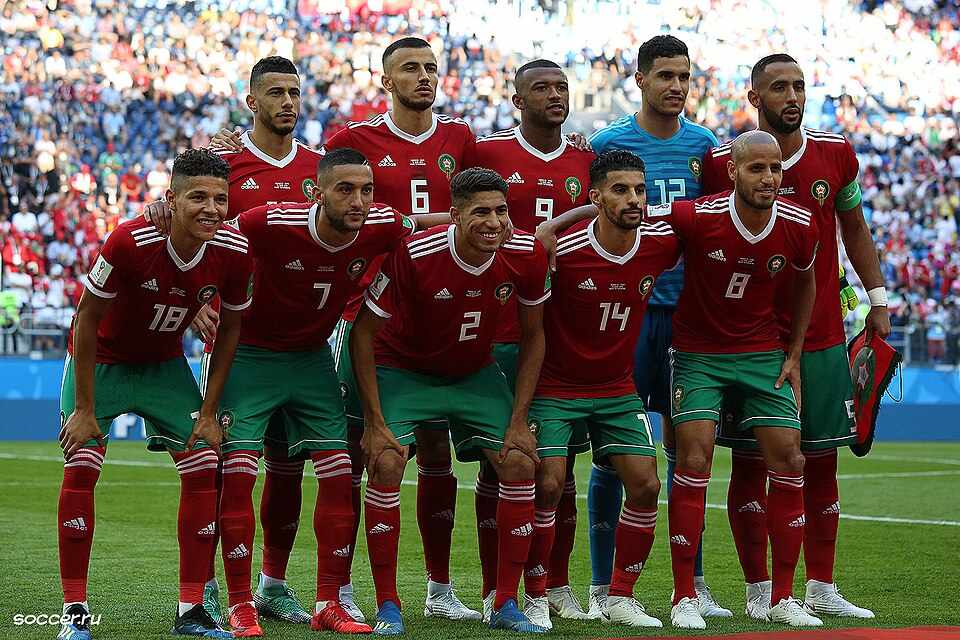
When Morocco defeated Portugal in the 2022 FIFA World Cup, it became the only Arab and African nation ever to reach the FIFA World Cup semi-finals. From being a 40th-ranked team in 2018 to 6th ranked team in 2026, the meteoric rise of the Morocco men’s national football team is noteworthy. And it’s not sheer luck that an Arab-African nation has earned the reputation of dominating European giants like Spain, Portugal and now the Netherlands.
Moroccan football has been a story where a team’s growth was hampered because of unstable administration and poor infrastructure. However, today, they are in a position to dominate any football team, whether it is Argentina, Brazil, France, or Spain. What made the difference was not luck, but a long state backed investments in infrastructure, diaspora recruitment, and the leverage that comes with hosting major tournaments.
Also read || Is the Netherlands the unluckiest football team?
The infrastructure bet
2009 was the turning point for Moroccan football when the Mohammed VI Football Academy was inaugurated. A year later, it was opened for trainees in Salé, across the river from Rabat. It was designed as a full development environment, with pitches, dorms, classrooms, medical facilities, and other support services meant to remove the financial hurdles that kept elite talent out of the game. The goal was to identify promising players early, educate them, train them, and make them an asset.
Some alumni from Mohamed VI Football Academy are Youssef En-Nesyri, Nayef Aguerd, and Azzedine Ounahi, who are representing clubs like Al-Ittihad, Marseille, and Girona. It won’t be wrong to say that Morocco’s rise at the senior level is steadily supported by a stream of newly developed talent in academy and club football. The academy normalized the idea that football development in Morocco could be centralized, professional, and built on a long-term vision.
This development model was not left isolated, and as a result, Morocco expanded its youth development through regional centres. They influenced clubs to modernize their own academies. A country that struggled to qualify for the FIFA World Cup for almost two decades eventually became one of the strongest football teams in the world. The goal of these developments was to raise the floor across the domestic game, not just to produce a single showcase institution.
Also read || Messi vs Ronaldo: The GOAT Debate by Numbers
Winning the diaspora race
Ismael Saibari, Achraf Hakimi, Issa Diop, and many others have one thing in common. None of them was born in Morocco. The Moroccan diaspora is spread across Europe, North America, and different parts of the world, which is their biggest advantage. Many of these players grew up inside elite European academies, which is still reflected in their style of play. Morocco football’s national strategy was to recruit the best players from the diaspora, which eventually helped it rise in the ranks.
Most European countries allow dual-citizenship, which not only helps players play for the country of their origin, but also the football federation. The Football Federation and national team staff built an organized scouting and relationship network around dual-national players. Many Moroccan players like Ayyoub Bouaddi and Brahim Díaz represented France and Spain, respectively, before moving to Morocco football team.
This strategy is now the core of the national team’s identity. Achraf Hakimi, a Madrid-born defender, became one of the best leaders for the Morocco football team. Noussair Mazraoui and Sofyan Amrabat, both born in the Netherlands, were key players for the national team’s success in 2022. Broadly, the squad has a mix of European academy products and players developed in Morocco, giving the team the right structure and balance.
Also read || Adidas vs. Puma: The Family Fight That Created Two Famous Sportswear Brands
Hosting on Morocco’s terms
Do you think Morocco was pushing for infrastructure only for sports development? The idea was more than player development, and the goal was to position Morocco to host bigger football tournaments on its own terms. They failed several bids, but finally became a co-host of the next 2030 FIFA World Cup alongside Spain and Portugal. That infrastructural decision gave Morocco a central role in one of the biggest football events in world sport.
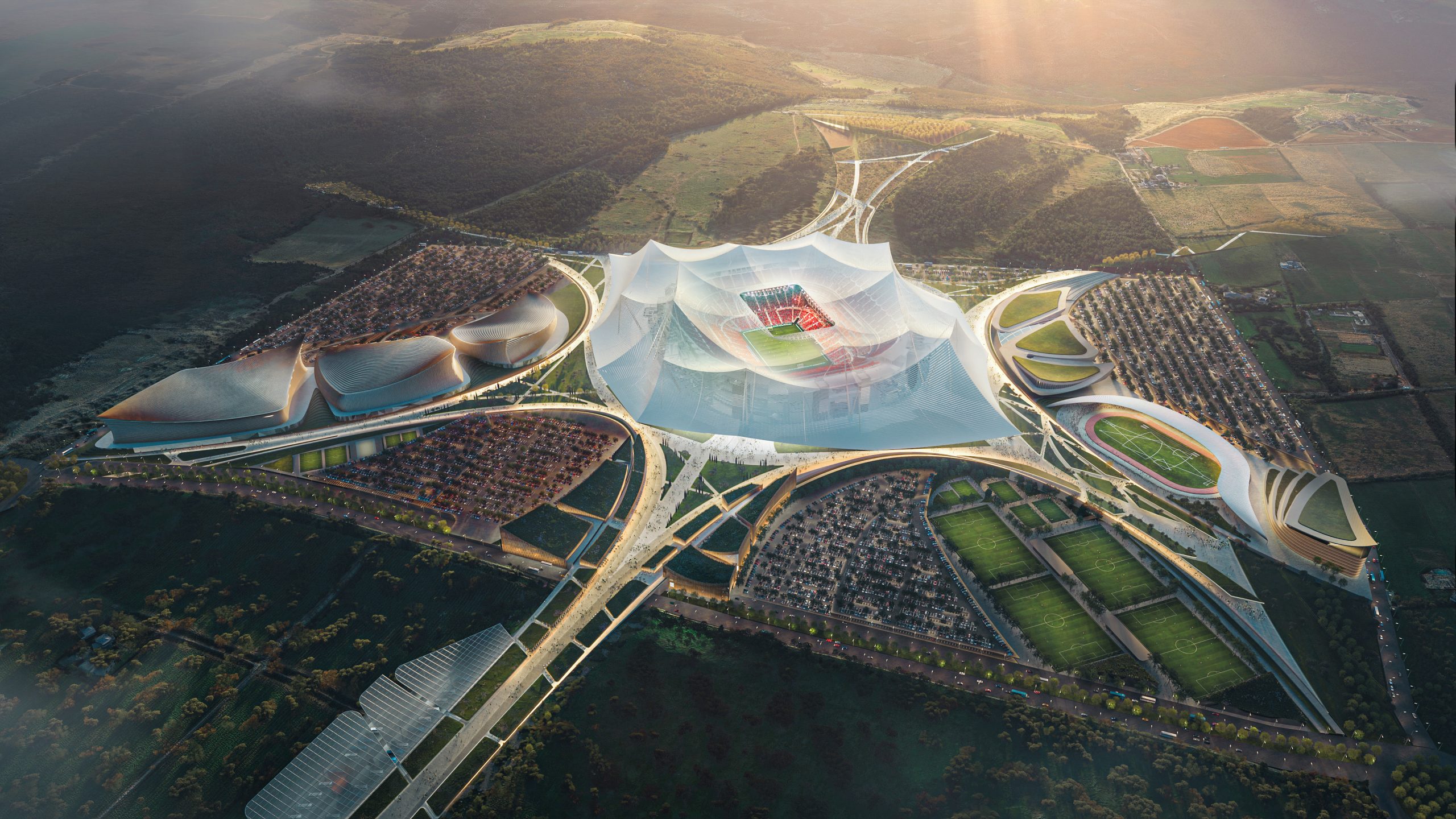
The planned Grand Stade Hassan II, located near Benslimane outside Casablanca, is one of the most ambitious symbols of Morocco's World Cup objectives. It is designed by architecture firms Populous and Moroccan-French firm Oualalou + Choi. With a 115,000 seating capacity, it is intended to be one of the largest football venues in the world and a showcase of 2030. However, it is still a planned project and under development, so full confirmation can’t be ensured.
In simpler terms, Morocco is using infrastructure as a magnet not only to retain the local talent, but also to win bidding wars. Based on the current situation, Morocco has transformed into a football-playing nation, and is visible on the global football map. Why does this visibility matter? Because it allows Morocco to reinforce the country’s image as a modern power rather than a one-off tournament surprise.
Also read || 5 Strange FIFA World Cup Rules in Football History
The blueprint in plain view
Morocco's success is an inspiring story for rising football nations. While finance plays a critical role here, the country already had the intent to develop its players and teams. It's not an overnight success, but built through long-term investment in youth development, systematic scouting of the diaspora, and a deliberate effort to use hosting power as a competitive edge. Whether it was 2022 FIFA World Cup heroics, the U-20 pipeline, or becoming the co-hosts of the 2030 World Cup, everything is part of the same strategy.
The bigger lesson from Morocco's football rise is that success in sports can be engineered when a federation, state, and development system work in alignment with each other and for long-term goals. At this point, Morocco is not an underdog anymore, and their story is a blueprint every aspiring nation should follow to get the best out of their players.