Have you ever smelled something and suddenly remembered a moment from many years ago? The smell of fresh paint might remind you of your kindergarten classroom. The scent of Play-Doh may bring back childhood memories. A certain laundry detergent might remind you of your grandparents’ home. The smell of a cleaning product used in a coffee shop may remind you of your first job. Sometimes, a smell can even bring back memories you had completely forgotten. This common experience happens because of a scientific process called olfactory memory, which is the strong connection between smell and memory. Smell is different from our other senses because it has a special pathway in the brain that is closely connected to memory and emotion. This is why a simple smell can bring back clear, emotional, and long-forgotten memories.
Also Read: 8 Surprising Met Gala Rules Most People Never Knew About
What Is Olfactory Memory?
The term olfactory memory refers to memories that are triggered by smells. The word “olfactory” simply means related to the sense of smell. This happens when a smell from the present matches a smell that your brain experienced in the past. When this happens, the brain can quickly bring back the memory connected to that smell. Scientists believe smell-triggered memories often feel stronger than other memories because smell is closely connected to the parts of the brain that control both memory and emotions.
Smell Is One of the Oldest Senses
Scientists believe that smell is our oldest sense in evolutionary history. Even the most basic living organisms, such as simple bacteria, can detect chemical signals in their environment. This ability helped early life forms survive by finding food, avoiding danger, and reacting to their surroundings. Long before humans developed advanced sight or hearing, early ancestors relied on detecting chemical signals. Over millions of years, this simple ability slowly developed into the modern human sense of smell. Because smell has such deep biological roots, it may explain why smell affects us so strongly even today.
How the Human Sense of Smell Works
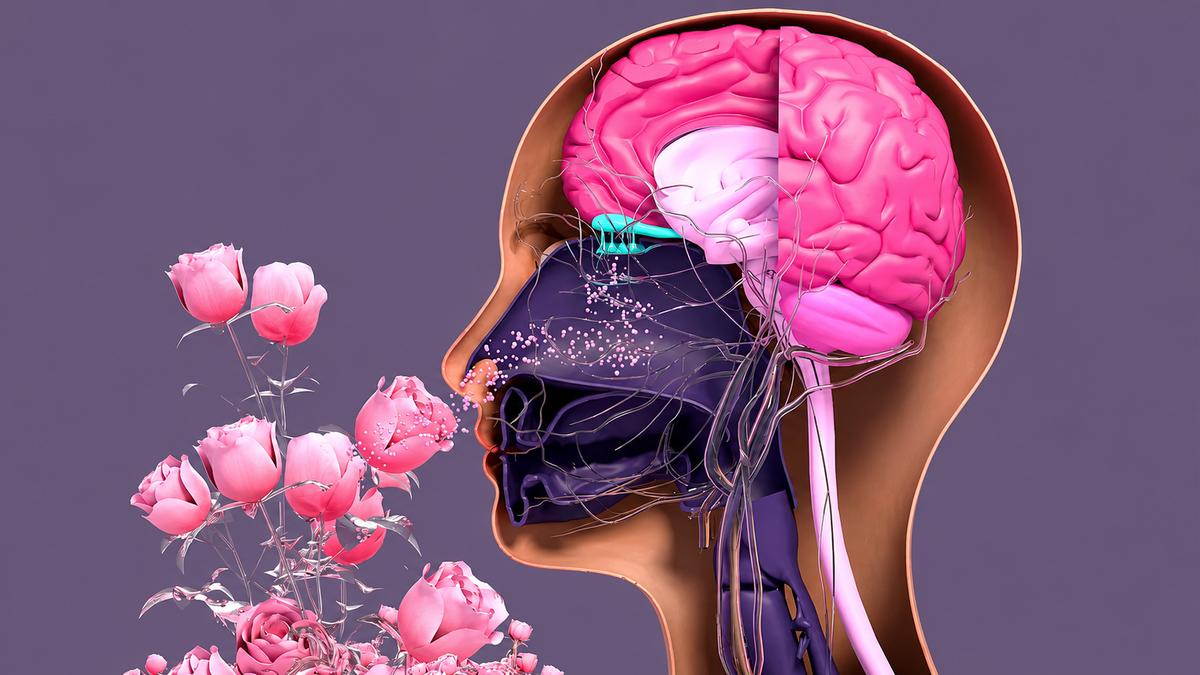
The process of smelling begins when we breathe in air. The air contains millions of tiny odor molecules released by objects, foods, chemicals, flowers, and many other things around us. These molecules enter the nose and reach a special area called the olfactory epithelium, which is a tissue inside the nose lined with millions of smell-detecting sensory nerve cells. At the ends of these cells are tiny receptors that detect smell molecules. Different receptors respond to different odor molecules, and not every receptor reacts in exactly the same way. Instead, each smell creates its own unique pattern of signals. These signals are then sent to the brain for processing. Because millions of nerve cells and many receptor types work together, humans can recognize a very large number of smells. Scientists estimate that humans have about 450 different types of smell receptors, which means people may be able to detect as many as one trillion different odors, at least in theory.
Also Read: The Old-School Dining Rules Your Grandparents Lived By
The Role of the Olfactory Bulb
After smell signals leave the nose, they travel to a part of the brain called the olfactory bulb. The olfactory bulb is located at the very front of the brain, just above the nose. Its job is to receive the mixed smell signals from the nose, organize them, and help the brain understand what smell is being detected. Without this process, the brain would not be able to recognize smells clearly. Scientists now understand this process much better than before, and one major explanation for smell-triggered memories focuses on the location of the olfactory bulb inside the brain.
Why Smells Trigger Memories So Easily
The olfactory bulb is located very close to the hippocampus, the part of the brain responsible for storing and bringing back memories. It is also close to the amygdala, which helps process emotions such as happiness, fear, comfort, and sadness. Because the smell system is closely connected to these areas, smells can directly trigger both memories and emotional reactions. This means that when you smell something familiar, your brain may immediately connect that smell with a stored memory. This explains why smell memories often feel sudden, vivid, and emotionally powerful. For example, the smell of old books may remind someone of school, the smell of rain on dry soil may remind someone of childhood evenings, and a perfume may remind someone of a particular person.
Why Other Senses Are Different
Other senses, such as sight, touch, and hearing, can also bring back memories. A song may remind you of a past event, or a photograph may remind you of a holiday. However, scientists believe these senses do not connect to the emotional memory areas of the brain in the same direct way as smell. This may explain why smells often create stronger and more emotional memory reactions than other senses.
Also Read: Australian Drinking Tradition Involving a Shoe
What Scientists Still Do Not Fully Know
Although the connection between smell, memory, and emotion is strongly supported by brain science, some details are still being studied. Scientists continue to learn exactly how the brain stores smell memories and why certain smells create stronger reactions than others. So while the main explanation is widely accepted, researchers are still working to better understand some parts of this process.