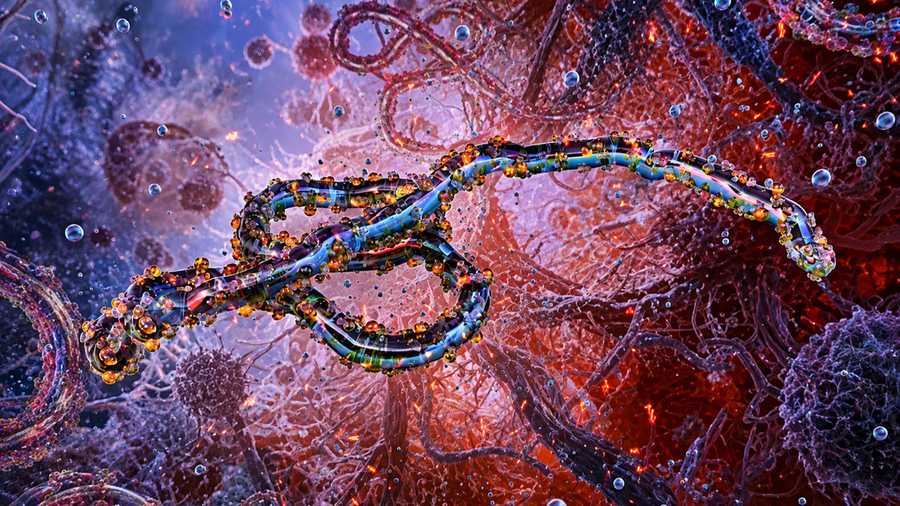
Ebola is one of the world’s most feared infectious diseases, known for causing severe illness and high death rates. The virus has triggered multiple deadly outbreaks over the past five decades, and although Ebola is considered rare, its sudden appearance and ability to spread quickly have made it a major public health concern, especially in Africa. Since it was first identified in 1976, around 35,000 cases and more than 15,000 deaths have been reported. Understanding where Ebola came from and how it spreads is important in preventing future outbreaks.
Also Read: 4 Common Cruise Ship Illnesses to Know About
The Discovery of Ebola
Ebola was first discovered in 1976 during a deadly outbreak in Zaire, now known as the Democratic Republic of Congo (DRC), near the Ebola River, which is where the virus got its name. Around the same time, another outbreak caused by the closely related Sudan virus occurred in what is now South Sudan. At first, doctors believed the illness might be malaria, typhoid, or yellow fever because the symptoms looked similar. Patients suffered from fever, weakness, headaches, and muscle pain, but as the illness worsened, many developed internal bleeding, organ failure, and eventually died. Scientists studied blood samples from infected patients and found similarities with the Marburg virus, another dangerous virus discovered about a decade earlier. However, further laboratory testing confirmed that this was a completely new virus. The first outbreaks were extremely deadly, with 318 reported cases in the DRC and an 88 percent fatality rate, while the Sudan outbreak recorded 284 cases with a fatality rate of 53 percent. These alarming numbers immediately demonstrated how dangerous Ebola could be.
How Ebola Spread in the Early Days
One major reason Ebola spread so rapidly during the first outbreak was unsafe medical practices. In Yambuku Mission Hospital in the DRC, medical workers reused needles without properly sterilizing them, allowing the virus to spread quickly among patients and healthcare workers. As deaths increased, fear spread throughout affected communities, and many people lost trust in hospitals and modern medical care. Because of this fear, many infected individuals returned to their home villages instead of seeking treatment in medical centers, while others turned to traditional healers for help. Unfortunately, this close contact with infected individuals made it easier for the virus to spread further among families and communities.
Also Read: PCOS Gets a New Name: Why It’s Now Called PMOS
Where Does Ebola Come From?
Scientists believe Ebola is a zoonotic disease, meaning it starts in animals before spreading to humans. Although the exact original source has not been fully confirmed, fruit bats are considered the most likely natural hosts because they can carry the virus without becoming seriously sick. Ebola can also infect other animals such as monkeys, gorillas, chimpanzees, and porcupines. Humans can become infected by handling infected animals, eating contaminated bushmeat, or coming into contact with infected animal blood or body fluids. Once the virus enters the human population, it spreads through direct contact with the blood, saliva, vomit, sweat, urine, or other body fluids of infected people. It can also spread through contaminated objects such as needles, bedding, and medical equipment.
Types of Ebola Viruses
Ebola belongs to a group of viruses called orthoebolaviruses. Several types exist, but four are known to infect humans: Ebola virus, Sudan virus, Tai Forest virus, and Bundibugyo virus. These viruses are mainly found in sub-Saharan Africa and vary in how deadly they are, with some outbreaks having fatality rates as low as 35 percent and others reaching nearly 90 percent. Each type behaves slightly differently, but all can cause serious illness and widespread outbreaks if not controlled quickly. Scientists continue studying these viruses to better understand how they spread and how to stop them.
Major Ebola Outbreaks in History
Ebola continued to appear in smaller outbreaks after 1976, but one of the most devastating outbreaks occurred between 2014 and 2016 in West Africa. This became the largest Ebola epidemic ever recorded, affecting Guinea, Sierra Leone, and Liberia, with more than 28,600 infections and thousands of deaths. The outbreak spread so widely because many affected countries had weak healthcare systems, poor disease monitoring, and limited infection control measures. Hospitals became overwhelmed, protective equipment was in short supply, and many communities lacked awareness about how the virus spread. Another major outbreak took place in the Democratic Republic of Congo between 2018 and 2020, becoming the world’s second-largest Ebola outbreak with 3,481 infections and 2,299 deaths. Controlling this outbreak was especially difficult because it occurred in an area affected by armed conflict, making it dangerous for healthcare workers to reach infected communities, provide treatment, and carry out vaccination programs. Despite these challenges, improved medical responses eventually helped control the outbreak.
Also Read: Fear or Joy: How Dreams Influence Your Morning Mood
Ebola in Recent Years
Ebola has continued to appear in smaller outbreaks in recent years, showing that the virus remains a serious public health threat. On May 15, 2026, the Democratic Republic of Congo reported its 17th Ebola outbreak. Soon afterward, the virus spread into Uganda. By May 20, 2026, more than 600 cases and 139 deaths had been reported. These repeated outbreaks show that Ebola has not disappeared, and regions with weaker healthcare systems remain especially vulnerable, making quick action essential whenever new cases appear.
Why Ebola Remains Dangerous
Ebola remains dangerous because it spreads through direct contact with infected body fluids and can kill quickly if patients do not receive timely treatment. Its symptoms can resemble other common diseases in the early stages, making immediate detection more difficult. In areas with poor healthcare systems, the virus can spread rapidly before health authorities are able to respond. However, medical science has made important progress, including better protective equipment, faster testing, improved treatment methods, and vaccines that have helped reduce the impact of outbreaks. Even so, Ebola remains a serious global health concern.