Today, the word odyssey is commonly used to describe a long, difficult, and exciting journey. It can also refer to a great adventure, a challenging task, or a long experience filled with problems, discoveries, and personal growth. A person may go on an odyssey by traveling across countries, spending many years working toward an important goal, or overcoming a series of life’s challenges.
However, the word did not always have this broader meaning. It originally referred to one famous work of ancient Greek literature, The Odyssey, an epic poem written by the Greek poet Homer. Over time, the title of this remarkable poem became an English word used to describe any long and memorable journey.
How the Word "Odyssey" Became an English Word
The modern meaning of odyssey developed during the 19th century. Before that time, the word was mainly used as the title of Homer’s famous epic poem. During the 1800s, however, English speakers began using the title figuratively rather than referring only to the literary work itself.
As a result, odyssey came to describe any long, difficult, or adventurous journey. Today, the word is also used to refer to a remarkable story, a wide-ranging adventure, an important mission, or any major undertaking that requires time, effort, perseverance, and determination.
Homer's The Odyssey
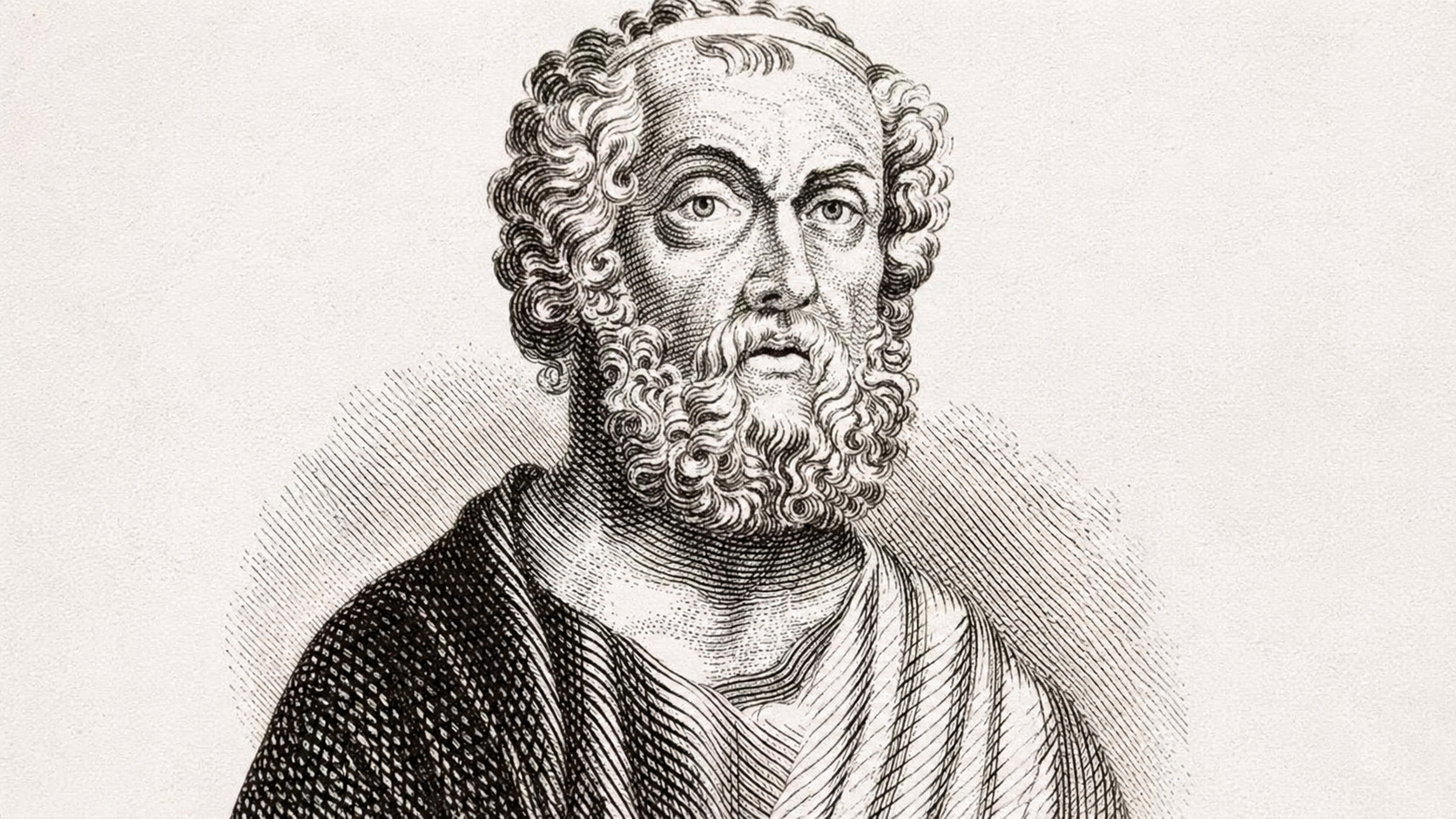
The Odyssey is one of the oldest and most celebrated works of literature in the world. It is believed to have been written by the ancient Greek poet Homer during the 7th century BC, although the exact date remains unknown. Most scholars estimate that it was composed sometime between 750 BC and 650 BC.
The epic poem consists of 24 books, or verse chapters, which together tell the story of the legendary Greek hero Odysseus, the King of Ithaca, and his long journey home after the Trojan War and the fall of the city of Troy. For more than 2,700 years, The Odyssey has remained one of the greatest literary masterpieces ever written, influencing literature, art, history, theatre, films, and even the English language.
Also Read: 7 Highest Monasteries In The World You Must Visit
Who Was Odysseus?
Odysseus was the King of Ithaca, a small Greek island kingdom, where he lived peacefully with his wife, Penelope, and their young son, Telemachus, before the outbreak of the Trojan War. When Helen of Troy was taken to Troy, many Greek kings united to fight against the Trojans.
As one of Helen’s former suitors, Odysseus was expected to join the war because all of her suitors had previously sworn an oath to defend her future husband. Although he did not want to leave his family, ancient tradition says that a prophecy warned he would spend many years trying to return home if he joined the war.
Despite this warning, he eventually became part of the Greek army and sailed to Troy. The Trojan War lasted ten years, and after the Greeks emerged victorious, Odysseus began another journey that also lasted ten years. Altogether, he spent about twenty years away from his home and family.
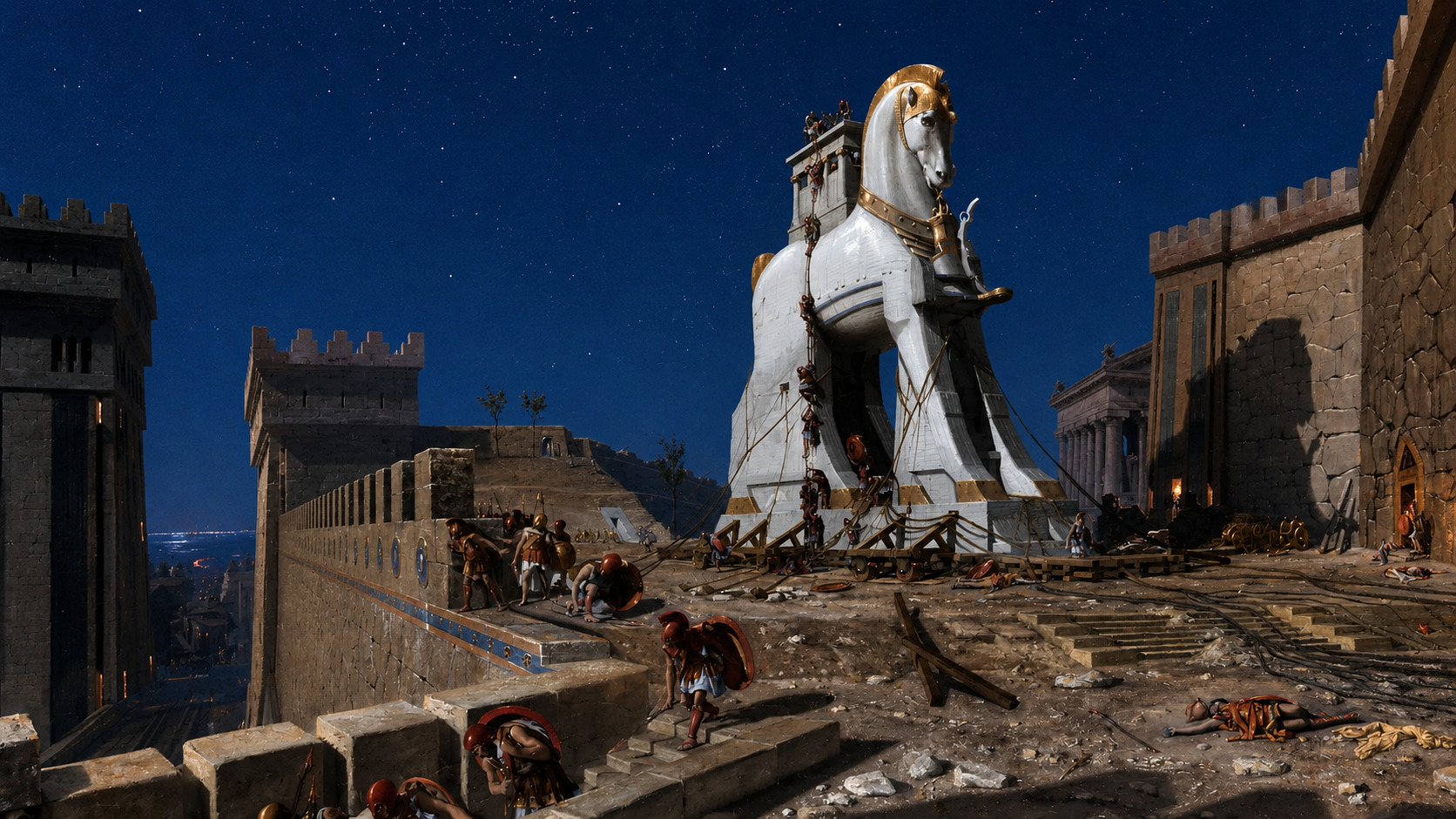
Rather than being remembered as the strongest warrior, Odysseus became famous for his intelligence, cleverness, and ability to solve difficult problems. Ancient legends also credit him with devising the plan of the famous Trojan Horse, which enabled the Greeks to capture Troy.
When Does The Odyssey Begin?
Although Odysseus spends ten years attempting to return home, Homer does not begin the story at the start of this journey. Instead, the poem opens in the middle of the adventure.
At the beginning of the story, Odysseus has already been stranded for several years on the island of the sea nymph Calypso, who keeps him there because she wants him to remain with her.
Since the poem begins midway through his travels, its main events cover only about the final month before Odysseus finally reaches Ithaca. The adventures that took place earlier are revealed later when Odysseus recounts and describes them himself.
The Adventures of Odysseus

Throughout his long journey, Odysseus encounters numerous dangerous adventures that test both his courage and his intelligence. One of the most famous episodes is his encounter with the Cyclops, a giant with a single eye, whom he defeats through clever thinking rather than physical strength. He also travels to the Underworld, where he meets the spirits of the dead and receives important advice about his future journey.
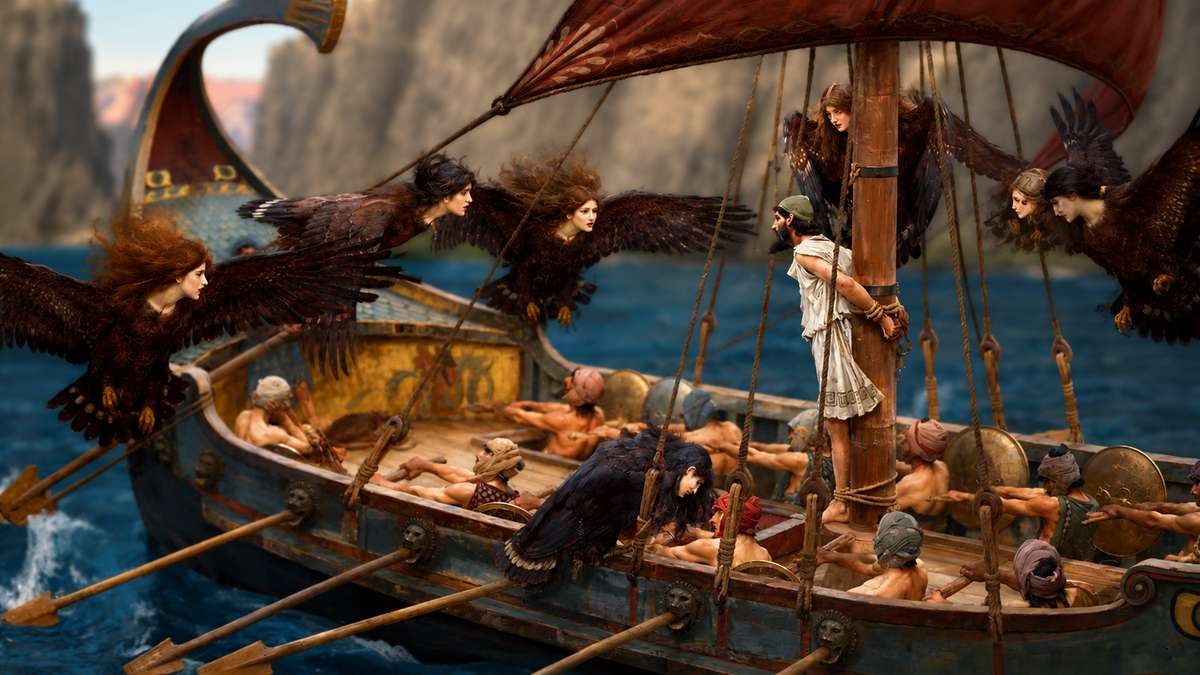
Later, he encounters the powerful sorceress Circe, who uses magic to transform some of his men into pigs. With the assistance of the gods, Odysseus overcomes her magic and rescues his companions. His travels also take him to the land of the Laestrygonians, a race of giant cannibals who destroy most of his ships and kill many of his men. Another well-known adventure occurs when he sails past the Sirens, whose enchanting songs lure sailors to their deaths.
To survive, Odysseus orders his crew to block their ears with wax while he has himself tied securely to the ship’s mast so he can hear the songs without steering the ship toward destruction. He also survives encounters with Charybdis, a massive whirlpool capable of swallowing entire ships, and Scylla, a terrifying sea monster that attacks sailors passing nearby. These extraordinary adventures have made The Odyssey one of the greatest adventure stories in literary history.
Odysseus Returns to Ithaca
After many years of hardship, suffering, and wandering, Odysseus finally returns to Ithaca. However, he discovers that more than one hundred suitors have occupied his palace because everyone believes he has died.
These men hope to marry his faithful wife, Penelope, and become the new ruler of Ithaca while spending the kingdom’s wealth as they wait for her decision. Throughout her husband’s long absence, Penelope remains loyal to him and cleverly delays choosing a new husband by using a trick that gives her hope that Odysseus will one day return. When Odysseus arrives home, he disguises himself as a poor beggar so that no one recognizes him.
After discovering who has remained loyal, he reveals his true identity. With the help of his son, Telemachus, and a few faithful servants, he defeats all of the suitors in a fierce battle. At last, after twenty years apart, Odysseus and Penelope are joyfully reunited.
Also Read: Japan's Most Mysterious Train Station You’ve Never Heard Of
Where Did the Name "Odysseus" Come From?
For centuries, historians and experts in the history of language have tried to determine the true meaning of the name Odysseus. This has proved difficult because different forms of the name appear in various ancient Greek dialects, and the name itself seems to be extremely old, possibly originating from a language that existed before Greek.
The most widely accepted explanation is that the name is connected to an ancient Greek word meaning “to hate,” and Homer himself appears to suggest this interpretation in the poem. If this explanation is correct, the name is distantly related to English words such as odium and odious, which are also associated with hatred or dislike. Even so, scholars still do not know why such an important hero would bear a name with this meaning.
According to the Oxford English Dictionary, the name may imply that Odysseus was “hated by gods and men.” This interpretation suits his character because he often relied on clever tricks and deception rather than strength alone, and his intelligence and pride sometimes angered both humans and the gods.
Was Odysseus a Hero or an Antihero?
Unlike many traditional heroes, Odysseus is not portrayed as a perfect character. He is undoubtedly brave, intelligent, and determined, but he is also proud and capable of making serious mistakes. Rather than winning every battle through physical strength, he often survives because of his cleverness, resourcefulness, and careful planning.
These human strengths and weaknesses make him a more realistic and complex character. As a result, many modern readers consider Odysseus to be an antihero rather than an idealized hero. Despite his flaws, he continues to overcome countless obstacles until he finally succeeds in returning home.
The Lasting Meaning of "Odyssey"

More than 2,700 years after Homer composed The Odyssey, the word odyssey continues to be used throughout the world. Today, it describes any long journey, difficult adventure, or significant life experience filled with challenges, discoveries, and personal growth. Whether the journey is real or symbolic, the word reminds people of Odysseus’ legendary voyage home after the Trojan War.
The story has become far more than an ancient Greek epic; it has given the English language a powerful word that symbolizes courage, determination, intelligence, patience, resilience, and the hope of reaching home after enduring many hardships. Even today, whenever someone speaks of an odyssey, they are using a word whose remarkable story began more than two thousand years ago in one of the greatest poems ever written.