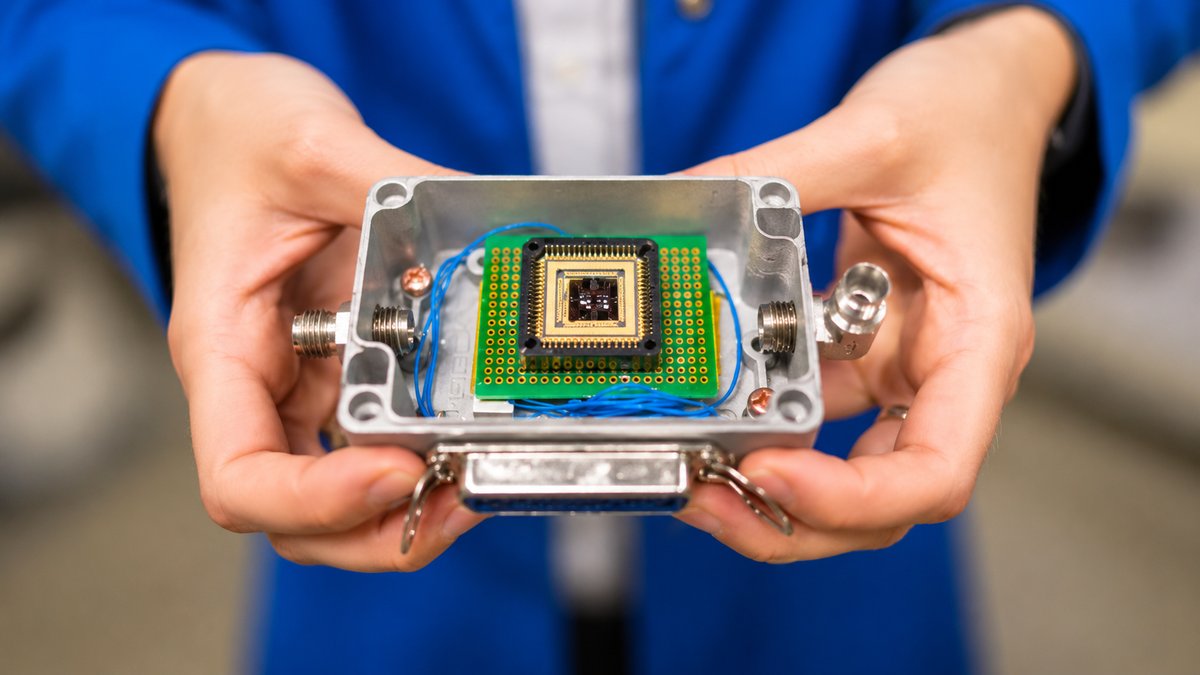
Imagine opening your refrigerator and wondering whether the milk is still fresh or if the chicken is safe to cook. Instead of smelling the food yourself, what if your refrigerator could tell you exactly when it is beginning to spoil? Scientists at the University of California, Berkeley, are working to make this possible with a new invention called an electronic nose.
This smart device can detect signs of food spoilage and identify certain common food allergens. Researchers believe that, in the future, it could be built into smart refrigerators and other kitchen appliances, helping people reduce food waste and lower the risk of foodborne illness.
Why Is This Technology Important?
Foodborne illness is a major public health problem worldwide. According to the Centers for Disease Control and Prevention (CDC), about 48 million Americans become sick from contaminated food each year. While most people recover within a few days, some infections are severe, and approximately 3,000 people in the United States die annually from foodborne diseases.
Many people rely on sight or smell to judge whether food is still safe to eat. However, spoiled food does not always look or smell bad in its early stages, and many harmful bacteria cannot be detected by human senses. As a result, scientists have been searching for a more reliable and accurate way to determine food safety.
Also Read: How ChatGPT Helped Create a Cancer Vaccine for a Dog
A Smart Electronic Nose
In June, researchers from UC Berkeley described their electronic nose in the scientific journal Science Advances. The device is designed to recognize the gases released by food as it begins to spoil. These gases create unique odor patterns that people may not notice, but the electronic nose can detect with high accuracy.
In addition to identifying spoiled food, the device can also detect common food allergens, including peanuts, making it especially useful for people with severe food allergies.
The research was led by Carla Bassil, a Ph.D. student in Electrical Engineering and Computer Sciences at UC Berkeley. She believes the technology could become a valuable feature of future kitchen appliances. For example, a smart refrigerator could alert users that broccoli should be eaten soon or that chicken is approaching the point at which it may no longer be safe to eat. Such reminders could help families reduce food waste while improving food safety.
How Does the Electronic Nose Work?
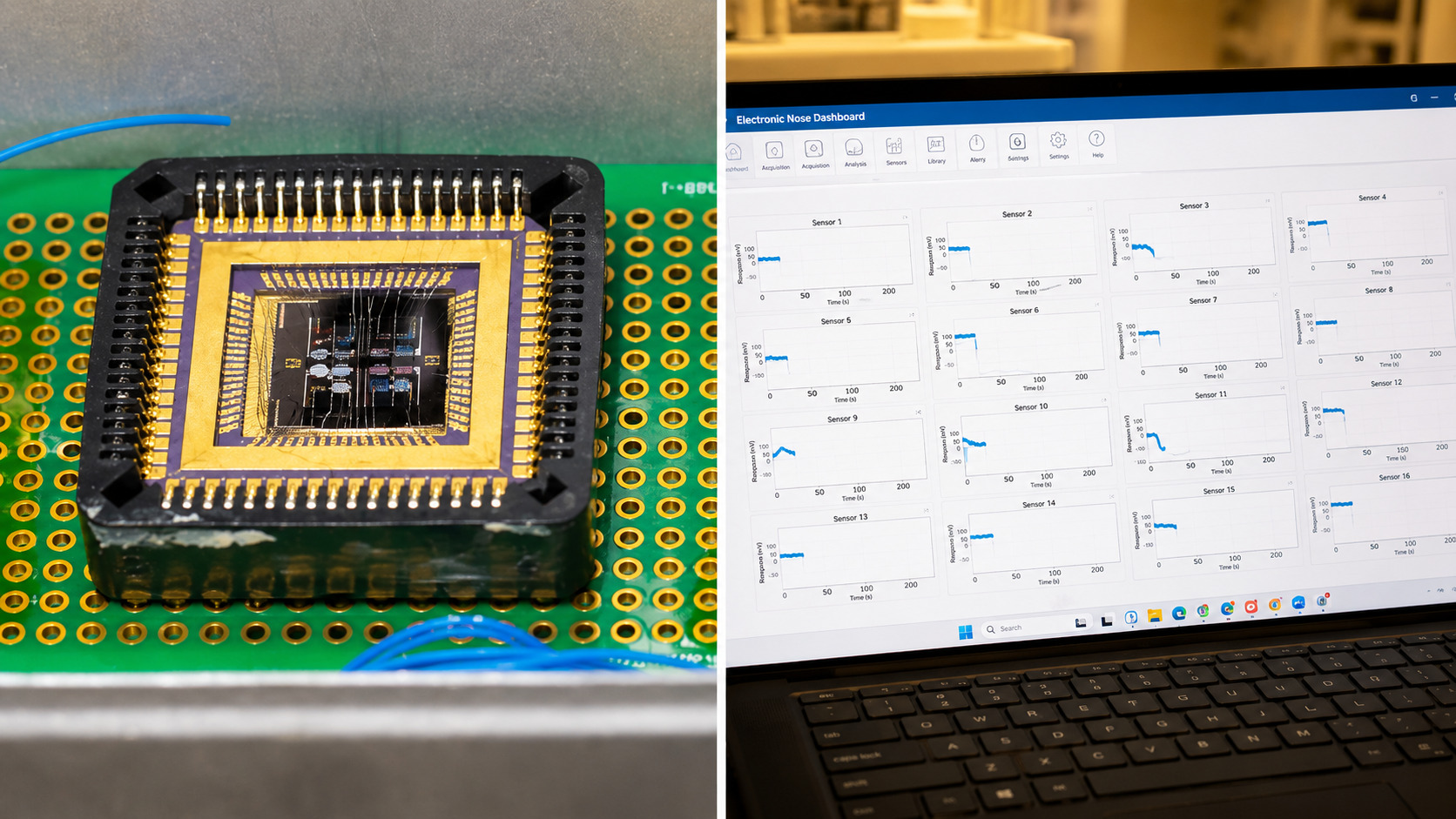
The electronic nose contains 16 different gas sensors, each designed to respond to specific gases released by spoiled food or food allergens. When food emits these gases, the sensors generate electrical signals that are analyzed using machine learning, a form of artificial intelligence that enables computers to recognize patterns.
The researchers trained the system to recognize the odor patterns of foods such as strawberries, blueberries, bananas, walnuts, hazelnuts, cashews, and peanuts. They also trained it using fresh chicken, milk, and eggs, along with samples of the same foods after they had been left at room temperature for 24 and 48 hours.
Because every food releases its own unique mixture of gases, the electronic nose learns to identify each item by its distinctive "gas fingerprint."
Digital Taste Buds
The researchers compare the electronic nose to a set of digital taste buds. Each of the 16 sensors is coated with a special material called a sensing film. When gas molecules from food come into contact with the film, they trigger a small chemical reaction that produces an electrical signal.
The computer analyzes the combined signals from all the sensors to determine what type of food is present and whether it is still fresh. Unlike the human nose, which relies on personal judgment and can vary from person to person, the electronic nose provides objective, consistent, and repeatable results without becoming fatigued over time.
Extremely Sensitive Detection
One of the most impressive features of the electronic nose is its exceptional sensitivity. According to the researchers, the device can detect as little as 0.05 grams of isolated walnut, about one-hundredth the weight of an average shelled walnut.
This high level of sensitivity could make the device especially valuable for detecting tiny amounts of allergens that might otherwise go unnoticed, improving food safety for people with severe nut allergies.
Current Limitations
Although the early results are promising, the technology is still under development. The researchers noted that the electronic nose has not yet been tested in environments where multiple food odors are mixed together.
For example, they do not yet know how well it will perform inside a refrigerator filled with many different foods or when analyzing prepared meals such as salads or frozen dinners. More research and testing will be needed before the technology can be widely used in homes, restaurants, and commercial kitchens.
Building on Existing Technology
Electronic gas sensors have been used for many years in devices such as carbon monoxide detectors, which identify dangerous gases in homes. However, these detectors typically rely on a single sensor because they are designed to detect only one gas.
The Berkeley research team faced a greater challenge by integrating 16 different sensors into one compact device while ensuring that each sensor could accurately detect different gases. To accomplish this, they used carbon nanotubes, extremely thin materials only a few atoms thick. These nanotubes made the sensors smaller, more sensitive, and compact enough to fit on a single chip.
Another advantage of the design is that all the sensing materials can be applied during a single manufacturing process, making the technology easier and more practical to produce on a larger scale.
Also Read: AI Vaccine Passes First Human Test: Could It Stop Future Outbreaks?
A Portable Version for Everyday Use
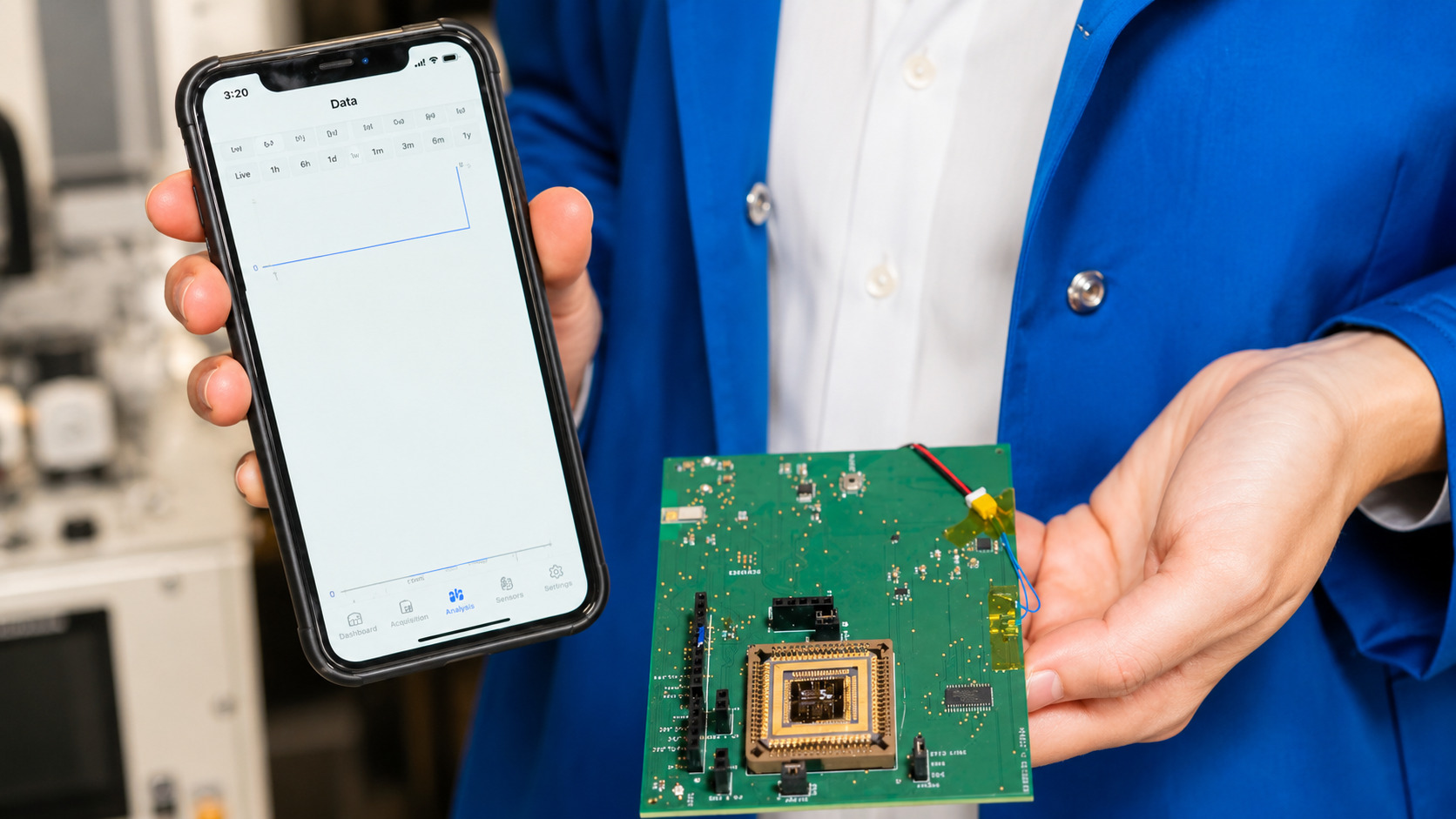
In addition to the laboratory prototype, the researchers have developed a portable electronic nose that works with an iPhone app. In the future, people may be able to carry this device while shopping for groceries, traveling, or dining at restaurants.
It could quickly determine whether food is fresh or whether allergens are present before someone eats. Although the portable version is still under development, it demonstrates how the technology could eventually become a practical part of everyday life.
The Future of Food Safety
The electronic nose is still in the research stage, but it has the potential to transform the way people think about food safety. Instead of relying solely on smell, appearance, or expiration dates, people may one day have access to a smart device capable of accurately detecting spoiled food and harmful allergens.
If the technology becomes widely available, it could help reduce food waste, lower the risk of food poisoning, improve protection for people with food allergies, and make kitchens smarter than ever before. For now, the electronic nose remains an exciting scientific breakthrough that demonstrates how artificial intelligence, advanced sensors, and modern engineering can work together to solve everyday problems.