Apple Inc. is one of the most influential technology companies in the world. Over the past five decades, the company has transformed the way people use computers, listen to music, communicate, and interact with digital technology. Apple’s story began as a small startup founded by young innovators and eventually grew into a global technology leader responsible for revolutionary products such as the Macintosh, iPod, iPhone, and iPad. From 1976 to 2026, Apple’s journey represents a remarkable example of creativity, risk-taking, innovation, and persistence that reshaped the global technology industry.
Also Read: Meet the Sudoku Champion Behind LinkedIn’s Puzzle Games
The Beginning of Apple
Apple was officially founded on April 1, 1976, by three partners: Steve Jobs, Steve Wozniak, and Ronald Wayne. The company started in the garage of Steve Jobs’ parents’ house in Los Altos, California. During the 1970s, computers were mostly large machines used by universities and large corporations, and very few people imagined owning a personal computer at home. Steve Wozniak, a skilled electronics engineer, designed a simple personal computer called the Apple I, while Steve Jobs recognized its commercial potential and believed it could be sold to hobbyists and technology enthusiasts. On April 11, 1976, Apple began selling the Apple I as a fully assembled circuit board, which was unusual at the time because most computer kits required customers to assemble the parts themselves. The Apple I was sold for $666.66, and approximately 200 units were produced. Only twelve days after the company was founded, Ronald Wayne decided to leave Apple and sold his 10 percent ownership for $800 on April 12, 1976. Although it seemed like a small decision at the time, it later became one of the most famous missed opportunities in business history, as Apple would eventually grow into a company worth trillions of dollars.
The Apple II and Rapid Growth
Apple’s first major commercial success came with the introduction of the Apple II on June 5, 1977, at the West Coast Computer Faire. Unlike earlier computers, the Apple II was designed to be user-friendly and ready to use immediately after purchase. It featured color graphics, a plastic case, a built-in keyboard, and expansion slots that allowed users to add additional hardware components. The Apple II quickly became one of the most popular personal computers of the late 1970s. In 1978, Apple introduced the Disk II system, which allowed users to store programs and data on floppy disks. The following year, in 1979, a spreadsheet software program called VisiCalc was released for the Apple II. VisiCalc allowed businesses to perform financial calculations electronically, which greatly increased demand for Apple computers. As a result of these innovations, Apple’s revenue grew rapidly, increasing from $774,000 in 1977 to $7.8 million in 1978 and then to $47 million in 1979. Apple was quickly becoming one of the most important companies in the growing personal computer industry.
Apple Goes Public
On December 12, 1980, Apple became a publicly traded company when it launched its Initial Public Offering (IPO). The company’s stock, listed as Apple Inc. (AAPL), was offered at $22 per share, and Apple sold 4.6 million shares to investors. This IPO immediately valued the company at approximately $1.8 billion. The event created more than 300 millionaires among Apple employees and investors and became the largest IPO since Ford Motor Company went public in 1956. Apple’s public listing demonstrated that personal computers were rapidly becoming an important part of the modern economy.
The Macintosh Era
Apple introduced the groundbreaking Macintosh computer on January 24, 1984. The Macintosh was one of the first commercially successful computers to use a Graphical User Interface (GUI), which allowed users to interact with icons, windows, and menus using a mouse instead of typing complex commands. The launch of the Macintosh was supported by the famous “1984” Apple Macintosh commercial that aired during Super Bowl XVIII on January 22, 1984. The advertisement became one of the most memorable commercials in television history and helped strengthen Apple’s reputation for creativity and bold marketing. Although the Macintosh introduced revolutionary ideas, its early versions had limited memory and were relatively expensive, which slowed its widespread adoption at first.
Steve Jobs Leaves Apple
Despite the innovative Macintosh, Apple experienced internal conflicts between Steve Jobs and the company’s CEO, John Sculley. These disagreements eventually led to Steve Jobs leaving Apple on September 17, 1985. After leaving the company, Jobs founded a new computer company called NeXT in 1985, which focused on advanced workstations designed for education and business users. In 1986, Jobs also purchased an animation studio that later became Pixar, which would eventually produce famous animated films such as Toy Story. During this period, Apple continued producing Macintosh computers but struggled to maintain the strong momentum it had achieved in its earlier years.
Apple’s Difficult Period
During the early 1990s, Apple faced increasing competition from personal computers running Microsoft Windows, developed by Microsoft. Windows-based computers were generally less expensive and were produced by many different manufacturers, allowing them to capture a large share of the global computer market. At the same time, Apple struggled with internal management issues, a confusing product lineup, and declining sales. By 1996, the company was losing money and was close to bankruptcy, creating serious concerns about its future.
The Return of Steve Jobs
In an effort to modernize its software and leadership, Apple purchased NeXT for approximately $429 million on December 20, 1996. This acquisition brought Steve Jobs back to the company he had co-founded. On July 9, 1997, Jobs became Apple’s interim CEO, often referred to as the “iCEO.” He quickly simplified Apple’s product lineup and refocused the company on innovation, design, and user-friendly technology. Another important event occurred on August 6, 1997, when Microsoft invested $150 million in Apple and promised to continue developing Microsoft Office for Mac. This investment helped restore confidence among customers and investors in Apple’s future.
The iMac and Apple’s Comeback
Apple’s turnaround became clear with the introduction of the iMac G3 on May 6, 1998. The iMac featured a colorful, transparent design that stood out from other computers on the market and was built specifically to provide easy internet access. It removed the traditional floppy disk drive and introduced modern USB ports, which were new technologies at the time. The iMac quickly became a major commercial success and played a key role in restoring Apple’s reputation as an innovative technology company.
The iPod and the Music Revolution
Apple expanded beyond personal computers when it introduced the iPod on October 23, 2001. The iPod allowed users to store thousands of songs in a small portable device. Steve Jobs famously described the product as “1,000 songs in your pocket.” The device worked closely with Apple’s music software, iTunes. On April 28, 2003, Apple launched the iTunes Store, allowing users to legally purchase and download music online. The combination of the iPod and iTunes quickly made Apple the leader in the digital music market.
The iPhone Revolution
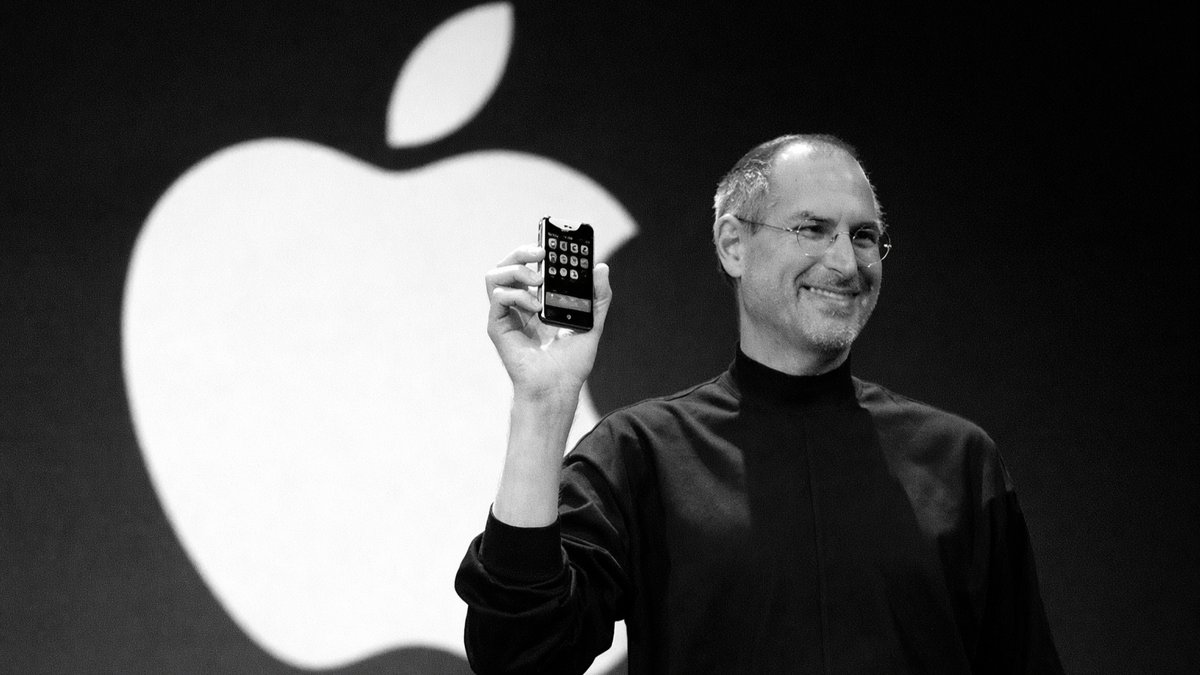
Apple introduced the iPhone on January 9, 2007, during the Macworld Conference & Expo 2007. Steve Jobs described the device as a revolutionary combination of an iPod, a phone, and an internet communicator. The iPhone featured a multi-touch screen, a mobile web browser, and a powerful operating system. When it officially launched on June 29, 2007, customers lined up outside Apple stores to buy the device. The iPhone transformed the smartphone industry and became one of the most important technological inventions of the 21st century.
Apple After Steve Jobs
Steve Jobs passed away on October 5, 2011, at the age of 56 due to complications from a pancreatic neuroendocrine tumor. Shortly before his death, Jobs stepped down as Apple’s CEO on August 24, 2011, and appointed Tim Cook as his successor. Under Cook’s leadership, Apple continued expanding its products and services while maintaining the company’s strong focus on innovation, design, and global growth.
Also Read: Who Invented the Car?
Apple in the Modern Era
During the 2010s and 2020s, Apple introduced several important new products and technologies. These included the Apple Watch in 2015, the wireless AirPods in 2016, and powerful computer processors known as Apple Silicon, announced on June 22, 2020. Apple also achieved historic financial milestones during this period. On August 2, 2018, Apple became the first publicly traded U.S. company to reach a $1 trillion market value. The company later surpassed $2 trillion in August 2020 and briefly reached a market value of $3 trillion on January 3, 2022.
Apple’s 50-Year Milestone
On April 1, 2026, Apple celebrated its 50th anniversary. What began as a small startup operating from a garage in California had grown into one of the most influential technology companies in the world. Today, Apple’s ecosystem includes products such as the iPhone, Mac computers, iPad, Apple Watch, and AirPods, along with a wide range of digital services including Apple Music, iCloud, and Apple TV+. Over fifty years, Apple has not only built successful products but has also played a major role in shaping the modern digital world.
Comments (0)
Log in to share your thoughts
No comments yet
Be the first to share your thoughts!