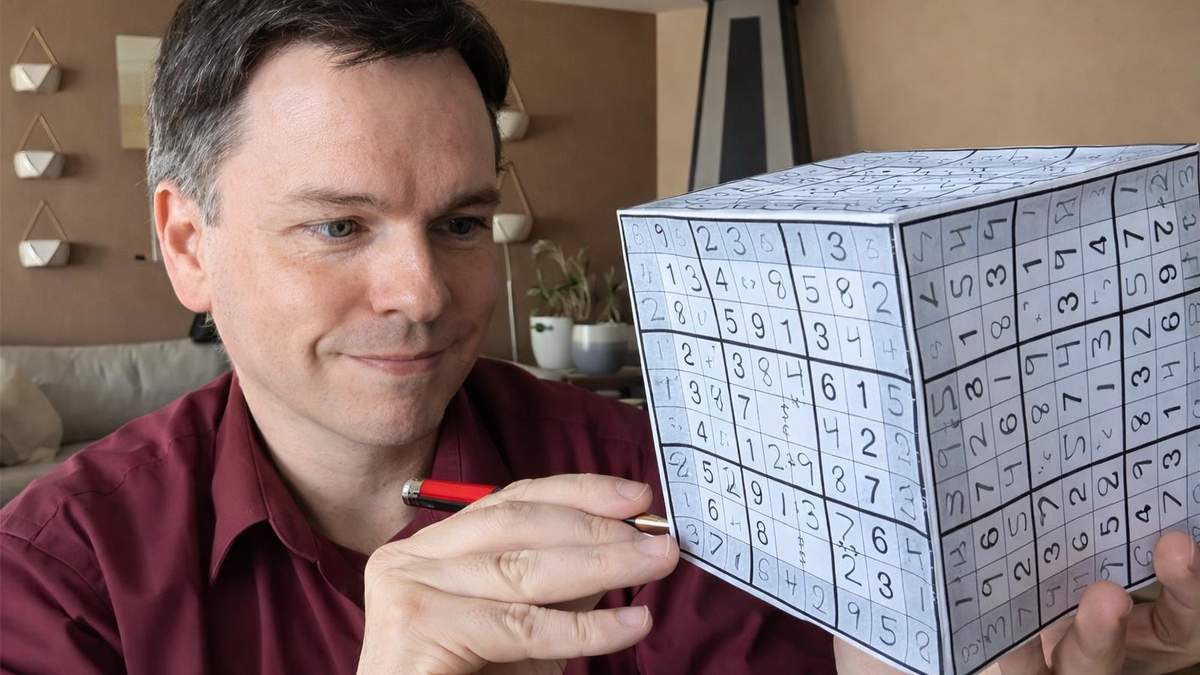
In recent years, the professional networking platform LinkedIn has introduced a series of daily puzzle games to keep users engaged and encourage interaction among colleagues and friends. These puzzles provide professionals with short mental breaks during their busy workdays while also allowing them to compete with friends and coworkers in a fun and interactive way. Behind many of these puzzles is Thomas Snyder, a renowned puzzle creator and a three-time winner of the World Sudoku Championship. Snyder plays a key role in designing and curating LinkedIn’s growing collection of brain-teasing games. His work has helped transform LinkedIn from simply a professional networking platform into a space where users can also enjoy quick mental challenges and friendly competition.
Who Is Thomas Snyder?
Thomas Snyder is widely known in the global puzzle community for his exceptional skills in Sudoku and logic puzzles. He studied chemistry and economics at the California Institute of Technology (Caltech) during his undergraduate years. Later, he earned a Ph.D. in chemistry from Harvard University, where he focused on scientific research. Before becoming a full-time puzzle creator, Snyder worked for more than a decade in the biotechnology industry, where he led research teams working on genomics and disease detection. Despite his success in science and research, puzzles had always remained his true passion.
Also Read: Who Invented the Car?
Becoming a World Sudoku Champion
Thomas Snyder gained global recognition through his achievements in the World Sudoku Championship, one of the most prestigious puzzle competitions organized by the World Puzzle Federation. He won the championship three times. His first victory came in 2007 in Prague, Czech Republic. He won again in 2008 in Goa, India, and later secured his third title in 2011 in Eger, Hungary. These impressive achievements established him as one of the greatest Sudoku solvers in the world. In addition to Sudoku competitions, Snyder has also competed in the World Puzzle Championship and has represented the United States many times in international puzzle competitions.
From Science to Professional Puzzle Making
Although Snyder had a successful scientific career, puzzles remained his favorite hobby. In 2012, he decided to leave the biotechnology industry and pursue puzzles full-time by launching a puzzle-creation business called Grandmaster Puzzles. At first, he published puzzles online and collaborated with puzzle magazines. Over time, his work gained attention from publishers such as Penny Dell Puzzles, a well-known puzzle magazine company. This success proved that puzzle creation could become a successful profession. Over the years, Snyder created more than 10,000 puzzles, demonstrating both his creativity and expertise in designing logical challenges. He has also written and edited several puzzle books and ebooks, including The Art of Sudoku and The Art of Puzzles.
Joining LinkedIn as Principal Puzzlemaster
In October 2025, Thomas Snyder joined LinkedIn full-time in a newly created role called Principal Puzzlemaster. Initially, he worked with the company as a consultant before becoming an official employee. In this role, his responsibility is to design, edit, and curate puzzles for LinkedIn’s games section. This makes him one of the few professionals in the world whose primary job is to create puzzles for a major digital platform. According to Snyder, the title “Principal Puzzlemaster” often surprises people and starts conversations about his unusual and unique profession.
LinkedIn’s Puzzle Games
LinkedIn introduced its puzzle games in 2024 as part of a strategy to increase user engagement and create shared experiences among users. Today, the platform offers seven daily puzzle games, including Queens, Zip, Patches, Mini Sudoku, Tango, Pinpoint, and Crossclimb. Each puzzle is updated daily so that users can solve a new challenge every day. Players can also compare their results on leaderboards and share their scores with colleagues and friends on the platform, which adds a social and competitive element to the experience.
Designing Puzzles for Millions of Players
Even though computers can help generate puzzle structures, Snyder believes that the best puzzles still require human creativity. According to him, good puzzles must be surprising, thoughtful, and unique, much like works of art. For this reason, every LinkedIn puzzle is handcrafted or carefully edited by a human author. This approach ensures that the puzzles maintain high quality and provide enjoyable gameplay for millions of users around the world.
Why LinkedIn Added Games
LinkedIn introduced games to encourage informal interaction among professionals. These puzzles provide short mental breaks during the workday and often spark conversations between colleagues, similar to casual chats around a workplace watercooler. According to LinkedIn product leaders, fun and shared activities can help strengthen workplace relationships. The company hopes that puzzles will encourage users to connect with each other in ways that go beyond traditional professional networking.
Also Read: Oracle Layoffs 2026: What's Really Going On?
Impact of LinkedIn Games
The success of word games like Wordle inspired many digital platforms to introduce their own puzzle experiences. LinkedIn followed this trend by offering quick daily games that users can complete in just a few minutes. Many players enjoy sharing their results with friends and coworkers and competing to achieve faster solving times. This social and competitive element has helped LinkedIn’s puzzle section become one of the platform’s most engaging and popular features.
Comments (0)
Log in to share your thoughts
No comments yet
Be the first to share your thoughts!