The Sega Genesis and the Super Nintendo were two of the most popular video game consoles of the early 1990s. Both offered exciting games, memorable music, and new ways to enjoy video games at home. However, the two systems had different strengths, and their rivalry became one of the biggest stories in gaming history.
The Sega Genesis had a faster main processor, which helped Sega promote it as a faster and more powerful console. The Super Nintendo, on the other hand, could display more colors and offered several advantages in graphics and sound.
So, which console was actually more powerful? The answer depends on what you compare. The Genesis was faster at certain tasks, but the Super Nintendo had better features in other areas. To understand the difference, we need to look at their history, hardware, graphics, sound, games, and sales.
The History of the Sega Genesis and Super Nintendo
Sega Genesis (Mega Drive)
Sega first released the Mega Drive in Japan on October 29, 1988. The console arrived in North America as the Sega Genesis in August 1989. In Europe and many other regions, it was sold as the Mega Drive. Sega wanted to offer a faster and more exciting alternative to Nintendo's older console. Its strong performance, action games, and advertising helped it attract many players.
Super Nintendo Entertainment System (SNES)
Nintendo first released the Super Famicom in Japan on November 21, 1990. The console arrived in North America as the Super Nintendo in August 1991 and reached Europe in 1992. It offered better graphics and sound than Nintendo's earlier console and became Sega's main rival. The SNES also became popular because of its many well-known games and the special features it offered to game developers.
The Genesis reached the market before the SNES. This gave Sega extra time to sell consoles, build a collection of games, and attract players before Nintendo introduced its new system. When the SNES arrived, Sega already had an established audience. However, Nintendo had popular game series and strong support from game makers. This made the competition between the two companies even stronger. By the early 1990s, choosing between the Genesis and the SNES had become a major decision for many gamers.
Sega's Advertising and the Meaning of "Blast Processing"
One of the main reasons people believed the Genesis was more powerful than the SNES was Sega's advertising. Sega used the phrase "blast processing" to make the Genesis sound faster and more advanced. The company also used the slogan "Sega does what Nintendon't" to suggest that its console could offer things Nintendo's system could not.
The Genesis did have a real advantage because its main processor ran at a higher clock speed than the SNES processor. However, blast processing was mainly a marketing term, not the name of a special technology that automatically made every game faster. The term helped Sega explain its message in a simple way. Players heard that the Genesis had blast processing and could easily come away believing that it was much more powerful than the SNES.
In reality, the two consoles had different strengths. A faster processor was useful, but it did not mean that the Genesis was better at graphics, sound, or every other part of gaming. Sega's advertising helped make the Genesis look like the faster console, but the full technical picture was more complicated.
Comparing the Hardware of Both Consoles
The best way to compare the Genesis and the SNES is to look at the parts inside them. Each console used different hardware, and these differences affected how games looked, sounded, and played.
The Genesis used a Motorola 68000 main processor running at about 7.67 MHz, while the SNES used a Ricoh 5A22 processor that could reach about 3.58 MHz during certain tasks. The Genesis had 64 KB of main memory, while the SNES had 128 KB. Both consoles had 64 KB of video memory, but their graphics systems worked differently. The Genesis had 8 KB of dedicated sound memory, while the SNES had 64 KB.
The Genesis could choose colors from a palette of 512 colors and normally display up to about 61 colors at once, while the SNES could choose colors from a palette of 32,768 colors and display up to 256 colors in supported modes. The Genesis commonly used a screen size of 320 by 224 pixels, while the SNES commonly used 256 by 224 pixels and supported other display sizes in certain modes.
The Genesis used six FM sound channels and four additional programmable sound channels. The SNES used eight sound channels that played stored sound samples. These differences show that the Genesis had a faster main processor, while the SNES offered more memory for certain tasks and more features for graphics and sound. Actual performance depended on the game, the display mode, and whether a cartridge included extra hardware.
The Genesis Had a Faster Main Processor
The processor is one of the most important parts of a video game console. It handles calculations, follows the game's instructions, and helps control what happens during gameplay. The Sega Genesis used a Motorola 68000 processor that ran at about 7.67 MHz. It also had a Zilog Z80 processor that helped with sound-related tasks and other functions.
The SNES used a Ricoh 5A22 processor. Its clock speed could reach about 3.58 MHz, although it also worked at lower speeds depending on the task. At first, these numbers make the Genesis look like the clear winner because its main processor had a much higher clock speed than the SNES processor.
However, clock speed only tells us how many clock cycles a processor can perform each second. It does not tell us exactly how much work the processor can finish during that time. The two consoles also used different designs and handled tasks differently. Their graphics and sound systems took care of some work separately, and developers wrote games to suit each system.
As a result, the Genesis could have an advantage when handling certain calculations and fast-moving action. However, the SNES could still produce games with better graphics, sound, and special effects. The Genesis had the faster main processor, but that did not make it the better console in every area.
The Super Nintendo Had Better Color and Graphics Features
Although the Genesis had a faster processor, the Super Nintendo had an advantage when it came to graphics. The Genesis could choose colors from a palette of 512 colors and normally display up to about 61 colors at once. The SNES could choose colors from a palette of 32,768 colors and display up to 256 colors at once in supported modes.
This allowed the SNES to show more colors in the same scene. Game makers could use these colors to create more detailed backgrounds, colorful characters, and smoother changes between shades. For example, a game could use different shades of blue to make water look deeper or different shades of green to make forests look more natural. More colors gave developers extra choices when creating the game's world.
The Genesis was still capable of producing attractive graphics. Many of its games had bright colors and clear characters. However, the SNES generally had an advantage when games needed many colors on screen.
The SNES also supported several display sizes. Its common resolution was 256 by 224 pixels, but some display modes could reach 512 by 448 pixels. The Genesis commonly used 320 by 224 pixels. A higher resolution could show more detail, but it did not automatically mean that a game would look better. Color, movement, game design, and the way the graphics were drawn all mattered.
The SNES's graphics system also supported effects that helped developers create special-looking backgrounds and scenes. These features were useful in adventure games, racing games, and role-playing games. The SNES generally had the advantage in color depth and several graphics features, while the Genesis also produced excellent graphics in games designed for its hardware.
The SNES Could Show More Objects on the Screen
Games often need to show many characters, enemies, and moving objects at the same time. These objects are commonly made using sprites, which are small pictures that the console displays on the screen. The SNES could handle up to 128 sprites in its sprite system, while the Genesis could handle up to 80. However, the number of sprites that could appear on a single line of the screen was also limited, and the limits were different for each console.
This means that a game with many enemies could face different limits depending on which console it used. The SNES had more room for sprites overall, but developers still needed to manage their size and position. If too many objects appeared in the same area, some could disappear or flicker.
The Genesis also had limits, but game makers learned how to work around them. Many Genesis action games used these techniques to keep the action moving smoothly. The actual result depended on how the game was designed. A console's maximum sprite count does not always tell us how many characters a particular game can show clearly during play.
Star Fox Showed What the SNES Could Do
Nintendo released "Star Fox" for the SNES in 1993. The game used a special chip called the Super FX chip inside its cartridge to create 3D-style graphics made from polygons. At the time, 3D-style graphics were a big step forward for home consoles. The game allowed players to control a spacecraft and fly through levels filled with enemies, obstacles, and other objects.
The SNES could not have produced the same results as easily using only its standard hardware. The extra chip helped it perform the calculations needed to draw the game's polygon shapes. This is an important point in the Genesis-versus-SNES debate because a console's power was not limited to the chips inside the console itself.
Some game cartridges included extra hardware that helped the console do more. "Star Fox" showed that the SNES could deliver an impressive gaming experience even though its main processor ran at a lower clock speed than the Genesis processor.
The SNES Had More Memory for Sound
Sound was another major difference between the two consoles. The Sega Genesis used a Yamaha YM2612 sound chip to create music through FM synthesis. It had six FM sound channels, and one of those channels could also produce digital sound samples. The console also had a separate sound chip that provided four programmable sound channels.
This allowed the Genesis to create strong electronic sounds, sharp musical notes, and fast-paced music. Many of its games became famous for soundtracks that matched their action.
The SNES used a different system. It had a Sony-designed sound processor and could play up to eight sound channels using stored sound samples. It also had 64 KB of memory dedicated to sound. By comparison, the Genesis had only 8 KB of dedicated sound memory. This meant the SNES had much more memory available for storing the sound data it needed.
The SNES could use recorded samples of instruments and other sounds to create music that often sounded more natural. This helped game makers create music with piano, strings, drums, and other instrument-like sounds. The system was especially useful for games that needed emotional music or a strong sense of atmosphere.
However, the Genesis was not bad at sound. Its FM sound system had a distinctive style, and many players still enjoy the music it produced. Some developers used its electronic sound to create music that suited action games perfectly. The SNES had a sound system that was better suited to sample-based music and natural-sounding instruments, while the Genesis became famous for its electronic music.
Why Games Sounded Different on Each Console
When the same game appeared on both consoles, its music and sound effects could be very different. The Genesis often produced electronic-sounding music because of its FM sound chip. This style worked well for fast action games, sports games, and arcade-style experiences.
The SNES could use stored sound samples to produce more natural-sounding instruments. This helped many games create music that felt closer to an orchestral soundtrack. However, neither system always sounded better. The result depended on the sound samples, the music itself, and how the developers used the hardware.
A talented music team could create an excellent soundtrack for either console. The hardware simply gave each team a different set of tools. That is why fans still debate which console had the better sound. Some prefer the Genesis's sharp electronic music, while others prefer the SNES's fuller and more natural sound.
Sonic the Hedgehog Made the Genesis Famous
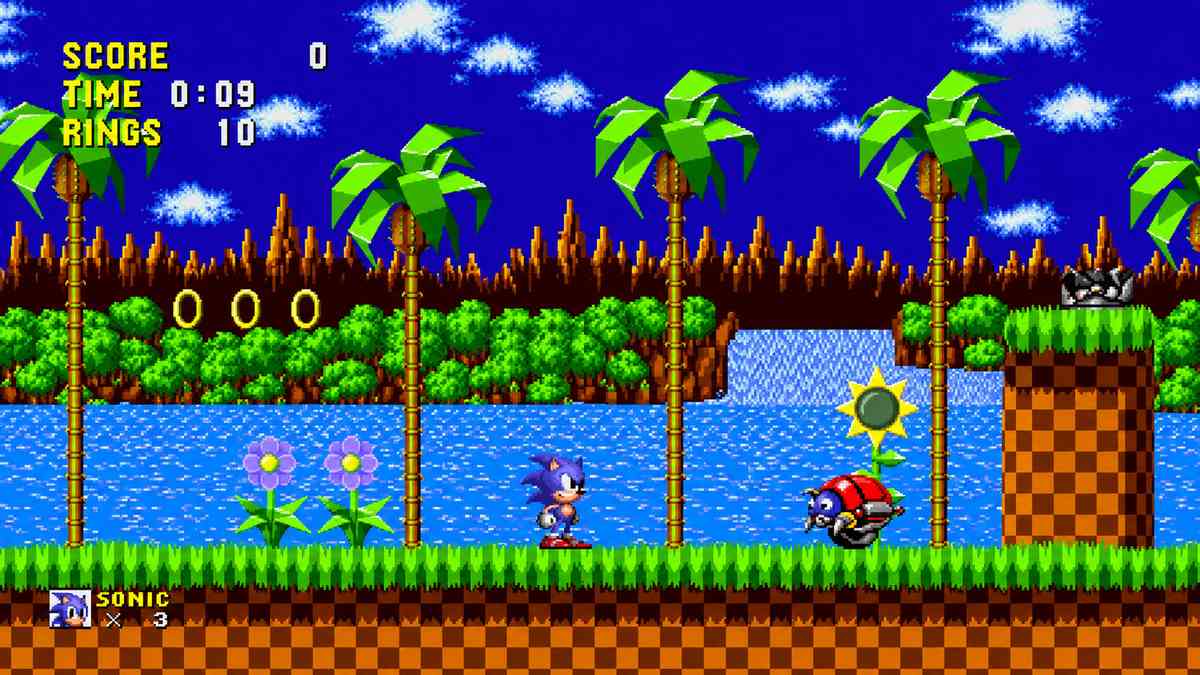
Sega released "Sonic the Hedgehog" in 1991. The game became one of the most important reasons for the Genesis's success, especially in North America. It focused on speed, jumping, collecting rings, and moving through colorful levels. Sonic could run quickly through the stages, giving the game a different feel from many of Nintendo's platform games.
Sonic also became Sega's main character and helped the company build its own identity. Sega used the character in its advertising and made the game a major part of the Genesis experience. The game showed that the Genesis could provide fast and exciting gameplay. It also helped attract players who wanted something different from Nintendo's games. Sega's focus on speed, arcade-style action, and sports games became an important part of the console's identity.
The SNES Had Many Popular Adventure and Role-Playing Games
Nintendo released "Super Mario World" in Japan in 1990 and in North America in 1991. The game became one of the SNES's best-known titles and showed how colorful graphics and well-designed levels could create a memorable game.
The SNES became famous for its large collection of games. Some of its best-known titles included "The Legend of Zelda: A Link to the Past," "Super Metroid," and "Chrono Trigger." These games used the console's graphics and sound features to create detailed worlds, memorable music, and enjoyable gameplay.
Role-playing games were particularly popular on the SNES. These games often involved exploring large areas, meeting characters, fighting enemies, and following a story. The SNES's ability to show many colors and play sample-based music helped create a strong atmosphere in these games.
However, the Genesis also had excellent role-playing games, including the "Phantasy Star" series. Both consoles offered many different types of games, even though players often connected each system with certain genres. The difference was not that one console could play only one type of game. Instead, each console became known for the games that were most popular on its system.
The Genesis Was Popular for Sports Games
Sports games were another important part of the Genesis's success. Sega worked to attract players who enjoyed football, basketball, and other sports. The Genesis became a popular choice for many sports fans, particularly in North America.
Its game collection included sports titles connected to real teams, athletes, and leagues. These games helped Sega attract players who wanted fast and competitive gameplay. Sega also used its advertising to present the Genesis as a console for older children and teenagers. The company focused on action, competition, and an image that was different from Nintendo's family-friendly image.
This helped the Genesis stand out in the market. However, the SNES also had sports games. The difference was that Sega's sports library and advertising became a major part of the Genesis's identity.
Mortal Kombat Created a Big Difference Between the Consoles
The original arcade version of "Mortal Kombat" appeared in 1992. Its home versions arrived in 1993, and the differences between the Genesis and SNES versions attracted a lot of attention. The game became famous for its fighting, blood, and finishing moves called fatalities.
The Genesis version kept the blood and fatalities when players entered a special code. The original SNES version removed the blood and changed some of the violent effects. This gave Sega an advantage with players who wanted a home version that was closer to the arcade game.
It also helped Sega build an image as the more mature and less restricted console. The company used this image in its advertising to attract older children and teenagers. The difference between the two versions became one of the most famous examples of how Sega and Nintendo approached their games differently.
However, the SNES was not limited to games for young children. It also had games aimed at older players, including a version of "DOOM," released for the SNES in 1995. That version used the Super FX 2 chip to help run the game.
Both consoles had games for different audiences. Their images were shaped by advertising, the games they were known for, and the choices they made when adapting games.
The Sega CD Added New Features to the Genesis
Sega also released add-ons that gave the Genesis more features. The Sega CD, known as the Mega-CD in some regions, was released in Japan in 1991 and in North America in 1992. It allowed the Genesis to play games stored on CDs instead of using only cartridges.
CDs could store much more data than the standard game cartridges of the time. This gave developers more room for music, video, and other content. The Sega CD could play games with full-motion video, meaning that players could see recorded video clips as part of the game. It also offered other features that were not available on the basic Genesis alone.
However, the Sega CD was an add-on. It did not mean that every Genesis game could suddenly use all of the extra features. The add-on also increased the cost of the system. Although it attracted interest, it did not become as successful as Sega had hoped. Most importantly, the Sega CD was not a special switch that activated blast processing. The phrase remained mainly part of Sega's marketing.
Which Console Was More Popular?
Hardware was important, but sales also depended on price, games, advertising, and the number of years each console had been available. The Genesis arrived first, giving Sega a head start. The console was released in Japan in October 1988 and reached North America in August 1989. The SNES was released in Japan in November 1990 and North America in August 1991.
This gave Sega time to build a strong collection of games before Nintendo entered the competition with the SNES. In North America, the Genesis became very successful during the early 1990s. Sonic the Hedgehog, sports games, and Sega's advertising helped the company compete closely with Nintendo.
However, the SNES eventually sold more consoles worldwide. The SNES sold about 49.1 million units worldwide, while Sega reported sales of about 30.75 million Genesis and Mega Drive units. These figures can vary depending on whether licensed versions and sales by other companies are included.
Nintendo's popular game series helped the SNES attract a large audience. Sega, meanwhile, had strong sales in North America and several other regions. The result was a close competition in some markets, even though Nintendo sold more consoles worldwide.
The Main Differences Between the Genesis and the SNES
The main differences become clearer when we look at each area separately. The Genesis had a faster main processor. This helped it handle some tasks quickly and made it well suited to games that focused on speed and action.
The SNES had more main memory and more memory for sound. It could also show more colors at once and offered graphics features that helped developers create detailed backgrounds and special effects. The Genesis had a distinctive sound system that worked well for electronic music, while the SNES used sample-based sound that helped it produce more natural-sounding instruments.
Both consoles had popular games and different strengths. The Genesis was well known for Sonic the Hedgehog, sports games, and fast action. The SNES was well known for Super Mario World, Zelda games, role-playing games, and detailed adventures. Neither console was better at everything. Their strengths depended on the game and the features that game needed.
Was the Sega Genesis More Powerful?
The Sega Genesis had a faster main processor than the Super Nintendo. That was a real advantage, and Sega used it to promote the console during the early 1990s. However, the SNES had more main memory, better color capabilities, and a sound system that could produce rich music and sound effects. Its graphics features also helped developers create games with detailed backgrounds and special effects.
The Genesis was a strong choice for fast action and sports games. The SNES was especially good at colorful games, adventures, and role-playing games. The phrase "blast processing" helped Sega make the Genesis sound much more powerful, but the truth was more balanced. A faster processor did not make the Genesis better in every area. In worldwide sales, the SNES came out ahead, selling about 49.1 million consoles compared with the Genesis's roughly 30.75 million.
In the end, there is no single answer that makes one console the winner in every way. The Genesis had the faster processor, while the SNES had several advantages in graphics and sound. Both systems offered great games, and both helped make the 1990s an important time in video game history.
If you want to experience that era today, you can look for modern retro consoles or collections that include games from both systems. You can then decide for yourself whether you prefer the fast action of the Genesis or the colorful worlds of the Super Nintendo.