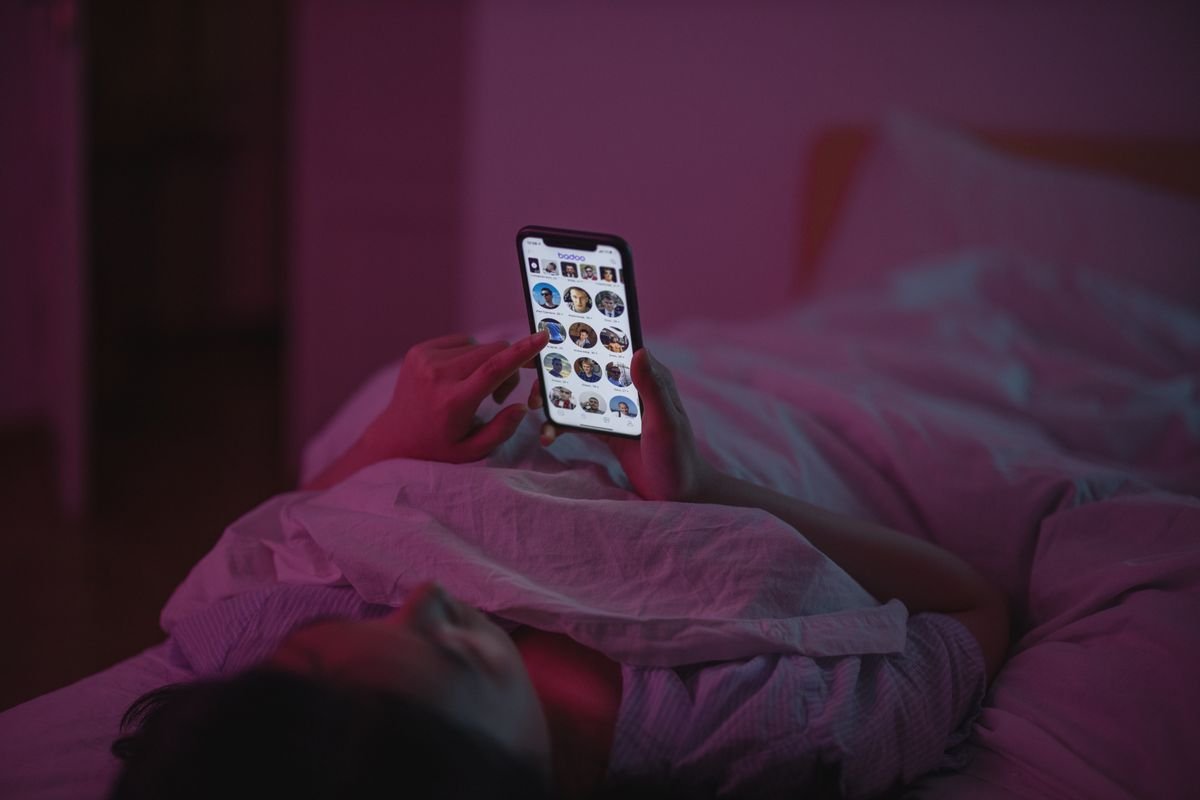
Does it ever happen to you that despite trying night mode, buying blue-light glasses, or dimming your phone to a warm amber glow, you still can't sleep at night? It's 1 AM, and you're still wide awake, mind racing through dozens of unrelated thoughts, replaying the whole day, half-remembering the headline you read in the morning. This is quite common these days, and the culprit is your devices.
Blue light is not good for your body clock, and that's something you must accept—final truth. However, research says that there's another antagonist in the picture: psychological arousal. When you consume short-form videos, outrage-driven content, or doomscroll, it arouses you psychologically, as claimed by a published study on PubMed. So, the screen might not be innocent, but it's also not the key antagonist here.
Also read || What Is Doomscrolling? 5 Easy Habits To Boost Your Mood Today!
The Photobiology: How Blue Light Actually Affects the Brain
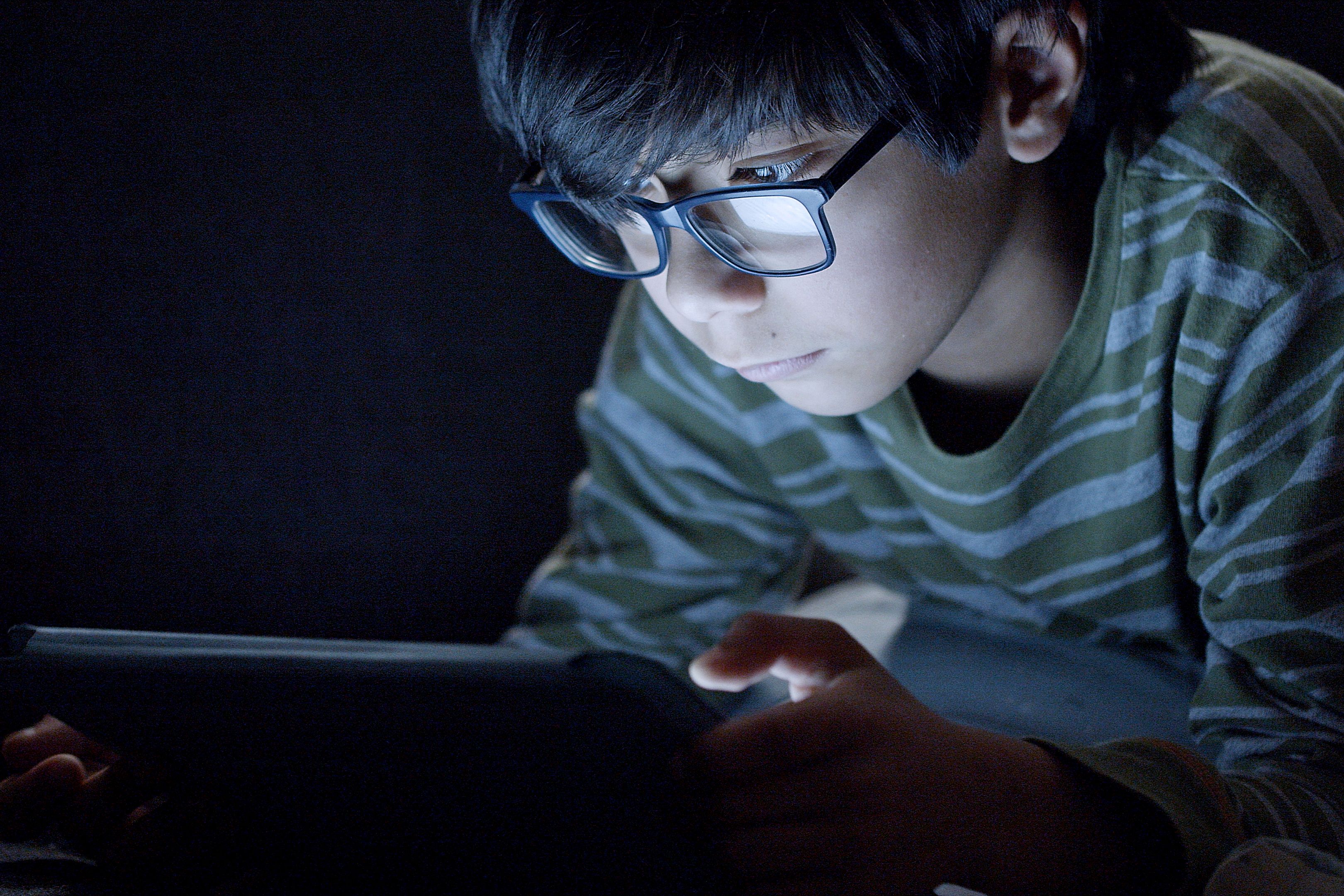
Delving deeper into the science behind your incomplete sleep, we'll explore what Photobiology says about the effect of blue light on our brain. Our retina's specialized cells are called intrinsically photosensitive retinal ganglion cells, or ipRGCs. They are responsible for detecting short-wavelength blue light peaking anywhere between 460 and 480 nanometers.
ipRGCs hold a photopigment called melanopsin and send signals straight to the suprachiasmatic nucleus, which is our brain's master circadian clock. The suprachiasmatic nucleus tells the pineal gland to hold back melatonin, which is a hormone responsible for making us sleepy. That's why the "night-mode" filters exist in devices, since dimming the light can protect the melatonin signal from being overridden late at night.
According to controlled studies, evening exposure to blue-enriched light reliably delays melatonin onset, which means a delay of 10-20 minutes in some cases, and even reduced restorative slow-wave sleep under certain conditions. Thus, it's a real, measurable effect, which you can't undermine or dismiss outright. However, context is what plays the most critical role here.
When your phone is dimmed, it's more likely to emit less light than an average indoor room, and modelling studies imply melatonin suppression becomes minimal below roughly 15 lux. Therefore, a bright bedroom lamp is more damaging to your sleep than the screen itself ever could. So, in any case, your dimmed phone is much better than a night lamp.
Cognitive Arousal vs. Light: The Psychological Mechanism
You think your screen time matters more than the color temperature? Well, you're wrong. When you scroll through a slow, static article, it feels nothing like swiping on a social media feed, which is designed specifically to keep you engaged as long as possible. The formula is simple: these social media apps like TikTok or Instagram rely on audiences to comment, like, and engage with content, and that's what doomscrolling is.
While the term "doomscrolling" is used harmlessly in daily vocabulary, it is causing real damage. When you consume social media content, there can be emotionally charged headlines, outrage loops, and an endless supply of content, which might create mental friction and decision fatigue for you. So, it keeps your brain locked in problem-solving mode, even when not needed. Heavier social media use at night leads to later bedtimes, and you need longer to fall asleep. In short, it affects your sleep quality and causes stress.
Also read || Inside the Lucid Dream: Brain Science vs Inception
Passive Media vs. Algorithmic Doomscrolling
So, do we mean that every screen carries the same risk for your sleep? The answer is no. There are two categories: low-arousal options and high-arousal options. E-ink readers, fiction audiobooks, white noise, and familiar reruns tend to cause far smaller disruptions and are low-arousal options. On the other hand, high-arousal options are news aggregators, Instagram, or Interactive gaming, etc.
However, there is a rule to keep in mind that upto 30 minutes of warm-screen e-reading tends to cause negligible disruption. In contrast, just 15 minutes of algorithmic short-video scrolling with blue light exposure and emotionally charged content can do much more damage than you expect. Check out the table below, which categorizes devices into low and high arousal.
| Low Arousal (sleep-friendlier) | High Arousal (sleep-disruptive) |
|---|---|
| E-ink readers, printed books | TikTok/Reels, Shorts |
| Fiction audiobooks, sleep podcasts | News aggregators, live feeds |
| White noise, calm music | Work email, Slack pings |
| Familiar TV reruns | Interactive multiplayer gaming |
The Real Fix: A 60-Minute Wind-Down, Not a Blue Light Filter
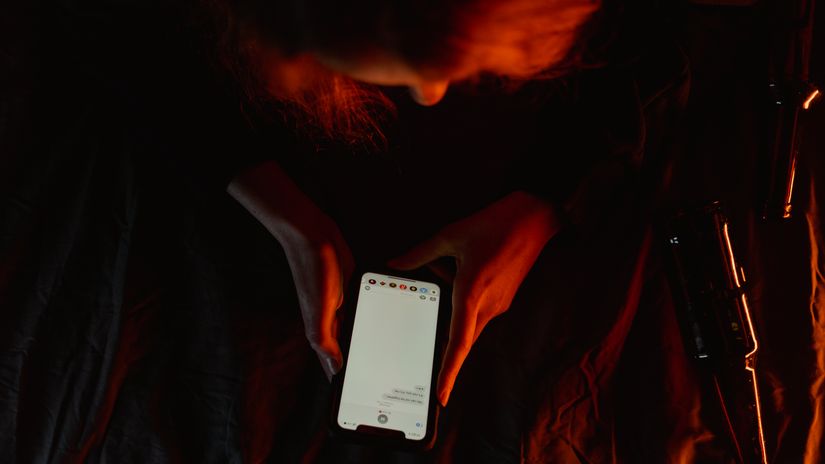
You can have a better life by giving up screens an hour before bed, but it's not the only path forward, and it doesn't mean throwing out your blue-light glasses either. However, if you stop using screens 60 minutes before sleep deliberately, it will lower your psychological arousal and enhance your sleep quality.
At the 60-minute mark, one can shift from active screen input to passive consumption. Instead of scrolling, consume audio content or read some fiction, and steer clear of all the work tasks on Slack or Mail. The goal is not zero stimulation; it is lower-arousal stimulation that does not demand your reactions. So, instead of unpredictable content, consume something predictable or less emotionally charged.
When 30 minutes have passed, switch on Do Not Disturb or a dedicated mode to silence non-urgent notifications, and shift tomorrow's to-do planning to earlier in the evening instead, which is a recommendation published in JMIR. Getting tomorrow's tasks out of your head before this window starts removes one of the biggest causes of late-night mental rehearsal.
Instead of charging your phone beside your bed, charge it across the room and use a standalone alarm clock. Research on PMC implies that removing the device from arm's reach cuts down on both the temptation to check it and the nighttime awakenings linked to habitual checking. Pair all this with dim, warm lighting in the hour before sleeping, and it would regulate your circadian rhythm over time.
Blue light filters are not villains; they treat a real but secondary symptom. Modern bedtime insomnia is caused by mental and emotional overstimulation from interactive feeds engineered to keep you hooked for as long as possible, as the PubMed research underscores. To protect your sleep genuinely, you will have to manage the optical side and the psychological load of what you are consuming, especially in that critical last hour.