In 1930, a famous economist named John Maynard Keynes made a prediction that sounds like a joke today. He looked at how fast machines were improving and predicted that by the 21st century, technology would do most of our chores. He genuinely believed that we would only need to work about 15 hours a week. He thought our biggest problem today would be figuring out what to do with all our free time!
If we look around us, almost everyone has supercomputers in their pockets. Artificial intelligence (AI) can write emails for us in five seconds. For instance, automated apps schedule our meetings instantly. We have successfully automated billions of hours of human work.
But how do you actually feel at the end of the day? You don't feel relaxed. Instead, you feel rushed, stressed, and completely exhausted. The time-saving tools that were built to set us free have turned into a digital treadmill that just keeps running faster. The irony is though we saved time, we lost our peace of mind.
Does Technology Save Time Or Just Make Us More Productive?
Whenever we feel overwhelmed, we usually blame it on a simple tech problem. We assumed we just haven't found the right app yet. We tell ourselves a comforting lie, “Once I master this new AI assistant, clean up my digital to-do list, or download that new calendar app, I will finally catch up.” We treat our busy schedules like a basic math problem.
We tend to operate under the assumption that if a tool cuts a task’s time in half, we will automatically get that saved time back to relax, play with our kids, or take a walk. We look at technology as a helpful, neutral filter that clearly wipes away the hard work, leaving our minds completely calm and unchanged.
Also Read: How Apple Survived Bankruptcy: The 1997 Turnaround Story
Why Does Technology Make Life Feel So Rushed And Fast Paced?
It is the frustrating truth that technology makes us busier not because it fails to save time, but because it tricks our brains into taking on more work, splitting our focus, and raising expectations. The extra minutes we save do not just sit around waiting for us to enjoy them. Instead, they create an empty space in our day.
Because of the way human psychology works, our brains instantly fill that empty space with a fast-moving flood of new messages, higher standards, and an inability to ever truly log off. No, the problem is not with your software. Your apps are working absolutely perfectly.
The problem lies with the the mechanism of your brain, as the ancient evolutionary psychology is trapping you in a modern cycle of busyness. To break out with this exhausting loop, we need to look past the shiny screens and understand the four simple psychological traps that turn time-saving tools against us.
What Are The Psychological Reasons For Productivity Loss With Digital Tools?
The first reason we are drowning in work is that technology has made it too easy to start a task. In the past, people used to talk about Parkinson’s Law, which says that work expands to fill the time you have. Today, the rule has changed significantly because when it takes absolutely zero effort to send a message or create a task, we end up creating way more tasks than we can handle.
The “Too Easy To Say Yes” Trap (Induced Demand)
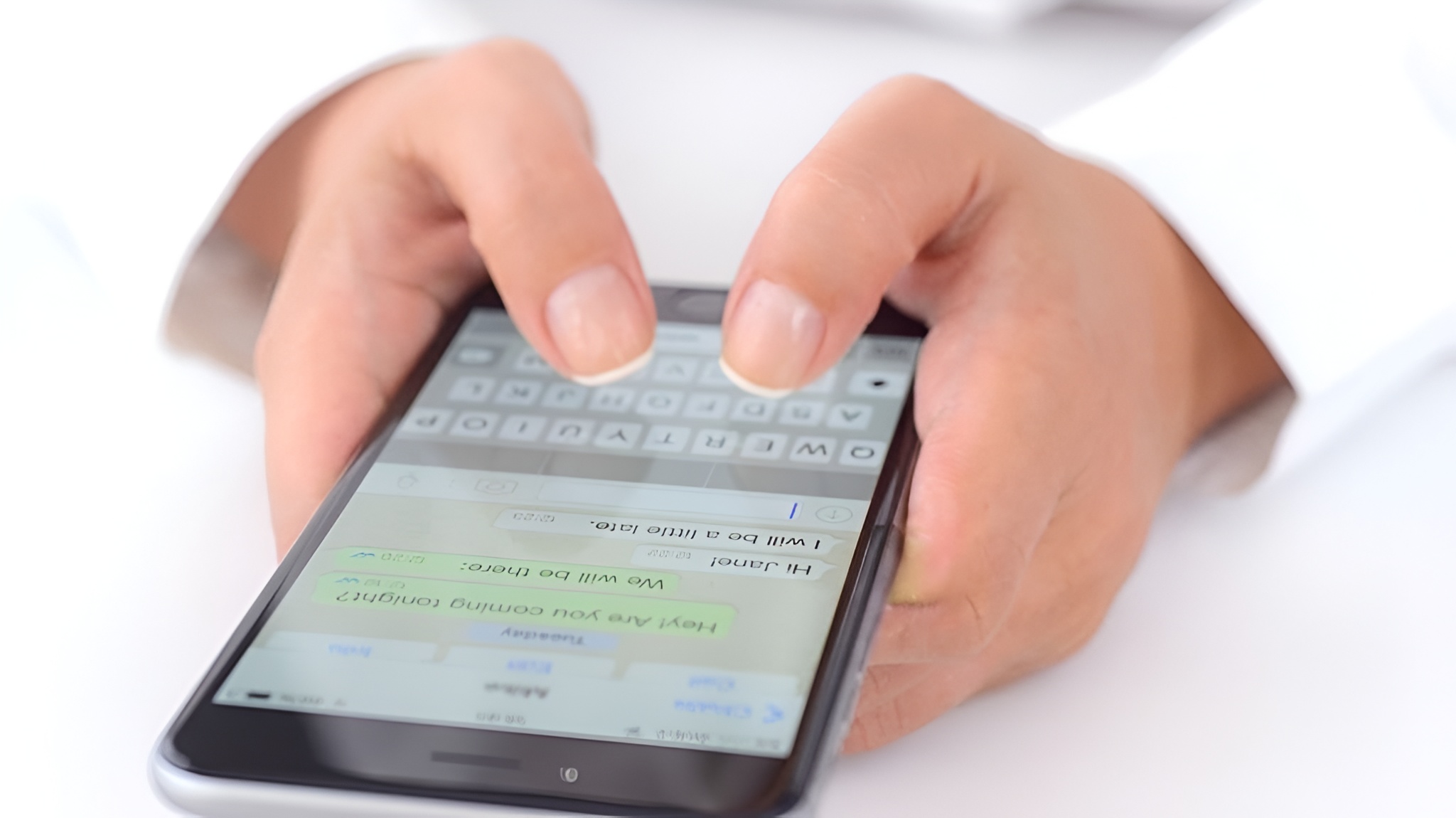
In city planning, there is a concept called “induced demand.” It explains why widening a highway never fixes traffic jams. When you add more lanes, more people decide to drive on that road until it is completely clogged again. Many digital tools like Slack, Whatsapp, and Microsoft Teams do the exact same thing. As it takes zero effort to send a message, we lose our filter for deciding whether that message is actually necessary.
In reality, our brains suffer from frictionless action bias. We think that sending a quick text or scheduling a 15-minute video call is “free of cost” because it takes only a second. By doing this, we forget that reading, processing, and replying to hundreds of these tiny messages takes a massive toll on our energy.
Let us understand this by taking a simple, everyday example. Before instant messaging, if anyone wanted to ask a coworker a question, they used to write it down on a formal paper memo and mail it to their desk, or walk to their office. Because that took effort, the people used to think carefully before taking any action.
Today, because the message system is instant, a coworker will send you 45 text messages a day with every random thought they might have. The tool saved time on delivery, but at the same time, it buried you under a mountain of digital chatter.
The “Moving Goalposts” Trap (The Jevons Paradox)
The second trap is that our standards keep going up. Back in 1865, an economist named William Stanley Jevons noticed something strange. When England invented a more efficient steam engine that used less coal, the country didn't just save coal. Instead, they used more coal because it had suddenly become cheaper and easier to run engines for everything.
Similarly, in your daily lives, your brain power is the coal, and your productivity apps are the efficient stream engines. Through a psychological process called adaptation, the moment a tool makes a task faster, our expectations instantly jump up to fill the gap.
According to psychology, we experience shifting goalposts. When a tool saves us time, we rarely stop and rest. Instead, our minds tell us, “Since that was so fast, I should make it bigger, better and more complicated.” This way, we used the saved time to create more work to load ourselves just to prove our value to the world.
We can understand this psychological concept by this example. Assume that you are making a presentation slide desk. Just a few years back, formatting a slide was difficult, so your boss accepted a simple presentation with just basic text. Thanks to design tools, AI can make beautiful slides in no time. But because it is so fast, the expectation has changed. A simple presentation is no longer good enough. It must now have custom animations, embedded videos, and five different color options. The time you saved making slides was completely eaten by the pressure to make them look absolutely stunning.
The Task-Switching (Attention Residue)
The third reason behind technology making us feel so tired is that our brains are physically unable to multitask. Tech companies love to talk about their tools and let us jump smoothly between tasks. But while a computer can switch apps in a millisecond, your brain cannot.
To understand it in a much better way, a researcher named, Dr. Sophie Leroy created a term called attention residue. She discovered that when you switch from Task A to Task B, your brain doesn't make a clean break. A big part of your thoughts stays stuck on the first task.
Psychologists say that constant notifications cause attentional fragmentation. Every time a little red dot pops up, a banner flashes, or a ping sounds, your brain freezes for a moment. Even if you only look away for five seconds to check the notification, your brain stays fuzzy for up to 23 minutes afterwards as it tries to refocus.
For instance, a coder using an automated tool that tests their software instantly. This should save you enough time. However, because the tool is automated, it sends a chat alert to the team every few minutes. The coder constantly glances at these little alerts while trying to write deep, complicated code.
By the end of the day, they haven't finished much actual work, but their brain is fried. They feel completely rushed and busy, but as far as the productivity is concerned, it was actually destroyed by the constant task-switching.
The “Always-On” Trap (The Autonomy Paradox)
The final reason technology makes us busier is that it destroys the walls between our work life and our personal life. Researchers call this as the "autonomy paradox." It means that people eagerly use smartphones and cloud apps so they can have the freedom to work from anywhere, but they end up working everywhere, all the time.
According to psychology, we live in a state of hyper vigilance. Your nervous system stays in a low-grade state of stress, waiting for a work message to pop up while you are eating dinner or watching a movie. It results in losing the ability to feel mentally detached and finally rest.
For instance, automated calendar links were invented to save the time of the users. Instead of wasting time in emailing back and forth to find a meeting time, you just send someone a link to your schedule. But because it is so easy, people across different time zones can easily book slots on your calendar. Suddenly, you find your schedule automatically filled with 7:00 AM calls and 9:00 PM syncs. The tool that was supposed to give you control over your time ended up letting other people control your life.
Also Read: The Technology That Defined 2021
How Do You Balance Technology And Time Management To Reduce Burnout?

The great news amidst all these is that once you understand these psychological traps, you can easily beat them, and realise that true productivity is not about downloading more apps; it is about setting strong human boundaries. You can reclaim your free time today by applying these three simple, practical steps:
Start by creating helpful barriers. Do not leave your email or work chat open all day. Close them completely. Open them intentionally only three or four times a day, reply to your messages all at once, and then close them again. This stops the endless flood of tiny questions and teaches people to solve minor issues on their own.
Keep some time aside for yourself too. When a new tool or AI shortcut saves you an hour of work, do not fill that hour with more tasks. You can simply lock that hour in your calendar and use it to rest, think, learn a new skill, or simply step away from your screen.
You can even build a digital wall. Go to your smartphone’s built-in settings (like “focus mode”) to automatically hide work apps and mute notifications after 6:00 PM. It is always wise to inform your team beforehand that you do not read or answer work messages outside of office hours.
Finally, it is important to know that technology is built and continuously evolving to save our time and energy. But in this process, we should not forget that our brain is biological, built for focus, depth, and rest. By protecting your attention and stepping off the digital treadmill, you can finally stop rushing and enjoy the free time technology promised us in the first place.