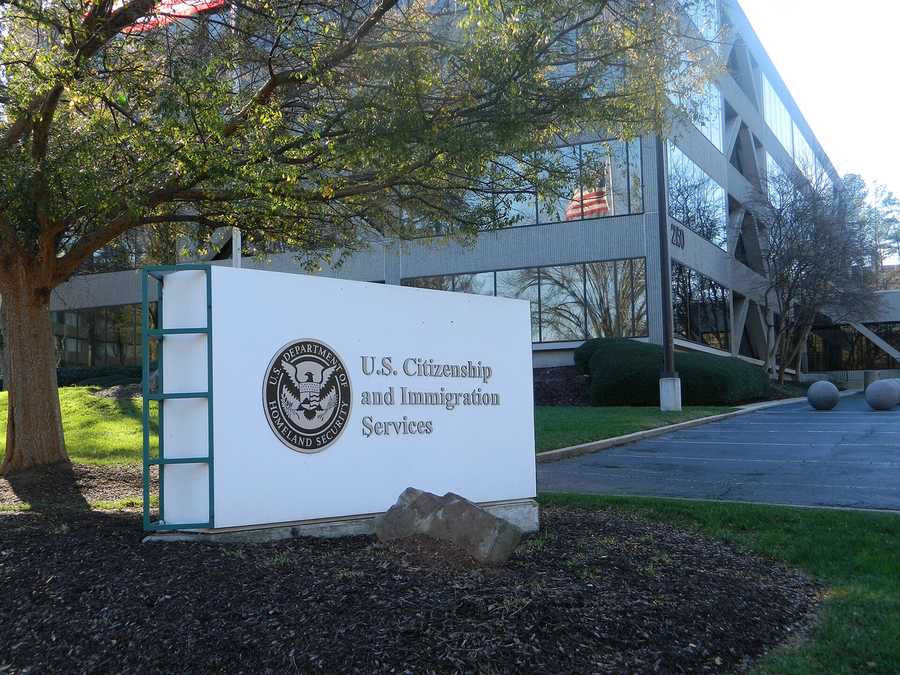
If you are a green card applicant, it might be time to return to your home country before applying for a Green card. It’s not a personal opinion, but the new guideline issued by the US Citizenship and Immigration Services (USCIS). This major change to US Immigration Policy could affect thousands of people seeking permanent residency.
The Trump administration believes that this announcement restores the original intent of US immigration law and closes the loophole that allowed people to remain in the US while pursuing lawful permanent resident status. In section 245(a) of the Immigration and Nationality Act, there is a provision allowing certain individuals who were legally admitted or paroled into the United States to apply for lawful permanent residency. For years, eligible applicants used this process, called ‘adjustment of status’, to obtain Green cards without leaving the US borders.
Also read || Why Traveling to the U.S. Feels Harder in 2026 — And What Politics Has to Do With It
Under this new guideline, USCIS officers expect Green card applicants to leave the United States, complete required background checks and screening procedures in their home countries, obtain an immigrant visa through the US Department of State, and then return to the United States as legal permanent residents.
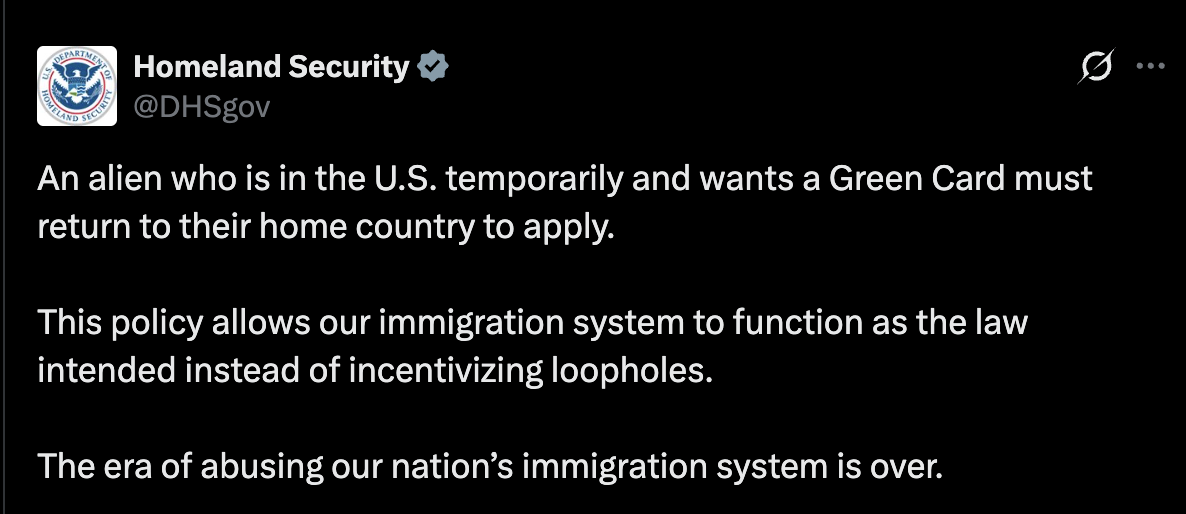
Elaborating on the details of the policy, Homeland Security shared on X, “An alien who is in the US temporarily and wants a Green Card must return to their home country to apply. This policy allows our immigration system to function as the law intended instead of incentivizing loopholes. The era of abusing our nation’s immigration system is over.”
What do the new USCIS guideline changes mean
The American dream is real. Many people from developing or underdeveloped countries work their whole lives to escape their homes, and every single policy affects their livelihood. In the new USCIS guideline, officers are commanded to treat adjustment of status as an act of “administrative grace” rather than a routine legal right. So, an applicant’s choice to seek domestic adjustment instead of going back to their home country will be considered an “adverse factor” in the case evaluation. Said, applying from inside the United States could affect your approval chances.
An argument from the administration is that the law was always written this way. Their position is that temporary visas, whether work, study, or tourism, were designed for people with a fixed end date, and the moment someone enters the US on a temporary visa, they should not transform into the first step toward permanent residency. To strengthen their argument, USCIS stated that when people apply for Green cards from their home countries and get denied, they are already outside the United States. So, there is no risk of them getting into the country illegally after a rejection.
Also read || Everything to Know About the US-Ukraine Drone Deal in 2026
Why Critics Are Pushing Back

Immigration attorneys are great at pointing out the problems. Lawyers with decades of experience note that USCIS itself never previously challenged the legitimacy of domestic Green Card applications, and the adjustment of status process has always been a functioning, standard legal pathway for generations. They are concerned that this guideline will create chaos, since the memo gives officers broad discretion without clearly defining what “extraordinary circumstances” actually means. Hence, it might produce inconsistent outcomes depending on which officer is reviewing the case.
There is another humanitarian dimension that is unaddressed in the policy. For instance, if a family member is told to return home to apply through consular processing, but the US consulate in their country is not actively processing immigrant visas, they could be stuck outside the US indefinitely with no clear timeline and no path forward. And, it’s not a made-up or hypothetical case; there is a huge backlog in consular processing, and for some countries, wait times could expand to years.
Also read || Meet John Kerry: Diplomat, Senator & Climate Leader
Uncertainty is another concern as USCIS issued this change through an internal memo rather than going through a formal rulemaking process; it leapfrogged the public comment period that typically accompanies major regulatory changes. These shortcuts in procedure make it vulnerable to lawsuits and court challenges. For now, the rule stands, and for anyone hoping to build an American dream, the message is clear: “the process starts at home.’