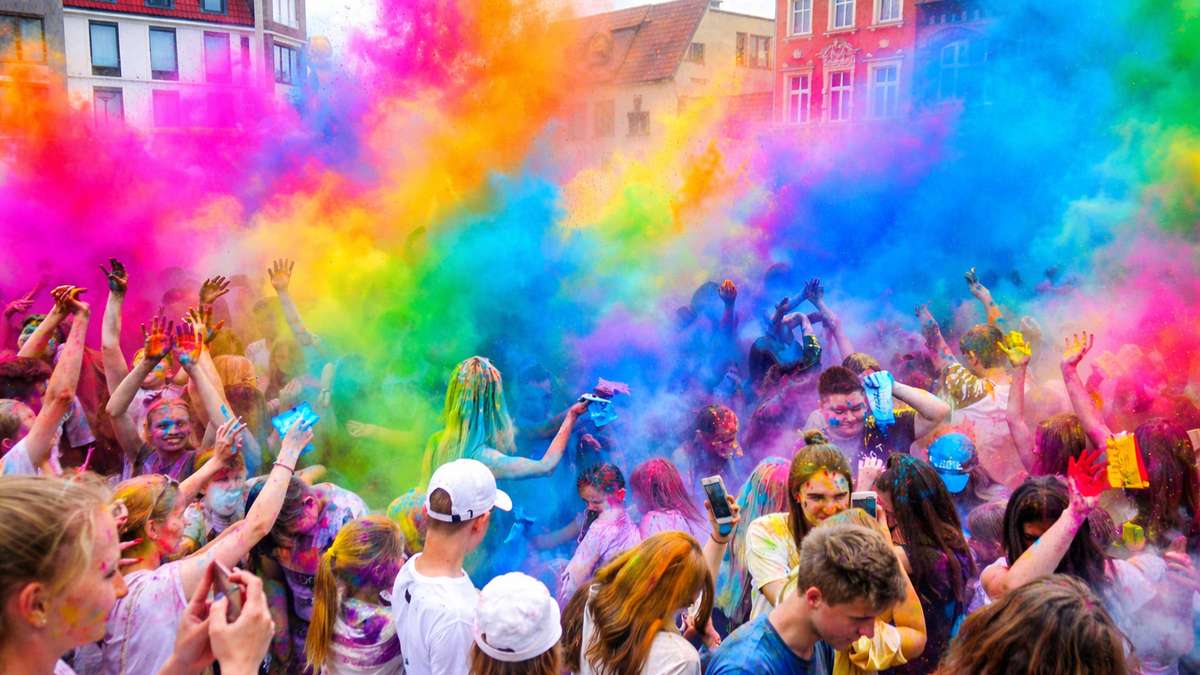
Holi, popularly known as the Festival of Colors, is one of the most ancient and vibrant festivals of Hindu culture. It is celebrated every year on the full moon day (Purnima) of the Hindu month of Phalguna, which usually falls in March. The festival marks the arrival of spring, the end of winter, the beginning of the harvest season, and the symbolic victory of good over evil.
In 2026, Holi will be observed with special timing due to lunar calculations. Holika Dahan will take place on March 2, 2026, and the main celebration of colors, known as Rangwali Holi or Dhulandi, will be celebrated on March 4, 2026. The variation in dates occurs because of traditional Hindu calendar calculations and the influence of a lunar eclipse period.
Over time, Holi has spread far beyond India. Through migration, cultural exchange, and the preservation of traditions by Indian communities abroad, the festival is now celebrated in many countries with the same enthusiasm and devotion.
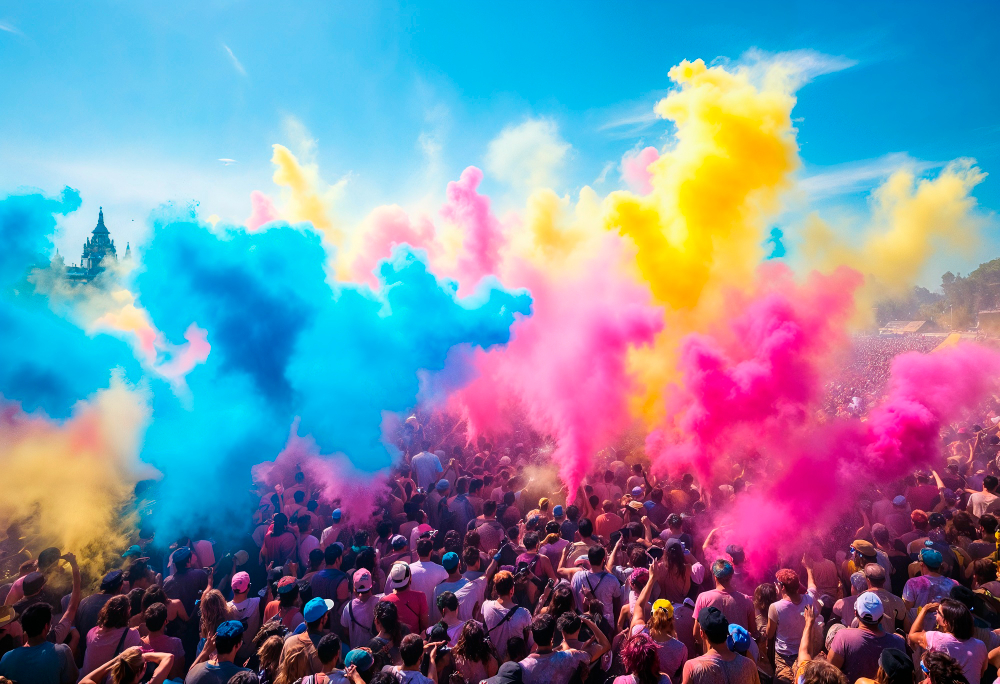
History and Origin of Holi
Holi is believed to have originated more than two thousand years ago. Ancient Hindu scriptures, including the Puranas, mention spring festivals that resemble present-day Holi. In earlier times, it was primarily an agricultural celebration marking the end of winter and welcoming the spring harvest.
Gradually, mythological stories became closely associated with the festival. The most prominent legend is the story of Prahlad and Holika. Prahlad was a devoted follower of Lord Vishnu. His father, Hiranyakashipu, a powerful demon king, demanded that everyone worship him instead of Vishnu. When Prahlad refused, his father tried to kill him. Holika, the king’s sister, had a magical protection against fire. She sat in a blazing fire with Prahlad in her lap, intending to burn him. However, due to divine protection, Prahlad survived while Holika perished. This event symbolizes the triumph of good over evil and is commemorated each year through the ritual of Holika Dahan.
Another important tradition of Holi is linked to the childhood stories of Lord Krishna in the Braj region. According to legend, Krishna playfully applied colors to Radha and her friends. This playful act became a cultural tradition and eventually evolved into the modern celebration of throwing colors.
Cultural Importance of Holi
Holi represents renewal, forgiveness, unity, and joy. During this festival, people forget past conflicts and mend broken relationships. Social barriers are reduced, and individuals from different communities come together to celebrate.
The festival also celebrates nature’s transformation, as flowers bloom and crops are harvested during this season.
Music, dance, and food are essential parts of Holi celebrations. Devotional songs dedicated to Lord Krishna are sung in temples. Folk songs accompanied by traditional instruments such as the dholak and harmonium are performed in villages. In cities, popular Bollywood songs like “Rang Barse,” “Holi Ke Din,” and “Balam Pichkari” are widely played.
Special dishes such as gujiya, malpua, dahi bhalla, and thandai are prepared and shared among family and friends.
Countries Where Holi Is Celebrated, Like in India
Nepal
Holi has been celebrated in Nepal for centuries due to its strong Hindu traditions and close cultural ties with India.
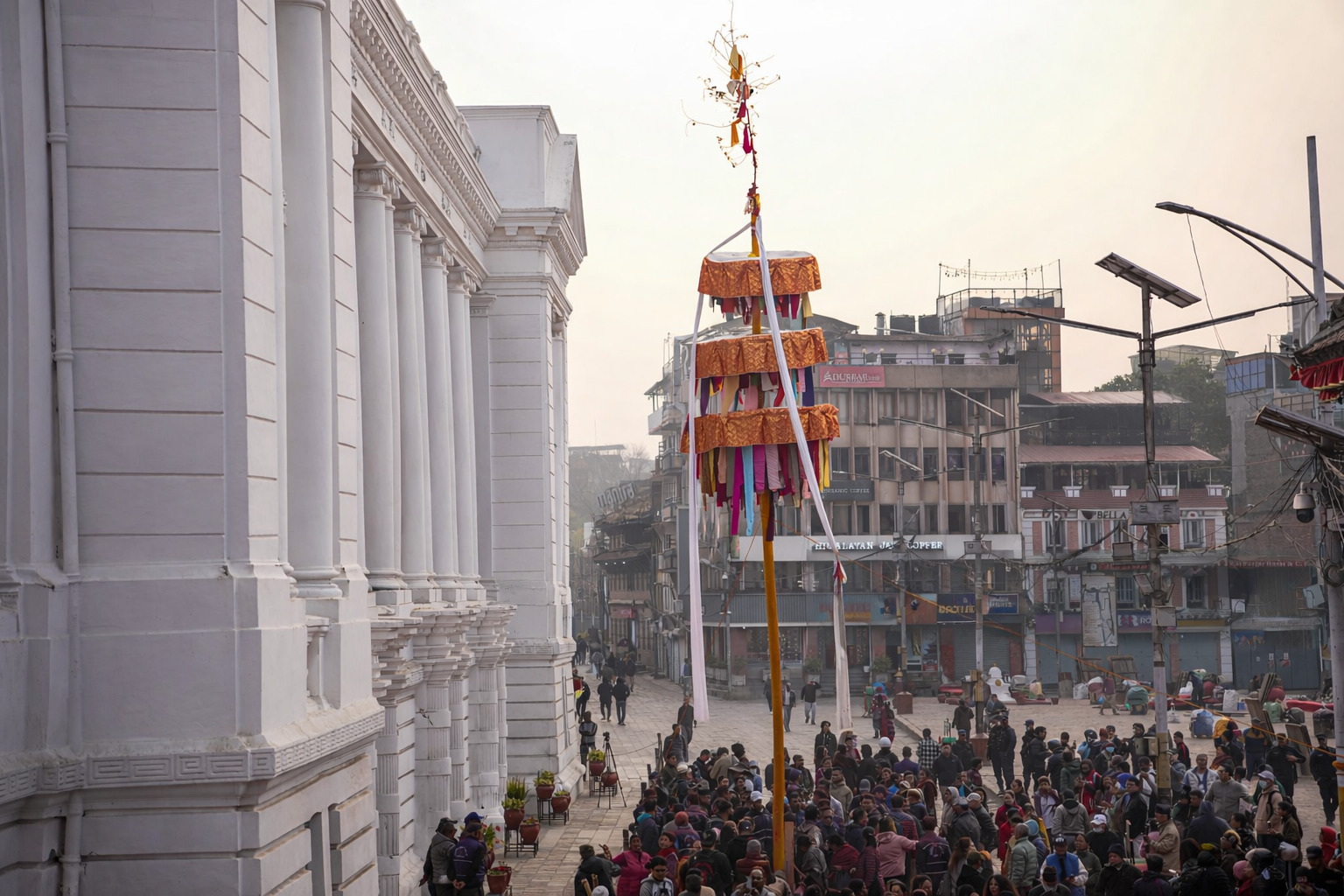
In Kathmandu, a ceremonial pole known as the Chir is installed at Basantapur Durbar Square about a week before Holi. The festival brings large crowds into public squares where people throw colors, splash water, sing devotional songs, and dance to modern music. Holi in Nepal promotes unity and attracts both locals and tourists.
United States
Holi became widely known in the United States during the late twentieth century as the Indian community grew significantly.
Large celebrations are organized in cities such as New York, Los Angeles, Chicago, and Houston. Temples conduct prayers and devotional singing, while outdoor festivals feature Bollywood music, dance performances, and Indian food stalls. Events like the Festival of Colors in Utah attract thousands of participants from diverse backgrounds.
United Kingdom
Holi gained prominence in the United Kingdom after Indian migration during the mid-twentieth century.
Cities such as Leicester and London host major celebrations. Temples organize devotional prayers and bhajans, while public parks turn into colorful gathering spaces filled with music and dance. The festival has become multicultural, attracting participants from different communities.
Mauritius
In Mauritius, Holi is known as Phagwa and is celebrated as a public holiday. It was introduced in the nineteenth century by Indian indentured laborers.
Traditional Bhojpuri Chowtal songs are sung in groups, accompanied by musical instruments such as the dholak and harmonium. Families visit temples, apply colors to one another, and prepare traditional sweets. The celebrations closely resemble traditional North Indian Holi customs.
Fiji
Holi was brought to Fiji between 1879 and 1916 by Indian laborers who preserved their religious traditions.
Indo-Fijian communities organize temple prayers, sing devotional songs, and gather for community celebrations. The festival strengthens cultural identity and unity across generations.
Trinidad and Tobago
Holi, locally known as Phagwa, was introduced to Trinidad in the nineteenth century by Indian workers.
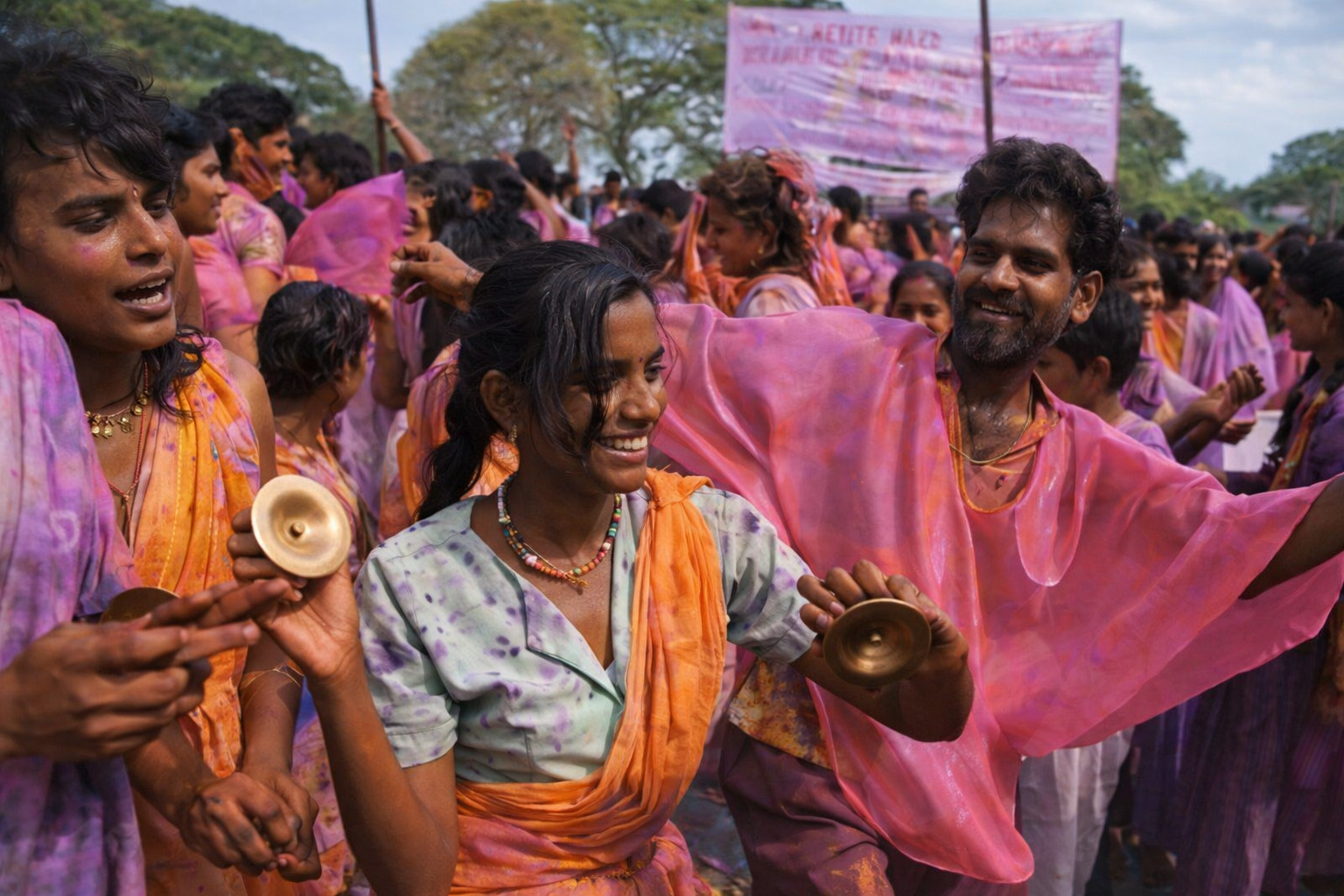
The festival includes Chowtal singing competitions and tassa drum performances. Large gatherings take place in open fields where participants apply colors and celebrate together. Phagwa has become a symbol of cultural diversity and national unity.
South Africa
Holi arrived in South Africa in 1860 with Indian indentured laborers.
Major celebrations occur in Durban and Johannesburg. Temples conduct religious rituals, while public events feature Bollywood music, dance performances, and vibrant color gatherings. Holi in South Africa reflects unity, cultural pride, and harmony among communities.