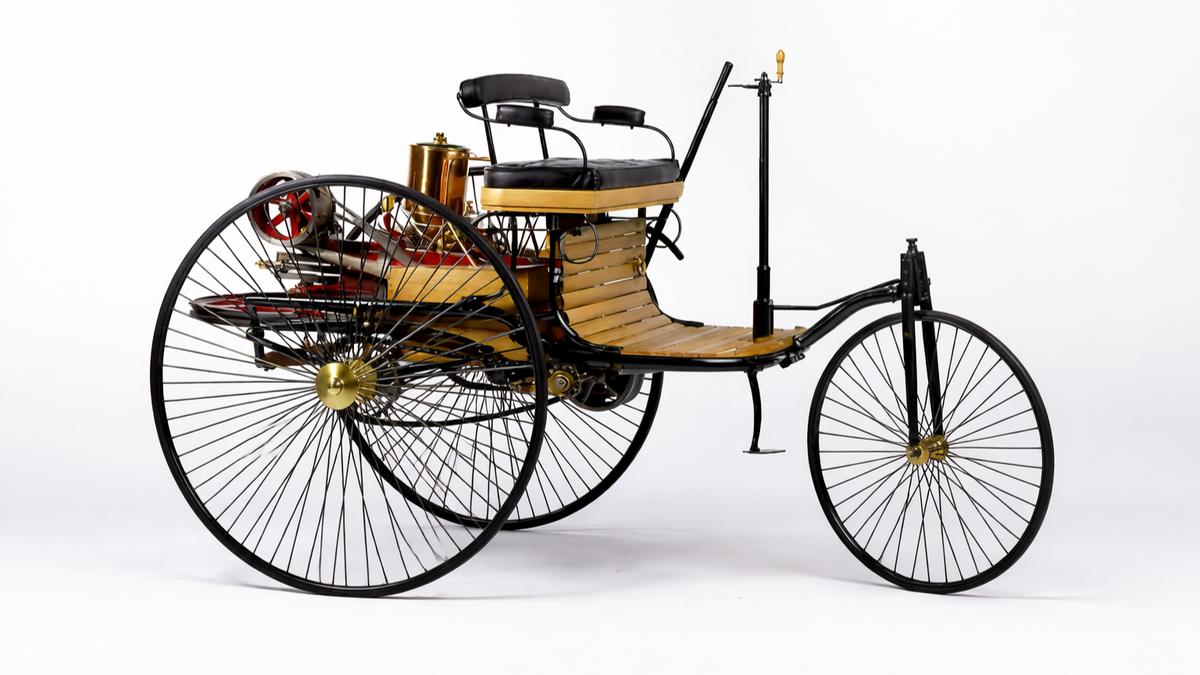
Imagine a world without cars. People would travel slowly by walking, riding horses, or using horse-drawn carriages. Long journeys could take many days. The invention of the car completely transformed transportation and made travel faster, easier, and more convenient. Today, automobiles are used everywhere in the world. However, the car did not appear suddenly. It was the result of many years of ideas, experiments, and innovations. The first practical automobile powered by a gasoline engine was invented by Karl Benz in 1885, and his invention started the modern automobile industry.
Also Read: 12 Cars That Saved Carmakers From Going Bankrupt
Early Dreams of a Self-Moving Vehicle
For centuries, inventors dreamed of building a machine that could move without horses. These early ideas were sometimes called “horseless carriages.” One of the earliest successful attempts was made by the French engineer Nicolas-Joseph Cugnot in 1769. He built a large steam-powered vehicle designed to transport artillery for the French army.
Although the vehicle could move by itself, it had several problems. It was heavy, slow, and difficult to control. Because of these limitations, steam vehicles were not practical for everyday travel. During the 19th century, many inventors continued experimenting with steam engines and even early electric vehicles. These experiments helped engineers learn more about engines and mechanical design, but they still had not created a practical automobile that people could use regularly.
Karl Benz: The Man Behind the First Real Car
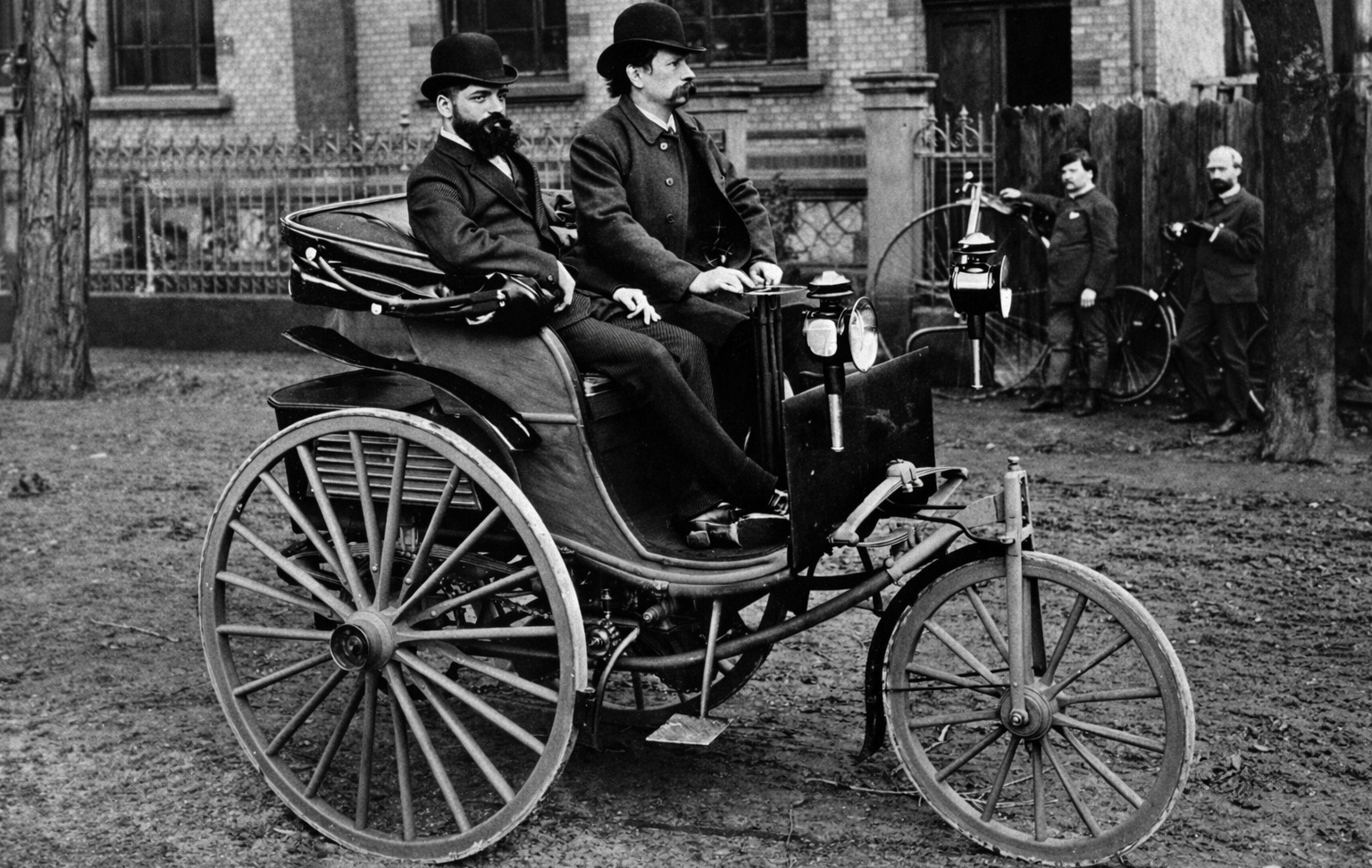
The person most widely recognized as the inventor of the modern automobile is Karl Friedrich Benz. He was born on 25 November 1844 in Karlsruhe, Germany. From a young age, Benz was fascinated by machines and engineering. He later studied mechanical engineering and dedicated many years to developing engines.
Karl Benz believed that a vehicle powered by a gasoline internal combustion engine could replace horse-drawn carriages. He spent many years experimenting and overcoming technical and financial challenges. Finally, his hard work led to one of the most important inventions in transportation history.
The First Practical Automobile
In 1885, Karl Benz built the world’s first practical automobile, called the Benz Patent-Motorwagen. Unlike earlier experimental machines, the Motorwagen was designed from the beginning to be a motor vehicle rather than a carriage with an engine attached.
The Motorwagen had three wheels and was powered by a single-cylinder four-stroke gasoline engine. It also included several innovative features such as wire wheels, a rear-mounted engine, a chain drive system, and an evaporative cooling system. The vehicle could reach a speed of about 16 kilometers per hour (10 miles per hour). While this speed may seem slow today, it was an incredible achievement at that time and proved that a gasoline-powered vehicle could work successfully.
The Official Birth of the Automobile
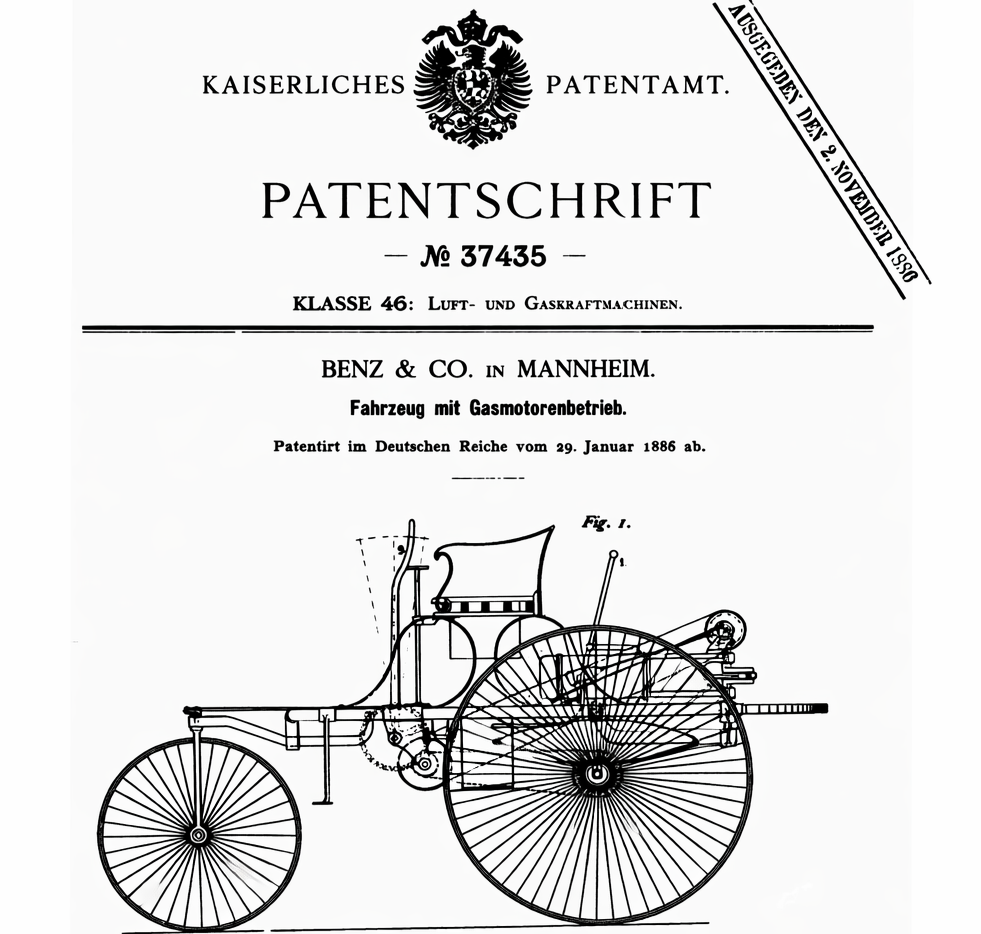
Karl Benz officially patented his invention on 29 January 1886. The patent was titled “Vehicle powered by a gas engine” and was assigned the number DRP 37435. This patent is often called the birth certificate of the automobile.
Later that year, on 3 July 1886, Karl Benz demonstrated his Motorwagen publicly in Mannheim, Germany. People saw for the first time that a self-powered vehicle could travel on the road without horses. This demonstration marked a historic moment in transportation.
Bertha Benz’s Historic Journey
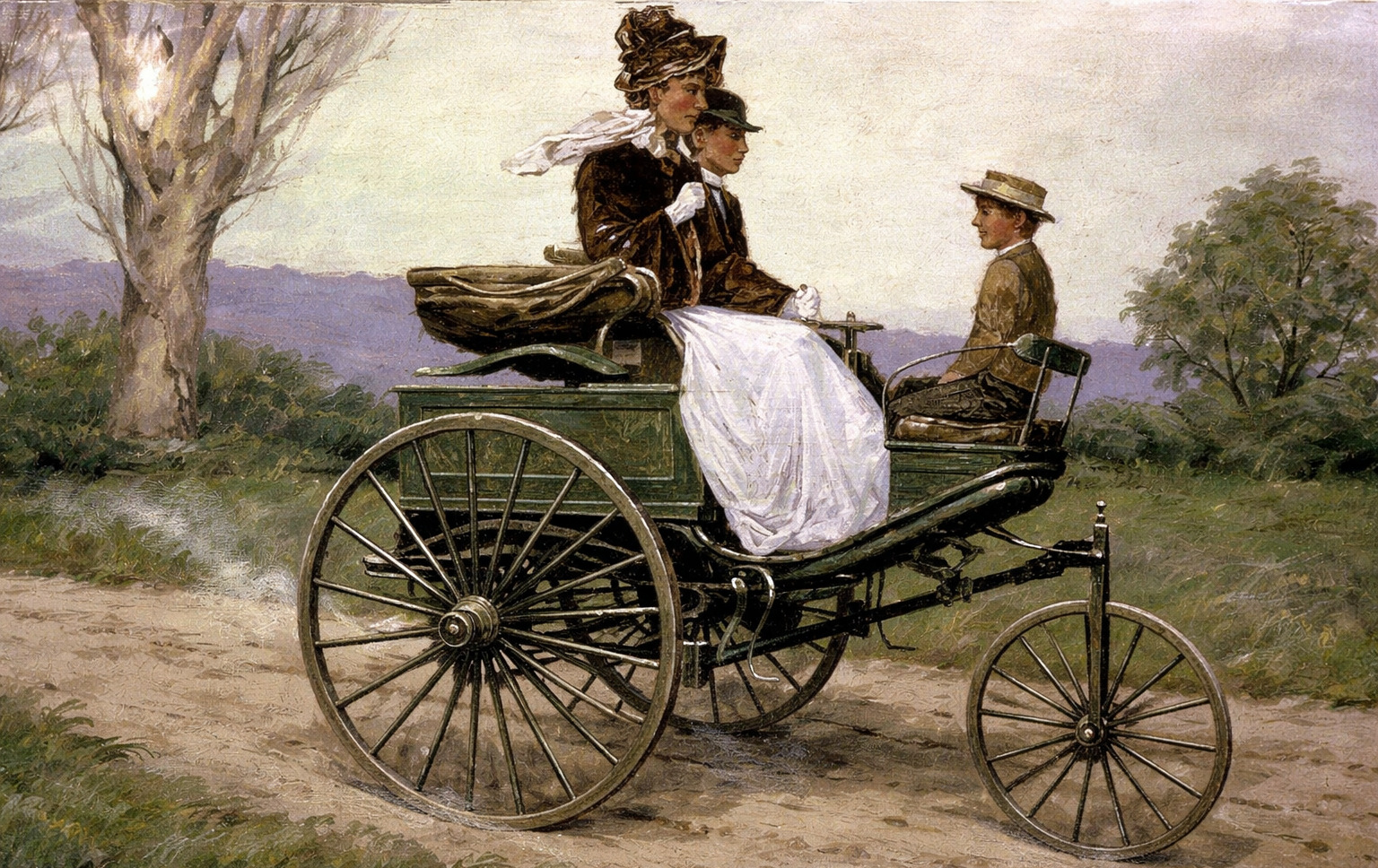
While Karl Benz invented the automobile, his wife Bertha Benz played a crucial role in proving that it could be useful in real life. In August 1888, she secretly drove the Benz Patent-Motorwagen Model 3 from Mannheim to Pforzheim and back. The journey covered about 106 kilometers (66 miles).
This trip became the first long-distance automobile journey in history. During the trip, Bertha solved several mechanical problems and even created the first brake lining, which improved the vehicle’s braking system. She also purchased fuel from a pharmacy along the way, which is often considered the first fuel station in history. Her successful journey helped prove that the automobile could be used for everyday travel.
The First Automobile Sold to the Public
Later in 1888, Karl Benz began selling the Benz Patent-Motorwagen, making it the first commercially available automobile in the world. This marked the beginning of the automobile industry.
One of the earliest buyers was Émile Roger, a French manufacturer who had already been building Benz engines under license. Roger later helped sell Benz automobiles in France, helping the invention spread across Europe.
Also Read: Which Airlines Cancelled or Suspended Middle East Flights Amid Ongoing Conflict?
Other Important Automobile Pioneers
Although Karl Benz invented the first practical gasoline-powered automobile, other engineers also contributed to the development of cars. In 1886, German engineer Gottlieb Daimler, together with Wilhelm Maybach, built another early motor vehicle by installing a gasoline engine into a four-wheeled carriage.
Their work helped improve automobile design and engine technology. Later, in 1926, the companies founded by Karl Benz and Gottlieb Daimler merged to form Mercedes-Benz, which became one of the most famous automobile manufacturers in the world.
How Cars Changed the World
The invention of the automobile had a huge impact on society. Cars made transportation faster, easier, and more efficient. They allowed people to travel long distances, connect cities, and expand trade and industry.
The automobile industry also created millions of jobs in areas such as manufacturing, road construction, and fuel production. Over time, cars evolved into many different forms, including passenger cars, trucks, buses, sports cars, and modern electric vehicles. Today’s cars include advanced technologies such as navigation systems, safety features, and even self-driving capabilities.
Comments (0)
Log in to share your thoughts
No comments yet
Be the first to share your thoughts!